

How to Choose Pet Clothing That Fits Properly
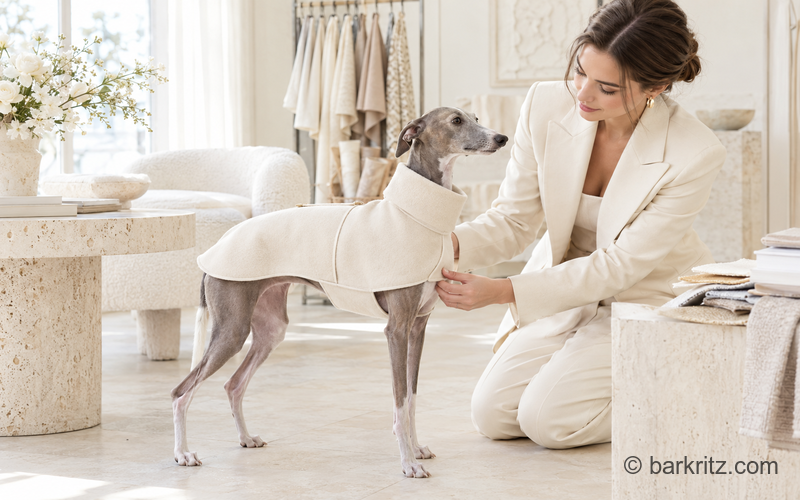
Well-chosen pet clothing should look considered, feel effortless, and allow an animal to move with complete freedom. Whether selecting a tailored raincoat for a city walk, a lightweight knit for a cool morning, or a protective layer for a small dog with limited natural insulation, the difference between an elegant garment and an uncomfortable one lies in its fit. For discerning pet owners, understanding proportions, fabric behavior, and practical construction is essential to building a wardrobe that respects both personal style and animal well-being.
How should you measure a pet for clothing that fits correctly?
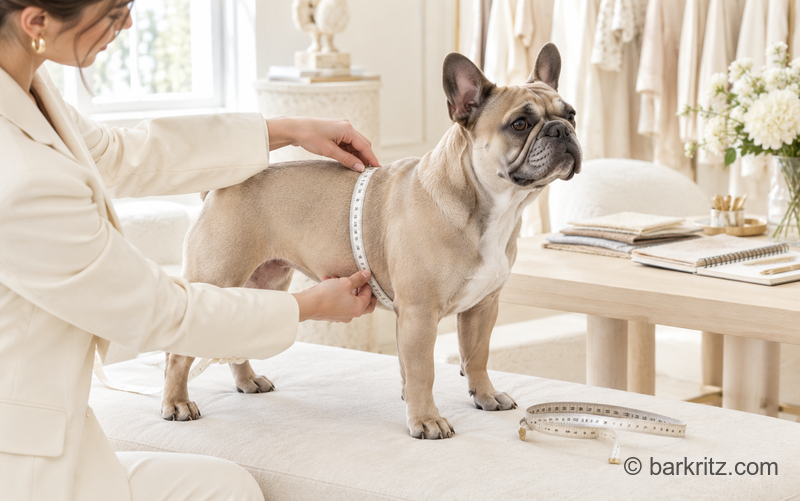
The most reliable way to choose properly fitting pet clothing is to measure the animal’s body directly and compare those measurements with the specific garment’s sizing chart rather than relying on breed or weight alone.
Manufacturers use different patterns, proportions, and sizing conventions, so a medium in one collection may fit very differently from a medium in another. Two dogs of the same breed can also have substantially different chest widths, neck circumferences, and back lengths. Accurate measurements provide a more dependable starting point than a generic size label.
For most dog garments, three measurements are especially important:
- Back length: Measure from the base of the neck, where the collar naturally rests, to the base of the tail. Avoid extending the tape to the tail tip.
- Chest circumference: Wrap a flexible measuring tape around the broadest part of the rib cage, usually just behind the front legs. This measurement is often the most important when assessing overall comfort.
- Neck circumference: Measure around the base of the neck where the garment’s neckline will sit, leaving enough room for comfortable movement.
For garments with sleeves, leg openings, or specialized coverage, additional measurements may be necessary. Check the manufacturer’s instructions before purchasing, particularly when ordering tailored pieces or weatherproof outerwear.
Take measurements while the animal stands naturally on a level surface. Keep the tape close to the body without compressing the coat or skin, and repeat each measurement to confirm consistency. If the pet falls between sizes, prioritize the measurement that determines the garment’s fit around the chest and shoulders, then consult the brand’s guidance on adjusting for length.
A well-measured garment should follow the animal’s natural silhouette without restricting breathing, pressing into the armpits, or extending so far backward that it interferes with the tail or hind legs.
How can you tell whether pet clothing fits comfortably around the chest, neck, and shoulders?
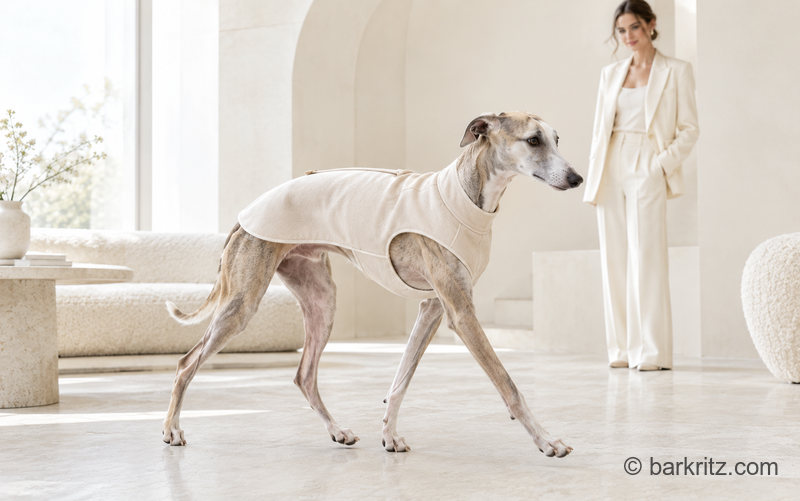
A properly fitted garment sits securely around the chest and neck while allowing the shoulders, forelegs, and head to move naturally through their full range of motion.
The chest is particularly important because it accommodates breathing and expands during activity. A garment that is too tight may press against the rib cage or rub behind the front legs, while an excessively loose design can shift, twist, or catch on surrounding objects. The neckline should remain comfortably positioned without constricting the throat or sliding over the head.
When evaluating a garment, look for these practical indicators:
- Neckline: It should sit comfortably without pressing against the throat or limiting head movement.
- Chest panel: It should cover the intended area without pulling tightly across the rib cage.
- Armholes: They should leave sufficient clearance around the armpits and upper forelegs.
- Shoulder movement: The animal should be able to walk, turn, sit, and lie down without the fabric pulling across the shoulders.
- Fastenings: Snaps, buttons, zippers, and hook-and-loop closures should remain secure without pinching skin or catching fur.
Observe the animal while it walks naturally rather than judging the fit only when it is standing still. A garment may appear immaculate in a static portrait yet become uncomfortable when the pet takes a longer stride or lowers its head.
Pay attention to behavior as well. Repeated attempts to remove the garment, sudden reluctance to walk, persistent scratching, or unusual changes in posture may indicate discomfort. These signs are not definitive on their own, but they warrant removing the garment and checking for pressure points, friction, or restricted movement.
A sophisticated fit should never require the animal to adapt its natural movement to the clothing. The garment should accommodate the animal, not the other way around.
Which fabrics and garment designs provide the best fit for different pets?
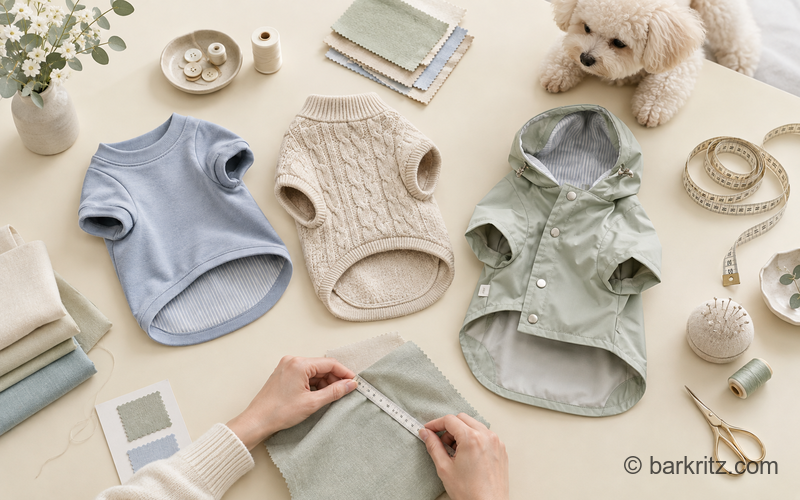
The best fabric and garment design depend on the animal’s body shape, coat, activity level, climate, and tolerance for wearing clothing.
A lightweight cotton jersey may work well for a simple indoor layer, while a smooth-lined raincoat is more appropriate for wet walks. Stretch fabrics can accommodate movement, but stretch alone does not guarantee a good fit: a garment must still have correctly proportioned panels, comfortable openings, and appropriate construction.
Fabric choice influences both appearance and performance. Consider the following distinctions when building a carefully selected pet wardrobe:
- Soft jersey: Flexible and lightweight, making it suitable for simple pullovers and casual indoor layers when the garment is appropriately fitted.
- Fine knitwear: Offers a refined appearance and warmth for pets that tolerate clothing, but should not sag, twist, or catch on claws.
- Water-resistant technical fabric: Useful for outdoor protection in wet conditions, provided the lining, closures, and armholes do not restrict movement.
- Breathable woven cotton: Comfortable for certain lightweight garments in mild conditions, although it offers limited protection from prolonged rain.
- Smooth, low-friction lining: Can reduce rubbing against the coat, particularly in garments worn for extended outdoor periods.
Body shape also matters. A deep-chested dog may require more room through the rib cage without excess fabric around the waist. A long-bodied dog may need additional back coverage, while a broad-shouldered animal may require a cut that accommodates the front legs without pulling.
Cats generally have different clothing needs from dogs and often tolerate garments less readily. Clothing should not be imposed simply for aesthetic reasons. If a cat requires a protective garment for a veterinary reason, follow the veterinarian’s guidance on design, fit, and duration of use.
Avoid materials that become excessively hot, retain moisture against the skin, shed loose decorative components, or contain details that may be chewed or swallowed. Sequins, dangling ribbons, elaborate buttons, and unsecured embellishments can compromise practicality.
The most successful design balances visual refinement with thoughtful construction. A clean silhouette, well-finished seams, and an appropriate fabric weight will usually serve an animal better than unnecessary ornamentation.
How should pet clothing fit different breeds, ages, and body types?
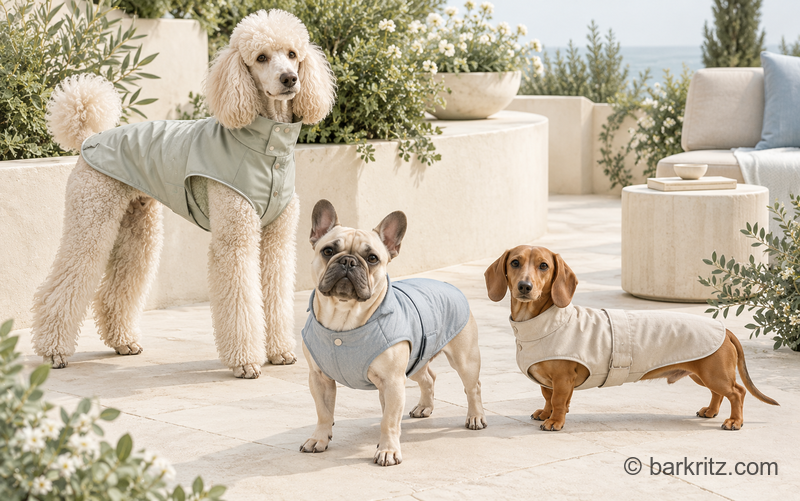
Pet clothing should be selected according to the individual animal’s proportions and physical needs, because breed labels, age categories, and general size classifications cannot account for every variation in body shape.
A garment designed for a compact, broad-chested dog may fit poorly on a similarly weighted dog with a narrow rib cage and longer limbs. Likewise, a long-backed breed may need extra coverage without additional width, while a deep-chested breed may require more room through the front of the garment.
Several common differences deserve particular attention:
- Deep-chested dogs: Need sufficient room around the rib cage and behind the forelegs, with a cut that does not pull across the shoulders.
- Long-bodied dogs: Often benefit from additional back length, provided the garment does not interfere with the tail, hind legs, or toileting.
- Broad or muscular dogs: May require wider chest and shoulder panels rather than simply sizing up the entire garment.
- Small, fine-boned dogs: Need lightweight construction and secure fastenings that do not overwhelm their proportions or restrict movement.
- Senior pets: May benefit from easy-entry designs and uncomplicated closures, especially when stepping into clothing or raising a leg is uncomfortable.
- Growing puppies: Need frequent fit checks because their proportions can change rapidly; clothing should never be purchased with the expectation that they will grow into a restrictive garment.
Coat type and individual tolerance also influence the decision. Some dogs with dense coats may become overheated in unnecessary layers, while certain short-haired or hairless animals may benefit from protection in cold conditions. Age, health, weather, and activity level should all inform the choice.
Breed-specific patterns can be useful starting points, but they should never replace direct measurement and a movement check. A garment that fits one dog perfectly may be unsuitable for another dog of the same breed.
For pets with mobility limitations, skin sensitivities, recent surgery, or other medical concerns, consult a veterinarian before selecting specialized clothing. The right design should support comfort and practical needs without creating new pressure points.
How can you test a pet garment before wearing it outdoors?
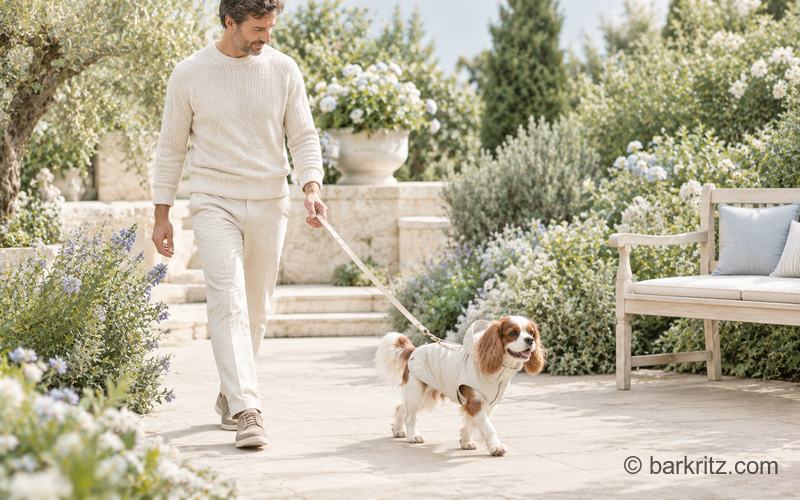
The best way to confirm a garment’s fit is to introduce it gradually in a familiar environment and observe the animal’s breathing, posture, movement, and response before attempting a full outdoor outing.
Begin by allowing the pet to investigate the garment without pressure. Once the animal appears comfortable, put it on gently and check that all fastenings are secure, the fabric lies smoothly, and no skin or fur is trapped. Avoid forcing the head or legs through openings that are too small.
Conduct a short fit assessment:
- Standing: Confirm that the garment rests evenly without pulling, sagging, or rotating.
- Walking: Watch for normal strides, unrestricted shoulder movement, and adequate clearance around the legs.
- Sitting and lying down: Ensure that the fabric does not bunch tightly under the body or press against the neck and chest.
- Turning the head: Check that the neckline does not restrict movement.
- After removal: Inspect the skin and coat for redness, indentation, tangled fur, or signs of friction.
For outdoor clothing, consider the conditions in which the garment will be worn. A raincoat should cover the intended areas without becoming heavy or uncomfortable when damp. A warm layer should provide appropriate insulation without causing overheating during activity.
Fit should be reassessed periodically, particularly after grooming, seasonal coat changes, weight fluctuations, or growth. Wash garments according to their care instructions and inspect seams, fasteners, and decorative components regularly. A once-comfortable garment can become unsuitable if its fabric shrinks, its elastic deteriorates, or its closures begin to fail.
Never leave a pet unattended in clothing that could catch on furniture, crate bars, branches, or other objects. Remove garments if the animal becomes distressed, excessively warm, or reluctant to move, and avoid using clothing that interferes with normal toileting or grooming.
Ultimately, the finest pet wardrobe is defined by precision rather than excess. Correct measurements, suitable fabrics, thoughtful construction, and attentive fit checks create clothing that looks polished while preserving the freedom and comfort every animal deserves.