

Rare Exotic Shorthair Traits and Breed History
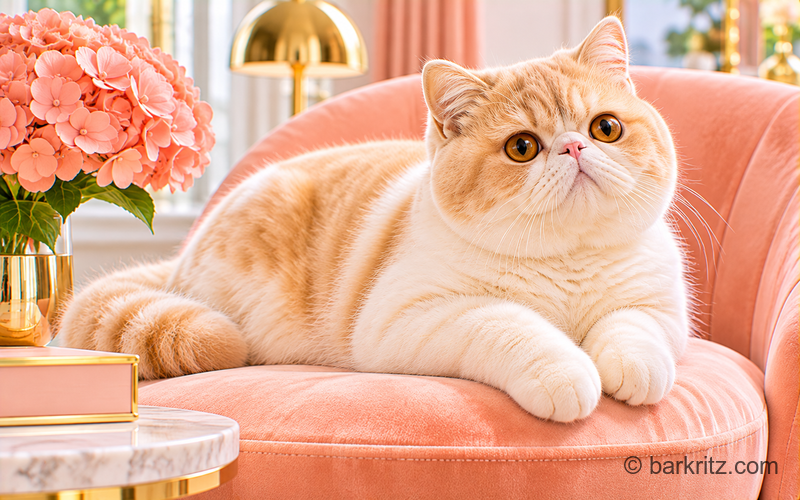
With its round expressive eyes, plush coat, and unmistakably Persian-inspired silhouette, the Exotic Shorthair possesses an appeal that feels both familiar and distinctly individual. Often described as a shorthaired Persian, this remarkable breed combines the aristocratic appearance of its longhaired predecessor with a more practical coat and an engaging, affectionate personality.
Yet the Exotic Shorthair is far more than a Persian with shorter fur. Its development reflects a fascinating chapter in modern feline breeding, while its distinctive physical characteristics, unusual coat texture, and gentle temperament have established its own identity among the world’s most recognizable pedigreed cats. For discerning cat enthusiasts, understanding this breed means appreciating both its carefully cultivated heritage and the details that make each Exotic Shorthair exceptional.
How Did the Exotic Shorthair Originate, and What Is Its Breed History?
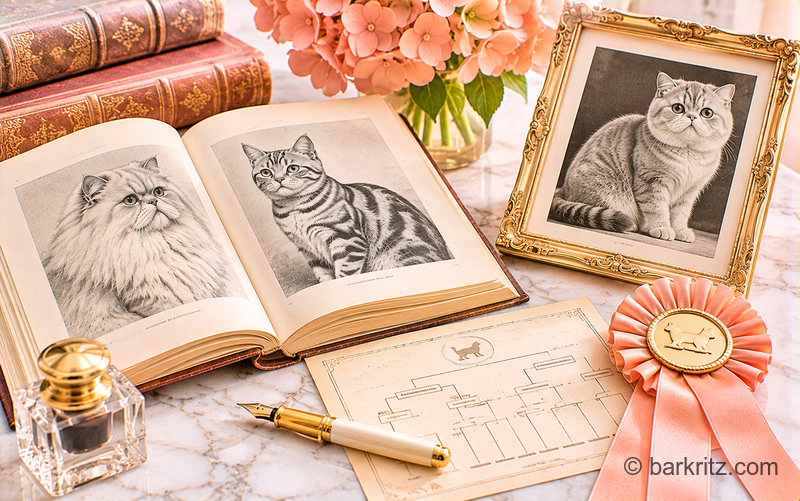
The Exotic Shorthair originated in the United States during the 1950s and 1960s, when breeders began crossing American Shorthairs with Persians to introduce the Persian’s distinctive appearance into a shorthaired cat.
The original objective was to develop a cat with the substantial body, rounded head, expressive eyes, and appealing facial structure associated with the Persian, while retaining a dense, manageable short coat. Other breeds, including the Burmese and British Shorthair, also contributed to early development, although the Persian ultimately became the defining influence.
The resulting cats attracted considerable attention among breeders and feline enthusiasts. The Exotic Shorthair was officially recognized by the Cat Fanciers’ Association (CFA) in 1966, establishing its place as a distinct pedigreed breed. Subsequent breeding programs refined its characteristic appearance and strengthened its Persian heritage.
Several historical details distinguish its development:
- 1950s: Early experimental crosses introduced Persian characteristics into American Shorthair breeding lines.
- 1960s: Dedicated breeding programs established the Exotic Shorthair as a recognizable breed in its own right.
- 1966: CFA recognition marked an important milestone in its formal development.
- Later decades: Selective breeding consolidated its distinctive short plush coat, rounded features, and Persian-type body.
Although the breed began as an experimental variation, it gradually developed its own devoted following. Today, the Exotic Shorthair is appreciated not simply as a shorthaired alternative to the Persian, but as a pedigreed companion with a distinctive history and carefully maintained characteristics.
What Physical Traits Make the Exotic Shorthair So Distinctive?
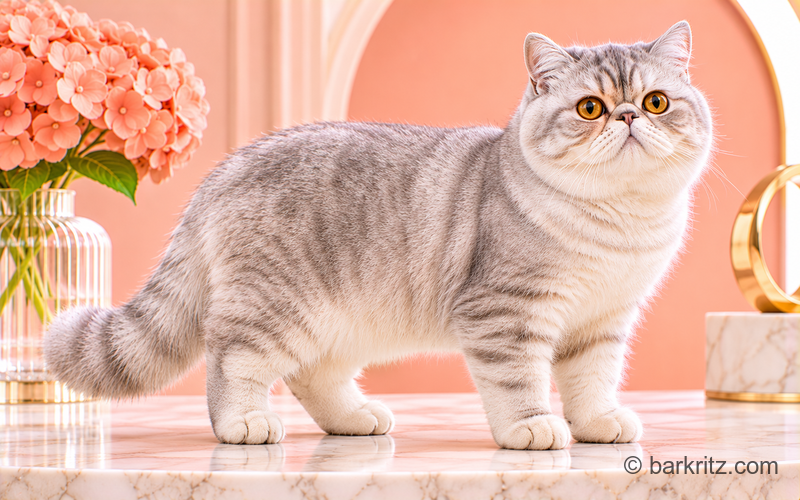
The Exotic Shorthair is distinguished by its compact, muscular body, broad rounded head, short nose, full cheeks, large expressive eyes, and remarkably dense plush coat.
Its silhouette is immediately recognizable: substantial without appearing ungainly, with a broad chest, short strong legs, and a rounded overall outline. The head is particularly characteristic, featuring a broad skull, small rounded ears set relatively low, and a short, wide nose. Its large eyes contribute significantly to its gentle, almost doll-like expression.
One of the breed’s most appealing features is the texture of its coat. Unlike the long, flowing hair of the Persian, the Exotic Shorthair has a dense, resilient coat that stands slightly away from the body, creating a soft, plush appearance. This texture gives the cat an almost teddy-bear-like quality.
Its defining physical characteristics include:
- Head: broad, rounded, and substantial, with full cheeks and a short muzzle.
- Eyes: large, round, and expressive, with color corresponding to the coat variety.
- Body: medium to large, compact, muscular, and supported by short, strong legs.
- Coat: dense, thick, and plush, with a soft texture and noticeable volume.
- Tail: short to medium in length, proportionate to the body, and carried without excessive length.
The breed appears in an extensive range of recognized colors and patterns, including solid, tabby, bicolor, tortoiseshell, silver, golden, and colorpoint varieties. This diversity allows for considerable individual variation while preserving the unmistakable Exotic Shorthair silhouette.
Which Rare and Unusual Coat and Eye Characteristics Can Exotic Shorthairs Display?
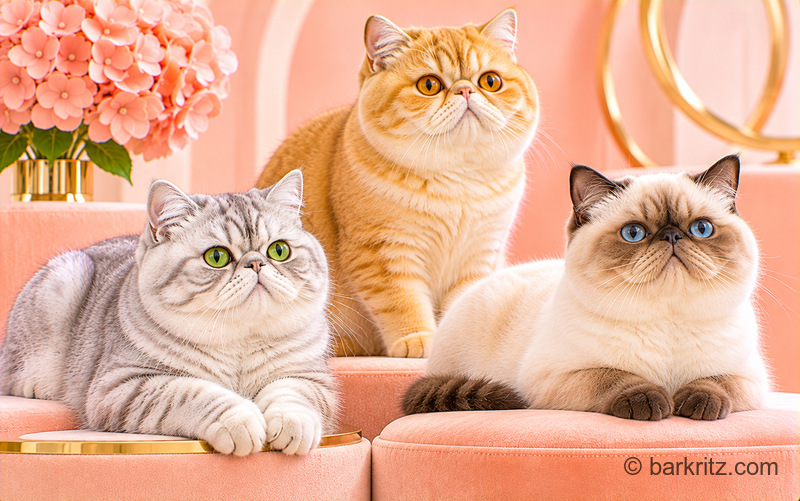
Among the most captivating Exotic Shorthair variations are its unusual combinations of coat color, pattern, and eye pigmentation, which can produce exceptionally distinctive individual appearances.
The breed’s recognized color palette is remarkably extensive, ranging from pure white and deep black to delicate cream, blue, chocolate, lilac, and more intricate patterned varieties. Particularly striking examples include silver tabbies with sharply defined markings, golden-shaded cats with warm luminous coats, and colorpoint individuals with contrasting facial, ear, paw, and tail coloration.
Eye color is another defining element. Depending on the coat variety, Exotic Shorthairs may display brilliant copper, deep orange, green, blue, or other recognized eye colors. The contrast between vivid eyes and a dense, softly colored coat can create an especially memorable appearance.
Among the more distinctive combinations are:
- Silver shaded: a pale, luminous undercoat with darker tipping that creates a delicate metallic effect.
- Golden shaded: a warm golden base with darker shading across the coat, producing exceptional visual depth.
- Blue and cream: a soft combination of diluted gray-blue and pale cream tones, sometimes appearing in tortoiseshell patterns.
- Colorpoint: a lighter body contrasted by darker coloration on the face, ears, legs, and tail.
- Calico and tortoiseshell: intricate combinations of contrasting colors that create individual patterns across the coat.
Some color and pattern combinations are less commonly encountered than others, particularly in specific breeding lines. However, rarity should not be confused with a separate breed variety or an indication of superior quality. A responsible breeder prioritizes health, temperament, and correct conformation rather than unusual coloration alone.
What Is the Exotic Shorthair’s Personality Like, and How Does It Differ From the Persian?
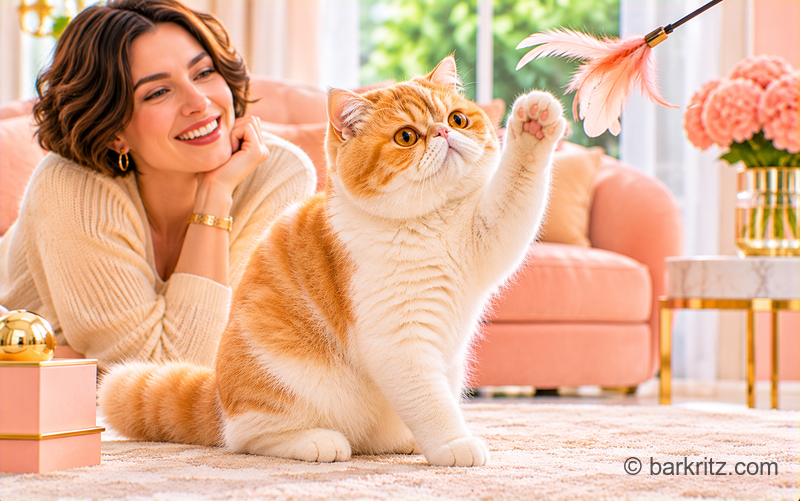
The Exotic Shorthair is generally affectionate, calm, and sociable, combining the Persian’s gentle temperament with a playful curiosity that often remains evident well into adulthood.
These cats tend to enjoy human companionship and frequently establish close relationships with their households. Many appreciate being near their owners, following familiar routines, and settling comfortably beside someone during quiet evenings. They are often affectionate without being excessively demanding, although individual personalities naturally vary.
Compared with the Persian, the Exotic Shorthair is frequently described as somewhat more playful and inquisitive. Its shorter coat also makes everyday grooming considerably less demanding, although regular brushing remains important because the coat is exceptionally dense.
The two breeds share many defining qualities, but several distinctions are worth understanding:
- Persian: long, flowing coat requiring frequent, careful grooming; generally associated with a particularly relaxed disposition.
- Exotic Shorthair: short, plush coat requiring less intensive maintenance; often displays a slightly more playful and curious temperament.
- Both breeds: affectionate, people-oriented companions with similar substantial body types and characteristic facial structures.
Exotic Shorthairs generally adapt well to apartment living, making them appealing companions for sophisticated urban households. They can enjoy interactive play, comfortable resting places, and predictable daily routines. Their relatively moderate activity level does not mean they lack curiosity; appropriately designed play sessions and enrichment remain important to their well-being.
What Health and Grooming Considerations Should Prospective Exotic Shorthair Owners Understand?
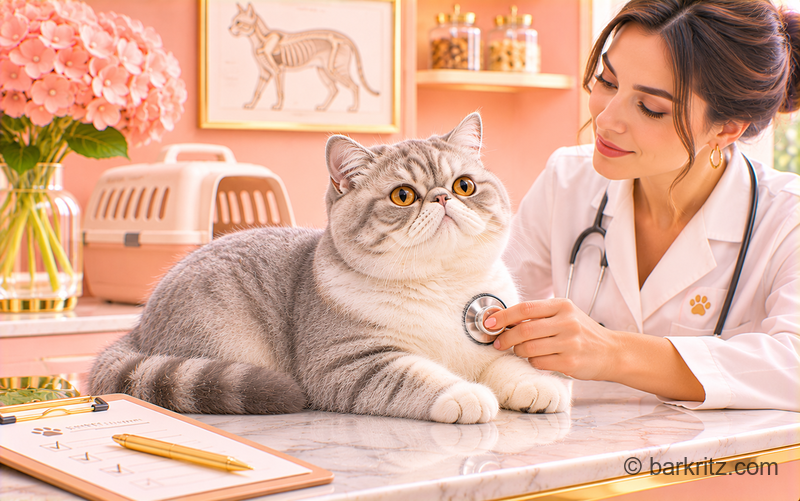
The Exotic Shorthair requires attentive preventive care, particularly because its Persian-derived facial structure can contribute to breathing, dental, and eye-related concerns.
Its short nose and flattened facial profile are among the breed’s most recognizable characteristics, but these features can also be associated with brachycephalic airway problems. Depending on the individual cat’s facial structure, breathing may be noisier or less efficient, particularly during exertion or warm weather. Responsible breeders should prioritize healthy facial proportions and functional breathing rather than exaggerated features.
Other considerations include:
- Eye care: prominent eyes may be prone to excessive tearing, staining, and irritation, making regular observation important.
- Dental health: the shortened jaw structure can contribute to dental crowding and related oral problems.
- Polycystic kidney disease (PKD): an inherited condition associated with Persian ancestry; responsible breeding programs should use appropriate genetic screening.
- Weight management: the breed’s compact build and relatively moderate activity level make balanced nutrition and portion control especially important.
- Coat maintenance: weekly brushing, with more frequent sessions when needed, helps manage loose hair and maintain the dense coat.
Owners should also pay attention to heat tolerance and exercise. Cats with significant brachycephalic features may struggle with strenuous activity or high temperatures, so a comfortable indoor environment is particularly important.
Routine veterinary examinations, dental assessments, appropriate vaccinations, and preventive screening should form part of the cat’s long-term care. When selecting a kitten, prospective owners should ask about the parents’ health, genetic testing, breathing, eye health, and the breeder’s approach to maintaining functional facial structure.
The Exotic Shorthair rewards thoughtful ownership with an appealing combination of expressive beauty, affectionate companionship, and a coat that is considerably easier to maintain than that of its longhaired relative. Its history is a testament to selective breeding, but its enduring appeal rests on something more meaningful: a distinctive personality and a remarkable appearance supported by responsible attention to health.