
Rare Abyssinian Cat Colors and Their Origins
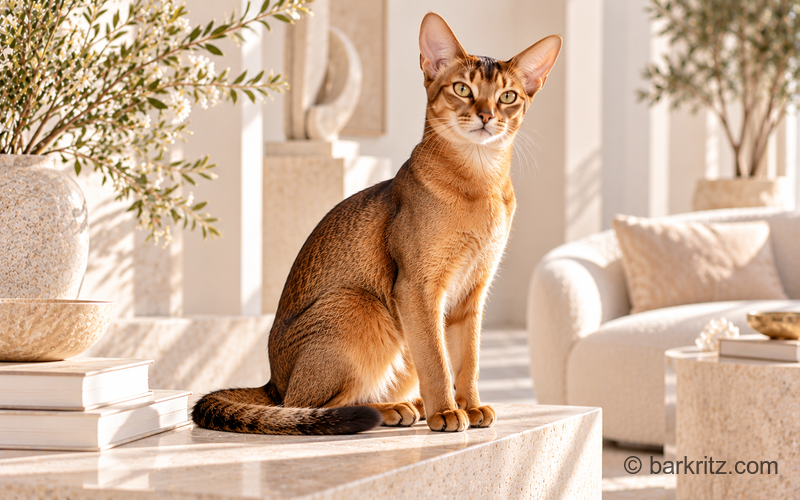
The Abyssinian cat is celebrated for its sculptural elegance, alert expression, and distinctive ticked coat, in which individual hairs display multiple bands of color rather than a conventional striped or solid pattern. While the breed is best known for its warm ruddy coloring, a more nuanced palette reveals a fascinating combination of inherited pigmentation, selective breeding, and historical development. From cool blue-gray coats to delicate fawn tones and less common silver-based varieties, these colors offer a closer look at the genetic artistry behind one of the world’s most recognizable feline breeds.
What makes the rare colors of Abyssinian cats so distinctive?
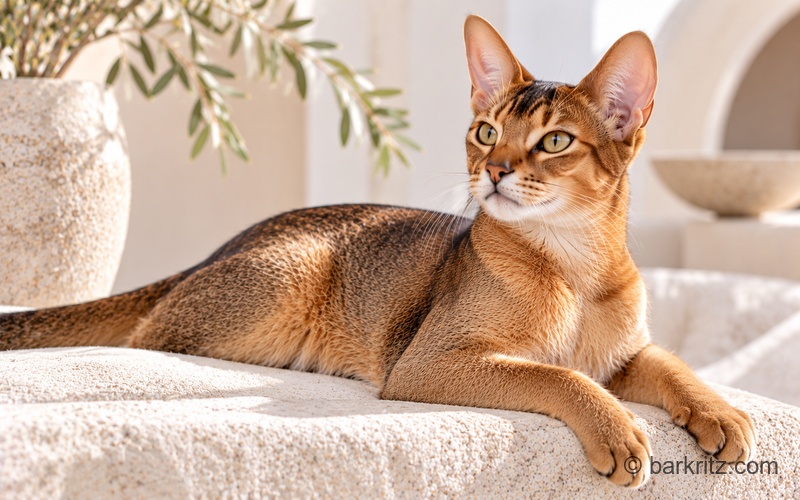
Rare Abyssinian colors stand out because they preserve the breed’s characteristic agouti ticking while introducing subtler combinations of pigment that transform the coat’s overall appearance.
Unlike cats whose fur appears uniformly colored, Abyssinians have individual hairs divided into alternating light and dark bands. This effect, known as ticking, creates a luminous, almost dimensional finish that changes with the angle of the light. The underlying genetic mechanisms influence both the distribution and intensity of pigment, producing coats that range from warm coppery brown to cool slate blue and soft pinkish beige.
The breed’s most widely recognized colors are ruddy, red (often called sorrel in Abyssinians), blue, and fawn. Their relative rarity depends on the registry, breeding population, and geographic market. Some colors are established breed standards, while others are uncommon variations or appear in experimental breeding programs without universal recognition.
Several characteristics make these coats particularly compelling:
- Ticked pigmentation: Each hair carries multiple bands of color, creating depth without the prominent stripes associated with many tabby cats.
- Warm and cool contrasts: The contrast between darker ticking and a lighter ground color gives the coat its distinctive sheen.
- Genetic inheritance: Color depends on combinations of inherited traits, meaning a rare shade may appear unexpectedly when both parents carry the relevant genes.
- Individual variation: Even within one recognized color, the intensity of ticking, warmth, and contrast can differ considerably between cats.
The result is a breed whose visual appeal depends less on dramatic markings than on the subtle interaction of pigment, texture, and light.
How did blue Abyssinian cats develop their distinctive coloring?
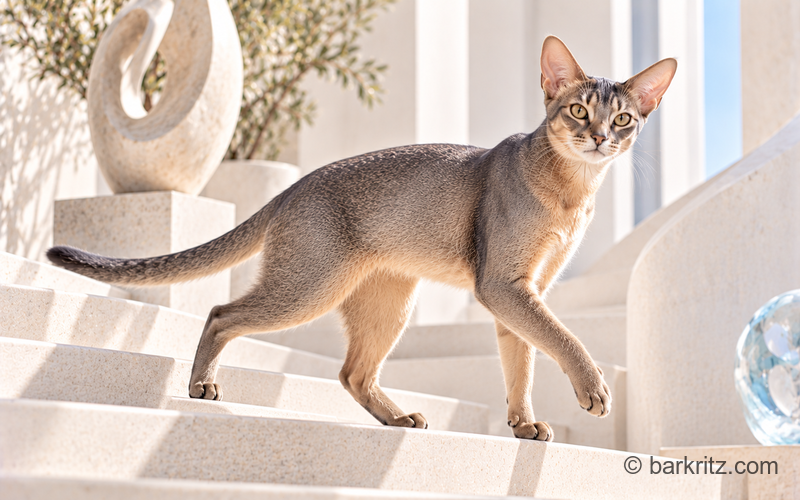
Blue Abyssinians owe their soft, cool-toned appearance to dilution of black-based pigment, which transforms the coat into a sophisticated combination of slate blue-gray and warm beige.
The blue variety is an established color in the breed, although it is generally less immediately recognizable to the public than ruddy. Its appearance results from the action of the recessive dilution gene, which reduces the intensity of eumelanin, the pigment responsible for black and brown tones. When a kitten inherits the dilution variant from both parents, darker pigment is distributed in a lighter, softened form.
In a well-colored blue Abyssinian, the body coat typically combines bluish-gray ticking with a warm, creamy or beige ground color. The effect is neither uniformly gray nor entirely cool: subtle warmth beneath the darker ticking preserves the breed’s characteristic richness.
The development of blue Abyssinians reflects the broader history of selective breeding, in which breeders sought to preserve the breed’s distinctive silhouette and ticked coat while establishing additional recognized colors. The precise origin of the first blue Abyssinians is difficult to assign to a single cat or breeding program, but the genetic mechanism behind their coloring is well understood.
Blue Abyssinians are particularly distinguished by three features:
- Pigment dilution: Black-based pigment appears softer and lighter than in a ruddy cat.
- Balanced contrast: The blue-gray ticking remains visible against the paler body coat.
- Warm undertones: Beige and cream tones prevent the overall appearance from becoming flat or monochromatic.
Although blue is not an experimental color, its relatively understated appearance can make it seem rarer than the familiar ruddy variety. Its appeal lies in the restraint of its palette rather than in an absence of pigment.
Why are fawn Abyssinians admired for their delicate, muted tones?
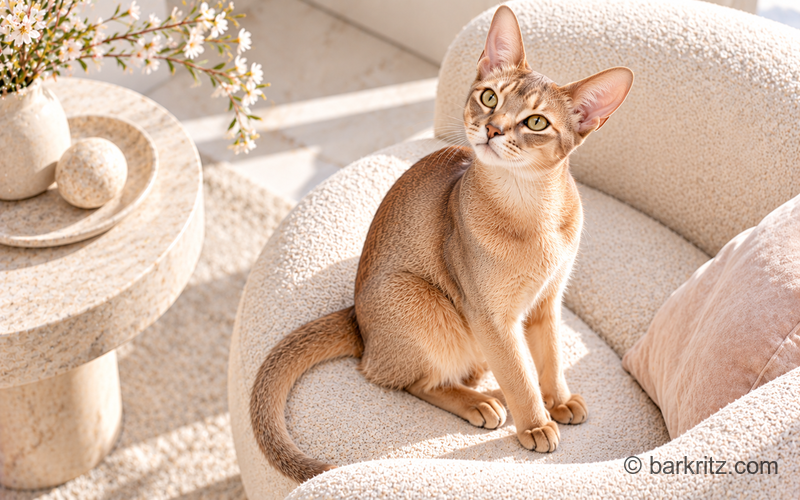
Fawn Abyssinians are admired for their pale beige-pink body color and soft cocoa-toned ticking, produced by combining pigment dilution with the genetic background responsible for red-based coloration.
The fawn variety represents one of the lightest established colors in the breed. Its subtle appearance can be difficult to appreciate in photographs because the contrast between the ticking and the ground color is often gentler than in darker varieties. In natural light, however, a well-developed fawn coat reveals a delicate interplay of warm beige, muted rose, and soft brown.
Fawn coloring is associated with the interaction of the dilution gene and the genetic factors responsible for sorrel or red-based pigmentation. As with other Abyssinian colors, the final appearance depends on multiple inherited traits rather than a single isolated characteristic.
The breed’s established fawn coloration should not be confused with a cream-colored coat or with an unrecognized color variation. A fawn Abyssinian retains the breed’s characteristic ticking, warm undertones, and overall color distribution.
Its defining qualities include:
- Ground color: A pale, warm beige with subtle pinkish undertones.
- Ticking: Soft cocoa or muted brown bands that provide definition without strong contrast.
- Overall impression: A lighter, more restrained palette than ruddy or sorrel, while retaining the Abyssinian’s characteristic depth.
Fawn is a recognized breed color in major cat registries, but its relative availability varies between breeding programs. Prospective owners should evaluate the cat’s health, temperament, pedigree, and breeder practices rather than assuming that a paler coat automatically indicates greater rarity or quality.
Do silver Abyssinian cats exist, and what makes their heritage different?
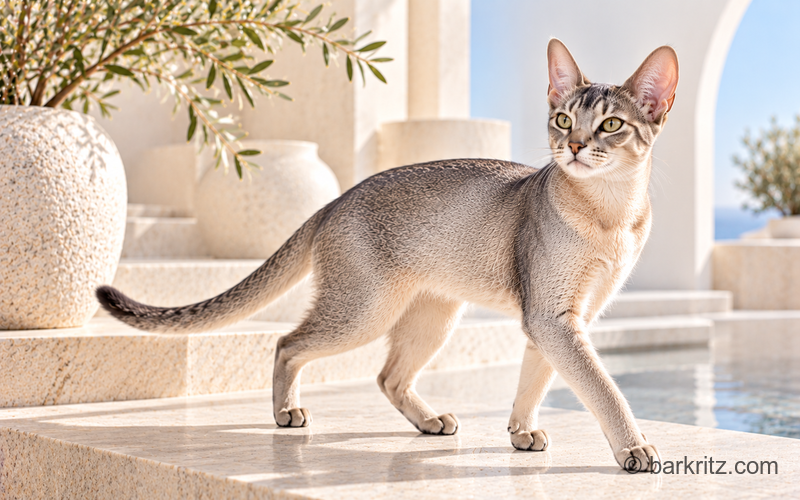
Silver Abyssinians do exist in some breeding lines, but silver is not universally accepted within the major breed standards and should be distinguished from the four widely established traditional colors.
Silver-based coats create a noticeably different visual effect from the warm, apricot or beige ground colors associated with traditional Abyssinians. In silver varieties, the lighter areas of the hair appear cool, pale, or nearly white, while the ticking supplies contrast. Depending on the underlying color, the darker bands may appear black, blue-gray, chocolate-toned, or another shade associated with the particular breeding line.
The genetic background of silver coloration involves pigment-inhibiting factors that affect the appearance of the hair shaft. The resulting coat can look strikingly cool and metallic compared with the warm, earthy palette that has long defined the breed.
However, registry recognition is important. Silver Abyssinians may be found in specialist breeding programs, but acceptance differs among organizations, and not every silver-colored cat is eligible for registration or competition under a particular standard. Buyers should verify the registration policy of the relevant organization rather than relying solely on a seller’s description.
The distinction between traditional and silver-based coloring can be summarized as follows:
- Traditional ruddy: Warm reddish-brown ground color with dark ticking.
- Sorrel: Coppery or cinnamon-red coloring with chocolate-brown ticking.
- Blue: Diluted black-based pigment producing slate blue-gray ticking over a warm pale ground.
- Fawn: Diluted red-based coloring with pale beige-pink tones and soft cocoa ticking.
- Silver-based varieties: A cooler, pale ground color created by additional pigment-related genetic factors; recognition varies by registry.
Silver coloration is an intriguing example of how selective breeding can expand the visual range associated with a familiar feline type. Its status, however, depends on the applicable breed standard, not simply on the rarity of the appearance.
Can rare Abyssinian colors be predicted through genetics and pedigree?
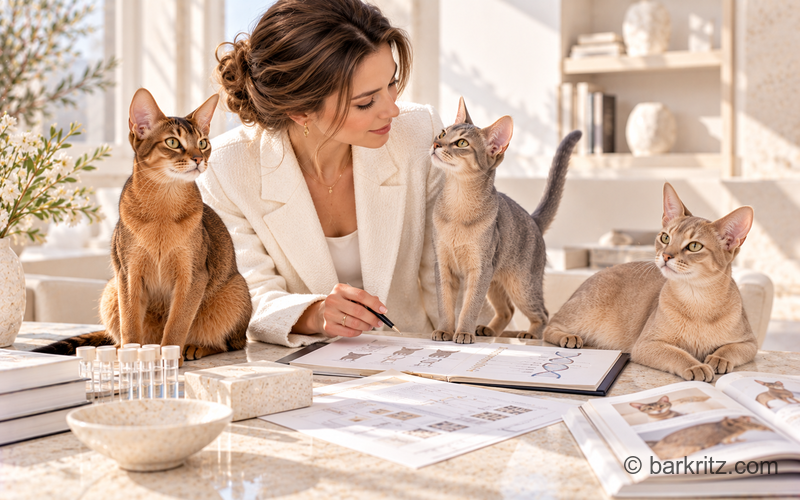
Rare Abyssinian colors can often be anticipated through pedigree analysis and genetic testing, although accurate predictions require understanding how several inherited traits interact.
Color inheritance is not a matter of choosing two visually similar parents and expecting their kittens to resemble them. Recessive traits may be carried by cats whose own coats do not visibly express them, allowing less common colors to appear in later generations. For example, two cats that carry a dilution variant may produce blue or fawn kittens even if neither parent displays that color.
Responsible breeders use pedigree records, knowledge of established inheritance patterns, and, where appropriate, genetic testing to make informed breeding decisions. These tools can help clarify whether a particular color is possible in a litter, but they do not guarantee a specific outcome when multiple genes influence the final coat.
Several principles are especially useful when evaluating a rare-color Abyssinian:
- Recessive inheritance: Certain color traits require a kitten to inherit a relevant variant from both parents.
- Multiple-gene influence: The final coat may depend on interactions among dilution, base color, ticking, and other pigment-related factors.
- Registry requirements: A color may be genetically possible without being accepted under every organization’s Abyssinian standard.
- Health-first breeding: Genetic diversity, appropriate health screening, temperament, and breed type should take priority over producing a particular shade.
- Documentation: A reputable breeder should be able to explain the kitten’s pedigree, registration status, health screening, and the basis for the color designation.
The most responsible approach is to regard color as one element of a cat’s individual identity rather than as the principal measure of its value. A rare shade may be visually captivating, but it does not inherently indicate superior health, temperament, or conformation.
Ultimately, the Abyssinian’s enduring appeal rests on the harmony of its physical characteristics: an athletic body, large attentive ears, expressive almond-shaped eyes, and a coat whose individual hairs create remarkable depth. Whether rendered in familiar ruddy tones, cool blue-gray, delicate fawn, or a less widely recognized silver-based variation, the breed demonstrates how inherited pigmentation can produce a remarkable range of natural beauty.