

Rare LaPerm Cat Traits and Unique Curly Coats
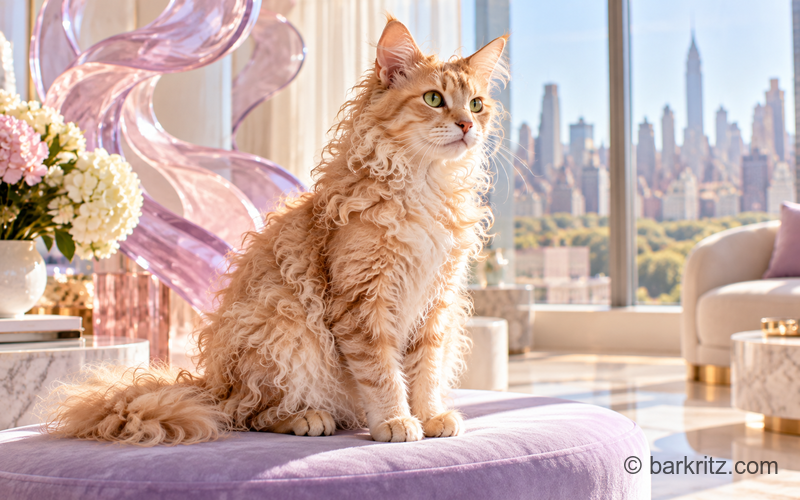
With their distinctive curls, expressive eyes, and softly tousled appearance, LaPerm cats possess one of the most unusual coats in the feline world. Their fur may form delicate waves, loose ringlets, or springy curls that give each cat an individual silhouette, while their affectionate and inquisitive personalities make them appealing companions beyond their striking appearance. Although the breed remains relatively uncommon, its natural texture and charming individuality have earned it a devoted following among cat enthusiasts.
The LaPerm’s appeal lies in the combination of a naturally occurring coat mutation, an engaging temperament, and considerable variation in appearance. Understanding the breed’s defining characteristics helps prospective owners distinguish genuine LaPerm traits from superficial similarities and appreciate the care required to maintain a healthy, comfortable coat.
What Makes the LaPerm Cat’s Curly Coat So Distinctive?
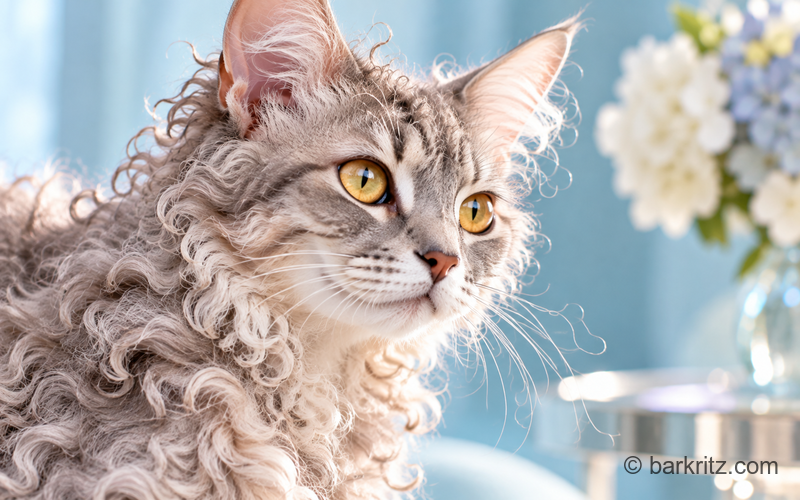
The LaPerm’s signature coat results from a naturally occurring genetic mutation that changes the structure and appearance of its hair, producing anything from gentle waves to well-defined curls. Unlike breeds whose distinctive coats are primarily associated with hairlessness or a dense undercoat, the LaPerm is recognised for its textured fur, which can feel light, soft, or slightly springy depending on the individual cat.
The curls are not necessarily uniform across the body. Some LaPerms have tighter ringlets around the neck and behind the ears, while their backs and sides may display looser waves. The coat can also change with age, hormonal influences, and seasonal shedding, so a kitten’s texture may not predict its adult appearance precisely.
Several features help define the LaPerm coat:
- Texture: Fur may be wavy, loosely curled, or formed into more pronounced ringlets.
- Length: Both shorthaired and longhaired LaPerms occur, with differences in the length and flow of their curls.
- Undercoat: The coat may have relatively little undercoat, giving it an airy appearance, although texture varies between cats.
- Whiskers: Curled or wavy whiskers can complement the breed’s characteristic appearance.
- Colour and pattern: LaPerms occur in a wide range of recognised colours and patterns rather than one signature shade.
The curls are a defining feature, but they should not be treated as a stand-alone measure of breed authenticity. Coat texture varies naturally, and a LaPerm may have a relatively relaxed wave rather than dramatic ringlets. Responsible identification considers pedigree documentation and recognised breed characteristics alongside appearance.
Owners should also understand that curly fur does not automatically mean a LaPerm is hypoallergenic. Allergens associated with cats are primarily produced through saliva, skin secretions, and other biological sources, not simply the visible length or texture of the hair.
How Did the LaPerm Breed Develop, and Why Is Its Genetic History Significant?
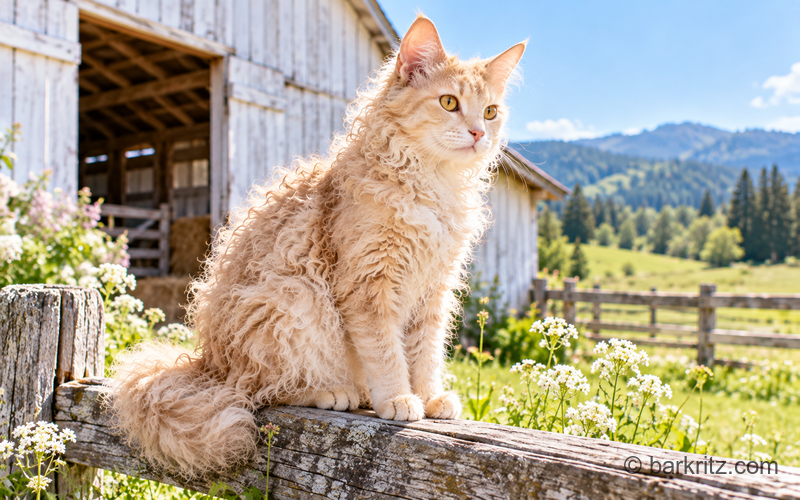
The LaPerm originated in the United States after a naturally curly-coated kitten was born in a barn in Oregon in 1982, eventually leading to the development of a recognised pedigree breed. Its history is notable because the defining coat emerged spontaneously rather than being created initially through a planned cross between established breeds.
The founding cat, named Curly, was born to an ordinary farm cat owned by Linda and Richard Koehl. As the curly-coated cats attracted attention, selective breeding helped establish the distinctive appearance and temperament associated with the LaPerm. The breed’s name reflects the impression of a permanent wave, an apt reference to its unusual coat.
The breed’s development illustrates several important distinctions:
- Natural mutation: The original curly coat arose spontaneously, rather than being deliberately engineered.
- Selective breeding: Breeders worked to establish consistent traits while maintaining healthy cats.
- Genetic inheritance: Curly coats are associated with a heritable mutation, but the appearance and degree of curl can vary.
- Breed recognition: LaPerms gained recognition through organised cat-breeding associations, with registration and standards differing by organisation.
- Pedigree verification: Documented ancestry is more reliable for confirming breed status than coat appearance alone.
The genetic history matters to prospective owners because a curly coat by itself does not establish that a cat is a purebred LaPerm. Other cats may develop unusual hair textures through different genetic backgrounds, while mixed-breed cats can also have wavy fur. Reputable breeders should be able to provide registration or pedigree records and explain the health considerations relevant to their breeding lines.
A responsible breeding programme places health, temperament, and genetic diversity alongside coat characteristics. Buyers should be wary of anyone who promises that every kitten will develop identical curls or suggests that a particularly dramatic coat is proof of superior quality.
Which Personality Traits Make LaPerm Cats Distinctive Companions?
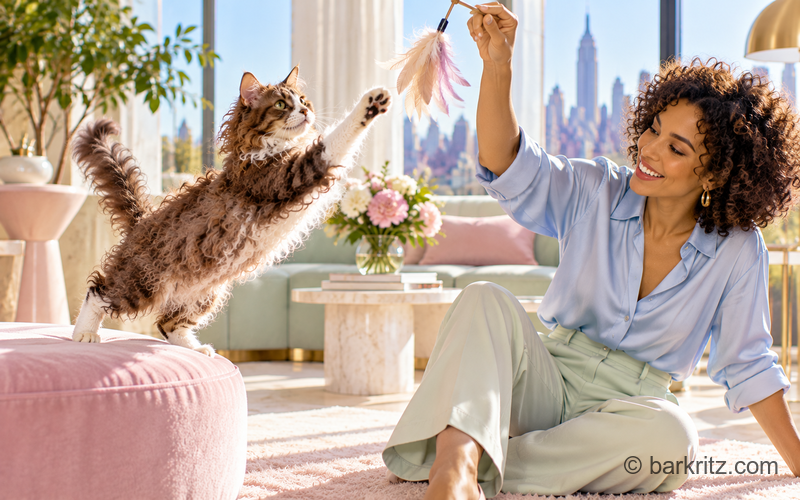
LaPerm cats are commonly described as affectionate, curious, and people-oriented companions that enjoy participating in household routines while retaining an independent feline character. Individual temperaments differ, but the breed is often valued for its sociability and willingness to engage with its human family.
Many LaPerms enjoy following their owners from room to room, investigating new objects, and watching household activity from an elevated perch. Some seek physical affection and settle beside their favourite people, while others prefer to remain close without being held for long periods. Their curiosity can make interactive play particularly rewarding.
Commonly appreciated traits include:
- Social engagement: Many LaPerms enjoy companionship and may actively seek interaction with familiar people.
- Curiosity: Their investigative nature can make puzzle feeders, climbing structures, and rotating toys useful sources of enrichment.
- Playfulness: Interactive games help provide exercise and mental stimulation throughout adulthood.
- Adaptability: With gradual introductions and appropriate spaces, many can adjust well to changes in household routines.
- Communication: Some individuals use vocalisations or physical gestures to request attention, although sociability and vocal habits vary.
The breed can suit households seeking an interactive companion, provided the cat’s individual needs are respected. A LaPerm should have access to secure climbing areas, scratching surfaces, hiding places, and quiet spaces where it can retreat without interruption. Even a highly sociable cat needs opportunities to rest independently.
Introductions to children or other pets should be gradual and supervised. Compatibility depends on the behaviour of every animal involved, not simply on breed reputation. Prospective owners should ask breeders about the kitten’s observed temperament, early socialisation, and response to everyday household sounds and handling.
How Should You Groom a LaPerm’s Curly Coat Without Losing Its Natural Texture?
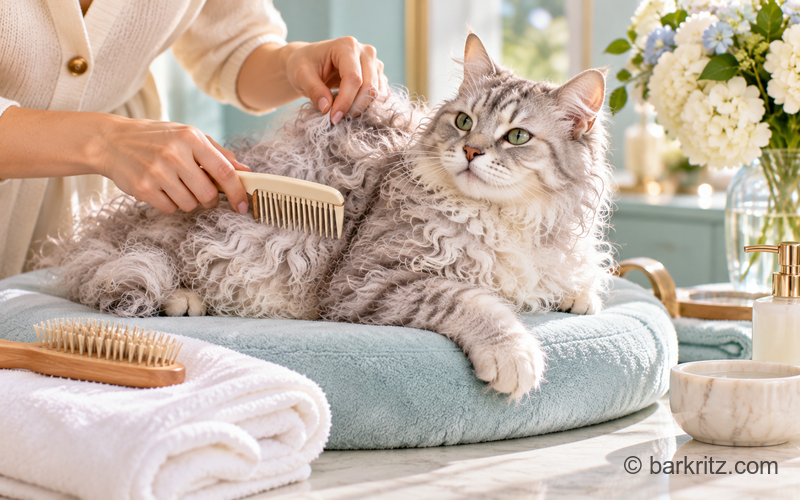
A LaPerm’s coat generally benefits from gentle, individualised grooming that removes loose hair and prevents tangles without unnecessarily disrupting its natural curl pattern. The ideal routine depends on whether the cat has a short or long coat, how densely its curls form, and how much shedding occurs.
Unlike a coat that needs frequent intensive brushing to remain sleek, LaPerm fur may look its best when handled lightly. Excessive brushing can separate the curls and create temporary frizz, while insufficient grooming can allow loose hair or small tangles to accumulate, particularly in longer coats.
A practical grooming routine includes:
- Gentle combing: Use a suitable wide-toothed comb or soft grooming tool when needed, working carefully through areas prone to tangling.
- Regular coat checks: Inspect behind the ears, around the collar area, beneath the legs, and along the underside.
- Bathing only when appropriate: Most cats do not need frequent baths; if one is necessary, use a cat-safe product and follow veterinary advice for skin concerns.
- Careful drying: Avoid aggressive rubbing, which can disturb the coat and create tangles.
- Routine nail and ear care: Check claws and ears regularly, addressing dirt or discomfort with appropriate cat-safe methods.
- Skin monitoring: Watch for redness, persistent scratching, bald patches, or changes in coat quality.
Longhaired LaPerms may need more frequent attention than shorthaired individuals, but grooming frequency should be guided by the actual condition of the coat rather than a rigid schedule. If tangles become tight or the skin appears irritated, seek advice from a veterinarian or an experienced feline groomer instead of cutting close to the skin.
Nutrition and general health also influence coat quality. A complete, balanced diet appropriate for the cat’s life stage supports normal skin and hair growth, while persistent changes in texture, excessive shedding, or patchy hair loss warrant veterinary assessment. Supplements should not be added routinely without a clear reason and professional guidance.
The aim is not to sculpt the curls into a particular shape. A healthy LaPerm coat should retain its natural texture, with grooming focused on comfort, cleanliness, and skin health.
How Can You Identify a Genuine LaPerm Cat and Choose a Responsible Breeder?
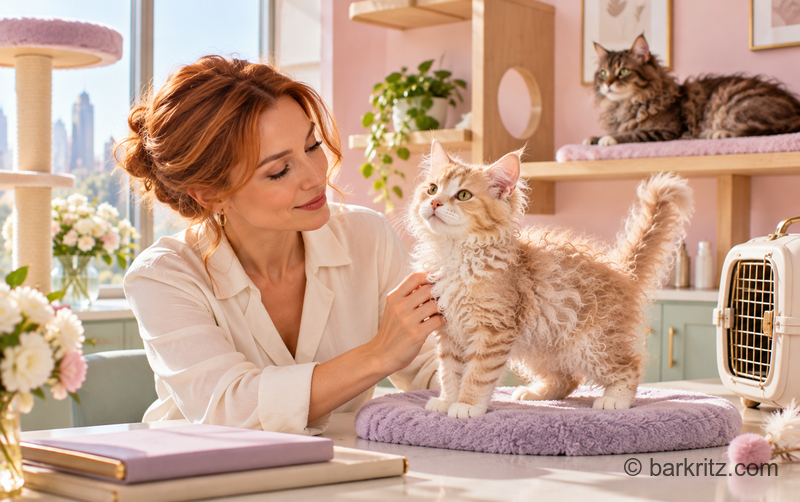
The most reliable way to identify a genuine purebred LaPerm is to verify its pedigree or registration documentation through a recognised cat-breeding organisation and assess the breeder’s commitment to health and welfare. A curly coat is an important clue, but it cannot establish purebred status on its own.
A reputable breeder should welcome questions about the kitten’s ancestry, early development, veterinary care, and the health of its parents. They should also be willing to explain the breed’s characteristic coat variation rather than guaranteeing an exaggerated curl pattern.
Before choosing a kitten, look for the following:
- Pedigree records: Request documentation showing the kitten’s lineage and applicable registration details.
- Health information: Ask what veterinary examinations, vaccinations, parasite treatments, and age-appropriate screening have been completed.
- Transparent breeding practices: The breeder should explain how breeding cats are selected and what is known about health concerns in the lines.
- Healthy living conditions: Kittens should be raised in clean, stimulating surroundings with opportunities for safe socialisation.
- Natural coat variation: A responsible breeder will explain that curl density, length, and maturity can differ between littermates.
- Ongoing support: Look for a breeder who provides feeding and care guidance and remains available for reasonable questions after adoption.
Be cautious if a seller refuses to provide documentation, offers little information about the parents, pressures you to pay immediately, or markets the kitten’s curls as proof of exceptional health. Coat appearance cannot guarantee overall wellbeing, and no single visual characteristic can replace a proper veterinary examination.
It is also worth meeting the kitten, where possible, and observing its behaviour, mobility, coat condition, eyes, ears, and general alertness. A veterinarian should examine a newly acquired cat and help establish a preventive-care plan appropriate to its age and history.
The LaPerm’s appeal is rooted in more than its unusual appearance. Its naturally textured coat, engaging personality, and distinctive American origin make it a memorable member of the feline world. For owners drawn to its curls, the most rewarding choice is a healthy, well-socialised cat whose individual character is valued as much as its striking looks.