

Rare Wildcat Hybrids and What Owners Should Know
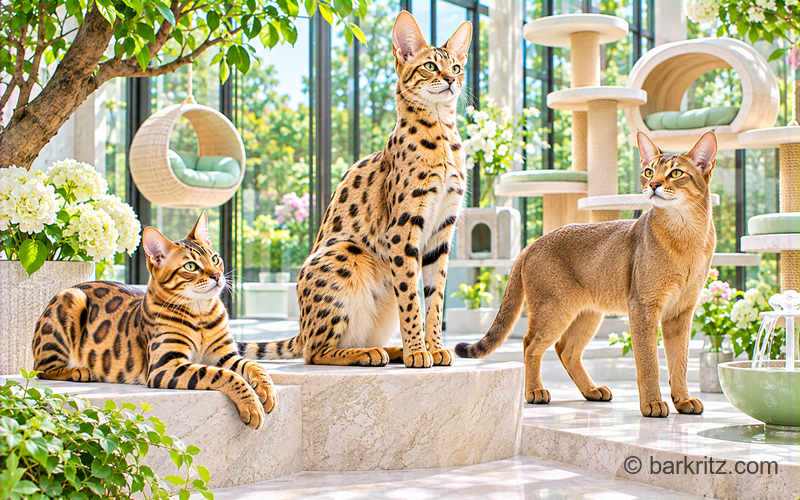
Few domestic cats attract as much attention as wildcat hybrids. Combining the striking appearance of wild felines with varying degrees of domestic ancestry, these unusual animals occupy a fascinating position between the familiar household companion and the untamed world. Their distinctive coats, athletic physiques, oversized ears, and unusual proportions have made certain hybrids highly sought after among specialist cat enthusiasts.
Yet their extraordinary appearance comes with responsibilities that extend far beyond conventional feline ownership. Wildcat hybrids can inherit complex behavioral traits, demanding exercise requirements, specialized nutritional needs, and particular challenges involving socialization and veterinary care. Their suitability for domestic life also varies considerably according to their ancestry and generation.
Understanding the differences between these cats is essential before considering ownership. A responsible decision requires looking beyond rarity and appearance to examine temperament, welfare, breeding practices, legal restrictions, and the long-term commitment involved in caring for an animal with wild ancestry.
Which Rare Wildcat Hybrids Are Most Recognized Among Specialist Cat Enthusiasts?
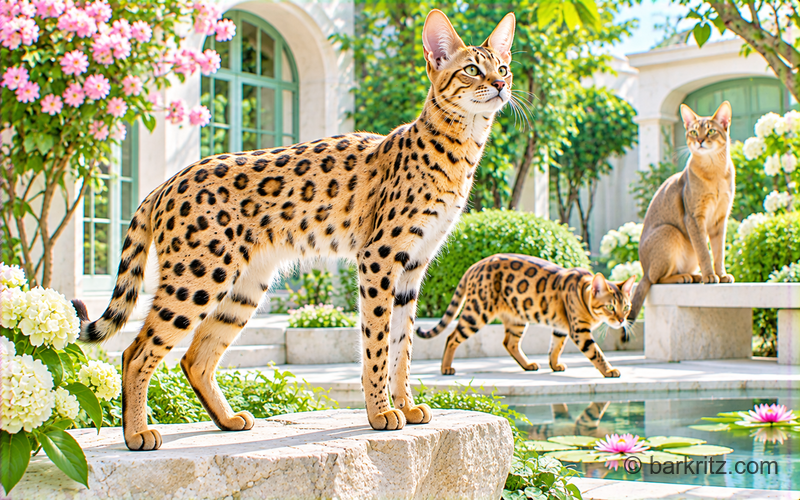
The best-known wildcat hybrids include the Savannah, Bengal, and Chausie, while less common crosses such as the Safari and Caracat remain particularly specialized and controversial.
Each hybrid has a different wild ancestor, appearance, breeding history, and behavioral profile. Their classification as domestic cats, hybrid animals, or restricted exotic species can also vary according to generation and local regulations.
Among the most recognized examples are:
- Savannah: developed from the domestic cat and the African serval, recognized for its tall, slender body, long legs, large ears, and spotted coat.
- Bengal: descended from crosses involving domestic cats and the Asian leopard cat, admired for its distinctive rosettes, muscular physique, and athletic character.
- Chausie: developed from domestic cats and the jungle cat, typically displaying long legs, a lean frame, and a particularly active temperament.
- Safari: a rare hybrid involving the Geoffroy’s cat, a small South American wild feline, and domestic ancestry; breeding populations remain limited.
- Caracat: an uncommon cross involving a caracal and a domestic cat, known for its dramatic ear tufts and distinctive facial features.
These animals differ substantially in their degree of domestication and the predictability of their behavior. The Bengal has an established domestic breeding population, while early-generation Savannahs and highly unusual crosses may retain more pronounced wild characteristics.
Rarity should never be confused with suitability. A less common hybrid is not necessarily more affectionate, healthier, or easier to maintain than an established domestic breed. Prospective owners should investigate the animal’s actual ancestry, generation, health history, and breeding background rather than relying on a marketing description.
How Do Savannah, Bengal, and Chausie Cats Differ in Appearance and Temperament?
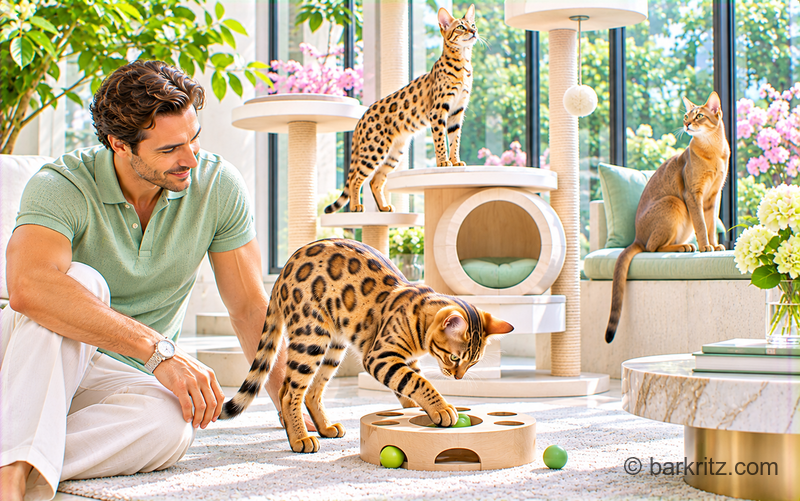
Savannah, Bengal, and Chausie cats differ most noticeably in their physical structure, activity patterns, social behavior, and degree of inherited wild characteristics.
Although all three can display an athletic appearance, their temperaments are not interchangeable. Individual personality depends on genetics, generation, early socialization, breeding quality, and the environment in which the cat is raised.
The Savannah is particularly recognizable for its long legs, large upright ears, elongated neck, and spotted coat. Its appearance reflects its serval ancestry, although physical characteristics vary considerably between generations. Savannahs are often described as curious, energetic, and highly interactive. Some enjoy retrieving toys, exploring elevated spaces, and participating in activities with their owners.
The Bengal has a more compact, muscular appearance, with a beautifully patterned coat that can display rosettes, spots, or marbling. Its Asian leopard cat ancestry contributes to its distinctive visual identity. Bengals are generally active, intelligent, and inquisitive, often enjoying climbing structures, interactive toys, and opportunities to investigate their surroundings.
The Chausie has a lean, athletic body, long limbs, and a relatively refined facial structure. Its jungle cat ancestry is reflected in its physical proportions. Chausies are frequently described as energetic and adventurous, making environmental enrichment particularly important.
Their principal distinctions can be summarized as follows:
- Savannah: tall, elegant proportions; large ears; strong curiosity; considerable need for activity.
- Bengal: muscular build; striking spotted or marbled coat; intelligence; enthusiasm for interactive play.
- Chausie: long-legged athletic frame; refined appearance; exploratory behavior; demanding enrichment requirements.
Early-generation hybrids generally require more careful consideration than later-generation animals. A first-generation Savannah, for example, has a serval parent, whereas a later-generation Savannah has progressively more domestic ancestry. This distinction can influence size, behavior, and the practical demands of ownership, although individual outcomes are never guaranteed.
A sophisticated appearance should not be mistaken for a predictable domestic temperament. Even well-socialized hybrids may retain strong hunting instincts, exceptional jumping ability, territorial tendencies, or sensitivity to unfamiliar environments.
What Does F1, F2, and F3 Mean When Choosing a Wildcat Hybrid?
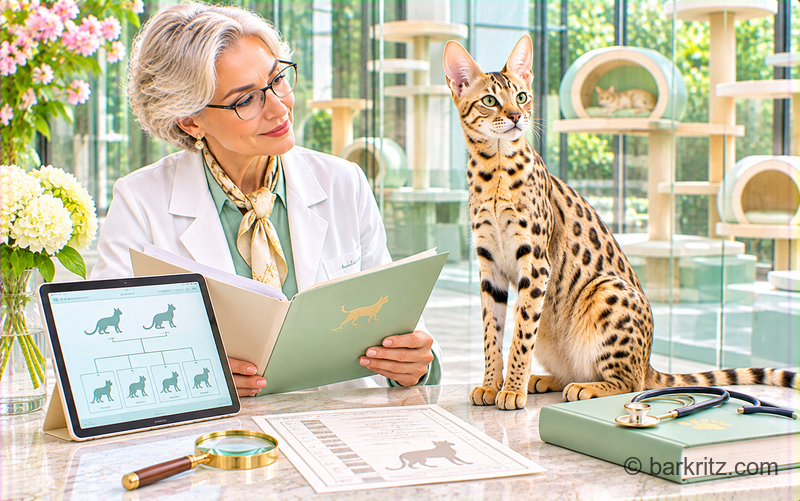
Generation labels indicate how many breeding steps separate a hybrid from its wild ancestor, providing an important indication of ancestry but not a guarantee of temperament or domestic suitability.
In many hybrid breeding programs, the letter F stands for filial generation. The number describes the generation following the original cross between a wild feline and a domestic cat.
The basic distinctions are:
- F1: the first-generation offspring of a wild feline and a domestic cat, with one wild parent.
- F2: offspring of an F1 hybrid and a domestic or later-generation hybrid, depending on the breeding program.
- F3: offspring several breeding steps removed from the original wild ancestor.
- Later generations: generally have more distant wild ancestry, although the precise pedigree must be examined.
Generation terminology is particularly familiar in Savannah breeding, where it is often used to describe the distance from the original serval cross. However, generation labels do not establish a universal behavioral profile across all hybrid types.
An F1 Savannah may retain pronounced physical and behavioral characteristics associated with the serval, while later generations are generally more closely aligned with domestic feline traits. Nevertheless, an individual cat’s temperament cannot be predicted by generation alone.
Another important distinction is the difference between generation and percentage of wild ancestry. Breeding records, parental pedigrees, and the specific mating history are necessary to understand an animal’s background accurately.
Prospective owners should request:
- Complete pedigree documentation identifying both parents.
- The precise generation designation and an explanation of how it was established.
- Veterinary records, vaccination history, and genetic health information where available.
- Evidence of appropriate early socialization and responsible breeding conditions.
- Written confirmation of the animal’s legal classification in the intended place of residence.
A reputable breeder should be willing to explain these details without presenting an early-generation hybrid as an ordinary domestic pet. The more distant the wild ancestry, the more appropriate domestic life may become, but responsible ownership still depends on the individual animal and its needs.
What Special Care, Nutrition, and Veterinary Attention Do Wildcat Hybrids Require?
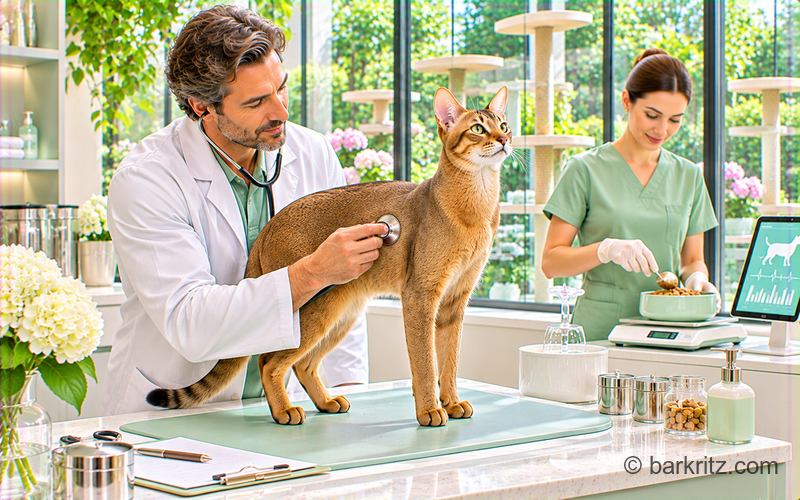
Wildcat hybrids require individualized care that accounts for their physical abilities, behavioral instincts, nutritional needs, and any health considerations associated with their particular ancestry.
Their athletic bodies and active temperaments make environmental enrichment especially important. A conventional apartment arranged for a sedentary domestic cat may not provide sufficient opportunities for a highly energetic hybrid.
A carefully designed living environment should include:
- Vertical space: sturdy climbing structures, elevated platforms, and secure shelves appropriate for the animal’s size and jumping ability.
- Interactive enrichment: puzzle feeders, supervised play, scent-based activities, and toys that encourage natural hunting behaviors.
- Secure boundaries: reinforced windows, secure doors, and appropriately designed outdoor enclosures where permitted.
- Private resting areas: quiet retreats where the animal can withdraw from visitors, household activity, and other pets.
- Consistent routines: predictable feeding, play, grooming, and veterinary-care schedules.
Nutrition deserves equally careful attention. Wildcat ancestry does not automatically mean that an animal needs a raw-meat diet or should be fed like a wild predator. A complete, nutritionally balanced feline diet should be selected with a veterinarian familiar with the relevant hybrid type. Any specialized dietary requirements should be based on the animal’s age, health, body condition, and documented nutritional needs.
Raw feeding carries potential risks, including bacterial contamination and nutritional imbalance, and should never be adopted simply because a cat has wild ancestry.
Veterinary care can present additional challenges. Not every clinic has experience with early-generation hybrids, and some animals may be more difficult to handle during examinations. Owners should establish a relationship with a veterinarian experienced in exotic or hybrid felines before acquiring the animal.
Routine preventive care should include:
- Regular physical examinations and body-condition assessments.
- Appropriate vaccinations and parasite prevention.
- Dental evaluations and routine oral care.
- Monitoring of appetite, digestion, mobility, and behavior.
- Individualized screening based on breed ancestry and family health history.
The breeder’s health claims should also be examined carefully. No hybrid should be assumed to be healthier simply because it has wild ancestry. Genetic diversity, responsible selection, parental health, and veterinary oversight are far more meaningful indicators of breeding quality.
Are Rare Wildcat Hybrids Legal and Suitable as Household Companions?
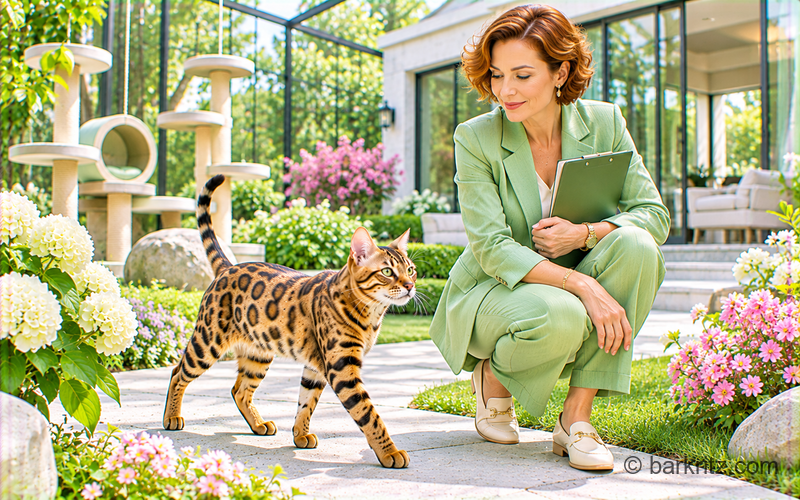
Rare wildcat hybrids are suitable household companions only when their legal status, behavioral requirements, welfare needs, and long-term care commitments are compatible with the owner’s circumstances.
Legal restrictions can differ significantly between countries, states, and municipalities. Some jurisdictions distinguish between early and later generations, while others regulate hybrids according to their wild ancestry or classify particular crosses as exotic animals. Importation, breeding, sale, transport, and private ownership may each be subject to separate requirements.
Before acquiring a hybrid, prospective owners should establish:
- Whether the specific species or hybrid generation may legally be kept as a pet.
- Whether ownership requires a permit, registration, inspection, or specialist enclosure.
- Whether local animal-welfare regulations impose additional obligations.
- Whether international transport or importation is restricted.
- Whether the animal can legally be transferred or rehomed if circumstances change.
Legal permission alone does not establish that an animal is suitable for domestic life. Some early-generation hybrids have demanding territorial and behavioral needs that make ordinary household environments inappropriate. Their strength, agility, hunting instincts, and potential difficulty with unfamiliar people or animals can create challenges that inexperienced owners may underestimate.
Ethical breeding is another important consideration. The production of unusual hybrids can involve complex reproductive challenges, differences in gestation periods, and potential welfare concerns for both wild and domestic parent animals. Buyers should avoid breeders who prioritize rare appearance or generation labels over health, temperament, and responsible animal care.
It is also worth considering the long-term commitment. A hybrid cat may live for well over a decade, and its needs can change as it matures. Owners must be prepared for appropriate housing, specialist veterinary care, enrichment, and potentially substantial ongoing expenses.
For many enthusiasts, a later-generation, well-socialized Bengal or Savannah from a responsible breeding program may offer a more practical introduction to hybrid feline ownership than an early-generation cross. Even then, careful research and a realistic assessment of the animal’s requirements are essential.
Rare wildcat hybrids represent an extraordinary intersection of feline appearance, breeding history, and behavioral complexity. Their appeal lies in much more than distinctive coats or impressive physical features. The most responsible form of ownership begins with respect for the animal’s ancestry and recognition that its welfare must always take precedence over exclusivity. A truly exceptional companion is not simply rare; it is an animal whose needs can be met with knowledge, commitment, and thoughtful care.