

Dental Chews and Toys for Dogs
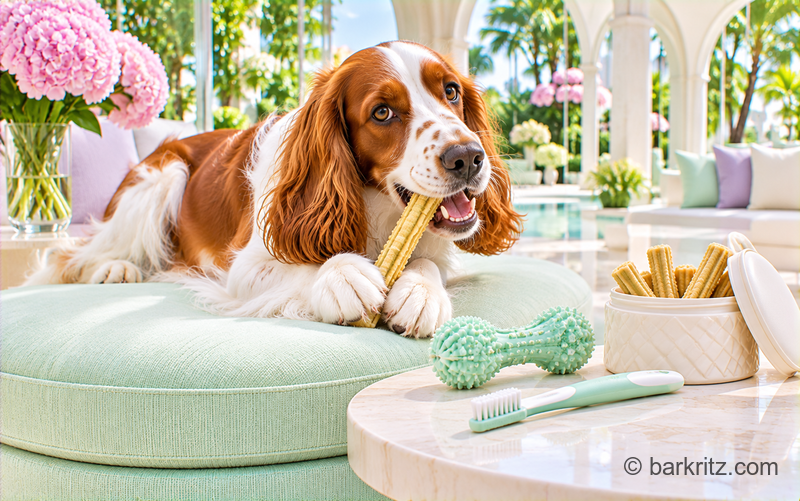
A healthy smile is an essential part of a dog’s overall well-being, yet dental care is often overlooked until unpleasant breath, visible tartar, or discomfort becomes difficult to ignore. Just as carefully selected nutrition and regular grooming contribute to a polished lifestyle, thoughtful oral hygiene deserves a permanent place in every dog’s wellness routine.
Dental chews and toys can make daily care more engaging by encouraging chewing, stimulating saliva production, and helping reduce certain forms of plaque accumulation. The right products may support cleaner teeth and healthier gums, but not every chew or fashionable accessory delivers meaningful dental benefits. Material, texture, size, durability, and a dog’s individual chewing habits all matter.
For discerning owners, the objective is to find products that combine safety, quality, and genuine functionality. Understanding how dental chews work, which toys are appropriate, and when professional care is necessary can help protect a dog’s smile well beyond the grooming salon.
How Do Dental Chews Help Keep a Dog’s Teeth Clean?
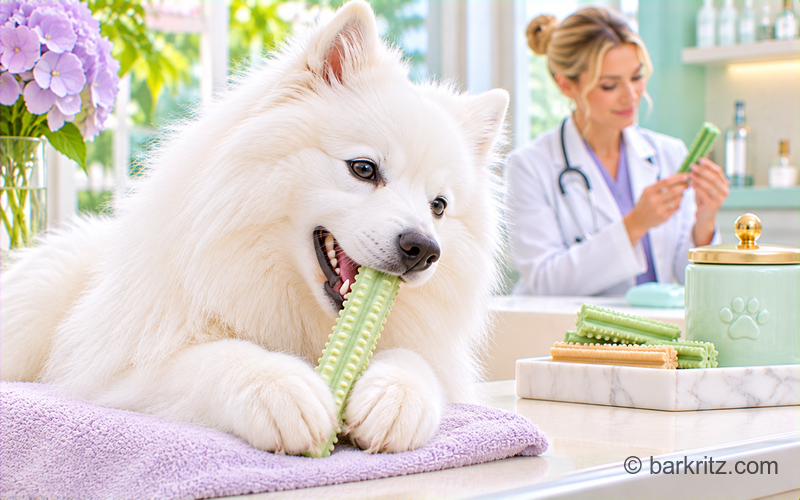
Dental chews can help reduce plaque accumulation by creating gentle mechanical friction against tooth surfaces while encouraging saliva production during chewing.
Plaque is a soft bacterial film that continually forms on teeth. If it is not regularly removed, it can mineralize into tartar, which is considerably harder to eliminate at home. Certain dental chews are designed to help disrupt plaque before this happens, particularly when used consistently as part of a broader oral-care routine.
Their effectiveness depends on construction rather than appearance. Products designed specifically for dental hygiene may feature textured surfaces, ridges, or shapes intended to increase contact with the teeth during chewing. Some also contain ingredients formulated to support oral health.
When choosing a dental chew, consider the following distinctions:
- Textured dental chews: feature ridges or grooves intended to increase mechanical contact with tooth surfaces.
- Veterinary dental products: may have undergone independent testing for plaque or tartar reduction.
- Edible dental treats: provide a chewing activity but also contribute calories to the dog’s daily intake.
- Functional dental formulations: may include ingredients intended to help manage oral bacteria or reduce plaque accumulation.
The Veterinary Oral Health Council (VOHC) evaluates products that meet established standards for reducing plaque and/or tartar. Its accepted-products list is a useful reference when comparing dental chews. Owners should check the specific product and its approved claim rather than assuming that every item from a particular brand has been evaluated.
Dental chews should complement brushing, not replace it. Even an effective chew cannot reliably clean every tooth surface or reach all areas where plaque accumulates.
Which Dental Chews Are Safest for Different Dog Breeds and Sizes?

The safest dental chew is one appropriately sized for the dog’s weight, jaw structure, chewing style, and individual dental condition.
A product that works well for a small companion breed may be unsuitable for a powerful large-breed dog, while an oversized or excessively firm chew can create unnecessary difficulty for a dog with a smaller mouth. Manufacturers generally provide weight-based recommendations, which should be followed carefully.
Small breeds, including Yorkshire Terriers, Maltese, and Toy Poodles, often benefit from appropriately scaled chews that are easy to grasp and comfortably positioned in the mouth. Their relatively small jaws and the tendency of some small breeds to develop dental crowding make consistent oral hygiene particularly important.
Medium-sized breeds, such as Beagles, Cocker Spaniels, and Border Collies, generally have a wider range of suitable products. Their chewing habits still matter: an enthusiastic chewer may need a more durable design than a dog that gently works through a treat.
Large breeds, including Golden Retrievers, German Shepherds, and Labrador Retrievers, require appropriately substantial products that cannot be swallowed whole. However, a large dog’s powerful bite does not mean that extremely hard chews are safe.
Important selection criteria include:
- Correct size: choose according to the manufacturer’s weight guidance and the dog’s ability to chew safely.
- Appropriate firmness: avoid products so hard that they could damage teeth.
- Digestibility: select edible chews designed for canine consumption and follow feeding instructions.
- Calorie content: include dental treats in the daily food allowance.
- Ingredient suitability: check for ingredients that may be unsuitable for dogs with allergies or dietary restrictions.
- Individual dental health: dogs with missing, damaged, or sensitive teeth may require a veterinarian’s recommendation before using chews.
A useful safety principle is to avoid objects that are so hard they cannot yield under pressure. Natural bones, antlers, hooves, and exceptionally hard nylon products can cause painful tooth fractures. Even products marketed as durable or natural should not automatically be considered safe.
Puppies, senior dogs, and animals with existing dental disease may need specially selected products. A veterinarian can help determine whether a particular chew is appropriate.
What Are the Best Dental Toys for Dogs That Love to Chew?
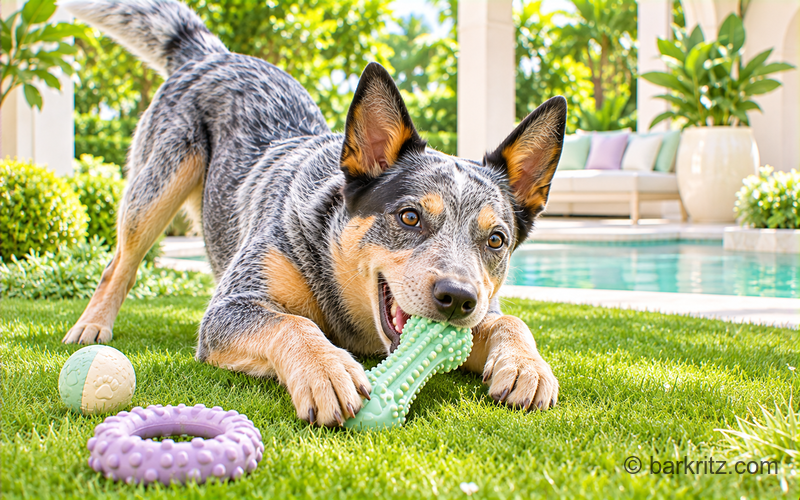
The best dental toys combine an appropriate level of flexibility, a comfortable shape, and textured surfaces that encourage safe chewing without damaging the teeth or gums.
Unlike edible chews, dental toys can often be reused, making them a practical addition to a dog’s enrichment routine. Many are designed with grooves, ridges, or specialized surfaces that interact with the teeth during play. Some can also hold small portions of dog-safe food, creating an additional incentive to investigate and chew.
Several types deserve consideration.
Textured rubber toys are among the most versatile options. Their flexible construction can provide resistance without the excessive hardness associated with certain rigid materials. Look for products specifically designed for canine chewing, with no detachable components that could be swallowed.
Treat-dispensing toys combine mental stimulation with chewing activity. A dog must manipulate the toy to access its contents, encouraging problem-solving and extending engagement. Choose a size and opening appropriate for the dog’s mouth and the food being used.
Dental rings and ridged toys provide multiple textured surfaces for dogs that enjoy repetitive chewing. Their usefulness depends on material quality, shape, and the animal’s chewing intensity.
Interactive rubber toys can be especially valuable for dogs that become bored easily. They encourage supervised play and can help redirect chewing away from furniture, shoes, and other household objects.
When comparing dental toys, consider:
- Soft rubber: offers flexibility and may be suitable for many moderate chewers.
- Durable flexible rubber: provides greater resistance for dogs that chew more enthusiastically.
- Food-compatible designs: allow owners to add small quantities of appropriate treats or food.
- Textured surfaces: create additional contact during chewing and play.
- Simple construction: reduces the risk of small detachable pieces becoming choking hazards.
A dental toy should never be selected solely because it is described as indestructible. No chew toy is completely indestructible, and even high-quality products can become damaged. Inspect toys regularly and replace them if they develop cracks, sharp edges, loose sections, or missing pieces.
How Often Should Dogs Use Dental Chews and Toys?
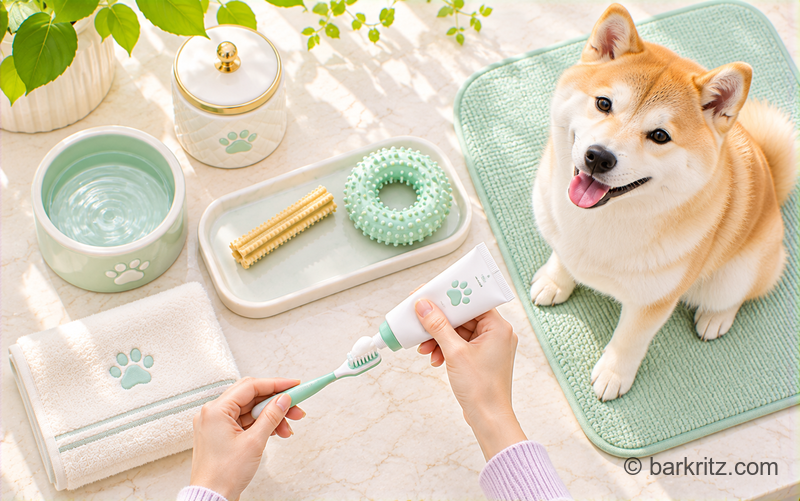
Most dogs can benefit from a consistent oral-care routine that combines regular toothbrushing with appropriately selected dental products, although the frequency of chew use should follow the manufacturer’s instructions.
Dental chews are not necessarily intended for unlimited daily use. Some are designed for one serving per day, while others have different feeding recommendations based on size and formulation. Giving more than the recommended amount can add unnecessary calories and may cause digestive upset.
A balanced routine can include:
- Daily toothbrushing: ideally with a dog-specific toothbrush and toothpaste.
- Dental chews: used according to the product’s recommended frequency and serving size.
- Supervised toy sessions: offered as enrichment and chewing opportunities, with the toy checked before and after use.
- Regular oral inspections: allowing owners to notice changes in the teeth, gums, or breath.
- Professional dental assessments: scheduled according to the veterinarian’s advice and the dog’s individual needs.
Toothbrushing remains the most effective home-care method for physically removing plaque. Use toothpaste formulated specifically for dogs; human toothpaste is not appropriate for canine consumption.
It is also important to supervise chewing sessions, particularly when introducing a new product. Watch for attempts to swallow large pieces, excessive force, coughing, gagging, or signs of discomfort. Remove a chew or toy if it becomes small enough to swallow or begins to break apart.
For dogs that are unfamiliar with oral care, introduce new products gradually. A relaxed, positive experience is more likely to become a sustainable part of the daily routine than an activity that causes frustration.
When Should Dental Chews and Toys Be Replaced by Professional Veterinary Care?
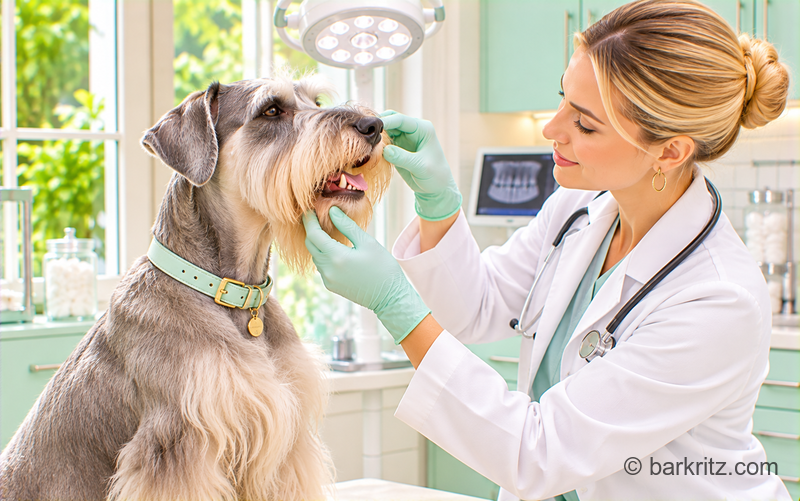
Dental chews and toys are supportive oral-care tools, but they cannot treat established periodontal disease, remove hardened tartar beneath the gumline, or repair damaged teeth.
Persistent bad breath is often dismissed as a normal feature of canine life, yet it can be an early indication of oral disease. Red or swollen gums, visible tartar, bleeding, excessive drooling, difficulty chewing, dropping food, and pawing at the mouth all deserve attention.
Owners should arrange a veterinary examination if they notice:
- Persistent unpleasant breath: particularly when accompanied by other changes in the mouth.
- Red, swollen, or bleeding gums: possible signs of inflammation or periodontal disease.
- Visible brown or yellow deposits: hardened tartar that cannot be removed by ordinary chewing.
- Changes in eating behavior: reluctance to chew, preference for soft food, or dropping pieces from the mouth.
- Broken or discolored teeth: potential indicators of injury or internal dental damage.
- Facial swelling or obvious pain: reasons to seek prompt veterinary attention.
Professional dental cleaning may be necessary to remove deposits from both visible tooth surfaces and areas below the gumline. Veterinary dental procedures are generally performed under anesthesia so that the entire mouth can be examined and treated safely and thoroughly.
Owners should also be cautious about products that promise to eliminate the need for professional cleaning. No dental chew, toy, water additive, or supplement can guarantee protection against periodontal disease.
A well-maintained canine smile is the result of consistency rather than a single premium accessory. Thoughtfully selected dental chews, safe toys, regular brushing, and appropriate veterinary care work together to support oral health throughout a dog’s life. For the Four-Legged Elite, the most sophisticated wellness routine is one in which every detail serves a genuine purpose—and a healthy smile remains the finest finishing touch.