

Rare Burmese Cat Traits and Temperament Guide
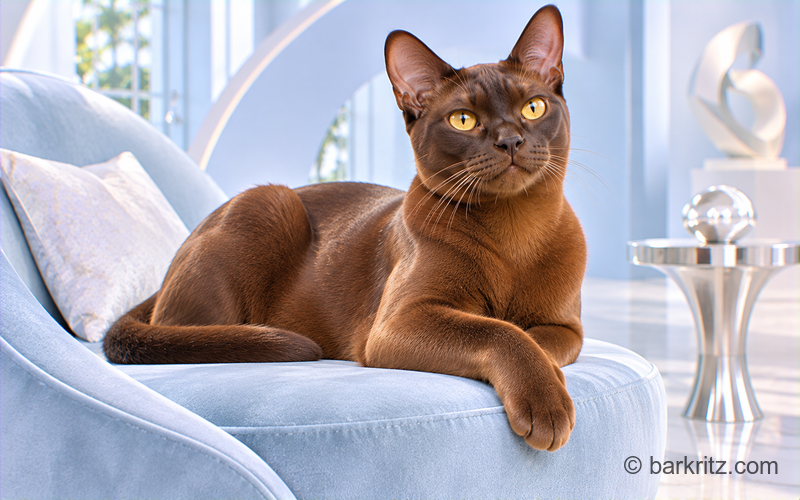
With their luminous eyes, satin-like coats, and remarkably affectionate personalities, Burmese cats possess a distinctive elegance that extends far beyond their appearance. Although the breed is often associated with its celebrated sable-brown coat, Burmese cats come in several recognized colors and display a fascinating combination of athleticism, intelligence, sociability, and devotion to their human companions.
Originally developed from a cat brought from Burma to the United States in the early twentieth century, the modern Burmese has become one of the most recognizable shorthaired pedigree breeds. Its compact, muscular physique, rounded facial features, and unusually expressive temperament distinguish it from many other companion cats.
For prospective owners, understanding the Burmese means appreciating both its exceptional qualities and its particular needs. From rare coat colors and distinctive physical characteristics to its conversational nature and potential health considerations, this guide explores what makes the breed so remarkable.
What Are the Most Distinctive Physical Traits of a Burmese Cat?
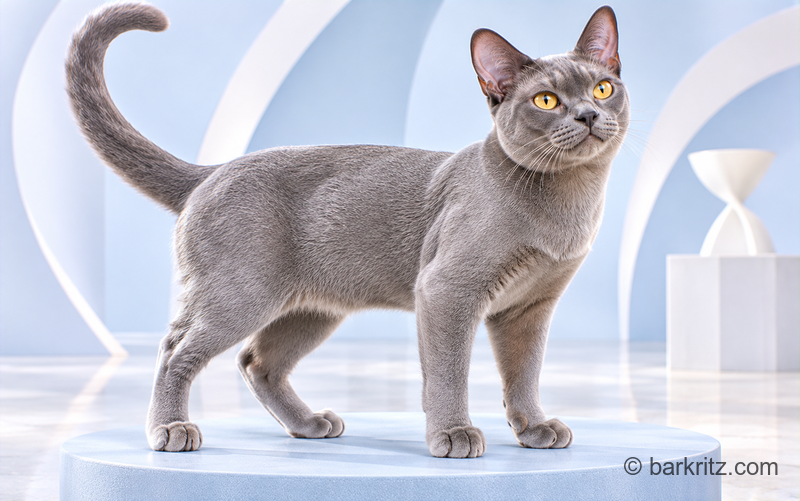
The Burmese is distinguished by a compact, muscular body, a rounded head, expressive golden-to-yellow eyes, and an exceptionally short, fine coat with a naturally glossy finish.
Despite its relatively moderate size, the Burmese is surprisingly substantial when lifted. Its dense musculature gives it a characteristic weight that enthusiasts sometimes describe as feeling heavier than its appearance suggests. The body is athletic rather than delicate, with a broad chest, strong shoulders, and well-developed hindquarters.
Its facial structure contributes significantly to its recognizable expression. The eyes are large and rounded, giving the cat an attentive, almost inquisitive appearance, while the muzzle and cheeks create a soft, rounded facial outline. The ears are medium-sized, with gently rounded tips, and are set relatively far apart.
The coat is another defining feature. Burmese fur is extremely short, fine, and close-lying, with a silky texture that reflects light beautifully. It requires comparatively little maintenance and rarely develops the matting associated with longer-haired breeds.
Important physical characteristics include:
- Body: compact, muscular, and surprisingly heavy for its size.
- Head: rounded, with full cheeks and a distinctive muzzle.
- Eyes: expressive, rounded, and generally golden-yellow to amber in appearance.
- Coat: short, fine, glossy, and close to the body.
- Tail: medium in length, proportionate to the body, and gently tapered.
- Movement: agile, coordinated, and athletic rather than heavy or cumbersome.
There are also differences between American and European Burmese types. American Burmese cats generally have a rounder head, fuller cheeks, and a more compact appearance. European Burmese cats typically have a slightly more moderate head shape, a less compact body, and a more elegant overall outline.
These distinctions are important when evaluating pedigree photographs or visiting breeders, as the two varieties can look noticeably different while sharing the breed’s affectionate temperament.
Which Burmese Cat Colors Are Rare and What Makes Their Coats Special?
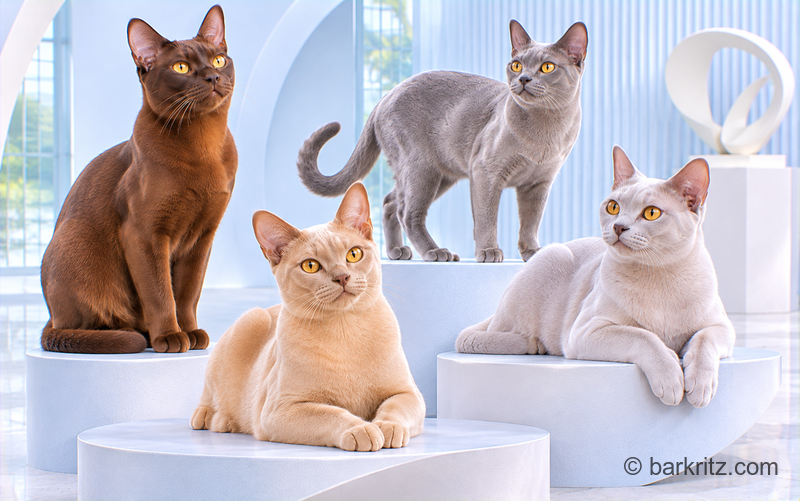
Burmese cats are recognized in several rich, solid coat colors, with the less commonly encountered variations offering an especially distinctive alternative to the traditional sable-brown appearance.
The original Burmese color is sable, a deep, warm brown that can appear almost chocolate-colored in certain lighting. Its characteristic richness, combined with the cat’s glossy coat, remains one of the breed’s most celebrated features.
Over time, selective breeding established additional color varieties. Depending on the registry and whether the cat belongs to the American or European Burmese tradition, recognized colors may include:
- Sable: the classic deep brown shade, with warm undertones and a particularly luminous appearance.
- Champagne: a warm beige or honey-toned color, often with a soft, creamy quality.
- Blue: a delicate silver-gray shade with subtle cool undertones.
- Platinum: a pale silvery-gray color, sometimes described as a soft dove-gray.
- Chocolate: a warmer, lighter brown than traditional sable.
- Lilac: a delicate pinkish-gray shade with a subtle frosted appearance.
- Red and cream: recognized in some European Burmese breeding programs, these colors introduce warmer, lighter variations.
The exact color terminology and accepted varieties depend on the registry. American and European Burmese standards do not recognize precisely the same range of colors, so prospective owners should check the relevant pedigree organization when assessing a particular cat.
One particularly appealing feature of Burmese coloration is its subtle development. Kittens may be born lighter than their eventual adult shade, with the coat gradually becoming richer as they mature. Temperature-sensitive pigmentation also contributes to the breed’s characteristic darker coloration around certain extremities.
Unlike pointed breeds such as Siamese cats, traditional Burmese coats are generally solid in appearance rather than sharply divided into contrasting dark points and a pale body.
For owners who appreciate understated distinction, the attraction lies in the coat’s depth and luminosity rather than dramatic patterns. A beautifully conditioned Burmese has an almost satin-like finish that makes even its simplest color variation appear exceptionally refined.
What Is the Burmese Cat’s Temperament Like and How Affectionate Is the Breed?
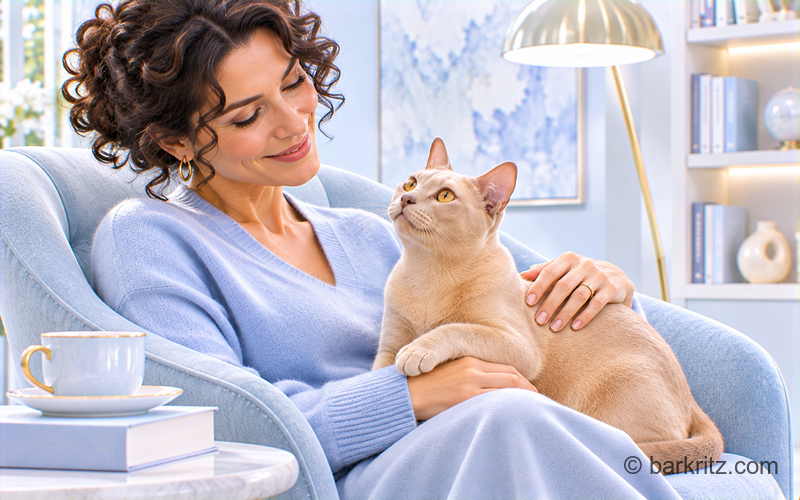
The Burmese is an exceptionally people-oriented companion known for its affectionate disposition, playful intelligence, curiosity, and desire to remain involved in everyday household activities.
Unlike more independent cats that prefer to observe domestic life from a distance, Burmese cats often seek direct interaction. They may follow their owners between rooms, settle beside them while they work, and actively request attention when the household becomes quiet.
Their sociability is one of the breed’s defining characteristics. Many Burmese enjoy physical affection and close companionship, although individual preferences vary. Some are particularly fond of sitting on laps, while others prefer to remain nearby, supervising household activities from a comfortable position.
Burmese cats are also notably intelligent. They often learn routines quickly, recognize familiar sounds, and can become enthusiastic participants in interactive games. Puzzle feeders, treat-dispensing toys, and supervised training sessions provide valuable mental stimulation.
Their temperament can be understood through several characteristic qualities:
- Affectionate: often forms close relationships with family members and enjoys regular interaction.
- Social: generally appreciates company and may dislike prolonged periods of isolation.
- Playful: retains considerable enthusiasm for games and exploration into adulthood.
- Intelligent: responds well to interactive toys, training, and problem-solving activities.
- Curious: enjoys investigating new objects, routines, and changes in the household.
- Conversational: frequently communicates through soft, expressive vocalizations.
Burmese cats are often described as more conversational than many other shorthaired breeds. Their voices are generally softer and less insistent than those of some Siamese cats, although individual personalities differ considerably.
Their attachment to people also means that they may not be ideal for households where the cat would regularly spend very long periods alone. Owners with demanding schedules should consider providing appropriate companionship, enrichment, and a stimulating home environment.
When properly socialized, Burmese cats can adapt well to family life and may develop affectionate relationships with respectful children and other compatible pets. Introductions should nevertheless be gradual, with sufficient space for every animal to retreat when necessary.
Are Burmese Cats Easy to Care for and What Health Conditions Should Owners Know About?

Burmese cats are relatively straightforward to groom, but responsible ownership requires attention to their dental health, weight, activity levels, and breed-associated genetic conditions.
Their short, fine coats need surprisingly little maintenance. A gentle weekly brushing with a soft grooming glove or brush is usually sufficient to remove loose hair and preserve the natural sheen. Regular handling from kittenhood also makes nail trimming, ear checks, and routine grooming more comfortable.
Dental care deserves particular attention. Like other cats, Burmese may develop plaque, gingivitis, and periodontal disease, making regular toothbrushing with feline-specific toothpaste a valuable preventive habit.
Nutrition should be tailored to the cat’s age, activity level, body condition, and individual health requirements. Although Burmese cats are naturally muscular and energetic, their weight should still be monitored carefully. Excess body weight can increase the risk of several health problems, including diabetes.
Potential breed-associated health concerns include:
- Hypokalemic polymyopathy: an inherited condition involving low potassium levels that can cause muscle weakness, particularly in affected Burmese lines.
- Diabetes mellitus: a metabolic disease associated with impaired blood-glucose regulation; maintaining a healthy body condition is important.
- Hypertrophic cardiomyopathy (HCM): a heart condition that can occur in cats, including Burmese, and may require veterinary investigation.
- Burmese head defect: a serious inherited craniofacial condition associated with particular American Burmese breeding lines.
- Dental disease: plaque accumulation and gum inflammation can affect individual cats and require consistent preventive care.
Responsible breeders should be transparent about the health history of their breeding cats and any relevant genetic screening. Prospective owners should ask specifically about testing appropriate to the lines involved, including screening for known inherited conditions where validated tests are available.
Routine veterinary examinations, appropriate vaccinations, parasite prevention, and dental assessments remain essential. Any unusual weakness, difficulty walking, changes in appetite, excessive thirst, or breathing abnormalities should be evaluated by a veterinarian rather than attributed to the breed’s normal characteristics.
With attentive preventive care and responsible breeding, many Burmese cats enjoy long, active lives and remain engaging companions well into their senior years.
Is a Burmese Cat the Right Companion for Your Home and Lifestyle?
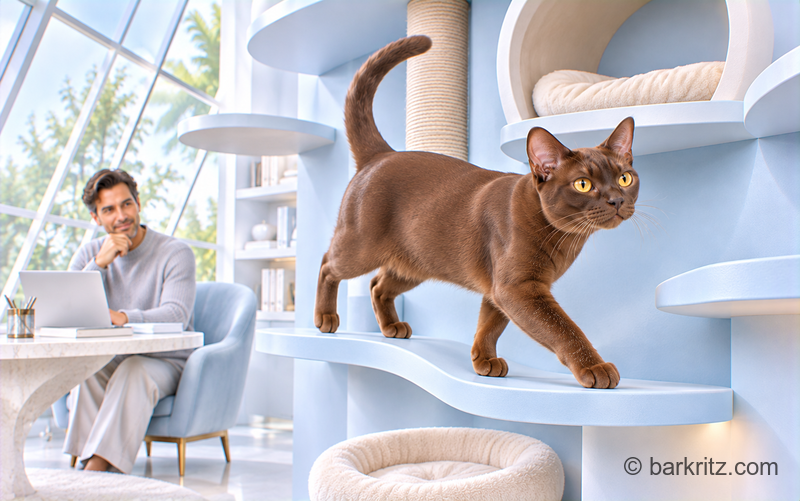
A Burmese cat is particularly well suited to owners who appreciate an affectionate, interactive companion and can provide consistent attention, environmental enrichment, and opportunities for daily play.
The breed’s sociable nature makes it appealing to people who want a cat that actively participates in domestic life rather than maintaining a largely independent routine. Burmese cats often enjoy accompanying their owners from room to room and observing everyday activities with considerable interest.
Their compact physique and short coat also make them adaptable to apartment living, provided they receive sufficient stimulation and suitable climbing and resting opportunities. A thoughtfully designed indoor environment can support their physical activity without requiring access to the outdoors.
Before choosing a Burmese, consider the following lifestyle factors:
- Companionship: these cats generally thrive with regular human interaction and may struggle with prolonged isolation.
- Indoor enrichment: climbing structures, scratching posts, puzzle feeders, and interactive toys help satisfy their curiosity.
- Family compatibility: their sociable nature can make them suitable for respectful children and compatible household animals.
- Grooming commitment: their short coats require relatively little maintenance, although routine dental and general care remain important.
- Activity requirements: regular interactive play helps maintain their muscular condition and mental well-being.
- Long-term responsibility: prospective owners should be prepared for a commitment that may extend well beyond a decade.
Burmese cats can be particularly rewarding for owners who enjoy an animal with a strong personality and an affectionate approach to companionship. Their intelligence also makes them excellent candidates for clicker training, simple tricks, and interactive games.
When selecting a kitten, prioritize a reputable breeder who provides transparent pedigree documentation, appropriate health information, early socialization, and the opportunity to meet the kitten’s mother when possible. A responsible breeder should also be willing to discuss the temperament and health characteristics of the particular line.
Ultimately, the Burmese is not simply a beautiful shorthaired cat with striking eyes and a glossy coat. Its greatest distinction is the combination of physical elegance and an unusually engaging personality. For owners who value affection, intelligence, and a genuine feline presence in everyday life, the Burmese offers a particularly memorable form of companionship.