

Best Raincoats and Weatherproof Gear for Stylish Pets
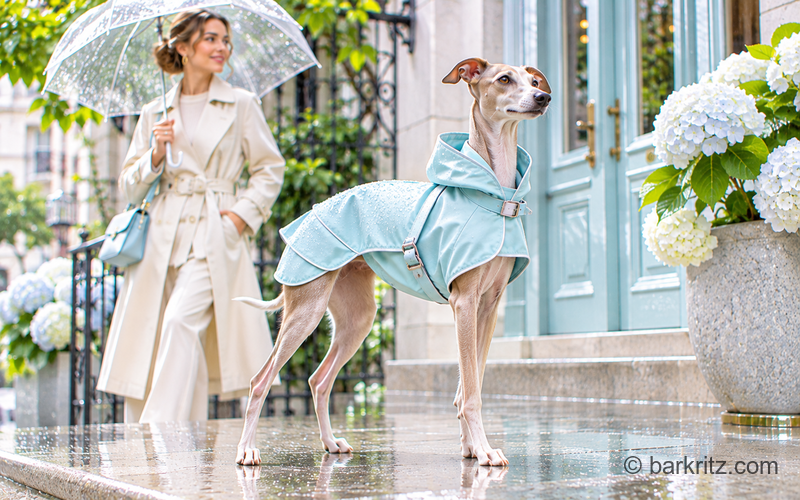
Rainy days need not compromise a carefully considered pet wardrobe. For style-conscious owners in New York, the best raincoats and weatherproof accessories combine thoughtful tailoring, dependable protection, and materials that stand up to unpredictable city weather. From streamlined waterproof shells for brisk Manhattan walks to lightweight designs suited to spring showers and insulated layers for colder months, the right gear should complement a pet’s natural silhouette while allowing unrestricted movement. The defining principle is simple: exceptional design begins with comfort and function, then adds the finishing details that make an everyday walk feel impeccably styled.
What Should You Look for in a Stylish, High-Performance Dog Raincoat?
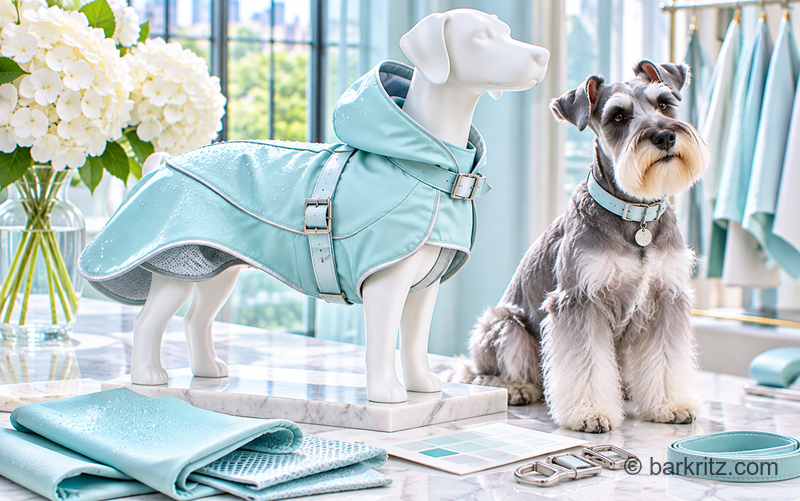
The best dog raincoat combines genuinely water-resistant or waterproof construction, a secure fit, practical coverage, and breathable materials that protect the dog without restricting natural movement.
A beautiful raincoat should do more than coordinate with a leash or harness. Its primary purpose is to keep the coat reasonably dry, reduce exposure to wind and rain, and make post-walk care easier. Waterproof fabrics and water-resistant finishes are not interchangeable: waterproof construction is designed to resist water penetration more reliably, while water-resistant materials may be suitable for lighter showers but can eventually become saturated.
Fit is equally important. A coat that is too tight can restrict the shoulders, chest, or stride, while an oversized design may twist, drag, or collect water. The neckline should sit comfortably without pressing against the throat, and closures should remain secure without rubbing the skin. For dogs with deep chests, broad shoulders, long backs, or unusual proportions, adjustable designs can be more practical than standard sizing.
When comparing raincoats, prioritize these features:
- Waterproof or water-resistant outer fabric: Match the level of protection to the climate and duration of walks.
- Coverage across the back and chest: Look for a cut that shields vulnerable areas without interfering with urination or natural movement.
- Adjustable closures: Neck, chest, or belly adjustments help create a stable, comfortable fit.
- Breathable construction: Useful during active walks, particularly in humid weather or when temperatures are mild.
- Lightweight lining: Smooth linings help the coat slide over the fur without creating unnecessary bulk or tangles.
- Reflective details: Discreet reflective trim can improve visibility during gloomy mornings and evening walks.
For the most versatile wardrobe investment, choose a well-fitted shell that can be layered over a light sweater when temperatures drop. A raincoat should feel like a natural extension of the dog’s everyday equipment, not an elaborate costume that makes walking uncomfortable.
Which Raincoat Styles Work Best for Different Breeds and Body Types?
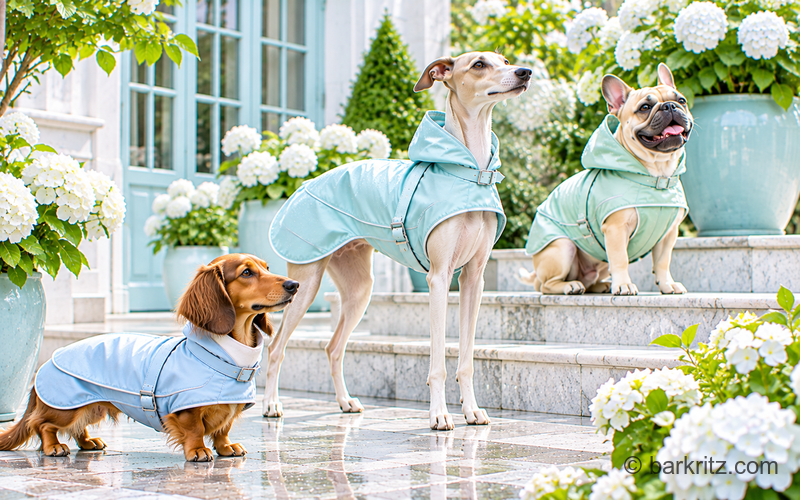
The most flattering raincoat is the one designed around a dog’s individual proportions, coat type, and movement patterns rather than the latest fashion silhouette.
A long-backed Dachshund needs a different cut from a deep-chested Greyhound, while a compact French Bulldog may require additional room through the chest and shoulders. Breed-specific proportions matter because a coat that fits comfortably on one dog may ride up, pull, or restrict another.
Short-coated dogs often benefit from greater body coverage in cold rain, while thick-coated breeds may need a lighter shell that protects against moisture without trapping excessive heat. Dogs with long, silky fur may be more comfortable in a smooth-lined design that minimizes tangling. For curly-coated dogs, a coat should fit without compressing the coat excessively or creating friction in high-movement areas.
Consider these general styling principles:
- Small breeds: Lightweight coats with adjustable chest panels can provide coverage without overwhelming a compact frame.
- Long-bodied breeds: Extended-back designs offer better coverage while maintaining clearance around the legs and underside.
- Deep-chested and athletic breeds: Contoured cuts with generous shoulder room help preserve a natural stride.
- Thick-coated breeds: Lightweight, breathable shells are often preferable to heavily insulated rainwear in mild weather.
- Short-coated or slender breeds: Additional coverage and a soft lining may be useful in cold, wet conditions.
- Dogs with broad heads or unusual proportions: Openings and closures should allow the coat to be put on and removed without uncomfortable pulling.
The visual language of a polished pet wardrobe can remain understated. A clean silhouette, carefully finished seams, tonal hardware, and a restrained color palette often look more refined than oversized embellishments. Soft rose, pale sage, mist blue, ivory, and classic navy can coordinate with collars and leads while remaining practical for everyday wear.
Above all, introduce rainwear gradually. Let the dog investigate the coat, reward calm behavior, and begin with short periods indoors before attempting a longer walk. Even an expertly designed garment is unsuitable if the dog finds it distressing or cannot move naturally while wearing it.
Is a Waterproof Dog Jacket Better Than a Full-Body Rain Suit?
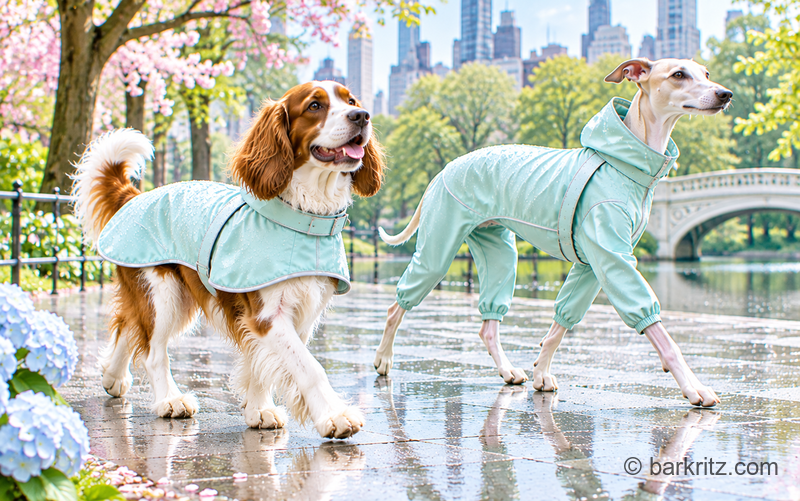
A waterproof jacket is generally the most versatile choice for everyday city walks, while a full-body rain suit offers additional coverage for dogs that encounter persistent rain, muddy trails, or heavily splashed surfaces.
The right design depends on where a dog spends time outdoors and how much protection it actually needs. In New York, a short walk along a wet sidewalk presents different demands from a long excursion through a muddy park. A jacket covering the back and chest is often easier to put on, simpler to clean, and more comfortable for routine outings. A full-body suit may help protect more of the legs and underside, but it also introduces additional seams, closures, and areas where friction or restricted movement can occur.
Weatherproof gear should be selected for practical performance rather than maximum coverage alone.
A jacket is usually preferable when:
- Walks are relatively short and mostly on paved surfaces.
- The dog needs a quick, easy-to-remove outer layer.
- The weather is wet but not especially cold.
- The dog dislikes garments that cover its legs.
A full-body suit may be worth considering when:
- The dog frequently walks through muddy parks or wet vegetation.
- Its coat is long and collects dirt or moisture easily.
- More extensive coverage would meaningfully reduce post-walk cleaning.
- The design allows unrestricted movement and does not trap excessive heat.
Waterproof trousers, leg coverings, and paw accessories should never be treated as automatically necessary. Dogs regulate heat differently from humans, and excessive layers can create discomfort, particularly during active exercise. Observe the dog throughout the walk for signs of overheating, reluctance to move, repeated attempts to remove the garment, or rubbing around the armpits and groin.
For many urban pets, the most useful wardrobe consists of a dependable rain jacket, a lightweight drying towel, and a comfortable harness compatible with the coat. A full-body suit can be added when the dog’s routine genuinely calls for it.
What Weatherproof Accessories Complete a Refined Pet Rainwear Wardrobe?
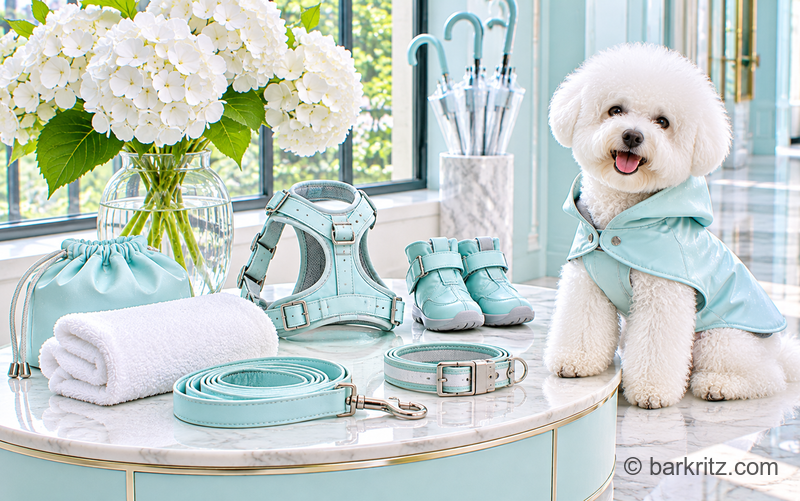
The most useful weatherproof accessories are those that protect the paws, improve visibility, and simplify cleanup without adding unnecessary complexity to a dog’s daily routine.
A raincoat addresses only part of the challenge posed by wet weather. Rainwater, road spray, mud, and damp pavement can affect paws and lower legs, while poor visibility can make a rainy urban walk more demanding. Carefully selected accessories help owners manage these conditions without turning an ordinary outing into an elaborate dressing ritual.
A considered rainwear collection may include:
- Water-resistant leash: A quick-drying material can be easier to maintain than absorbent fabric during repeated wet-weather walks.
- Compatible harness: A well-fitting harness should remain secure over or beneath the coat without compromising the fit of either item.
- Paw protection: Properly fitted dog boots may help protect against cold, rough surfaces, or certain environmental hazards, but many dogs need gradual introduction and close monitoring to tolerate them.
- Reflective collar or trim: Additional visibility can be valuable in rain, mist, and low-light conditions.
- Absorbent drying towel: A dedicated microfiber towel helps remove moisture from the paws, belly, and coat when returning indoors.
- Portable cleanup pouch: Waste bags and a small cloth make wet-weather outings easier to manage.
- Compact storage bag: A washable pouch keeps damp rainwear separate from other items when traveling.
Paw protection deserves particular attention in winter, when road salt and de-icing products can irritate sensitive pads. Boots may help in suitable circumstances, but they must fit securely without rubbing or restricting circulation. After walks, inspect the paws and rinse away visible salt or grime when necessary.
For an elegant finish, coordinate accessories through material and color rather than insisting that every piece match exactly. A sage-green raincoat, a blush-toned leash, and understated reflective details can create a cohesive look while preserving each item’s practical purpose. The best accessories are easy to use, simple to clean, and comfortable enough that the dog can forget it is wearing them.
How Should You Care for Dog Raincoats to Keep Them Looking Their Best?
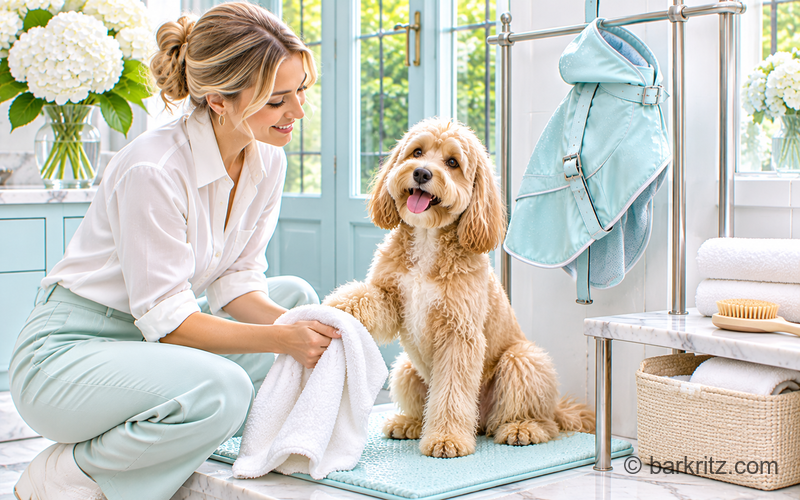
Regular cleaning, thorough drying, and careful inspection help preserve a raincoat’s appearance, fit, and protective performance over repeated seasons.
Wet-weather gear is exposed to more than rain. Sidewalk residue, mud, salt, oils from the coat, and everyday friction can affect the fabric and its finish. Proper care helps maintain the garment’s appearance while reducing unpleasant odors and preventing damp material from remaining against the dog’s skin.
Start by following the manufacturer’s care label. Some technical fabrics can be machine-washed on a gentle cycle, while others require handwashing or specific detergents. Fabric softeners and harsh cleaning products may affect certain water-repellent finishes, so they should be avoided unless the manufacturer explicitly approves them.
A practical maintenance routine includes:
- Remove surface dirt promptly: Brush off dried mud and wipe away fresh splashes before they become embedded in the fabric.
- Wash according to instructions: Use the recommended cycle and cleaning products to protect seams, linings, and water-repellent treatments.
- Dry thoroughly: Allow the coat to dry completely before storage to reduce odor and moisture buildup.
- Inspect seams and closures: Check stitching, snaps, zippers, hook-and-loop fasteners, and adjustment straps for wear.
- Check the fit regularly: Reassess the coat after changes in weight, muscle condition, or seasonal grooming.
- Refresh water repellency when appropriate: Use only a treatment compatible with the garment’s fabric and the manufacturer’s recommendations.
After every rainy walk, remove the coat when indoors and check the dog’s chest, belly, armpits, and skin folds for trapped moisture or irritation. A garment that remains damp against the body can cause discomfort, even if its outer surface appears stylish and well maintained.
The most successful pet wardrobe is built around a few reliable pieces rather than an excessive collection of seasonal novelties. A thoughtfully fitted raincoat, practical accessories, and consistent care create a polished, functional system that serves the dog well through changing weather. In the end, true pet style is not simply about how a garment looks on a walk; it is about how comfortably and confidently a companion can move through the world in it.