

The Complete Guide to Bengal Cat Coat Patterns
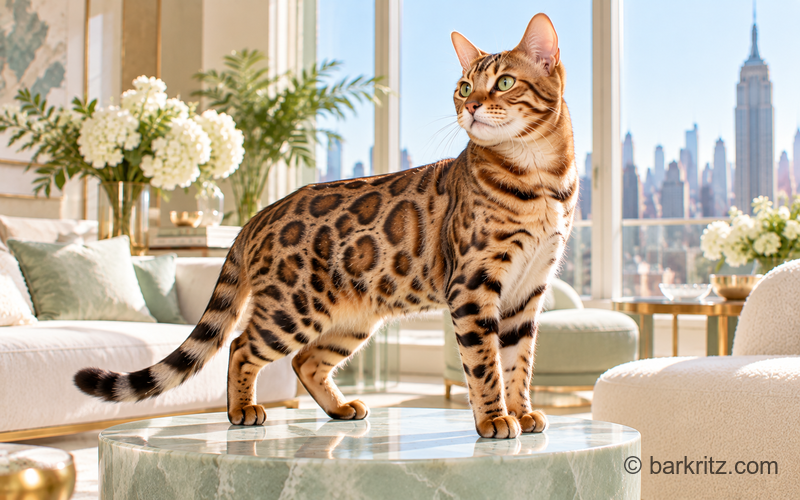
The Bengal cat is one of the most visually distinctive domestic breeds, celebrated for a coat that evokes the beauty of wild felines while retaining the elegance of a modern companion. From dramatic rosettes and elongated marbling to delicate spots and shimmering golden tones, Bengal coat patterns offer an extraordinary range of natural artistry. Understanding these variations helps prospective owners and breed enthusiasts appreciate the genetics, heritage, and individual character behind every distinctive marking.
What Are the Main Bengal Cat Coat Patterns?
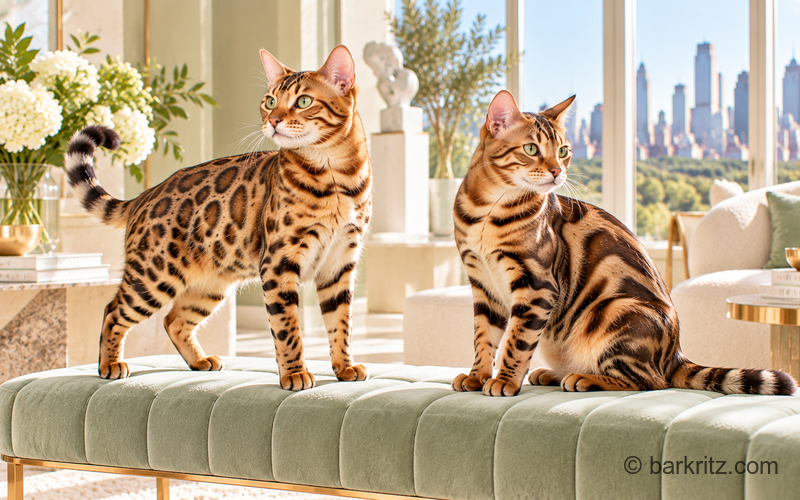
Bengal cats are recognized primarily for two major pattern families—spotted and marbled—each offering distinctive variations in shape, contrast, and visual movement. Spotted coats feature individual markings distributed across the body, while marbled coats display flowing, horizontal swirls that resemble abstract stonework or the intricate grain of polished wood.
Within these two categories, the arrangement and definition of markings can vary considerably, giving each Bengal a unique appearance.
The principal pattern variations include:
- Rosetted: Markings composed of two or more tones, often forming outlined spots with lighter centers.
- Single-spotted: Distinct, solid-colored spots without the contrasting inner coloration characteristic of rosettes.
- Donut rosettes: Rounded markings with a darker outline surrounding a lighter center.
- Paw-print rosettes: Irregular, open-centered markings that resemble small paw impressions.
- Arrowhead markings: Triangular or tapered spots that create a streamlined appearance.
- Marbled: Elongated, flowing markings that spread across the torso in irregular, interconnected swirls.
Rosettes are particularly admired for their dramatic contrast, while marbled coats appeal to those who appreciate fluid, sculptural patterns. Neither is inherently superior as a companion-cat feature; the distinction is primarily aesthetic, although coat pattern can matter in formal breed competitions.
How Do Rosetted Bengal Coats Differ From Marbled Coats?
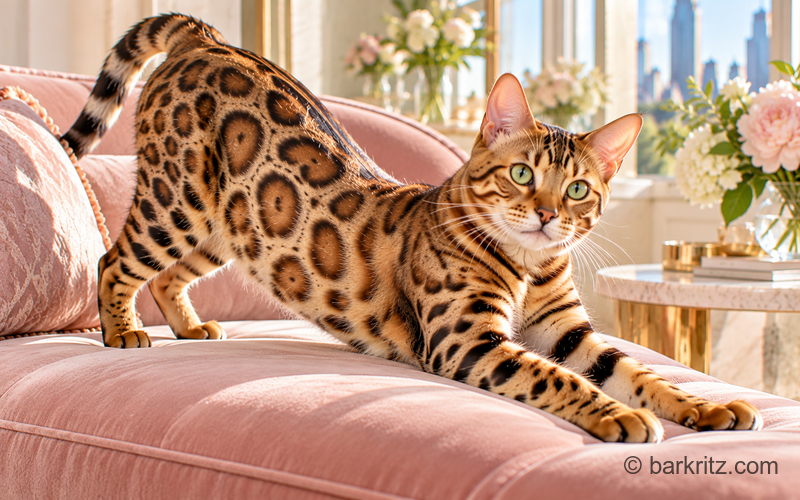
Rosetted Bengals display defined, spot-like markings with contrasting centers, whereas marbled Bengals feature broad, flowing patterns that create a sense of continuous movement across the body.
Rosettes are among the breed’s most recognizable visual signatures. Their appearance ranges from small, compact circles to large, irregular formations that create a striking contrast against the background coat. Depending on their shape and coloration, rosettes may resemble leopard spots, paw prints, or rounded doughnuts.
Marbled Bengals offer a different interpretation of the breed’s wild-inspired appearance. Their markings form sweeping curves and asymmetrical ribbons, often extending horizontally along the flanks. The ideal impression is fluid rather than symmetrical, with clearly differentiated colors and a balanced distribution of pattern across the body.
The key differences are easy to identify:
- Visual structure: Rosettes appear as separate markings; marbling forms connected or elongated swirls.
- Overall impression: Rosetted coats tend to look bold and spotted, while marbled coats appear fluid and painterly.
- Pattern distribution: Rosettes are individually defined, whereas marbling emphasizes the relationship between adjacent markings.
- Individual variation: Both pattern families can range from subtle to exceptionally high-contrast, depending on genetics and background color.
Bengal kittens may display less-developed markings than adults. As the coat matures, the pattern can become more defined, although the degree of change varies from one individual to another.
Which Bengal Coat Colors and Markings Are Most Distinctive?
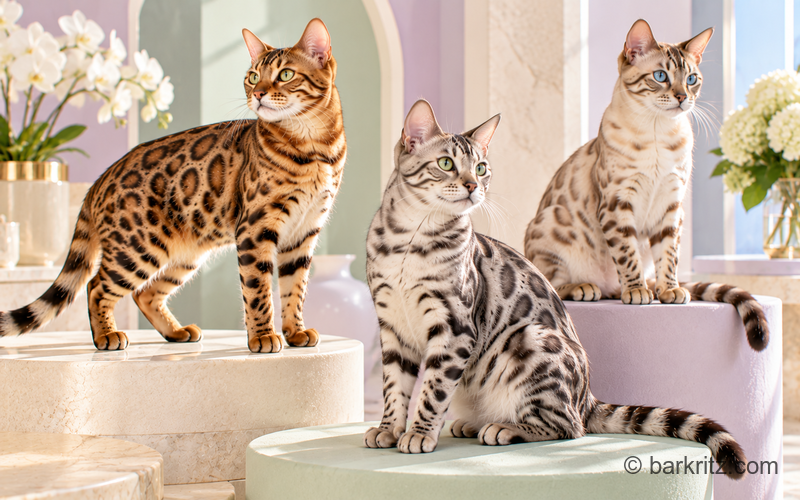
Bengal coat color determines the background against which the pattern appears, while the contrast between the two gives the markings their depth, definition, and distinctive visual impact.
The brown Bengal is widely associated with the breed’s classic appearance, featuring a warm background that can range from golden honey to rich copper or orange-brown. Its markings typically appear dark brown or black, creating pronounced contrast that emphasizes rosettes and marbling alike.
Snow Bengals offer a cooler, more delicate palette. The term encompasses several genetic color variations, including seal lynx point, seal mink, and seal sepia. Their coats can range from ivory and cream to pale beige, with markings that vary in tone and intensity. Snow Bengals are not necessarily white, and their eye colors may differ according to their specific color genetics.
Other color families and modifiers include:
- Silver: A pale, cool background with dark markings and minimal warm coloration in well-defined examples.
- Blue: A dilute coloration that produces softer, cooler tones in the coat.
- Charcoal: A modifier associated with darker facial features, a pronounced dorsal cape, and a deeper overall appearance in affected cats.
- Melanistic: A predominantly black appearance in which the underlying pattern may remain visible under suitable lighting.
Not every visually appealing color or combination is accepted in every show standard. Breed registries can differ in their recognition of certain colors, modifiers, and pattern characteristics, so anyone interested in showing a Bengal should consult the relevant organization’s rules.
What Makes a Bengal Cat’s Coat Look So Glossy and Shimmering?
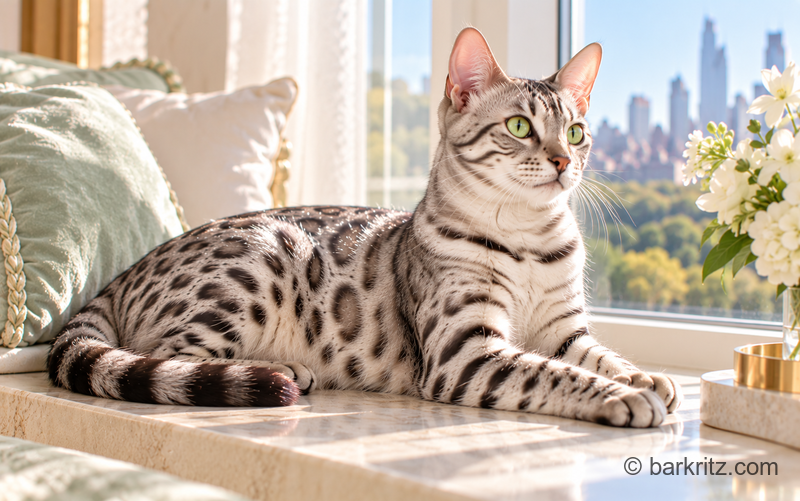
A Bengal’s characteristic sheen comes from the interaction of its hair structure, pigmentation, and light, producing a reflective quality often described as glitter.
Glitter is a distinctive feature associated with many Bengals, although its intensity varies between individuals and is not equally pronounced in every coat. The effect can make the fur appear dusted with gold or silver when illuminated, adding another dimension to the breed’s visual appeal.
The coat’s texture also contributes to its refined appearance. Bengal fur is generally short, dense, and soft, lying close to the body rather than forming a long, flowing silhouette. Healthy hair reflects light more evenly, while excessive dryness, poor nutrition, or certain medical conditions can affect the coat’s appearance.
Owners can support coat condition through a few consistent practices:
- Balanced nutrition: Feed a complete diet appropriate to the cat’s age, health, and activity level.
- Gentle grooming: Use a soft brush occasionally to remove loose hair without irritating the skin.
- Regular observation: Look for changes in texture, bald patches, persistent dandruff, or excessive shedding.
- Veterinary care: Seek professional advice if the coat becomes dull suddenly or changes alongside itching, weight loss, or other symptoms.
Routine grooming is generally straightforward because Bengal coats are short. Frequent bathing is usually unnecessary unless recommended for a specific reason. The goal is to maintain healthy skin and fur rather than artificially enhance the coat’s shine.
How Can You Choose a Bengal Coat Pattern That Suits Your Preferences?
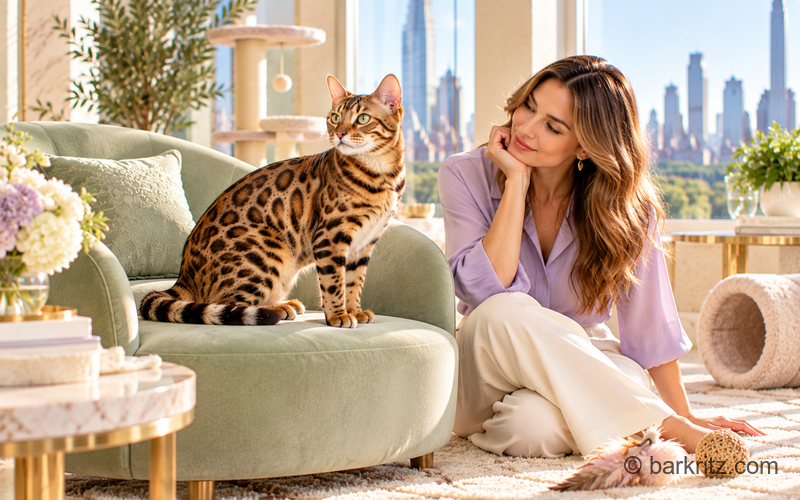
The best Bengal coat pattern is the one whose appearance appeals to you personally, provided the cat’s health, temperament, breeding practices, and long-term care needs remain the primary considerations.
Some enthusiasts gravitate toward large, high-contrast rosettes because they create an unmistakably wild-inspired silhouette. Others prefer marbled Bengals for their flowing patterns, while snow and silver coats appeal to those who favor cooler, more restrained color palettes.
When evaluating a Bengal kitten or adult, consider the entire coat rather than focusing on one dramatic feature. Look at the clarity of the markings, the contrast between the background and pattern, the distribution of color across the shoulders and flanks, and the overall condition of the fur. If show participation is important, seek guidance on the relevant breed standard before making a decision.
A responsible selection process should also include:
- Health documentation: Ask about veterinary examinations, vaccinations, and relevant inherited-condition screening.
- Breeder transparency: Choose a breeder who welcomes questions about parentage, rearing conditions, and the kitten’s development.
- Temperament: Observe the cat’s confidence, sociability, and response to handling.
- Lifestyle compatibility: Bengals are often energetic, intelligent, and curious, so they benefit from enrichment, interactive play, and an engaging home environment.
- Long-term commitment: Consider the financial, practical, and emotional responsibilities of caring for an active cat throughout its life.
Coat patterns are part of the Bengal’s appeal, but they do not reliably predict personality, intelligence, or affection. A beautifully marked cat still needs thoughtful care, social interaction, and veterinary attention.
Ultimately, the Bengal coat is a remarkable combination of natural variation and distinctive breed heritage. Whether expressed through bold rosettes, sweeping marbling, cool silver tones, or a luminous golden background, every pattern offers a different interpretation of the breed’s signature elegance.