

Maine Coon vs Norwegian Forest Cat: Which Is Right for You?
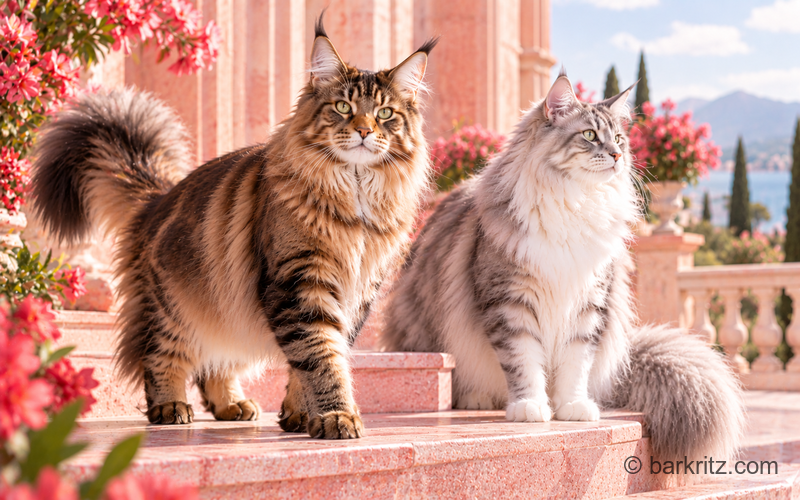
Few feline companions combine an impressive physical presence with such distinctive personalities as the Maine Coon and the Norwegian Forest Cat. Both are celebrated for their substantial size, luxurious coats, tufted ears, and ability to thrive as affectionate household companions, yet their temperaments, grooming requirements, and preferred ways of interacting with people can differ in meaningful ways. Choosing between them is less about deciding which breed is more beautiful and more about finding the cat whose character and care requirements best complement your lifestyle.
How Do Maine Coons and Norwegian Forest Cats Differ in Appearance and Size?
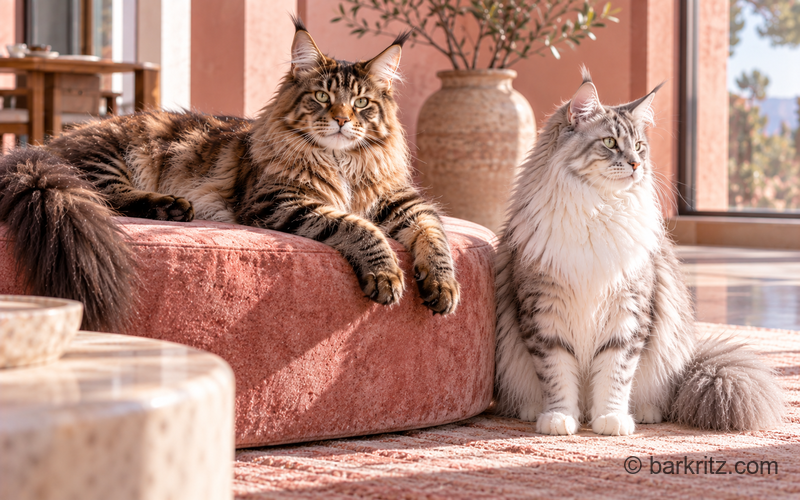
The Maine Coon generally has a longer, more rectangular silhouette with a prominent muzzle and a flowing tail, while the Norwegian Forest Cat typically has a triangular face, a straighter profile, and a distinctive double coat adapted to cold climates.
Both breeds are large, slow-maturing cats, and individual animals can vary considerably in weight and proportions. Maine Coons are among the largest domestic cat breeds, with adult males often weighing approximately 13–18 pounds and females around 8–12 pounds, although healthy individuals may fall outside these ranges. Norwegian Forest Cats are also substantial, with adult males commonly weighing around 12–16 pounds and females approximately 8–12 pounds. These are broad estimates rather than targets; body condition and overall health matter more than reaching a particular number.
Their coats offer another useful distinction. The Maine Coon’s shaggy, uneven-length coat often forms a prominent ruff around the neck, with longer hair on the belly and britches. The Norwegian Forest Cat has a dense undercoat beneath a water-resistant outer coat, creating a particularly protective structure associated with its Scandinavian origins.
Look for these characteristic differences:
- Head shape: Maine Coons have a squarer muzzle and a more rectangular overall profile; Norwegian Forest Cats usually have a triangular head and straight nose profile.
- Coat structure: Maine Coons have a shaggy, variable-length coat; Norwegian Forest Cats have a dense double coat with a protective outer layer.
- Body proportions: Maine Coons tend to look long and rectangular, while Norwegian Forest Cats often have a more compact, sturdy appearance despite their considerable size.
- Tail: Both have long, bushy tails, but the Maine Coon’s tail is often particularly prominent in its overall silhouette.
- Maturity: Both mature slowly, frequently taking several years to reach full physical development.
Neither breed is automatically larger or healthier than the other in every comparison. If size is a deciding factor, meet the individual cat and assess its build rather than relying solely on breed reputation.
Which Breed Has the More Affectionate and Sociable Personality?
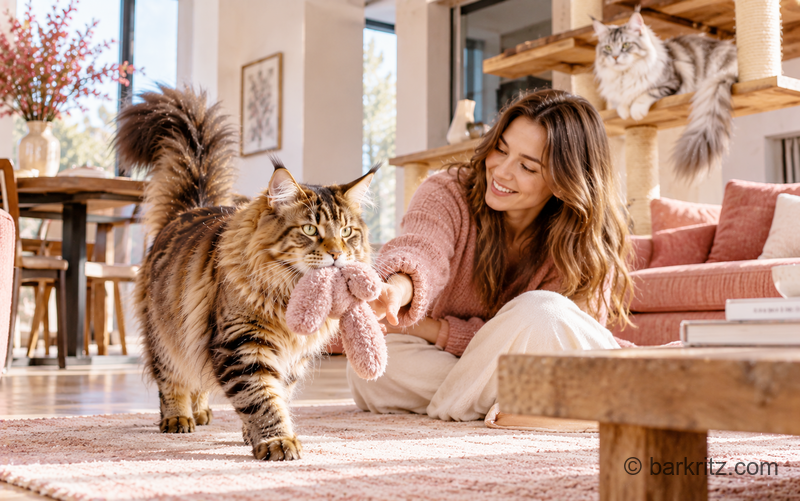
Maine Coons are often described as outgoing, people-oriented companions, while Norwegian Forest Cats tend to combine affection with a more independent temperament, although personality varies substantially between individuals.
The Maine Coon has earned a reputation as a sociable household cat that often enjoys following its people from room to room, participating in everyday activities, and engaging in interactive play. Many are friendly without being persistently demanding, preferring to remain close to their families rather than spending every moment on a lap. Some develop a distinctive repertoire of chirps and trills, using vocalizations that sound different from the conventional feline meow.
Norwegian Forest Cats are generally affectionate in a more self-directed way. They may enjoy companionship and remain near family members while choosing when to initiate physical contact. Their independent streak does not mean they are unfriendly; rather, many appreciate having the freedom to retreat, observe, and rejoin the household on their own terms.
For households with children, visitors, or other pets, early socialization and the individual cat’s temperament are more predictive of compatibility than breed alone. Both breeds can become excellent companions in an appropriately managed home, provided introductions are gradual and each animal has access to safe resting places.
Consider which everyday dynamic best suits your household:
- For an interactive companion: A well-socialized Maine Coon may appeal to owners who enjoy frequent engagement and shared activities.
- For affectionate independence: A Norwegian Forest Cat may suit someone who appreciates companionship without constant attention.
- For a busy household: Either breed can adapt, but both need reliable interaction, environmental enrichment, and opportunities to withdraw.
- For first-time cat owners: Both can be rewarding choices when their grooming, space, and health needs are understood in advance.
A breeder or rescue organization should be able to describe the cat’s established temperament, comfort with handling, and experience around children or other animals. Observing how a cat responds to unfamiliar people often provides more useful information than relying on a generalized breed description.
Which Cat Is Easier to Groom and Maintain at Home?
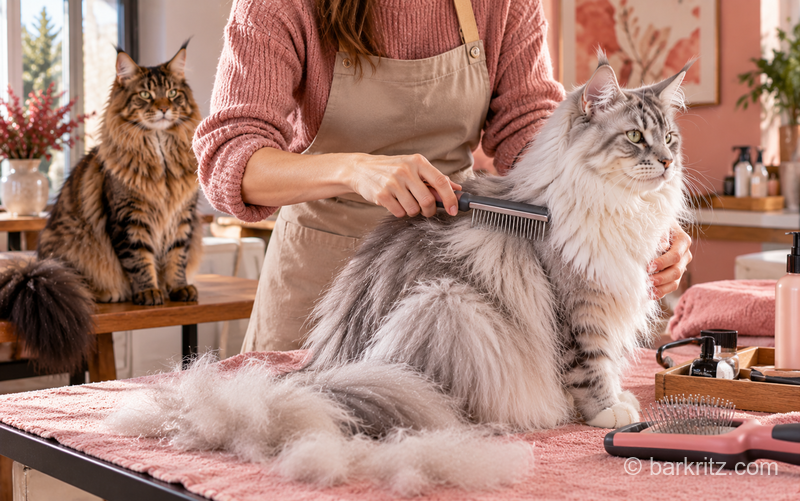
The Maine Coon’s shaggy coat and the Norwegian Forest Cat’s dense double coat both require consistent grooming, but the Norwegian Forest Cat may need especially careful attention during seasonal shedding.
Neither breed is genuinely low-maintenance when it comes to coat care. Maine Coons can develop tangles beneath the legs, around the belly, and behind the ears, particularly where longer hair experiences friction. Norwegian Forest Cats also benefit from regular brushing, especially when the undercoat loosens during seasonal changes and dense fur begins to form mats.
A practical routine typically includes brushing several times a week, with more frequent sessions during heavy shedding or whenever tangles begin to develop. Individual coat texture makes a significant difference: some cats maintain relatively manageable coats, while others need daily attention. Introduce grooming gradually, reward calm behavior, and check sensitive areas without pulling at knots.
Both breeds also need routine nail checks, dental care, clean litter facilities, balanced nutrition, and preventive veterinary attention. Their size makes appropriately spacious litter boxes, sturdy scratching posts, and stable climbing structures particularly useful. A large cat should be able to turn comfortably inside its litter box and access resting places without struggling.
For a more precise comparison:
- Maine Coon: Pay particular attention to longer belly fur, leg furnishings, and areas where the coat can tangle.
- Norwegian Forest Cat: Monitor the dense undercoat during shedding periods and check thoroughly for mats beneath the outer layer.
- Both breeds: Use cat-appropriate grooming tools, inspect the skin during brushing, and maintain a consistent dental-care routine.
- For either breed: Seek professional advice if mats are tight, extensive, or painful rather than attempting to cut them out close to the skin.
A well-maintained coat should feel comfortable rather than serve as a decorative achievement. Owners who travel frequently or have limited time for regular brushing should realistically assess whether they can sustain the commitment before choosing either breed.
What Health Considerations Should You Know Before Choosing Either Breed?
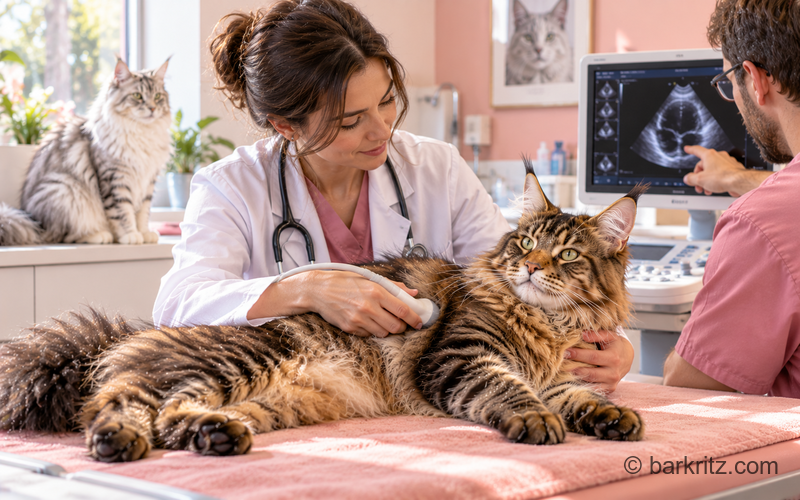
Both breeds benefit from responsible breeding, regular veterinary care, and appropriate screening for inherited conditions, with particular attention to hypertrophic cardiomyopathy and other breed-relevant risks.
Hypertrophic cardiomyopathy (HCM), a disease involving thickening of the heart muscle, is a significant concern in cats and has been studied in both Maine Coons and Norwegian Forest Cats. Certain inherited variants have been identified in Maine Coons, and genetic testing may help assess specific risks; however, a negative result does not eliminate the possibility of HCM. Norwegian Forest Cats also warrant careful cardiac-health consideration, and genetic testing alone cannot establish that an individual cat will remain free of heart disease.
Responsible breeders should be transparent about health histories and the screening methods used for their breeding cats. Depending on the breed and family history, this may include DNA testing for relevant inherited variants, veterinary cardiac evaluations, and other assessments recommended by breed specialists. Ask what the results mean, which conditions the tests address, and whether additional screening is appropriate.
Maine Coons are also associated with concerns such as hip dysplasia and spinal muscular atrophy, an inherited neuromuscular condition for which a genetic test is available. Norwegian Forest Cats can be affected by glycogen storage disease type IV, a rare inherited metabolic disorder for which genetic testing can identify affected or carrier status.
Before committing to a kitten, ask the breeder for:
- Health documentation: Records of relevant genetic tests and veterinary examinations for the parents.
- Cardiac screening: Details of any echocardiography or other heart assessments recommended for the breeding cats.
- Family history: Information about inherited conditions, unexplained early deaths, and significant illnesses among relatives.
- Written agreements: Clear terms covering health guarantees, veterinary responsibilities, and support if a condition emerges.
- Ongoing guidance: Advice on feeding, weight management, preventive care, and the transition to a new home.
No pedigree or screening program can guarantee perfect health. A careful breeder reduces avoidable risk through informed selection and transparent records, while regular veterinary examinations remain essential throughout the cat’s life.
Which Breed Is the Better Fit for Your Home, Schedule, and Lifestyle?
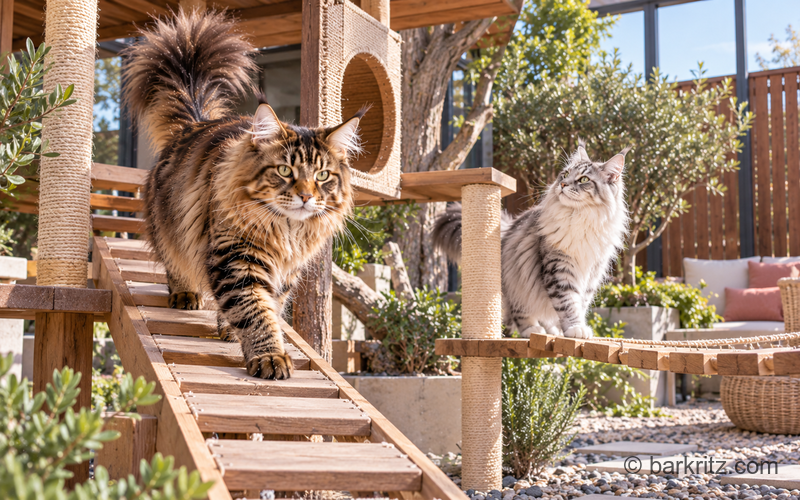
The Maine Coon may be the better match for owners seeking an especially interactive companion, while the Norwegian Forest Cat may appeal to households that value a confident, affectionate cat with a somewhat more independent style.
Both breeds need more than attractive surroundings: they require meaningful daily interaction, exercise, environmental enrichment, preventive care, and a home designed around their physical needs. Their size makes stable climbing furniture, generous resting areas, and spacious litter facilities particularly important. Vertical territory is valuable, but it should be arranged so that older cats or those with mobility limitations can reach essential resources safely.
A Maine Coon may suit someone who enjoys training games, interactive toys, and a cat that likes to participate in household routines. A Norwegian Forest Cat may be a good choice for an owner who appreciates a companion that alternates between sociable moments and independent observation. These are tendencies, not guarantees, and an individual cat may display the opposite pattern.
Before choosing, consider the realities of everyday ownership:
- Time: Can you provide regular grooming, interactive play, and companionship?
- Space: Is there room for sturdy climbing structures, comfortable resting areas, and large litter boxes?
- Budget: Can you cover quality nutrition, routine veterinary care, grooming supplies, and unexpected medical expenses?
- Household dynamics: Will children and other pets be introduced patiently, with safe spaces available to every animal?
- Long-term commitment: Are you prepared to care for a cat that may live well into its teens, potentially for 12–16 years or longer?
A responsible decision begins with meeting cats from reputable breeders or rescue organizations and discussing their individual needs. Observe whether the animal approaches readily, prefers quiet observation, enjoys handling, or becomes unsettled in unfamiliar situations. Ask how its temperament has developed and what support will be available after adoption.
Ultimately, neither breed is universally superior. The Maine Coon offers an appealing combination of size, sociability, and playful engagement, while the Norwegian Forest Cat brings a distinctive Scandinavian profile, a protective double coat, and an often self-possessed temperament. The right choice is the individual cat whose personality, health background, and care requirements align with your home—and whose companionship you are prepared to nurture for years to come.