

How to Prepare Your Cat for Air Travel
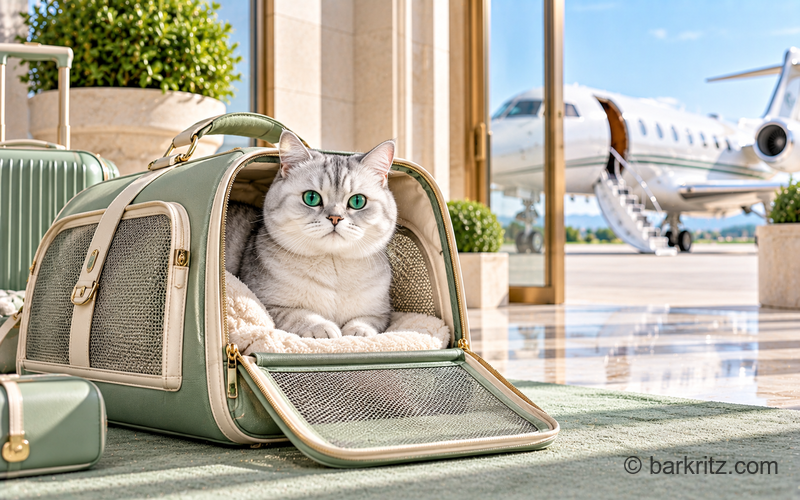
Air travel with a cat requires thoughtful preparation, from selecting the right carrier to understanding airline policies and creating a familiar environment in an unfamiliar setting. For discerning pet owners, a seamless journey is not simply a matter of booking a flight; it is an exercise in anticipating a cat’s needs while preserving comfort, safety, and composure throughout the experience. Whether traveling from New York to Europe or connecting to a seasonal residence, the most successful journeys begin weeks before departure, with a carefully considered plan tailored to the individual animal.
How Far in Advance Should You Prepare Your Cat for a Flight?
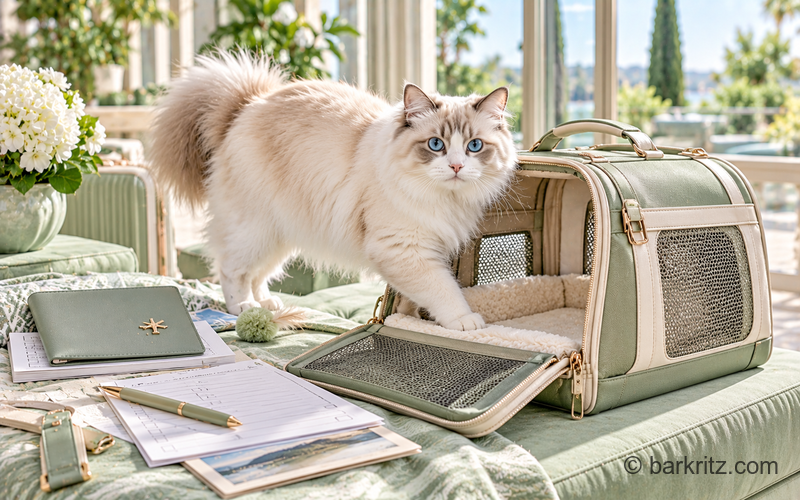
The ideal preparation begins several weeks before departure, allowing sufficient time to arrange veterinary documentation, confirm airline requirements, and help your cat become comfortable with its travel carrier.
Begin by contacting the airline directly, since cabin pet policies, carrier dimensions, fees, and the number of animals permitted on each flight vary considerably. A reservation for a passenger does not automatically guarantee a space for a cat, and some airlines impose strict limits on the number of pets allowed in the cabin.
A veterinary appointment should be scheduled early enough to address health concerns, discuss travel-related anxiety, and obtain any required certificates or vaccinations. International journeys may involve additional requirements, including microchip identification, rabies vaccination records, import permits, or official health documentation. These requirements depend on the destination, transit countries, and applicable regulations, so verify them with the relevant authorities rather than relying on a generic checklist.
A practical preparation timeline includes:
- Four to eight weeks before departure: Research airline policies, destination entry requirements, and carrier specifications; arrange veterinary advice.
- Two to four weeks before departure: Begin structured carrier training and gradually introduce short practice journeys.
- One to two weeks before departure: Confirm reservations, review documentation, and prepare a travel kit.
- The final 48 hours: Recheck flight details, pack essential supplies, and maintain your cat’s familiar routine as much as possible.
Some destinations require veterinary procedures or documentation well in advance, so international travelers should start earlier whenever necessary. A carefully organized itinerary also allows time to address unexpected administrative requirements without creating avoidable stress for the animal.
Which Cat Carrier Is Best for a Comfortable and Safe Flight?
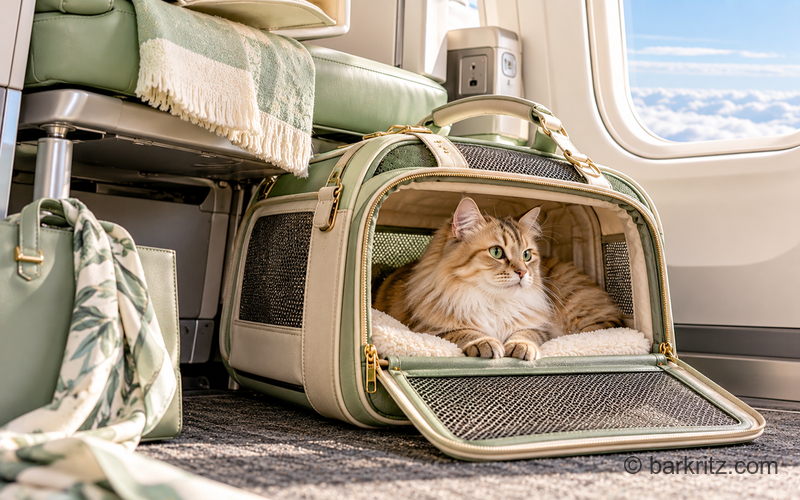
The best carrier is an airline-approved, well-ventilated model that fits beneath the intended aircraft seat, accommodates your cat comfortably, and allows secure access without compromising safety.
For most cats traveling in the cabin, a soft-sided carrier may be practical because some models can fit beneath seats more easily than rigid alternatives, although acceptance depends on the airline’s exact dimensions and construction requirements. A rigid carrier can provide additional structure and protection, particularly when required by the airline or appropriate for the cat’s size and temperament.
Before purchasing, measure the carrier and check the airline’s current specifications. Your cat should be able to stand naturally, turn around, and lie down in a comfortable position. The carrier must also remain secure during movement and provide adequate ventilation on multiple sides where required.
Introduce the carrier well before departure rather than presenting it for the first time on travel day. Leave it open in a familiar room, place a favorite blanket inside, and occasionally offer treats or meals near the entrance. Gradually encourage your cat to spend time inside, then practice closing the door for brief periods. Progress should follow the cat’s comfort level rather than a rigid schedule.
For an elevated travel experience, consider these practical details:
- Stable base: A firm, level floor helps the cat feel secure during handling.
- Absorbent lining: A washable, absorbent pad can help manage accidents without sacrificing comfort.
- Secure closures: Zippers and latches should resist accidental opening.
- Familiar scent: A blanket carrying the cat’s usual scent may provide reassurance.
- Accessible identification: Attach identification securely and keep a recent photograph of your cat available.
Avoid relying on an expensive carrier’s appearance alone. Design matters, but reliable construction, adequate space, ventilation, and compatibility with the airline are more important than branding or decorative finishes.
What Veterinary Checks and Travel Documents Does a Cat Need Before Flying?
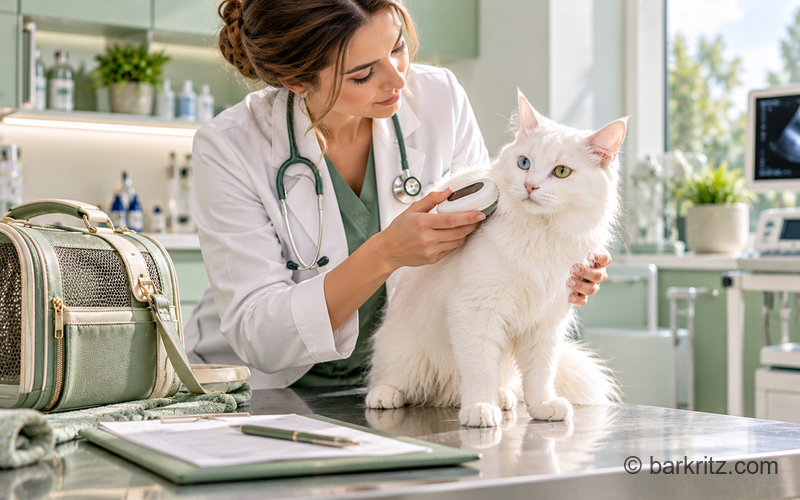
Before flying, your cat should receive veterinary guidance appropriate to its health, destination, and itinerary, while all required identification and travel documents should be verified against current official rules.
A healthy adult cat may tolerate air travel well, but age, respiratory problems, heart disease, pregnancy, mobility limitations, and a history of severe anxiety can affect whether flying is advisable. Cats with underlying health conditions may require additional evaluation, and some animals are better served by an alternative travel arrangement.
Ask your veterinarian to review your cat’s medical history and determine which preventive measures or documentation are appropriate. Do not assume that a routine vaccination record alone satisfies international entry requirements. Depending on the destination, authorities may require a microchip, rabies vaccination, a waiting period, a veterinary health certificate, an official endorsement, or parasite treatment.
For journeys from the United States, requirements may differ between domestic flights and international departures. A cat traveling to another country may need documentation issued or endorsed by the appropriate authority, and some destinations impose quarantine or advance-notification requirements. Transit through a third country can introduce additional conditions, even when the cat never leaves the airport.
Before departure, organize a dedicated document folder containing, where applicable:
- Veterinary health certificates and official endorsements.
- Vaccination records and microchip identification details.
- Import permits or destination-specific authorizations.
- Airline pet reservation confirmation and applicable payment records.
- Copies of relevant medical information and your veterinarian’s contact details.
Keep both accessible digital copies and physical copies where appropriate, while carrying original documents whenever the authorities or airline require them. Verify validity periods and submission deadlines carefully; a document that was acceptable for a previous journey may not be valid for the next one.
How Can You Reduce a Cat’s Stress During Airport Security and the Flight?
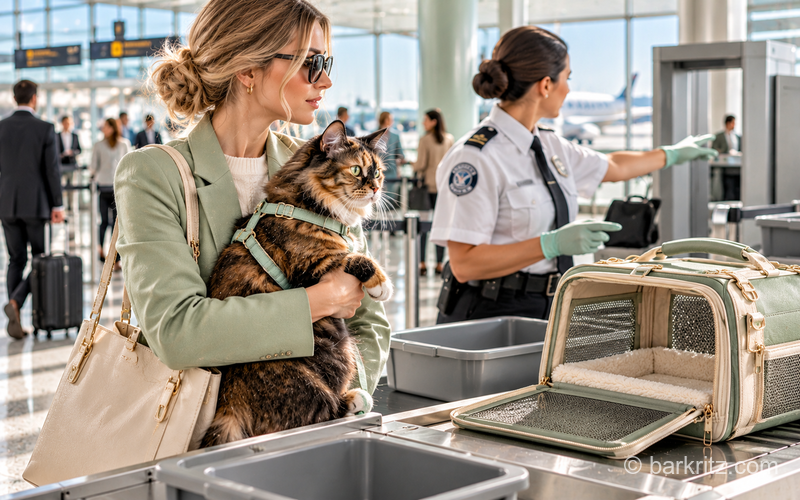
The most effective way to reduce travel stress is to combine gradual preparation, predictable handling, a familiar carrier environment, and a calm response to the unfamiliar sounds and movements of air travel.
Airports expose cats to crowds, rolling luggage, unfamiliar smells, announcements, and sudden changes in routine. Carrier training helps establish a secure reference point, but owners should also prepare for security screening. Procedures vary by airport and screening authority, so ask staff how pets are handled and what screening options are available.
In some screening situations, a cat may need to be removed from its carrier while the carrier passes through an inspection machine. Because frightened cats can escape quickly, consider a well-fitted harness and leash introduced gradually at home, provided your cat tolerates them. Follow the screening staff’s instructions and ask whether an alternative procedure is available if removing your cat would create a safety concern.
During the flight, keep the carrier closed and positioned as instructed by the airline. Speak softly if your cat responds positively to your voice, avoid repeatedly disturbing the carrier, and do not open it in an unsecured environment. A familiar absorbent liner can help maintain comfort, while a small amount of familiar bedding may provide reassurance.
Feeding requires individual judgment. Ask your veterinarian about meal timing and hydration based on your cat’s age, medical history, and flight duration. Avoid making major dietary changes immediately before departure, and do not withhold water or food for prolonged periods without appropriate veterinary advice.
Sedatives and tranquilizers should never be administered casually for air travel. Some medications can affect coordination, blood pressure, temperature regulation, or respiratory function, and certain airlines restrict or discourage sedated animals. If anxiety is a concern, discuss a personalized plan with your veterinarian and test any prescribed medication under veterinary guidance before the journey.
What Should You Pack for Your Cat’s Flight and Arrival?

A thoughtfully assembled travel kit should cover identification, hygiene, hydration, familiar comfort, and the essentials needed to settle your cat safely after arrival.
Keep essential items in your personal carry-on rather than in checked luggage, where they may be inaccessible during delays. The exact quantity of supplies depends on the length of the journey, the number of connections, your cat’s needs, and whether you will have immediate access to pet-friendly facilities at your destination.
A refined but practical packing list includes:
- Carrier essentials: An absorbent liner, a familiar lightweight blanket, and a spare pad.
- Food and hydration: The usual food in appropriate portions, plus a collapsible bowl and access to water.
- Hygiene supplies: Waste bags, unscented wipes suitable for pets, paper towels, and a small sealable bag for soiled materials.
- Identification and records: Contact details, a recent photograph, required documents, and relevant medical information.
- Comfort items: A familiar toy or bedding item that fits safely inside the carrier.
- Health essentials: Any prescribed medication, stored and administered according to veterinary instructions.
For long journeys or connections, identify suitable opportunities to offer water and attend to your cat’s needs without exposing it to an unsecured environment. Do not assume every airport has a suitable pet-relief area, and research facilities at connecting airports before departure.
Upon arrival, take your cat directly to a quiet, secure room before introducing it to a larger space. Set out water, its usual food, a litter tray, and familiar bedding, then allow the animal to explore at its own pace. Keep exterior doors and windows secured, particularly in unfamiliar accommodation, and avoid immediate introductions to unfamiliar pets or large groups of visitors.
The finest travel preparation is ultimately defined by attention to individual needs rather than elaborate accessories. When documentation is organized, the carrier feels familiar, and the itinerary allows room for the unexpected, air travel becomes more manageable for both cat and owner. A thoughtful approach transforms the journey from a stressful disruption into a carefully planned transition, allowing your companion to arrive ready to settle into its new surroundings.