

Scottish Fold Cats: Personality, Care, Health, and What Makes Them Unique
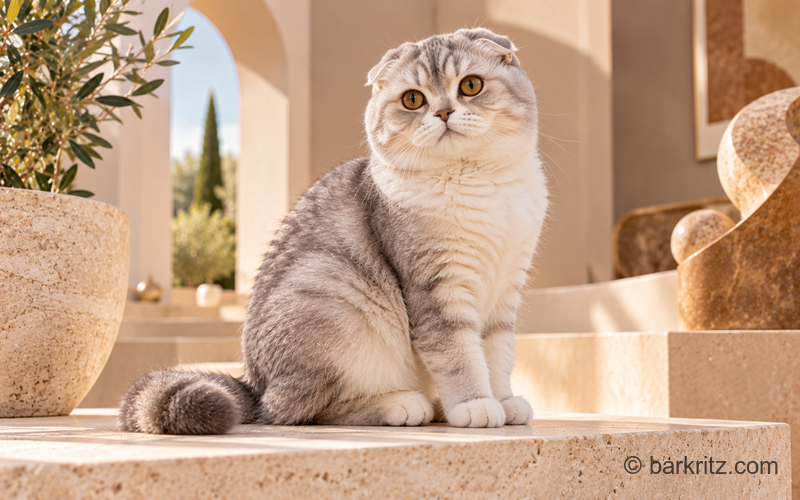
With their rounded faces, plush coats, and distinctive folded ears, Scottish Fold cats possess an unmistakable appearance that has made them recognizable among feline enthusiasts worldwide. Yet their appeal extends beyond their expressive features: these cats are often described as gentle, observant companions who appreciate familiar surroundings and relaxed interaction. Behind their polished appearance, however, lies an important consideration for prospective owners—the genetic mutation responsible for folded ears is also associated with a painful cartilage and bone disorder. Understanding the breed means appreciating its character while making informed, welfare-conscious decisions about health, care, and responsible ownership.
What Makes Scottish Fold Cats Physically Unique, and How Can You Recognize One?
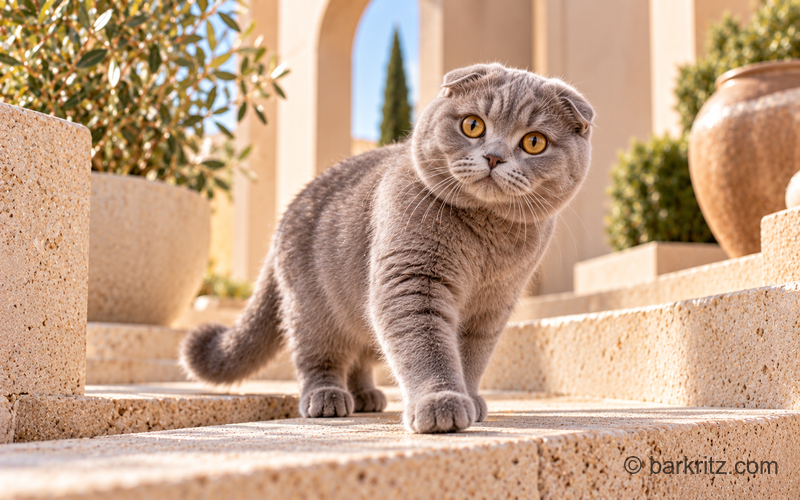
Scottish Fold cats are best recognized by their rounded head, large expressive eyes, compact-looking silhouette, dense coat, and ears that bend forward because of an inherited cartilage abnormality.
The breed originated in Scotland in the 1960s, when a farm cat named Susie attracted attention for her unusual folded ears. Selective breeding established the distinctive appearance that later became associated with the Scottish Fold. Not every cat descended from Scottish Fold lines has folded ears; some have straight ears and are commonly called Scottish Straights.
Their appearance can be remarkably varied. Scottish Folds may have short or long coats, and their colors and patterns include solid shades, tabby markings, bicolor combinations, and more. The familiar rounded face and wide-set eyes contribute to an expression that many admirers find particularly appealing.
Characteristic features include:
- Ears: Folded forward to varying degrees in cats that inherit the associated mutation; some related cats have straight ears.
- Eyes: Large and rounded, with colors influenced by coat genetics.
- Head: Typically rounded, with full cheeks and a short-to-moderate muzzle.
- Coat: Dense and plush in short-haired cats, with longer, fuller coats in long-haired varieties.
- Body: Medium-sized and sturdy, with a rounded overall impression rather than an extremely elongated silhouette.
The folded ears are not simply a cosmetic variation. They result from a genetic condition affecting cartilage development throughout the body, not only the ear flap. This distinction is central to understanding the breed: the feature that makes a Scottish Fold immediately recognizable is also linked to its principal welfare concern.
A responsible introduction to the breed therefore goes beyond appearance. Prospective owners should learn about the cat’s individual health, mobility, family history, and veterinary care rather than assuming that a particularly pronounced fold or round face indicates superior quality.
What Is the Scottish Fold Personality Like, and Do These Cats Make Good Companions?
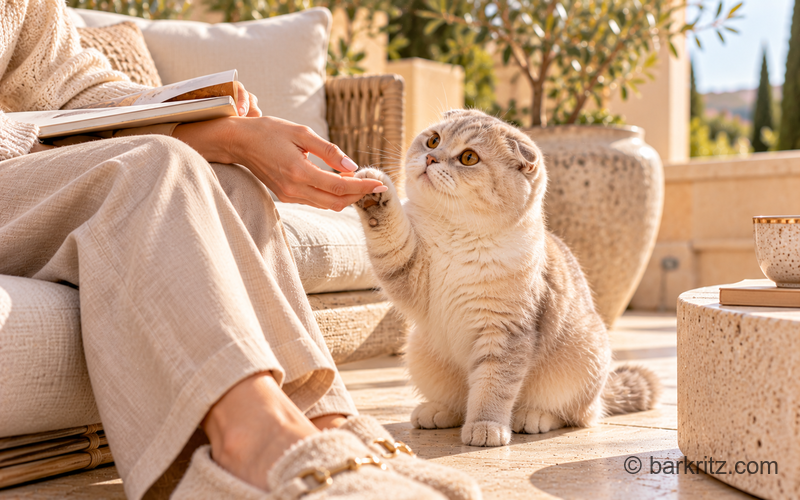
Scottish Fold cats are often affectionate, quietly curious, and adaptable companions, although their temperament depends on individual personality, early socialization, health, and living environment.
Many enjoy remaining close to their people without demanding constant attention. A Scottish Fold may follow its owner from room to room, settle nearby during quiet activities, or observe household routines from a comfortable resting place. Some enjoy interactive play and gentle handling, while others prefer companionship on their own terms.
Their reputation for calm behavior should not be mistaken for a guarantee that every cat will be placid. Young cats may be energetic, some adults are highly playful, and individual preferences vary. As with any breed, early positive experiences can help a kitten become more comfortable with visitors, household sounds, grooming, and routine veterinary examinations.
A suitable environment offers both security and stimulation. Useful features include:
- Interactive play: Wand toys and short, supervised play sessions provide opportunities to stalk, chase, and pounce.
- Comfortable retreats: Covered beds, quiet corners, and stable resting places allow a cat to withdraw when it wants privacy.
- Predictable routines: Consistent feeding and play schedules can help cats feel secure.
- Gentle companionship: Letting the cat initiate contact helps establish trust and respect its boundaries.
- Enrichment at ground level: Puzzle feeders, scent games, and accessible climbing or scratching structures encourage exploration without requiring strenuous jumps.
Scottish Folds can live happily in apartments when their needs for play, rest, and environmental enrichment are met. A spacious home is not essential, but an engaging one is. Scratching posts, safe observation points, and rotating toys can help prevent boredom.
It is also important to distinguish personality from physical limitation. A cat that moves little, avoids jumping, or resists being handled may not simply be unusually relaxed. These behaviors can indicate discomfort, including joint pain, and warrant veterinary assessment. Owners should never assume that reduced activity is an inherent feature of the breed.
What Health Problems Affect Scottish Fold Cats, and Why Do Their Folded Ears Matter?
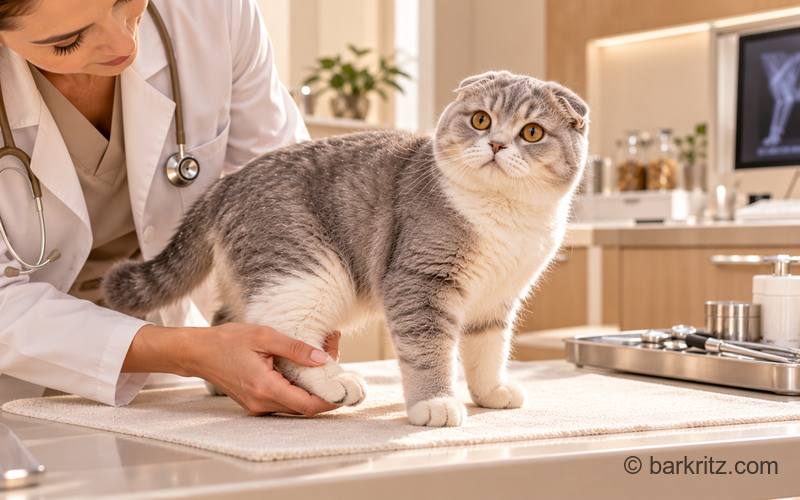
The most significant health concern in Scottish Fold cats is osteochondrodysplasia, a genetic disorder of cartilage and bone development associated with the mutation that produces folded ears.
The mutation affects cartilage throughout the body, meaning its consequences can extend well beyond the ears. Cats may develop abnormal bone growth, joint changes, stiffness, lameness, a thickened or inflexible tail, and difficulty moving comfortably. Severity varies, but the underlying risk is directly connected to the folded-ear trait.
Cats with two copies of the associated variant can be particularly severely affected, but cats with only one copy may also develop disease. A cat that appears comfortable as a kitten may develop signs as it matures, and the absence of obvious symptoms does not guarantee that it will remain unaffected.
Potential warning signs include:
- Reluctance to jump onto familiar furniture or climb stairs.
- Stiffness after resting or difficulty walking normally.
- Sensitivity when the legs, feet, or tail are touched.
- An unusually thick, rigid, or painful tail.
- Changes in gait, reduced play, or unexplained irritability.
- Difficulty grooming areas of the body that were previously easy to reach.
If any of these signs appear, a veterinarian should assess the cat. Diagnosis may involve a physical examination and imaging, depending on the symptoms. There is no simple cosmetic treatment that removes the genetic cause; management focuses on pain relief, mobility, and quality of life under veterinary supervision.
The folded-ear mutation is dominant, which means breeding two folded-ear cats together can produce kittens with two copies and a particularly high risk of severe disease. Even mating a folded-ear cat with a straight-eared cat does not eliminate the possibility of affected offspring. Because the mutation itself is associated with welfare concerns, avoiding breeding for folded ears is the clearest way to prevent creating additional cats at risk.
Prospective owners should ask for transparent veterinary records and an honest account of any mobility concerns. No breeder can guarantee that a folded-ear kitten will be free of osteochondrodysplasia simply because its parents appear healthy. A responsible decision must put the cat’s long-term welfare ahead of a particular appearance.
How Should You Care for a Scottish Fold Cat’s Coat, Diet, and Daily Well-Being?
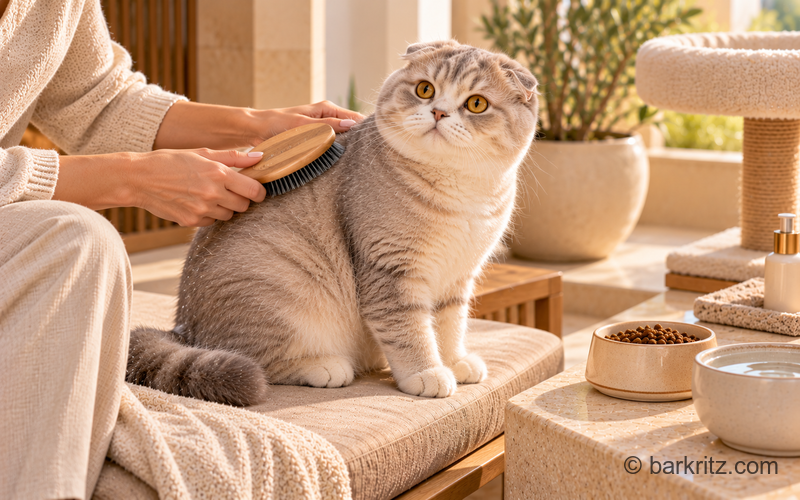
Scottish Fold care centers on balanced nutrition, regular grooming, appropriate exercise, routine veterinary attention, and careful observation of mobility and behavior.
Short-haired Scottish Folds generally benefit from weekly brushing, while long-haired cats may need more frequent grooming to prevent tangles and remove loose fur. During seasonal shedding, additional brushing can help maintain coat condition. Introduce grooming gradually and use a soft brush suited to the coat rather than pulling at knots.
Ears should be checked regularly, but they should not be cleaned aggressively or with cotton swabs inserted into the ear canal. Ask a veterinarian to demonstrate safe cleaning if wax buildup or other concerns arise. Redness, discharge, odor, or persistent scratching warrants a professional examination rather than repeated cleaning at home.
Nutrition should be tailored to the cat’s age, body condition, activity level, and medical needs. A complete and balanced diet appropriate for the cat’s life stage supports general health, while measured portions help prevent excess weight that could add stress to already vulnerable joints.
A practical wellness routine includes:
- Weekly coat care: Brush according to coat length and check the skin for irritation or unusual changes.
- Daily play: Offer several short, accessible play sessions, adapting the activity to the cat’s comfort and mobility.
- Fresh water: Provide clean water in an accessible location; some cats prefer a fountain.
- Dental hygiene: Introduce feline toothbrushing gradually where possible and arrange veterinary dental checks.
- Nail care: Inspect claws regularly and trim them carefully when needed.
- Preventive veterinary visits: Maintain vaccination, parasite prevention, and health assessments according to veterinary advice.
- Weight monitoring: Check body condition and discuss feeding amounts with a veterinarian.
For a Scottish Fold, the home environment should also be designed with comfort in mind. Stable steps or low platforms can provide access to favorite resting places without demanding high jumps. Soft bedding, accessible litter boxes, and food and water stations that are easy to reach can help a cat remain comfortable if mobility becomes limited.
These adjustments are not a substitute for veterinary care, and owners should not wait for obvious lameness before seeking advice. Subtle changes in posture, grooming, jumping, or social behavior can be early indicators of pain. Routine observation is one of the most valuable elements of responsible ownership.
How Can You Choose a Scottish Fold Responsibly and Create the Right Home for One?
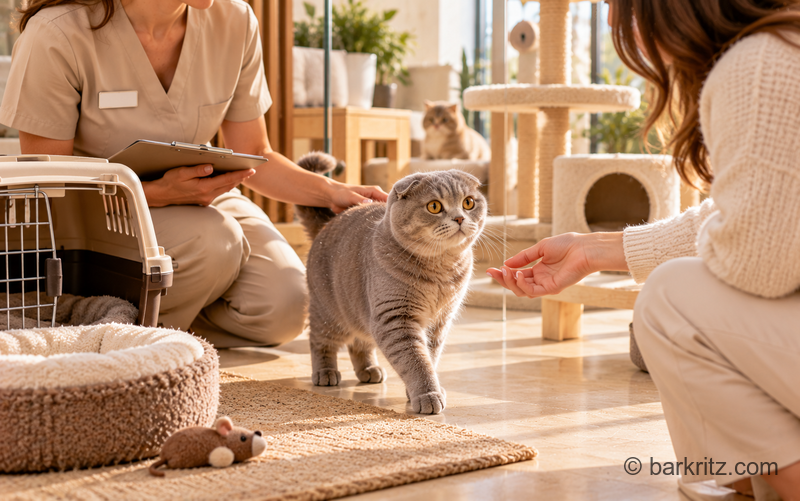
The most responsible approach is to prioritize feline welfare, obtain a clear veterinary history, and understand the breed’s inherited health risks before committing to ownership.
Because the folded-ear trait is linked to osteochondrodysplasia, choosing a kitten solely for its appearance can support breeding practices that perpetuate a painful condition. Prospective owners should carefully consider whether acquiring a folded-ear cat aligns with their welfare priorities and may wish to consider a straight-eared cat or another breed without this particular mutation.
If you are assessing an individual Scottish Fold, ask for veterinary documentation, information about the parents, and a transparent discussion of any signs of stiffness or mobility difficulty. Be cautious of claims that a particular mating, diet, supplement, or screening test can guarantee freedom from the disorder. A health check is valuable, but it cannot erase the underlying genetic association.
Before bringing a cat home, prepare a calm, secure environment with separate feeding and resting areas, a clean litter box, scratching surfaces, and opportunities for play. Keep windows secure, remove toxic plants and hazardous small objects, and introduce the cat to unfamiliar rooms gradually. A predictable environment can help a new companion settle without unnecessary stress.
The following considerations can guide a thoughtful decision:
- Health transparency: Seek complete records and honest answers about known risks rather than verbal assurances.
- Mobility awareness: Observe how the cat walks, turns, plays, and uses its litter box, while remembering that visible comfort does not rule out future disease.
- Long-term care planning: Budget for routine veterinary care and the possibility of additional assessment or pain management.
- Ethical sourcing: Avoid supporting breeding practices that prioritize folded ears over health and welfare.
- Individual compatibility: Consider temperament, household activity, existing pets, and the time available for daily care.
Adoption may provide an opportunity to offer a home to a Scottish Fold or straight-eared cat already in need of one. Rescue organizations and shelters can often share information about an animal’s known health and personality, although some medical uncertainties may remain.
Scottish Fold cats are undeniably distinctive, with an appearance that has captured the attention of cat lovers around the world. Yet the most meaningful form of appreciation is not measured by the depth of an ear fold or the roundness of a face. It is demonstrated through informed choices, attentive care, and a willingness to place comfort and quality of life above appearance. For any cat, that is the foundation of a rewarding companionship.