

How to Fly Private with Your Dog or Cat
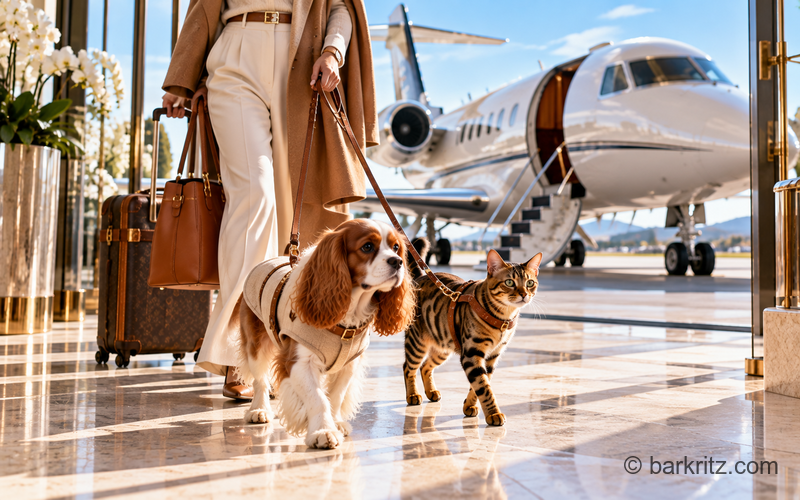
Private aviation can transform pet travel from a logistical exercise into a highly individualized journey, particularly when the itinerary, aircraft and animal’s needs are considered together. Dogs and cats can often remain close to their owners throughout a private flight, but the most seamless experience still depends on careful preparation, appropriate documentation, veterinary planning and advance coordination with the operator. The objective is simple: make the journey feel as composed and predictable for the animal as it does for its owner.
How Should You Prepare Your Dog or Cat Before a Private Flight?
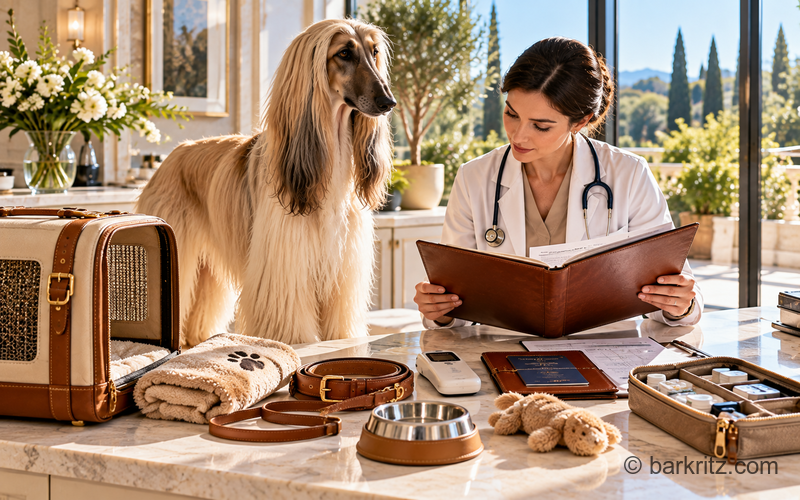
The most successful private pet journeys begin several days or weeks before departure, with veterinary preparation, documentation and a travel routine tailored to the individual animal.
A pre-flight plan should account for the destination, duration of the journey, climate, the animal’s age and temperament, and any border or entry requirements that apply. International travel can involve vaccination records, identification requirements, health certificates, import permits or other documentation depending on the countries involved.
Before departure, establish:
- Veterinary review: Confirm that the animal is fit to travel and discuss any breed- or age-specific considerations.
- Identification: Ensure microchip information and contact details are current.
- Documentation: Prepare vaccination records, health certificates and destination-specific paperwork well in advance.
- Medication: Carry prescribed medication in its original packaging and follow veterinary instructions.
- Familiarization: Introduce the carrier, travel blanket or other equipment well before departure rather than on travel day.
- Routine: Preserve normal feeding, exercise and sleep patterns as closely as practical before the flight.
For international itineraries, requirements can vary considerably by destination and may change over time, making confirmation with the relevant authorities and the aviation operator essential.
Can Dogs and Cats Stay With Their Owners During a Private Flight?
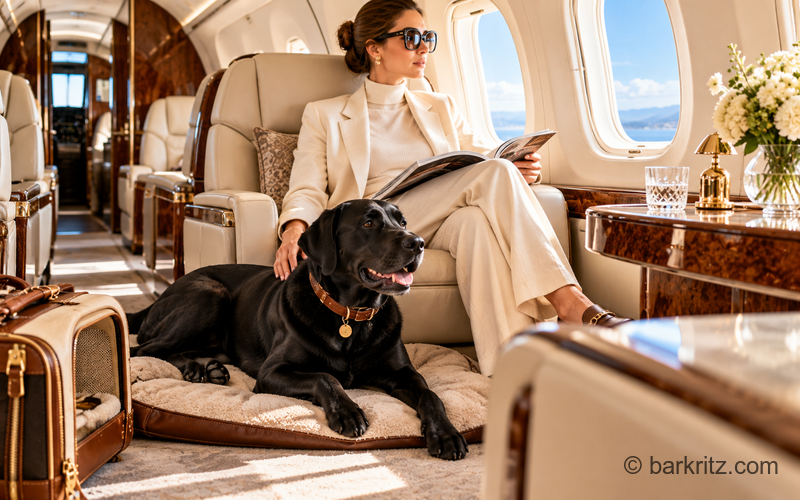
One of the principal advantages of private aviation is the ability to coordinate the journey around the animal rather than separating the pet from the owner as commonly occurs in commercial travel.
Depending on the aircraft, operator and itinerary, dogs and cats may be able to remain in the cabin with their owners rather than traveling in a separate cargo environment. The exact arrangement should always be confirmed before booking, particularly for larger dogs or animals requiring specialized equipment.
Important considerations include:
- Cabin access: Confirm that the specific operator and aircraft permit the animal to remain in the passenger cabin.
- Size: Verify whether there are restrictions based on the animal’s dimensions or weight.
- Carrier requirements: Some operators may require a suitable carrier during portions of the journey.
- Seating: Determine where the animal can safely rest without obstructing aisles or emergency equipment.
- Multiple pets: Confirm the number and species of animals permitted on the specific aircraft.
- Crew procedures: Discuss feeding, movement, cleaning and other practical arrangements before departure.
For a large dog, the aircraft itself becomes an important part of the decision. Cabin dimensions, floor space, seating configuration and door access can matter considerably more than the aircraft’s headline range.
What Should You Pack for a Private Flight With a Pet?
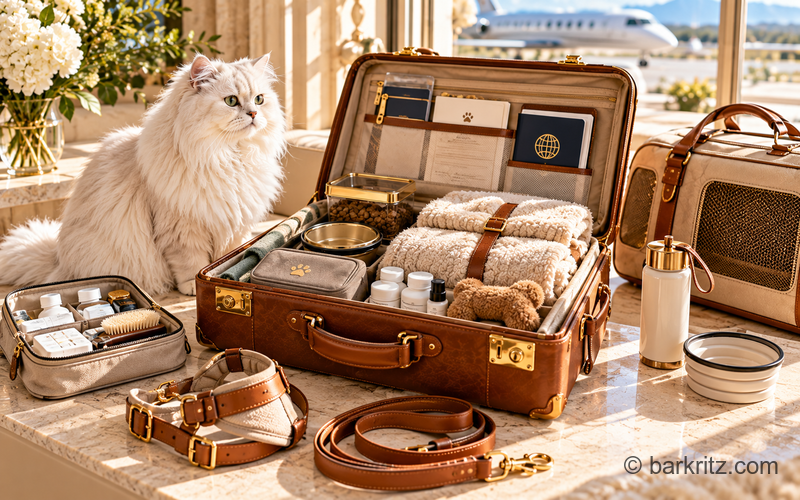
A refined pet-flight kit should be compact but comprehensive, containing everything required to preserve the animal’s normal routine from departure through arrival.
The advantage of private aviation is flexibility, but that does not eliminate the need for disciplined packing. Familiar objects can also reduce anxiety by giving the animal recognizable scents and textures throughout an unfamiliar journey.
A considered flight kit can include:
- Travel documentation: Health records, identification details and destination paperwork.
- Food: The animal’s usual diet portioned for the entire journey plus a contingency supply.
- Water: Familiar drinking water where practical, particularly for sensitive animals.
- Bowls: Lightweight, stable food and water bowls.
- Comfort item: A familiar blanket, bed or toy carrying the animal’s usual scent.
- Medication: Prescribed treatments with clear dosing instructions.
- Cleaning supplies: Waste bags, absorbent pads, wipes and disposable protective materials.
- Leash or harness: Kept immediately accessible rather than packed away.
- Emergency essentials: Contact details for the veterinarian and relevant destination veterinary services.
Avoid introducing a completely new food, supplement or calming product immediately before departure unless it has been discussed with the animal’s veterinarian. Familiarity is usually more valuable than novelty when preparing for travel.
How Can You Make the Aircraft Comfortable for a Dog or Cat?
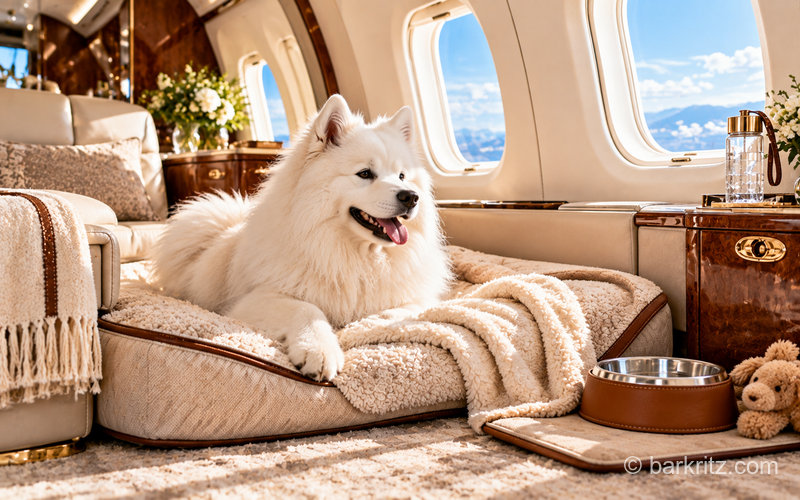
The ideal private-flight environment is calm, temperature-controlled and familiar, with the animal given a defined space where it can rest without unnecessary disruption.
Cabin temperature, noise, lighting and movement can all influence how an animal experiences the flight. Some pets settle immediately into the unfamiliar environment, while others benefit from remaining beside their owner with familiar bedding and a consistent routine.
For greater comfort, consider:
- Dedicated resting area: Give the animal a predictable place to settle rather than moving it repeatedly around the cabin.
- Familiar bedding: Bring an item that smells like home.
- Stable temperature: Avoid placing the animal directly beside strong ventilation or heat sources.
- Water access: Make fresh water available according to the animal’s normal routine.
- Movement: Follow the operator’s safety procedures and allow appropriate movement when practical.
- Noise management: Keep unnecessary cabin noise and sudden disruptions to a minimum.
Sedation should never be treated as a routine travel accessory. Any medication intended to alter an animal’s behavior during flight should be discussed with a veterinarian beforehand, particularly because changes in altitude and cabin conditions can affect an animal differently.
How Do You Plan a Seamless Private Arrival With Your Pet?
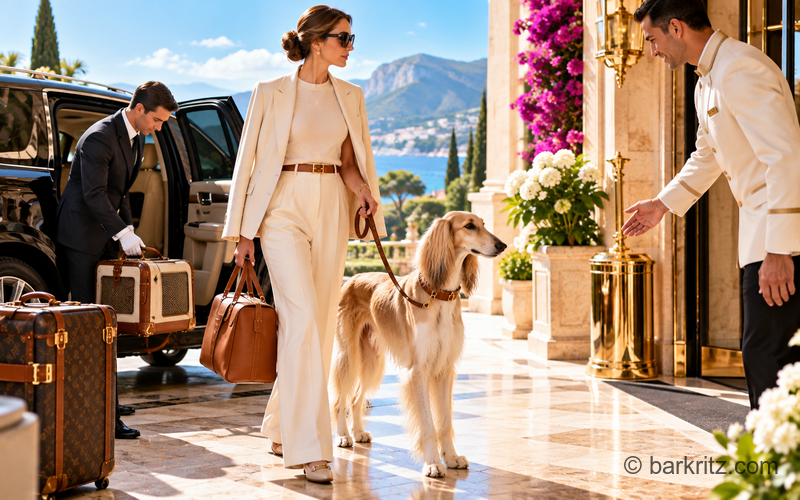
The most sophisticated private pet journey extends the same level of planning to the arrival, ensuring that transportation, accommodation and the animal’s immediate needs are already organized before touchdown.
Arrival can be more demanding than the flight itself, particularly after an international journey. A pet may need to pass through veterinary or border procedures, adjust to a new climate or transition directly into ground transportation and a hotel or residence.
A complete arrival plan should cover:
- Ground transportation: Reserve an appropriate pet-friendly vehicle before departure.
- Destination requirements: Confirm veterinary, customs or animal-entry procedures in advance.
- Accommodation: Verify the property’s current pet policy rather than relying on third-party descriptions.
- Food: Arrange access to the animal’s established diet at the destination.
- Veterinary support: Identify a reputable local veterinary practice before arrival.
- Environment: Prepare a quiet resting area where the animal can decompress after the journey.
- Return itinerary: Keep documentation and travel equipment organized for the next flight.
The defining advantage of private pet travel is not simply the aircraft but the control it gives the owner over the entire journey. When veterinary preparation, documentation, aircraft selection, cabin arrangements, ground transportation and accommodation are coordinated in advance, the experience becomes remarkably close to ordinary life—only with the dog or cat beside you from departure to arrival.