

Best Pet-Friendly Island Resorts in the Caribbean
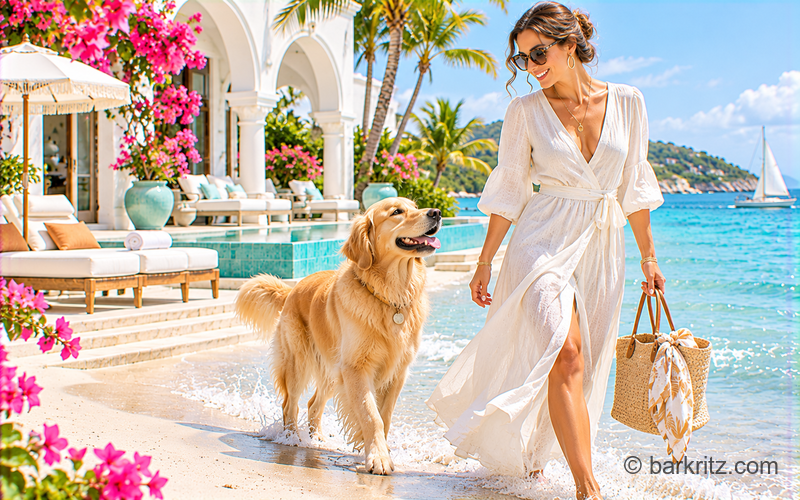
The Caribbean has long been associated with extraordinary beaches, private villas, turquoise waters, and an unhurried approach to life. For travelers who consider their dogs or cats essential members of the family, however, the appeal of an island escape depends on something more: finding a resort where pets are genuinely accommodated rather than merely permitted.
Although pet-friendly luxury resorts remain a relatively selective category across the Caribbean, several distinguished properties offer welcoming accommodation, beautiful surroundings, and practical arrangements for traveling with four-legged companions. From the white sands of Anguilla to the celebrated beaches of Grand Cayman and the tropical landscapes of the Dominican Republic, these destinations offer different interpretations of an island holiday with a pet.
The finest choice is not necessarily the resort with the most elaborate facilities, but the one whose accommodation, pet policy, outdoor environment, and surrounding island experience best suit the individual animal. Understanding those distinctions makes it possible to plan a Caribbean holiday that feels exceptional for every member of the family.
Which Caribbean Island Resorts Offer the Most Exceptional Pet-Friendly Stays?
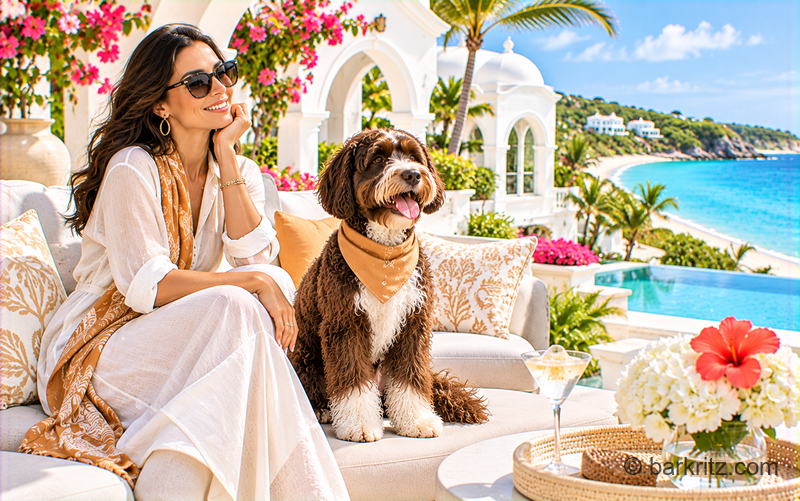
The most appealing Caribbean resorts for travelers with pets include Cap Juluca in Anguilla, Grand Cayman Marriott Beach Resort, Hotel Indigo Grand Cayman, Zoëtry Marina Cap Cana in the Dominican Republic, and Baha Mar in the Bahamas.
Each property offers a different atmosphere, from intimate beachfront accommodation to expansive resort complexes, making it important to match the destination with the owner’s expectations and the animal’s needs.
Cap Juluca, A Belmond Hotel — Anguilla
Set along the beautiful shores of Maundays Bay, Cap Juluca combines Greco-Moorish architecture, elegant beachfront accommodation, and a particularly romantic island atmosphere. Its pet policy welcomes dogs and cats, with a maximum of two animals per room and a weight limit of 22.7 kilograms per pet. The resort provides a pet bed, bowls, arrival treats, a toy, and a training pad. The published fee is $450 per pet for stays of up to five nights, with an additional $75 per night thereafter. Pets are not permitted in restaurants, pool areas, or the spa.
Grand Cayman Marriott Beach Resort — Grand Cayman
For travelers seeking a relaxed beachfront setting with convenient access to the island’s attractions, Grand Cayman Marriott Beach Resort is a compelling option. The property welcomes up to two pets per room, with a maximum weight of 50 pounds per animal. A nonrefundable pet fee of $65 applies. Its location along the Seven Mile Beach corridor makes it attractive for owners who want to combine resort comfort with opportunities to explore Grand Cayman.
Hotel Indigo Grand Cayman — Grand Cayman
Hotel Indigo offers a contemporary alternative on Grand Cayman’s celebrated Seven Mile Beach corridor. Its published policy welcomes both dogs and cats without specifying a weight or breed restriction in the general FAQ. The property also identifies pet-friendly accommodation and a designated pet-walking area. This makes it a particularly interesting option for owners traveling with cats or dogs who do not fit the restrictions imposed by some other island hotels. Dedicated pet-sitting and dog-walking services are not currently listed as available.
Zoëtry Marina Cap Cana — Dominican Republic
Located in the exclusive Cap Cana area of Punta Cana, Zoëtry Marina Cap Cana offers a more intimate resort experience with a marina setting and carefully considered guest amenities. The property welcomes small dogs weighing less than 10 kilograms in designated room categories. Its pet program includes a dog bed, food and water bowls, a rope toy, waste bags, and other welcome amenities. The published fee is $75 per night. Dogs are restricted from the beach, swimming pool, spa, and several other facilities, so the experience is best suited to owners comfortable with keeping their companion close to the accommodation and designated outdoor areas.
Baha Mar — Nassau, Bahamas
For travelers who prefer a larger resort destination with extensive dining, entertainment, and accommodation choices, Baha Mar in Nassau offers a formal canine guest program. The property accepts house-trained dogs weighing up to 50 pounds, or two dogs with a combined weight of up to 75 pounds, with a maximum of two dogs per room or suite. A one-time cleaning fee of $250 applies to stays of one to six nights, increasing to $300 for stays of seven nights or longer. Dogs are restricted from restaurants, pools, the golf course, and several other facilities, with designated walking areas provided.
These properties demonstrate that a Caribbean holiday with a pet need not mean sacrificing beautiful surroundings or distinguished hospitality. The key is understanding what each resort actually permits before choosing the island.
What Pet Policies Should You Compare Before Booking a Caribbean Resort?
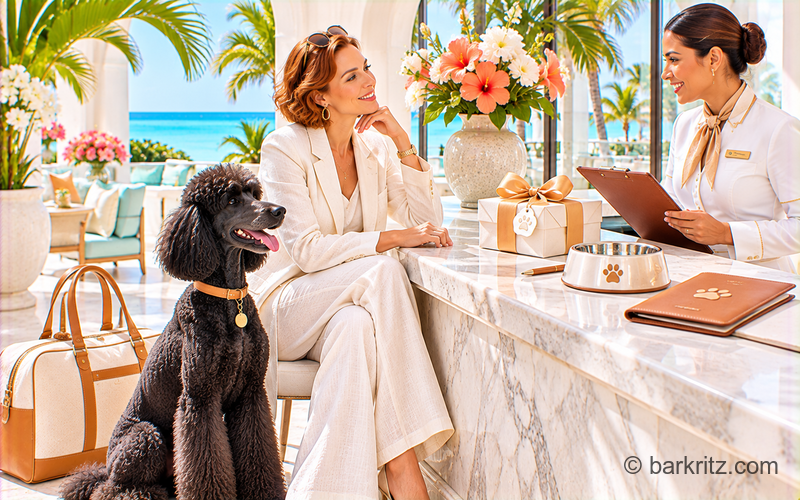
The most important differences between Caribbean pet-friendly resorts concern permitted animal types, weight limits, accommodation categories, fees, and access to shared facilities.
A hotel described as pet-friendly may welcome only small dogs, while another may accept both dogs and cats. Some properties provide dedicated pet amenities, whereas others simply permit animals to stay in designated rooms.
The following distinctions are particularly useful when comparing the featured resorts:
- Cats and dogs: Cap Juluca and Hotel Indigo Grand Cayman explicitly welcome both; the other properties featured here publish canine-focused policies.
- Weight restrictions: Cap Juluca allows pets up to 22.7 kilograms, Grand Cayman Marriott accepts pets up to 50 pounds each, and Zoëtry Marina Cap Cana restricts its program to dogs under 10 kilograms.
- Number of animals: Cap Juluca allows two pets per room, Grand Cayman Marriott permits two pets per room, and Baha Mar accommodates up to two dogs within its published weight limits.
- Dedicated amenities: Cap Juluca and Zoëtry provide pet-specific welcome items, while Baha Mar operates a structured canine guest program.
- Outdoor access: restrictions differ considerably, particularly concerning beaches, swimming pools, restaurants, and landscaped public areas.
Fees also deserve careful attention. A one-time cleaning charge, a nightly pet fee, and a per-animal charge can produce very different totals for an extended stay. Ask whether taxes, additional cleaning, or damage deposits apply, and request written confirmation of the final amount.
Room selection is equally important. Some resorts restrict pets to specific accommodation categories, and availability may be limited even when the general hotel policy welcomes animals. A beautiful ocean-view suite is of little practical value if it is not included in the property’s pet program.
Before paying a deposit, obtain confirmation of the following:
- The exact room category approved for your pet.
- The permitted number, species, and weight of animals.
- The total pet fee for the complete stay.
- Access rules for beaches, gardens, terraces, restaurants, and pools.
- Whether pets may remain unattended in the room.
- The availability of housekeeping arrangements and emergency veterinary assistance.
A genuinely suitable resort is one whose rules are compatible with the holiday you want to enjoy, rather than one whose marketing simply features a dog-friendly welcome photograph.
Which Caribbean Islands Are Most Convenient for Traveling With Dogs and Cats?

Grand Cayman, Anguilla, the Bahamas, and the Dominican Republic each offer attractive resort choices, but the most convenient destination depends on airline connections, animal-entry regulations, climate, and the individual pet’s tolerance for travel.
Island travel requires more preparation than many domestic holidays. Even when a resort welcomes pets, the destination country or territory may impose separate veterinary documentation, import permits, vaccination requirements, or advance notification procedures.
Grand Cayman is an appealing option for travelers who value established resort infrastructure and a choice of pet-friendly accommodation. Its hotel selection includes properties that welcome both dogs and cats, although the island’s animal-import requirements must be checked before departure.
Anguilla offers a more intimate atmosphere, particularly for travelers drawn to beautiful beaches and private resort accommodation. Cap Juluca’s acceptance of both dogs and cats makes it especially interesting for owners seeking a more secluded island experience. Its relatively substantial pet fee should be included in the overall travel budget.
The Bahamas can be attractive for travelers who prefer a larger destination with an extensive hospitality infrastructure. Nassau offers international connections and a variety of activities, while Baha Mar provides a structured canine program. Owners should nevertheless account for restrictions on where dogs may accompany them within the resort.
The Dominican Republic offers an appealing combination of tropical landscapes, resort accommodation, and international air connections. Zoëtry Marina Cap Cana is an option for owners of smaller dogs, although its beach and facility restrictions mean that the holiday will be more accommodation-centered than some travelers may expect.
Before selecting an island, investigate these practical considerations:
- Airline acceptance: confirm cabin, checked-pet, or cargo arrangements directly with the airline, including breed, carrier, and seasonal restrictions.
- Import documentation: establish the destination’s current vaccination, health-certificate, microchip, and permit requirements.
- Transit rules: check the requirements of any country through which you will travel, even if your pet does not leave the airport.
- Climate: consider heat and humidity, particularly for older animals, thick-coated breeds, and dogs with respiratory sensitivities.
- Veterinary access: identify an appropriate veterinary clinic near the resort before traveling.
Owners should begin this process well before purchasing nonrefundable flights. A resort’s acceptance of pets does not automatically mean that an animal can enter the island without additional documentation.
What Should You Look for in a Caribbean Resort When Traveling With a Pet?
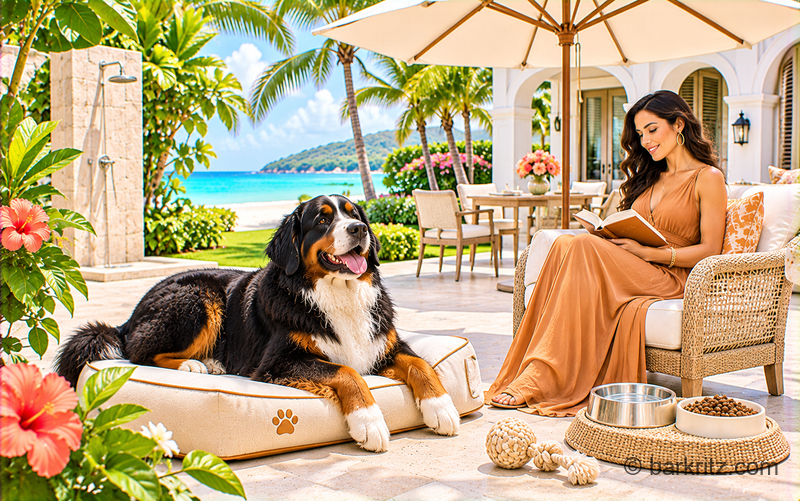
The best resort for a pet is one that combines comfortable accommodation with accessible outdoor areas, sensible safety arrangements, and a daily environment suited to the animal’s temperament.
For some owners, a beachfront suite with direct access to a garden is the ideal arrangement. Others may prefer a larger property with designated walking areas, convenient access to veterinary services, and a concierge familiar with local pet-related needs.
The accommodation itself deserves particular attention. A ground-floor suite, private terrace, or room near an approved walking area can make daily routines considerably easier. Owners traveling with cats may place greater importance on quiet surroundings, secure windows, and sufficient indoor space.
A few features can make a meaningful difference:
- Private outdoor space: a secure terrace or garden can provide convenient access to fresh air, subject to the resort’s rules.
- Comfortable flooring: practical surfaces are easier to maintain after beach walks and outdoor excursions.
- Room layout: sufficient space for a pet bed, feeding station, carrier, and familiar belongings helps create a comfortable routine.
- Shaded walking areas: particularly valuable in tropical climates, where direct sunlight and hot surfaces can become uncomfortable.
- Concierge assistance: local recommendations for veterinarians, groomers, transport, and pet supplies can simplify the stay.
- Flexible housekeeping: arrangements that respect an animal’s presence in the room help reduce unnecessary stress.
The resort’s surroundings matter as much as its interiors. A beautiful beach may not be accessible to pets, and a property with extensive gardens may still restrict animals to a small designated area. Owners should distinguish between scenic surroundings and places where their companion is actually permitted.
It is also worth considering the animal’s personality. A sociable dog may enjoy a lively resort with regular outdoor activity, while a sensitive or older companion may be more comfortable in a quieter property with fewer crowds and predictable routines.
The most successful island holiday is not necessarily the most elaborate one. It is the one in which the animal can settle comfortably into the environment and remain part of the family’s daily experience.
How Can You Prepare Your Pet for a Comfortable Caribbean Island Holiday?
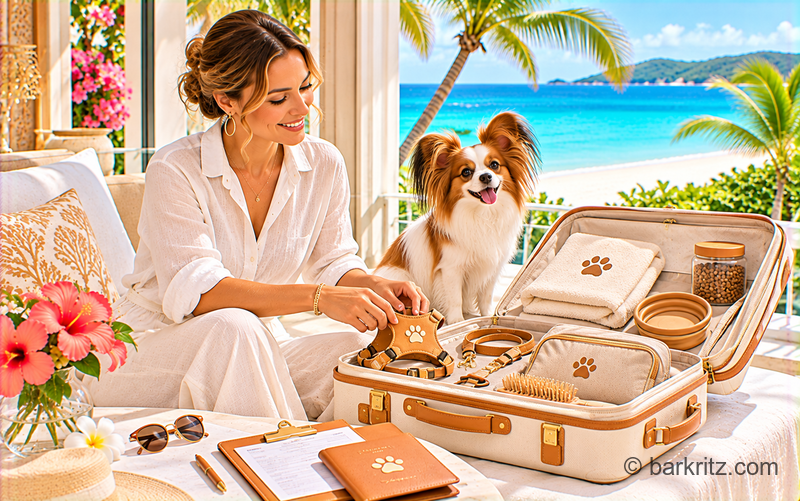
A comfortable Caribbean holiday begins with early veterinary preparation, confirmed resort arrangements, suitable travel equipment, and a realistic plan for managing heat and unfamiliar surroundings.
International travel can be demanding for animals, particularly when it involves flights, airport procedures, tropical temperatures, and changes in routine. Preparation should therefore begin several weeks or months before departure, depending on the destination’s import requirements.
A considered travel checklist includes:
- Veterinary documentation: obtain the required health certificates, vaccination records, microchip information, and import permits.
- Airline arrangements: reserve the pet’s place in advance and confirm carrier dimensions, weight limits, and any breed-specific restrictions.
- Familiar belongings: pack the animal’s usual food, bowls, bedding, leash, harness, carrier, and preferred toys.
- Climate preparation: plan walks for cooler hours, provide constant access to fresh water, and arrange shaded resting areas.
- Identification: ensure that the pet wears identification with current contact details and that its microchip information is up to date.
- Emergency planning: save the contact details of the resort’s nearest veterinary clinic and establish how to reach it if necessary.
Food deserves particular attention. Sudden dietary changes can cause digestive discomfort, so bringing an adequate supply of the animal’s familiar food is preferable to relying on unfamiliar products at the destination. Owners should also confirm whether their chosen accommodation has refrigeration or other facilities required for special diets.
On arrival, allow the pet time to become familiar with the room before introducing new surroundings. Establish a quiet resting area, show the animal where its water and food are located, and maintain familiar feeding and walking routines.
Tropical heat requires particular care. Avoid strenuous exercise during the hottest hours, never leave an animal unattended in a parked vehicle, and watch for excessive panting, weakness, drooling, or unusual behavior. These may be signs of heat stress and require prompt attention.
For cats, secure windows, balcony doors, and exterior access points before allowing them to explore. A new island environment can be stimulating, but unfamiliar surroundings also increase the risk of an animal becoming lost.
Ultimately, the most memorable Caribbean holiday is one that allows every family member to enjoy the destination comfortably. With thoughtful preparation and a resort whose policies genuinely suit the animal, the region’s beautiful beaches, warm hospitality, and distinctive island atmosphere can become part of a shared experience rather than a reason to leave a beloved companion behind.