

How to Travel to Japan with a Dog or Cat

Japan offers an extraordinary setting for travelers who appreciate thoughtful hospitality, beautiful landscapes, and a culture in which attention to detail is woven into everyday life. From the serene gardens of Kyoto to the sophisticated hotels of Tokyo and the coastal retreats of Hokkaido, the country can be a rewarding destination to explore with a four-legged companion.
Bringing a dog or cat to Japan, however, requires considerably more preparation than an ordinary international trip. Japan maintains strict animal-quarantine procedures designed to prevent rabies, and the process can take several months depending on the country of departure. Microchipping, rabies vaccinations, antibody testing, advance notification, and official veterinary documentation may all be required before arrival.
The most comfortable journey begins long before departure. With careful planning, the right travel arrangements, and a clear understanding of Japan’s entry requirements, owners can make the experience considerably smoother for themselves and their pets.
What Are Japan’s Official Entry Requirements for Dogs and Cats?
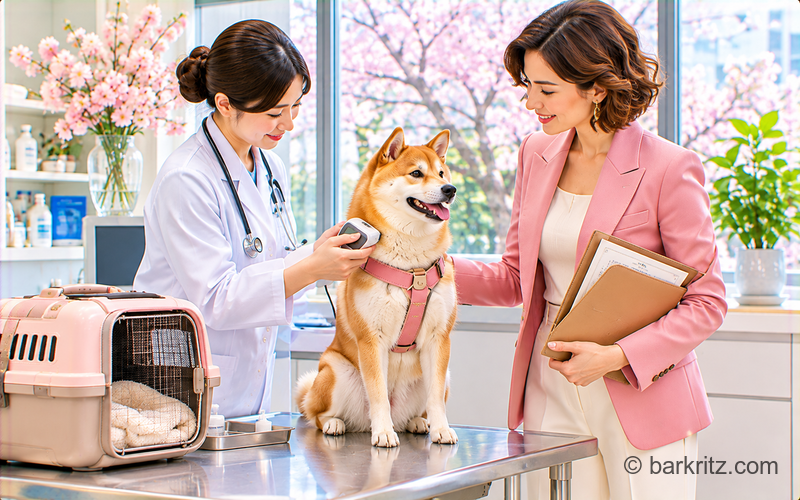
The essential first step is to identify the country from which your pet will enter Japan, because the required veterinary procedures differ between designated rabies-free regions and all other countries.
Japan recognizes a limited group of designated regions: Iceland, Australia, New Zealand, Fiji, Hawaii, and Guam. Pets arriving from these locations follow a simplified procedure, provided they meet the applicable identification, residency, documentation, and inspection requirements. Animals arriving from other countries must complete a more extensive rabies-prevention process.
For pets arriving from non-designated regions, the principal requirements include:
- Microchip identification: an ISO 11784/11785-compatible microchip with a 15-digit identification number must be implanted before the first rabies vaccination.
- Rabies vaccinations: at least two qualifying rabies vaccinations are required, administered in the prescribed sequence and within the permitted intervals.
- Antibody testing: a blood sample must be tested at a Japanese-designated laboratory, with a rabies antibody result of at least 0.5 IU/ml.
- 180-day waiting period: the pet must wait at least 180 days after the blood-sampling date before arriving in Japan.
- Advance notification: the Animal Quarantine Service at the intended Japanese port of entry must receive the import notification at least 40 days before arrival.
- Official health documentation: the required veterinary certificates and supporting records must be completed and endorsed by the appropriate government authority in the exporting country.
The 180-day period is particularly important: it begins on the date the blood sample is taken, not on the date the laboratory issues its result. Vaccination validity and the antibody test’s validity must also remain current when the animal arrives.
If the requirements are satisfied and the arrival inspection is successful, quarantine inspection can generally be completed within 12 hours. If documentation or veterinary procedures are incomplete, the animal may be held for quarantine for up to 180 days or returned to the country of export.
Owners should consult Japan’s Animal Quarantine Service directly before booking flights. The official requirements are detailed, and even a small discrepancy in dates, microchip identification, or vaccination records can affect entry.
How Far in Advance Should You Prepare Your Pet for a Trip to Japan?

For a pet traveling from a non-designated region, preparation should ideally begin at least seven months before departure, allowing time for identification, vaccinations, laboratory testing, the mandatory waiting period, and final documentation.
A practical planning sequence looks like this:
- Seven to eight months before travel: consult a veterinarian experienced in international pet relocation, verify the microchip, and begin the required vaccination process.
- Six to seven months before travel: complete the rabies antibody blood test and confirm that the result meets Japan’s minimum threshold.
- During the 180-day waiting period: maintain vaccination validity, organize transport arrangements, and research suitable accommodation.
- At least 40 days before arrival: submit the advance import notification to the relevant Japanese Animal Quarantine Service.
- Before departure: obtain the required government-endorsed veterinary certificates and arrange the necessary export inspection in your country.
- Immediately before travel: reconfirm the flight, carrier arrangements, arrival airport, and all original documents.
This timeline is a planning guide rather than a substitute for the official sequence of procedures. The precise dates depend on your pet’s vaccination history, country of origin, and the validity of existing tests.
Create a dedicated travel file containing:
- Microchip identification details and implantation date.
- Original rabies vaccination certificates.
- Laboratory antibody-test results.
- Veterinary health certificates and government endorsements.
- Copies of the advance notification and the Animal Quarantine Service’s approval.
- Airline booking confirmation and pet transport documentation.
Keep both physical and digital copies, but do not assume that digital copies replace original documents where originals are required. Ask your veterinarian and the Japanese quarantine office to verify the completed paperwork before departure.
If you are planning a short visit rather than relocating, remember that Japan’s entry requirements still apply. A holiday of ten days does not exempt a dog or cat from the applicable import procedures.
How Should You Choose Flights and Prepare Your Dog or Cat for the Journey?

The most comfortable flight is one that minimizes unnecessary transfers, provides appropriate temperature-controlled transport, and accommodates the animal’s size, temperament, and health requirements.
Start by contacting the airline directly before purchasing your own ticket. Policies vary considerably: some carriers accept small animals in the cabin under specific conditions, while others require pets to travel in an approved hold or through dedicated cargo arrangements. Breed restrictions, seasonal temperature limitations, aircraft type, carrier dimensions, and route availability can all influence the options.
For a long-haul journey to Japan, consider the following:
- Direct flights: fewer transfers generally mean fewer handling stages and less disruption.
- Cabin travel: potentially preferable for eligible small pets, subject to the airline’s rules and approved carrier dimensions.
- Temperature-controlled transport: essential when an animal must travel in the aircraft hold or as cargo.
- Appropriate carriers: choose a secure, well-ventilated travel crate that allows the animal to stand, turn around, and lie comfortably.
- Health assessment: discuss age, respiratory health, anxiety, mobility, and any chronic conditions with your veterinarian before flying.
Introduce the carrier several weeks in advance. Leave it open at home, place familiar bedding inside, and gradually encourage your pet to spend time in it. Short practice sessions can help make the carrier a familiar resting place rather than an unfamiliar object associated only with travel.
For dogs, practice calm periods inside the crate and familiar walking routines around departure times. For cats, maintain a predictable feeding and litter routine and avoid unnecessary changes to their environment immediately before departure.
Never administer sedatives or calming medication without veterinary guidance. Some medications can affect an animal’s ability to regulate its body temperature, balance, or breathing during air travel.
Pack a compact travel kit with familiar food, collapsible water bowls, waste bags, cleaning supplies, absorbent pads, a lead or harness, and any prescribed medication. Keep essential items accessible rather than placing everything in checked luggage.
Where Can You Stay and Travel Around Japan with a Dog or Cat?

The most practical way to explore Japan with a pet is to build an itinerary around accommodation and transport providers that explicitly accept animals, rather than assuming that pet-friendly policies are universal.
Japan offers a range of accommodation styles, from international hotels in Tokyo to traditional inns, countryside retreats, and private rental properties. However, acceptance policies differ considerably. Some properties welcome dogs but not cats, some impose size or breed restrictions, and others offer designated pet-friendly rooms rather than unrestricted access throughout the property.
When evaluating accommodation, confirm:
- Species and size policies: whether dogs, cats, or both are accepted and whether weight limits apply.
- Room arrangements: whether pets may stay in the main guest room or must use designated accommodation.
- Additional charges: cleaning fees, deposits, or nightly pet supplements.
- Access restrictions: whether animals are permitted in restaurants, lounges, gardens, or other shared spaces.
- Practical facilities: nearby walking routes, outdoor areas, pet supplies, and access to veterinary services.
For a sophisticated city stay, Tokyo can serve as a convenient base for exploring galleries, shopping districts, gardens, and contemporary architecture. Kyoto offers a more tranquil atmosphere, with private gardens, historic streets, and countryside excursions. For a longer retreat, Hokkaido provides expansive landscapes and outdoor opportunities, particularly appealing to active dogs.
Transport requires equally careful planning. Japanese rail operators have their own rules for animals, including carrier dimensions, containment requirements, and restrictions on how pets may be transported. Small animals may be permitted in suitable carriers, while larger dogs can face more limitations. Confirm the policy with the specific railway operator before purchasing tickets.
Taxis and private transfers can offer greater flexibility, but pet acceptance should be arranged in advance. A dedicated pet-friendly transfer is particularly useful when traveling with a large dog, several animals, or substantial luggage.
Cats may find a slower itinerary with fewer hotel changes and quieter accommodation more comfortable. Dogs may appreciate a route that includes regular outdoor breaks and access to suitable walking areas.
What Should You Know About Pet Etiquette, Health, and Daily Life in Japan?

A successful visit to Japan with a pet depends on respecting local expectations, maintaining familiar care routines, and planning for the practical needs of an animal in a densely populated environment.
Japanese cities are generally orderly, and responsible pet ownership is important in shared public spaces. Dogs should remain under control, and owners should carry waste bags and clean up immediately. Keep dogs on a lead wherever required, observe posted restrictions in parks and gardens, and avoid allowing animals to approach unfamiliar people or pets without permission.
Cats usually benefit from a secure indoor environment, particularly in unfamiliar accommodation. Check windows, balconies, sliding doors, and escape routes before allowing a cat to explore a room. A familiar blanket, portable litter tray, and favorite toy can make a hotel stay less stressful.
Consider these practical details before arrival:
- Veterinary access: identify a nearby veterinary clinic at each destination and keep emergency contact details available.
- Food availability: bring enough familiar food for the initial part of the stay and verify whether the same product can be purchased locally.
- Climate: consider seasonal heat and humidity, especially for dogs with thick coats or breeds sensitive to high temperatures.
- Walking equipment: bring a comfortable harness, lead, identification tag, and waste bags.
- Local etiquette: respect restrictions in public gardens, restaurants, shops, and transport facilities.
- Emergency planning: know how to reach veterinary care and keep vaccination and medical records accessible.
Owners staying in Japan for an extended period should also understand the distinction between a temporary visit and a longer-term stay, as additional local requirements may apply. For example, dogs kept in Japan are subject to local registration and rabies-vaccination obligations under Japanese law; confirm the relevant procedures with the local municipality if your stay involves establishing residence.
Ultimately, Japan can be an exceptionally rewarding destination for people who want to share their travels with a beloved dog or cat. The key is to approach the journey as a carefully coordinated experience: veterinary preparation well in advance, thoughtfully selected transport, accommodation suited to the animal, and an itinerary that allows time to rest.
With the formalities completed before departure, the experience can become less about managing logistics and more about enjoying Japan together — from peaceful garden walks and elegant city hotels to the quiet pleasure of discovering a new destination in the company of a trusted companion.