

Most Majestic Dog Breeds for Country Estates
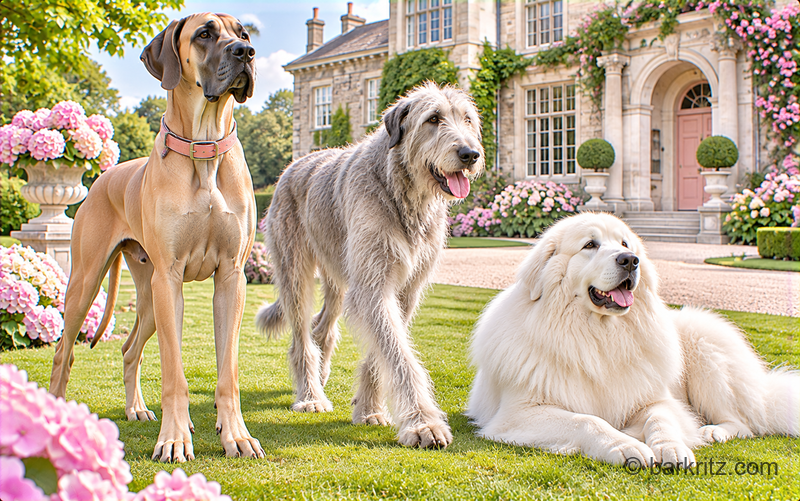
A distinguished country estate offers a setting in which certain dog breeds seem entirely at home: magnificent grounds to explore, long woodland paths to follow, open lawns to patrol, and peaceful interiors in which to spend quiet afternoons. For centuries, dogs have accompanied aristocratic families, estate owners, and country households, serving as guardians, hunting companions, working partners, and devoted members of the family.
Today, the appeal of these breeds extends beyond their impressive appearance. The most suitable estate companions combine physical presence with a temperament appropriate to family life, the ability to adapt to their surroundings, and a natural affinity for outdoor living. From the noble Great Dane to the aristocratic Borzoi and the imposing Bernese Mountain Dog, certain breeds bring a distinctive character to an exceptional country residence.
Choosing the right companion, however, requires more than admiring a magnificent silhouette. Space, exercise requirements, grooming, climate, temperament, and the presence of children or other animals all deserve careful consideration.
Which Large Dog Breeds Are Most Impressive for Grand Country Estates?
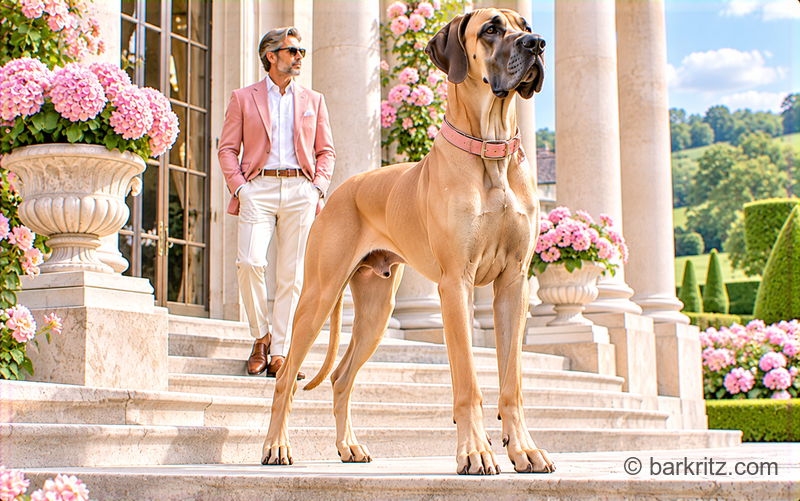
The Great Dane, Irish Wolfhound, and English Mastiff are among the most visually imposing breeds for country estates, combining extraordinary stature with distinctive temperaments and centuries of heritage.
Great Dane
Few dogs make an entrance quite like the Great Dane. Its extraordinary height, elegant proportions, and naturally dignified expression give it an unmistakable presence. Despite its imposing appearance, the breed is generally affectionate, sociable, and strongly attached to its family.
Great Danes are often described as gentle companions, although their size requires thoughtful training and sufficient indoor space. Their short coat is relatively easy to maintain, but their substantial frame makes comfortable bedding and careful attention to joint health particularly important.
Irish Wolfhound
The Irish Wolfhound possesses an entirely different kind of grandeur. Originally developed in Ireland for hunting wolves and other large game, it is one of the tallest dog breeds in the world. Its rough coat, long limbs, and calm expression create an unmistakably noble appearance.
Despite its historical hunting role, the modern Irish Wolfhound is often gentle and reserved. It appreciates room to stretch its legs and opportunities for regular exercise, although its temperament at home is typically relaxed.
English Mastiff
The English Mastiff represents strength and quiet authority. Its broad head, powerful build, and substantial frame make it an impressive presence at the entrance of a country residence. Historically associated with guarding and protection, the breed is often devoted to its household and comparatively calm indoors.
Its short coat requires relatively little grooming, but its size, weight, and potential joint concerns make responsible breeding and appropriate weight management especially important.
These three breeds offer different interpretations of estate grandeur:
- Great Dane: exceptional height, elegant proportions, and an affectionate family temperament.
- Irish Wolfhound: historic hunting heritage, remarkable stature, and a gentle disposition.
- English Mastiff: impressive mass, traditional guarding associations, and a calm household presence.
All three need suitable accommodation, careful socialization, and access to comfortable indoor spaces. A large estate may provide ample outdoor room, but it does not eliminate the importance of daily companionship and structured exercise.
Which Aristocratic Dog Breeds Bring Elegance and Refinement to a Country Residence?
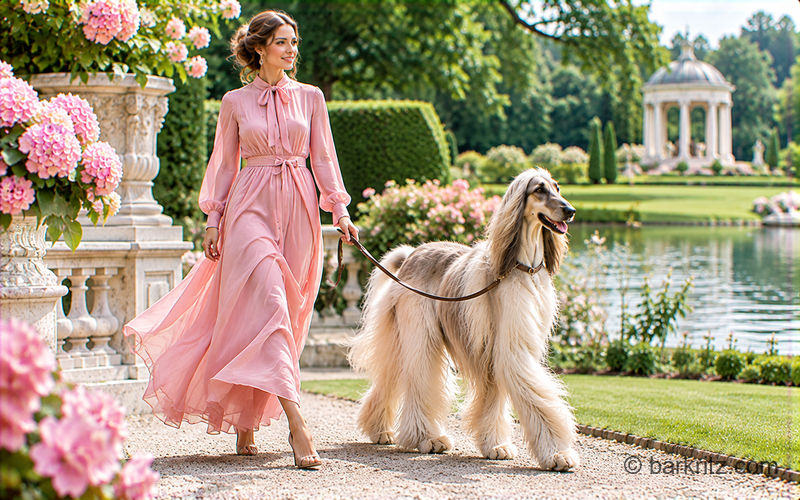
The Borzoi, Afghan Hound, and Scottish Deerhound are particularly distinguished choices for owners drawn to elegant silhouettes, flowing coats, and the historic association between sighthounds and aristocratic country life.
Borzoi
The Borzoi, historically known as the Russian Wolfhound, is celebrated for its elongated head, graceful proportions, and silky coat. Developed for coursing game across open landscapes, it possesses remarkable speed and an unmistakably aristocratic appearance.
At home, the Borzoi is often quiet and affectionate, preferring comfortable resting places to constant activity. Its independent nature means that training benefits from patience and consistency. Because it retains a strong instinct to chase moving animals, secure outdoor spaces are essential.
Afghan Hound
With its flowing coat, distinctive head carriage, and elegant movement, the Afghan Hound is among the most recognizable breeds in the world. Its origins in the mountainous regions of Afghanistan are reflected in its characteristic coat, historically suited to challenging terrain and varied climates.
The breed is independent, sensitive, and often selective in its interactions. Its magnificent coat requires substantial grooming, including regular brushing and careful maintenance to prevent tangles and matting.
Scottish Deerhound
The Scottish Deerhound combines the stature of a large hound with a distinctly understated elegance. Historically used to pursue red deer in the Scottish Highlands, it has a wiry coat, long limbs, and a gentle expression.
Despite its athletic heritage, the Scottish Deerhound is often relaxed indoors and enjoys close family companionship. It benefits from regular opportunities to run in safely enclosed areas, with particular care taken around its natural chasing instincts.
Their defining characteristics differ in several important respects:
- Borzoi: flowing silky coat, exceptional speed, and a reserved, independent temperament.
- Afghan Hound: dramatic coat, distinctive appearance, and a more independent personality.
- Scottish Deerhound: rugged elegance, historic deer-hunting heritage, and a generally gentle nature.
These breeds are especially appealing in environments where owners appreciate both outdoor activity and refined domestic living. Their beauty, however, comes with practical responsibilities: sighthounds require secure exercise areas, and long-coated breeds demand consistent grooming.
Which Traditional Working and Guardian Breeds Are Best Suited to Large Country Properties?
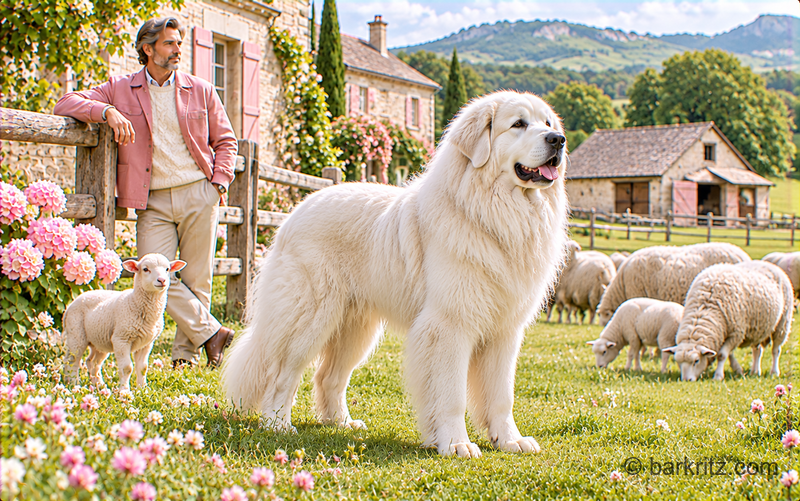
The Bernese Mountain Dog, Great Pyrenees, and Leonberger are among the most impressive traditional estate companions, offering a combination of substantial physical presence, working heritage, and strong attachment to their households.
Bernese Mountain Dog
Originating in Switzerland, the Bernese Mountain Dog was historically used as a farm and draft dog, helping with livestock, transport, and general agricultural work. Its distinctive tricolor coat, sturdy build, and expressive face give it an unmistakable appearance.
Bernese Mountain Dogs are often affectionate, patient, and sociable with their families. They generally enjoy outdoor activities but are also happiest when included in everyday household life. Their thick double coat requires regular grooming, particularly during seasonal shedding.
Great Pyrenees
The Great Pyrenees developed as a livestock guardian in the mountainous regions of France and Spain. Its magnificent white coat, impressive stature, and naturally watchful temperament make it particularly suited to properties where livestock protection has practical importance.
Unlike many companion-oriented breeds, the Great Pyrenees is naturally independent and may make decisions without waiting for direction. Early socialization, secure boundaries, and consistent training are essential. Its dense coat also requires regular maintenance.
Leonberger
The Leonberger was developed in Germany during the nineteenth century and is distinguished by its imposing build, luxuriant mane, and gentle expression. Historically associated with work around farms and water, it combines strength with a notably sociable character.
Leonbergers are generally affectionate family companions and often enjoy swimming, hiking, and other outdoor activities. Their substantial coat requires regular brushing, while their large frame makes responsible health screening especially important.
For estate owners, the distinctions are worth considering:
- Bernese Mountain Dog: traditional farm heritage, affectionate temperament, and a distinctive tricolor coat.
- Great Pyrenees: livestock-guarding instincts, independence, and a magnificent white double coat.
- Leonberger: impressive mane, versatile working heritage, and a sociable family-oriented nature.
These breeds are particularly suited to properties where their instincts can be accommodated responsibly. A livestock guardian should have appropriate work, boundaries, and training, while a large family companion needs regular interaction rather than simply access to extensive grounds.
Which Sporting and Hunting Breeds Are Ideal for Estates With Woodlands, Lakes, and Open Fields?
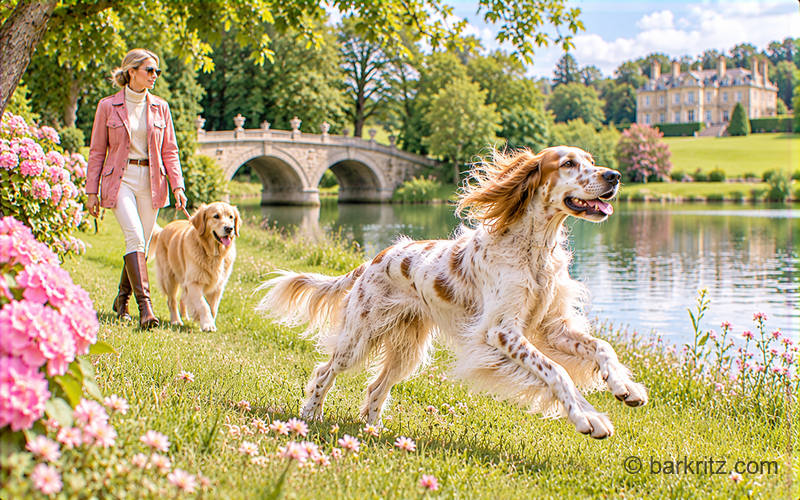
The English Setter, Golden Retriever, and German Shorthaired Pointer are excellent choices for active country households, combining outdoor versatility with established traditions of companionship and fieldwork.
English Setter
The English Setter is admired for its graceful movement, feathered coat, and distinctive speckled markings, known as belton. Developed as a bird dog, it has a long association with traditional British field sports and country-house life.
Its temperament is generally affectionate and sociable, although it needs regular exercise and opportunities to explore. The breed is particularly attractive to owners who enjoy long walks across open grounds and woodland trails.
Golden Retriever
The Golden Retriever remains one of the most recognizable and versatile family breeds. Developed in Scotland during the nineteenth century as a retrieving dog, it combines an athletic build with a friendly, responsive temperament.
Its enthusiasm for water, retrieving games, and outdoor exploration makes it especially suitable for estates with lakes, rivers, and extensive gardens. Regular grooming is necessary to manage its double coat, particularly during seasonal shedding.
German Shorthaired Pointer
The German Shorthaired Pointer is an athletic and highly versatile sporting breed, originally developed in Germany for hunting across different types of terrain. Its streamlined physique, short coat, and energetic temperament make it particularly suited to active rural households.
It requires substantial daily exercise and mental stimulation. Without sufficient activity, its energy can become difficult to manage in a domestic environment. Secure outdoor areas and structured training are particularly valuable.
Their suitability depends largely on the lifestyle of the household:
- English Setter: graceful field companion with a gentle, sociable personality.
- Golden Retriever: versatile retriever with a strong affinity for water and family activities.
- German Shorthaired Pointer: energetic sporting dog requiring substantial exercise and engagement.
An estate with extensive grounds can provide excellent opportunities for these breeds, but the quality of exercise matters as much as the amount of land available. Retrieving games, structured walks, scent activities, and supervised swimming can provide meaningful physical and mental stimulation.
How Should You Choose the Right Majestic Dog Breed for Your Country Estate?
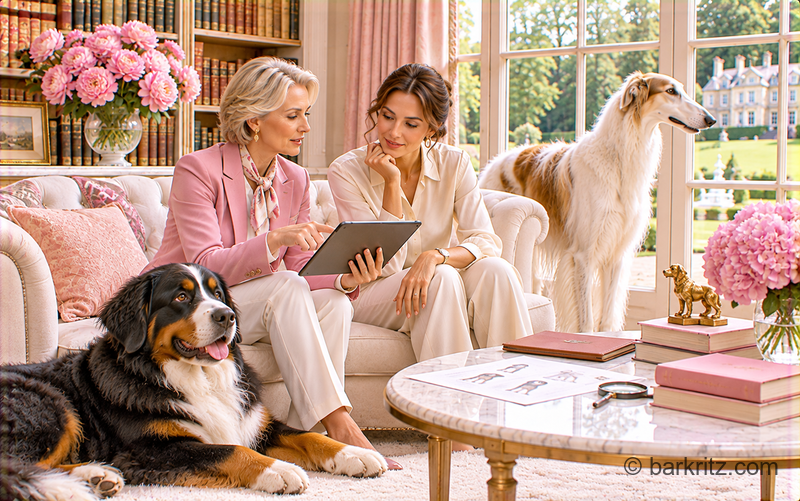
The ideal estate dog is one whose temperament, exercise requirements, grooming needs, and health considerations align with the household’s daily routine rather than simply the size or appearance of the property.
A magnificent residence may accommodate a large dog comfortably, but different breeds have very different expectations. An Irish Wolfhound may be content with regular walks and relaxed family companionship, while a German Shorthaired Pointer needs considerably more structured activity. A Great Pyrenees may be naturally inclined to guard its surroundings, whereas a Golden Retriever is generally more interested in participating in family activities.
Before choosing a breed, consider several essential factors.
Space and environment
A large garden is valuable, but it should be secure and suitable for the dog’s physical abilities. Sighthounds require enclosed areas where they can exercise without chasing wildlife or entering roads. Livestock guardians need boundaries and an environment that accommodates their protective instincts.
Exercise and daily routine
Consider how much time the household can realistically devote to exercise and enrichment. Sporting breeds often require substantial daily activity, while some giant breeds are comparatively moderate in their exercise needs once mature. All dogs, regardless of size, benefit from regular walks, training, and social interaction.
Grooming and maintenance
Coat type can significantly influence the time required for care:
- Short-coated breeds: Great Dane and German Shorthaired Pointer generally require less intensive grooming.
- Double-coated breeds: Bernese Mountain Dog and Great Pyrenees need regular brushing and seasonal coat management.
- Long-coated breeds: Afghan Hound and Borzoi require more extensive grooming to maintain coat condition.
- Wiry-coated breeds: Irish Wolfhound and Scottish Deerhound benefit from consistent brushing and appropriate coat care.
Temperament and household composition
Families with children should consider a breed’s size, patience, sociability, and response to noise and activity. Even gentle giant breeds can accidentally knock over small children because of their size. Early socialization and adult supervision remain essential.
Households with cats, horses, poultry, or other small animals should also evaluate the breed’s prey drive and individual temperament. A dog’s suitability cannot be guaranteed by breed reputation alone.
Health and responsible breeding
Large and giant breeds can be predisposed to orthopedic conditions, including hip and elbow dysplasia, as well as certain cardiac disorders. Some deep-chested breeds are also at risk of gastric dilatation-volvulus, commonly known as bloat.
Responsible breeders should provide relevant health-screening information and be transparent about the health history of their breeding dogs. Prospective owners should discuss breed-specific screening with a veterinarian before making a decision.
Finally, consider the dog’s expected lifespan and long-term care requirements. Giant breeds often have shorter average lifespans than smaller dogs, and their food, veterinary treatment, bedding, transport, and general equipment can involve considerable expense.
The most majestic dog for a country estate is not necessarily the tallest, heaviest, or most visually dramatic. It is the companion whose natural character complements the household, whose needs can be met consistently, and whose presence brings genuine enjoyment to everyday life. In the finest country residences, a dog’s true distinction is measured not simply by its appearance on the grounds, but by the place it holds within the family.