

Rare Hairless Cat Breeds Beyond the Sphynx
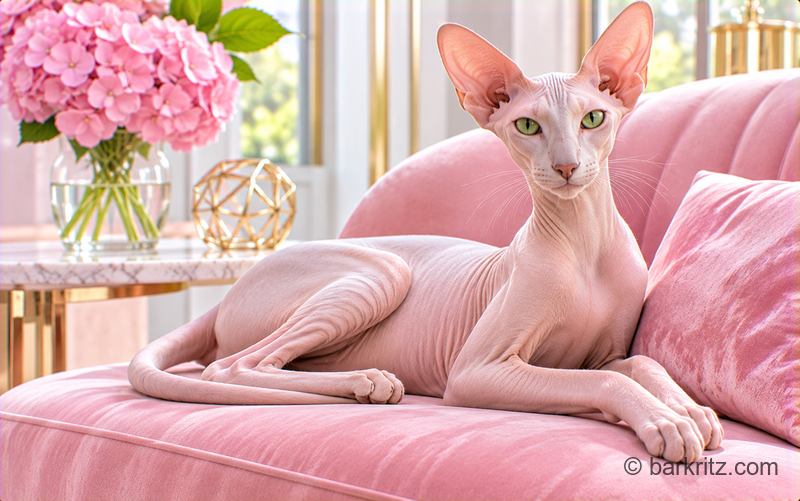
The Sphynx may be the most recognizable hairless cat, but the world of feline breeding includes several other remarkable varieties distinguished by unusual skin textures, sculptural silhouettes, distinctive ears, and fascinating genetic histories. From the elegant Peterbald to the striking Ukrainian Levkoy, these cats demonstrate that a hairless appearance can emerge through different genetic pathways and produce remarkably different expressions of feline beauty.
Some have developed established international breeding communities, while others remain exceptionally uncommon or are still gaining recognition among feline organizations. Their appearance may be unconventional, but their needs are very real: hairless cats require attentive skin care, protection from temperature extremes, and responsible breeding practices. Understanding their individual characteristics is essential before choosing one as a companion.
Which Hairless Cat Breeds Are the Most Distinctive Beyond the Sphynx?
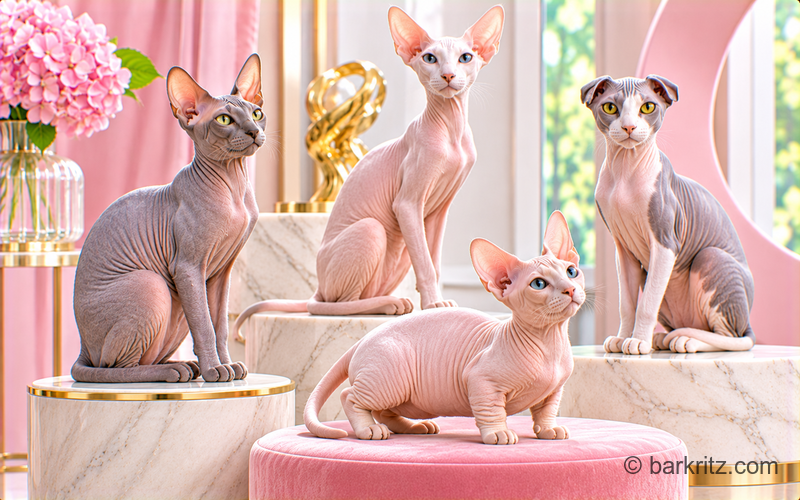
The Donskoy, Peterbald, Ukrainian Levkoy, and several developing hairless varieties are among the most distinctive alternatives to the Sphynx, each possessing its own combination of genetic heritage and physical characteristics.
Although these cats may appear similar at first glance, their origins and appearance differ considerably. Some have naturally occurring hairlessness, while others combine hairlessness with distinctive ear shapes or body proportions.
The most notable examples include:
- Donskoy: originating in Russia, this breed is associated with a dominant hairlessness gene and may display several coat conditions, including completely hairless, flocked, velour, and brush.
- Peterbald: developed in St. Petersburg, Russia, through breeding involving the Donskoy and Oriental-type cats, it is known for its long, elegant body, prominent ears, and distinctive head shape.
- Ukrainian Levkoy: developed in Ukraine, this unusual breed combines a hairless or nearly hairless appearance with distinctive inward-folding ears.
- Bambino: a small, short-legged variety created through breeding involving the Sphynx and Munchkin, combining hairlessness with a notably compact silhouette.
- Elf Cat: a developing hairless variety distinguished by its curled ears, resulting from breeding involving Sphynx and American Curl cats.
These varieties should not all be considered equally established. The Donskoy and Peterbald have recognized breed histories, while recognition of the Ukrainian Levkoy, Bambino, and Elf Cat varies between feline registries and breeding organizations. Prospective owners should therefore distinguish between an established breed standard and a developing breeding variety.
What Makes the Donskoy and Peterbald Different From the Sphynx?
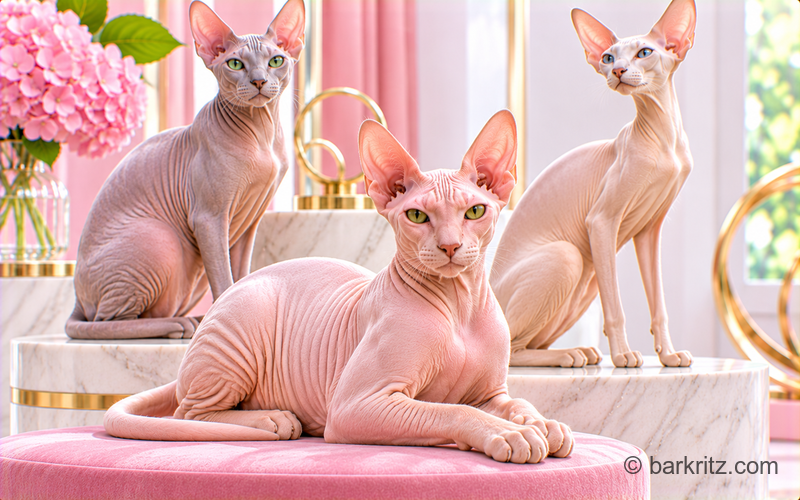
The Donskoy and Peterbald differ from the Sphynx primarily in their genetic origins, body structure, and characteristic coat variations, despite sharing the striking appearance associated with hairless cats.
The Donskoy, also known as the Don Sphynx, traces its origins to Russia in the late 1980s, when a naturally hairless cat became the foundation of a distinct breeding line. Unlike the Sphynx, whose hairlessness is associated with a recessive genetic variant, the Donskoy’s characteristic hairlessness is associated with a dominant mutation.
One particularly interesting feature is the breed’s range of coat types. Not every Donskoy is completely hairless from birth, and some kittens may develop or lose different amounts of hair as they mature.
The Peterbald emerged in St. Petersburg during the 1990s through breeding involving a Donskoy and an Oriental Shorthair. Its appearance reflects this heritage: an elongated, fine-boned body, long limbs, a narrow wedge-shaped head, and impressively large ears. Some Peterbalds are completely hairless, while others retain a fine coat or develop a short, textured covering.
Their principal distinctions can be summarized as follows:
- Donskoy: Russian origin, dominant hairlessness, and several possible coat conditions.
- Peterbald: Russian origin, Oriental-influenced body structure, and a range of coat types.
- Sphynx: Canadian origin, muscular body, prominent cheekbones, and a distinctive suede-like skin texture.
The comparison reveals why the term hairless cat does not describe a single genetic or physical type. Even breeds with similar skin appearances can have substantially different pedigrees, proportions, and coat characteristics.
Why Is the Ukrainian Levkoy Considered One of the Most Unusual Hairless Cat Breeds?
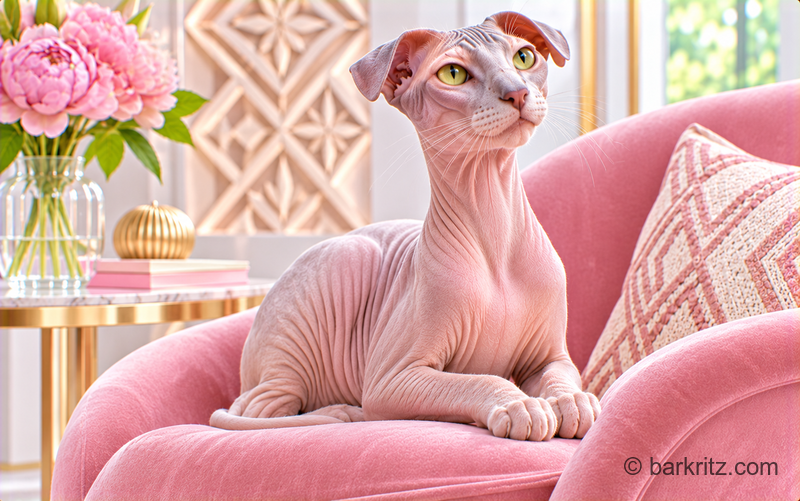
The Ukrainian Levkoy is particularly distinctive because it combines a hairless appearance with inward-folding ears, creating an unmistakable profile unlike that of most other feline breeds.
Developed in Ukraine in the early 2000s, the Levkoy emerged through selective breeding involving the Donskoy and Scottish Fold. Its most recognizable feature is the folded ear structure, which gives the head a rounded, almost sculptural appearance. The body is generally slender and elongated, with long limbs, prominent cheekbones, and soft, flexible skin.
The breed’s name reflects the appearance of its ears, which resemble the folded shape of the Levkoy plant’s leaves. Its overall expression is unusual but often remarkably gentle.
Several characteristics distinguish the Ukrainian Levkoy:
- Distinctive ears: folded forward and downward rather than standing upright.
- Skin: typically hairless or covered with very fine, almost imperceptible fuzz.
- Body: elongated and athletic, with a supple, muscular appearance.
- Head: angular and elongated, with prominent cheekbones and a gently curved profile.
- Personality: often described by enthusiasts as affectionate, sociable, and strongly attached to human companions.
An important consideration concerns the genetic heritage behind its folded ears. The Scottish Fold mutation is associated with osteochondrodysplasia, a cartilage and bone disorder that can cause painful skeletal abnormalities. Responsible breeding must therefore take inherited health risks seriously rather than treating the folded-ear appearance as a purely cosmetic feature.
The Ukrainian Levkoy remains uncommon internationally, and its recognition differs among feline organizations. Anyone considering one should investigate the breeder’s health-testing practices, pedigree documentation, and veterinary history with particular care.
What Are Bambino, Elf, and Other Emerging Hairless Cat Varieties?
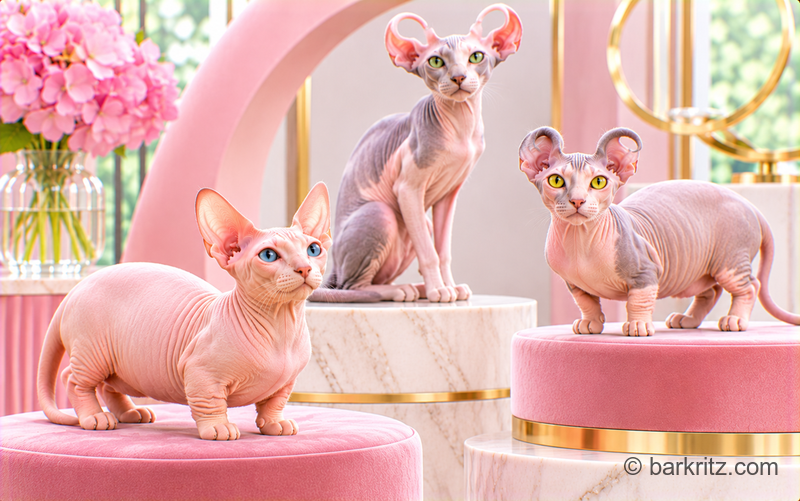
Bambino and Elf Cats are among the more unusual hairless varieties, combining the Sphynx’s characteristic lack of a conventional coat with distinctive physical traits inherited from other feline breeds.
The Bambino is known for its short legs and hairless body. Developed through breeding involving the Sphynx and Munchkin, it combines two highly recognizable physical characteristics in one small cat. Its compact appearance can be appealing, but the shortened limbs are associated with skeletal considerations that prospective owners should understand.
The Elf Cat is distinguished by its large, curled ears, which give the head a particularly expressive appearance. Developed through breeding involving the Sphynx and American Curl, it retains the hairless look while introducing a different ear shape and a distinctive facial profile.
Other experimental or developing varieties may also be encountered in specialist breeding circles, but their status and recognition can vary considerably.
The most recognizable differences include:
- Bambino: short legs, hairless skin, compact proportions, and a distinctive low-set silhouette.
- Elf Cat: hairless appearance, large backward-curving ears, and a body type influenced by Sphynx ancestry.
- Dwelf: a developing variety combining hairlessness, short legs, and curled ears.
These combinations of physical traits raise important welfare questions. The shortened legs of Munchkin-derived cats are associated with skeletal differences, while folded or curled ear mutations can require additional attention to cartilage and ear health. A striking appearance should never take priority over comfortable movement, normal function, and long-term well-being.
Because some of these varieties are not universally recognized, buyers should request clear information about their ancestry, health screening, and the standards followed by the breeder.
What Special Care and Health Considerations Do Hairless Cat Breeds Require?
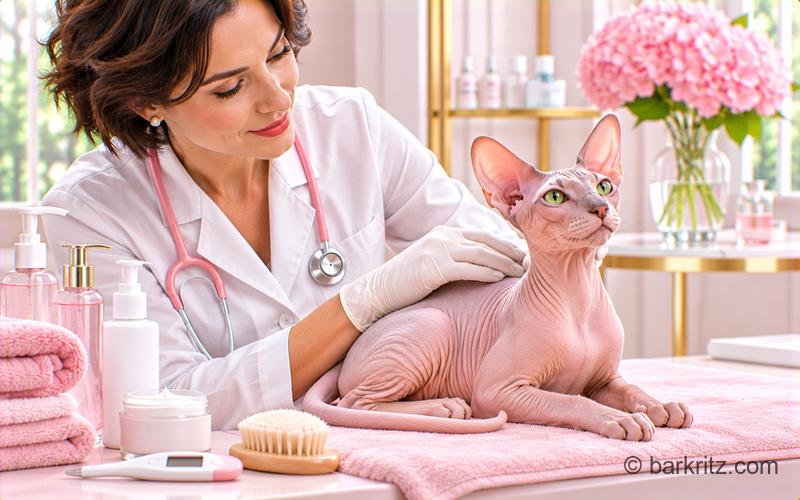
Hairless cats need consistent skin care, temperature management, appropriate nutrition, and regular veterinary attention because the absence of a conventional coat changes how their skin interacts with the environment.
Without protective fur, natural skin oils can accumulate on the body rather than being distributed along the coat. This may create a greasy surface, particularly around skin folds, paws, and areas of friction. Gentle cleaning is therefore important, although excessive bathing can irritate the skin and disrupt its natural balance.
A thoughtful care routine should include:
- Gentle skin hygiene: use only mild, veterinarian-approved products and avoid harsh soaps, fragrances, or frequent unnecessary bathing.
- Temperature protection: provide warm resting areas during colder weather and prevent prolonged exposure to direct heat.
- Sun protection: limit intense direct sunlight, as exposed skin can be vulnerable to sunburn; use only veterinary-approved protection when appropriate.
- Ear and nail care: clean ears when necessary and inspect nails regularly, since skin oils and debris can accumulate around the nail beds.
- Balanced nutrition: provide a complete feline diet appropriate for the cat’s age, body condition, and activity level.
- Routine veterinary examinations: monitor skin health, dental condition, joints, heart health, and any breed-specific inherited concerns.
Hairless cats may also require more careful temperature management than their coated relatives. They can become chilled more easily in cool environments, while excessive warmth and direct sunlight may create additional risks. Clothing can provide protection in certain circumstances, but it should fit comfortably, allow normal movement, and never cause overheating or skin irritation.
Prospective owners should also investigate inherited health concerns associated with individual breeding lines. For example, some Sphynx-related populations have a recognized risk of hypertrophic cardiomyopathy, while Munchkin-derived varieties warrant particular attention to skeletal health. Breed-specific veterinary screening and transparent family health records are essential considerations.
Ultimately, rare hairless cats offer an extraordinary range of appearances, from the elongated elegance of the Peterbald to the distinctive folded ears of the Ukrainian Levkoy. Their appeal lies not simply in the absence of fur, but in the remarkable genetic diversity behind each variety. Choosing one responsibly means looking beyond its unusual silhouette and placing health, temperament, and long-term welfare at the center of the decision.