

How to Travel to Europe with a Cat

A European journey with a feline companion can be an elegant extension of a carefully planned itinerary, whether the destination is a Parisian apartment, a Tuscan villa, or a design-led hotel in Copenhagen. Yet traveling internationally with a cat requires considerably more preparation than booking a flight and choosing attractive accommodation. Entry regulations, veterinary documentation, airline policies, and the cat’s individual temperament all influence the experience. For New York travelers, the most successful approach is to organize the journey around the animal’s comfort and legal requirements first, then build the European itinerary around them.
What Documents Does a Cat Need to Travel from the United States to Europe?
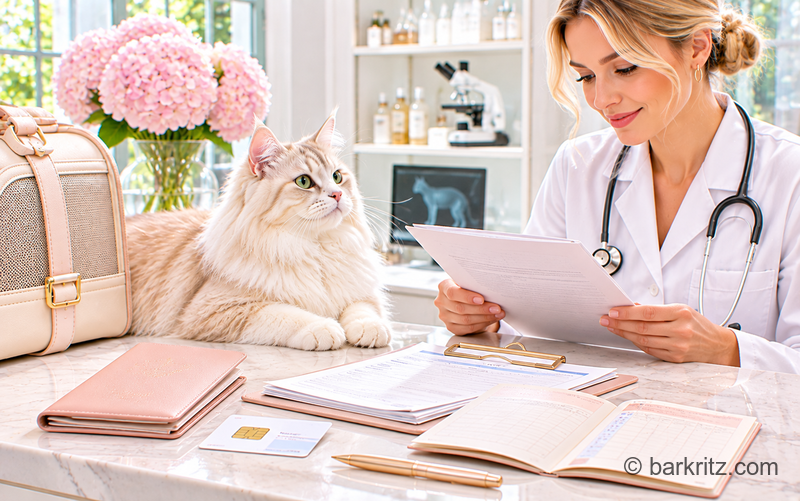
A cat traveling from the United States to a European Union country generally needs an appropriately identified microchip, a valid rabies vaccination, and the required official animal health documentation, with the exact requirements depending on the destination and travel circumstances.
The most important step is to establish the destination country’s current entry rules well before departure. For many travelers from the United States, the process involves having the cat microchipped with a compatible ISO-standard microchip before its rabies vaccination, obtaining the necessary veterinary certification, and arranging official endorsement where required. The sequence matters: a rabies vaccination administered before the microchip is implanted may not satisfy the applicable entry requirements.
For travel to an EU country from the United States, owners commonly need an EU animal health certificate completed by an authorized veterinarian and endorsed by the relevant U.S. Department of Agriculture Animal and Plant Health Inspection Service (USDA APHIS) office. The certificate generally must be issued within a prescribed period before entry, so scheduling the veterinary appointment too early can be as problematic as leaving it until the last minute.
Before making final arrangements, confirm:
- Microchip: Check that the identification number can be read and matches every document.
- Rabies vaccination: Verify that the vaccination meets the destination’s rules and that any required waiting period has elapsed.
- Animal health certificate: Use the correct certificate for the country and route, completed within the required timeframe.
- Official endorsement: Determine whether the certificate must be endorsed by USDA APHIS or another competent authority.
- Destination-specific requirements: Check for additional rules concerning transit countries, entry points, or onward travel.
- Return to the United States: Review current U.S. requirements before departure, particularly if the itinerary includes countries with additional rabies-related restrictions.
An EU pet passport is generally issued within the EU and is not ordinarily the document a U.S.-resident cat owner obtains before an initial trip from New York. A certificate used to enter Europe may also have limitations for later travel, so owners planning a multi-country itinerary should clarify how their documents will be accepted throughout the journey.
Official requirements can change, and individual circumstances—including the cat’s vaccination history and countries visited—can affect eligibility. Confirm the current rules with USDA APHIS and the competent authority of the destination country before purchasing nonrefundable travel arrangements.
How Should You Choose an Airline and Flight for a Cat Traveling to Europe?
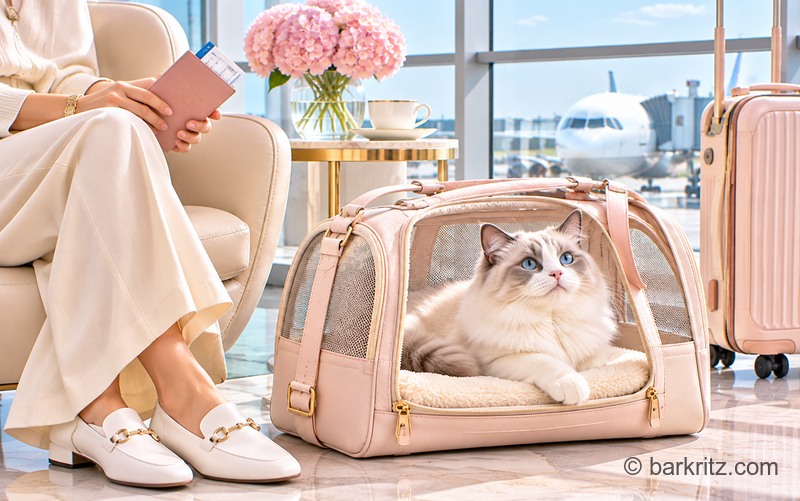
The best flight is one that permits the cat to travel legally and safely, ideally in the cabin with its owner, on a route with minimal transfers and clear pet-handling procedures.
For many cats, cabin travel offers the advantage of remaining close to a familiar person throughout the flight, although it can still be stressful. Airline policies differ significantly: some permit cats in the cabin on transatlantic routes, while others impose restrictions based on aircraft, destination, carrier, or booking class. A pet reservation may be required even after the passenger’s own ticket has been confirmed, and the number of animals permitted in the cabin is often limited.
Before booking, ask the airline to confirm the rules for the exact route and aircraft rather than relying on a general pet-travel page. A flight that accepts cats on domestic services may have different conditions on an international itinerary. Also check whether the carrier must fit completely beneath the seat, whether the cat must remain inside it throughout the flight, and whether the animal counts toward the cabin baggage allowance.
When comparing flights, prioritize the following:
- In-cabin eligibility: Confirm that the airline accepts cats in the cabin on the specific transatlantic route.
- Carrier dimensions: Obtain the permitted measurements and check that the carrier fits beneath the assigned seat.
- Transfer complexity: Prefer a direct flight when practical, avoiding unnecessary airport changes and additional handling.
- Pet reservation confirmation: Secure the cat’s place directly with the airline; a passenger ticket alone does not guarantee pet acceptance.
- Arrival airport and onward transport: Consider how far the airport is from the accommodation and whether the next stage of the journey is pet-friendly.
- Seasonal conditions: Review restrictions related to extreme temperatures, particularly if cargo travel is being considered.
A well-ventilated, secure carrier with a waterproof base and familiar bedding can help the cat feel more settled. Introduce it at home well before departure, leaving it open in a comfortable area and rewarding voluntary exploration. Short practice sessions can help the cat become familiar with being enclosed.
Avoid sedating a cat for air travel unless a veterinarian has specifically assessed the animal and advised on an appropriate plan. Sedatives can affect balance, breathing, and the ability to respond to changes in the environment, and airlines may have their own restrictions. If the cat has a history of severe travel anxiety, discuss behavioral preparation and medical options with a veterinarian before booking.
How Can You Prepare a Cat for a Long-Haul Flight and Airport Security?
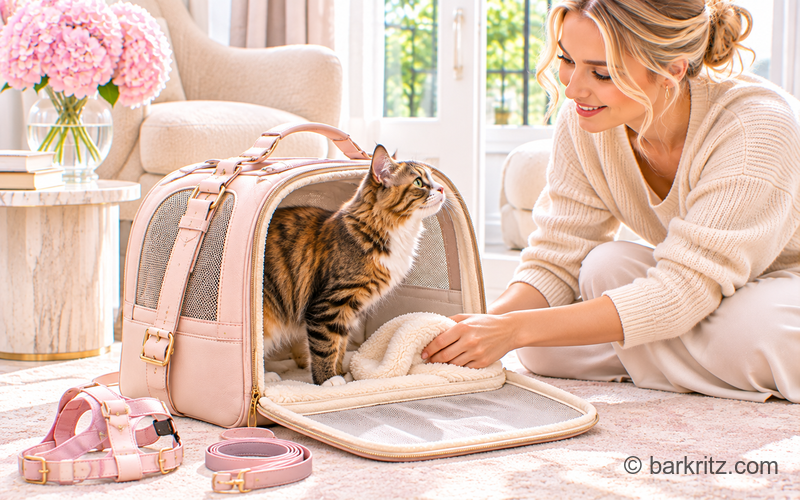
A cat is best prepared for a long-haul flight through gradual carrier training, a calm airport routine, and a veterinary plan tailored to its health and temperament.
Preparation should begin several weeks before departure whenever possible. Allow the cat to use the carrier voluntarily at home, gradually increasing the duration of closed-door sessions. Once the cat is comfortable, practice carrying it around the home and taking short trips in the carrier. The objective is not to force the cat to tolerate every sensation at once, but to make the carrier a familiar and predictable place.
Airport security requires particular attention because cats generally must be removed from their carriers when the carrier passes through the screening equipment. Procedures can vary, so ask the airport or airline how pet screening is handled. A secure harness and leash can reduce the risk of escape while the cat is out of the carrier, but the harness should already be familiar and properly fitted. Never assume that a frightened cat will remain still in an unfamiliar terminal.
A considered airport kit should include:
- A familiar carrier: Use an airline-approved model that is secure, well ventilated, and large enough for the cat to reposition comfortably within the permitted dimensions.
- A well-fitted harness and leash: Introduce them gradually before travel and use them as an additional safeguard during screening.
- Absorbent liners and spare bedding: Pack replacements in case of an accident.
- Pet-safe cleaning supplies: Bring a small quantity of appropriate wipes and disposal bags.
- Food and water: Pack the cat’s usual food and a practical way to offer water, following veterinary advice about meal timing.
- Essential records: Keep copies of the health certificate, vaccination information, microchip number, airline confirmation, and emergency veterinary contacts accessible.
- A familiar scent: A small piece of bedding from home may provide reassurance, provided it does not obstruct ventilation.
Offer food according to the cat’s normal routine and your veterinarian’s guidance; a large meal immediately before flying may not suit every animal. Keep water available whenever practical, and do not withhold water simply to avoid the possibility of an accident. During the flight, follow the airline’s instructions and avoid opening the carrier in an unsecured area.
If the cat is elderly, has a chronic medical condition, or has previously experienced respiratory distress or extreme anxiety during transport, arrange a veterinary consultation before committing to the journey. For some animals, the most responsible decision may be to modify the itinerary or arrange care at home instead.
Which European Hotels and Accommodations Are Best for Traveling with a Cat?

The best European accommodation for a cat is not necessarily the most prestigious property, but one that explicitly accepts cats and can provide a quiet, secure environment suited to feline needs.
Pet-friendly policies vary even within the same hotel group. Some properties welcome dogs but restrict cats; others accept cats only in designated rooms, impose additional fees, or limit the number and size of animals. A general statement that a hotel is pet-friendly is therefore insufficient confirmation for a feline guest.
Before booking, contact the property directly and ask for written confirmation that a cat is permitted in the specific room category. Clarify whether the cat may remain alone in the room, whether housekeeping requires advance notice, and whether there are restrictions on leaving the carrier or litter tray in particular areas. If the trip includes a private rental, confirm that the owner’s permission explicitly covers cats and that the property’s rules allow the intended stay.
For a comfortable arrival, look for:
- A quiet room: Request a location away from elevators, service areas, and heavily trafficked corridors when possible.
- Secure windows and balconies: Check that windows can be closed securely and that the cat cannot access an unprotected balcony.
- Sufficient floor space: Allow room for a litter tray, food and water stations, the carrier, and a familiar resting area.
- Clear housekeeping arrangements: Establish whether staff may enter while the cat is present and how to prevent an accidental escape.
- Nearby veterinary care: Identify a local clinic and an emergency veterinary service before arrival.
- Transparent pet fees: Confirm cleaning charges, deposits, restrictions, and any additional conditions in writing.
A familiar litter tray, the cat’s usual litter, and a compact scratching surface can make an unfamiliar room easier to navigate. Keep food, water, and the litter tray in separate areas where space permits, and allow the cat to explore one room before introducing the rest of the accommodation. Do not allow it to roam through hallways or common areas unless the property explicitly permits this and the cat is safely secured.
Travelers planning a longer European stay may find a serviced apartment or private residence more practical than changing hotels frequently. Additional space, a predictable routine, and the ability to prepare familiar meals can make an extended visit more comfortable for both the cat and its owner.
How Can You Travel Between European Countries with a Cat After Arrival?

Travel between European countries is often straightforward when the cat has the correct identification and documentation, but owners must verify the rules for every destination and transit country rather than assuming one set of requirements applies everywhere.
For noncommercial travel within the European Union, a cat that meets the relevant identification and rabies-vaccination requirements can generally move between participating countries with an appropriate EU pet passport or other valid documentation accepted for its circumstances. Travelers arriving from the United States should establish which documents will remain valid for subsequent journeys and whether a new certificate or additional steps are required. Countries outside the EU may impose separate conditions, even when they are geographically within Europe.
The choice of transport also affects the cat’s comfort. High-speed trains may offer an efficient alternative to flying between cities, but pet policies differ by operator and ticket type. Some permit small animals in carriers under specified conditions, while others apply additional fees or restrictions. Rental-car companies also vary in their policies, and owners should confirm that cats are allowed and that a suitable restraint or secure carrier can be used.
For a multi-country itinerary, compare the following:
- Rail travel: Check the operator’s current rules for cats, carrier dimensions, fees, and any required reservation.
- Rental cars: Confirm pet permission and use a secure carrier positioned safely in the vehicle.
- Short-haul flights: Review cabin availability and documentation requirements for the specific airline and route.
- International borders: Verify the entry conditions of every country, including non-EU destinations and transit stops.
- Return travel: Confirm that the cat’s documentation and vaccination status will satisfy the requirements for re-entry into the United States.
Avoid planning an itinerary that changes accommodation every night or requires multiple forms of transport in rapid succession. Many cats respond better to a predictable base, familiar belongings, and enough time to settle between journeys. If the trip includes several cities, consider spending longer in fewer locations rather than prioritizing the maximum number of destinations.
On arrival, keep the cat indoors while it acclimates, and ensure that identification details remain current. A microchip registered with up-to-date contact information provides an additional safeguard if the animal becomes separated from its owner. A collar with a temporary travel contact tag can also help, provided it fits safely and the cat is accustomed to wearing it.
The most rewarding European journey with a cat is built around preparation rather than improvisation. With verified documents, a suitable flight, a familiar carrier, carefully chosen accommodation, and a realistic itinerary, international travel becomes more manageable and less disruptive. The finest travel experience is ultimately one in which the cat’s welfare remains central—and the owner can enjoy Europe knowing that every essential detail has been thoughtfully arranged.