

Most Loyal Large Dog Breeds for Wealthy Families
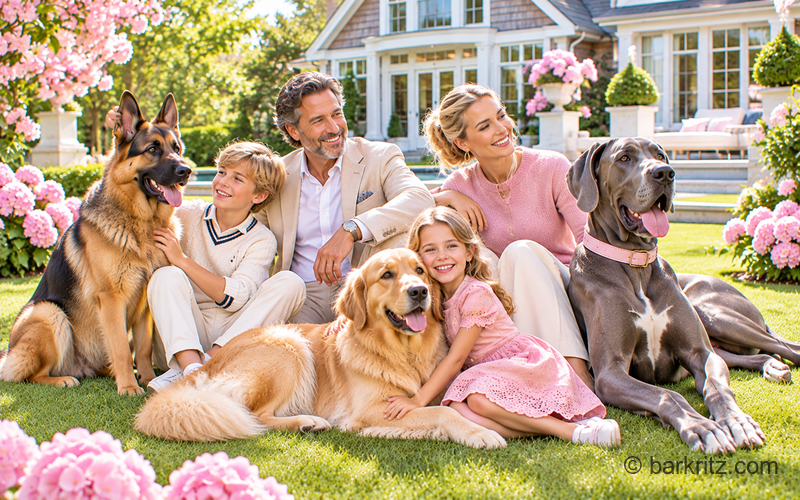
For families accustomed to exceptional homes, carefully curated lifestyles, and meaningful traditions, a large dog can become far more than a companion: a trusted presence woven into the rhythm of daily life. The most loyal breeds combine deep attachment to their families with qualities that make them suitable for spacious residences, country estates, and active urban households. Yet loyalty is not simply a matter of breed; temperament, early socialization, responsible training, and the time devoted to a dog all shape the bond. From the steadfast Labrador Retriever to the dignified Great Dane, these remarkable breeds offer different expressions of devotion, each with its own requirements and distinctive character.
Which Large Dog Breed Is Best for Families Seeking an Exceptionally Loyal Companion?
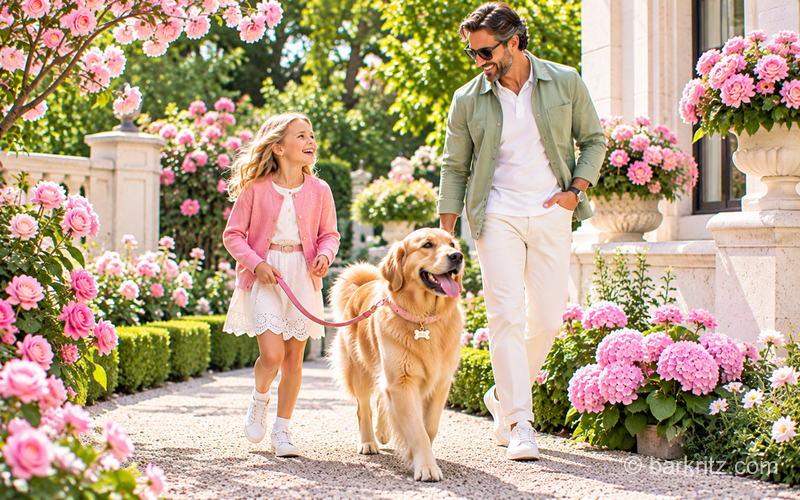
The Labrador Retriever is one of the strongest choices for families seeking a loyal, sociable, and adaptable large dog that can participate naturally in everyday family life.
Renowned for its friendly temperament and willingness to cooperate, the Labrador often develops close relationships with multiple family members rather than attaching exclusively to one person. Its enthusiasm for shared activities makes it well suited to households where dogs accompany their owners on countryside walks, outdoor gatherings, and family adventures. Labradors are also commonly trained as assistance and service dogs, reflecting their trainability and responsiveness to human guidance.
Their affectionate nature does not eliminate the need for structure. Young Labradors can be energetic, exuberant, and physically powerful, so consistent training and regular exercise are essential. Their enthusiasm may overwhelm very small children unless interactions are carefully supervised, and their sociability means they are generally better suited to companionship than to functioning as independent property guardians.
For families with room for an active dog, the Labrador offers a compelling balance of affection, intelligence, and versatility.
- Temperament: Typically outgoing, affectionate, and eager to engage with people.
- Physical profile: Commonly weighs approximately 55–80 pounds, depending on sex and individual build.
- Activity requirements: Needs daily exercise, interactive play, and mental stimulation.
- Coat care: A short double coat requires regular brushing, particularly during seasonal shedding.
- Ideal environment: Active families who can include their dog in daily routines rather than leaving it alone for extended periods.
A Labrador’s loyalty is most evident in its eagerness to remain involved. Whether accompanying the family through a weekend in the country or relaxing nearby after a long day, it tends to thrive when companionship is a consistent part of its life.
Is the German Shepherd a Good Choice for a Loyal and Protective Family Dog?
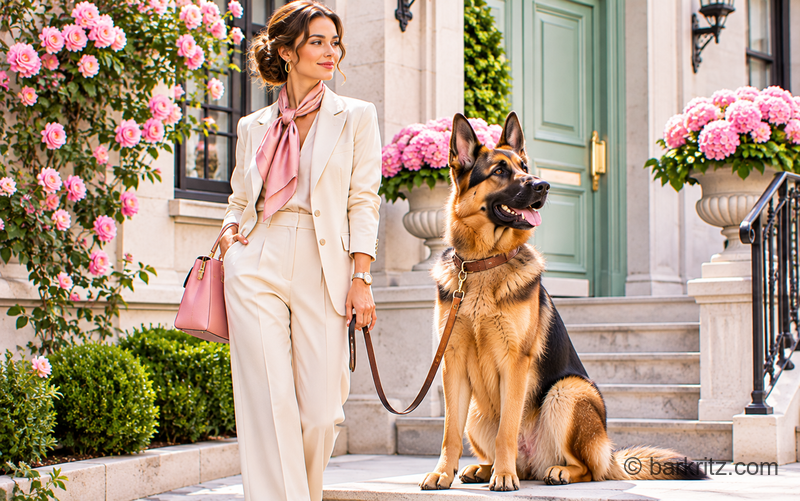
The German Shepherd is an excellent candidate for experienced families seeking a deeply devoted, intelligent dog whose loyalty is often expressed through attentiveness, trainability, and a strong instinct to remain connected to its household.
Originally developed as a working and herding dog, the German Shepherd is known for its capacity to learn complex tasks and respond to consistent direction. A well-bred, well-socialized individual can form strong bonds with its family while remaining observant of unfamiliar people and surroundings. This combination can be particularly appealing to owners who value a companion that is both affectionate at home and attentive in new environments.
However, the breed’s intelligence and protective tendencies demand responsible ownership. Without sufficient training, socialization, and purposeful activity, a German Shepherd may become anxious, overly vigilant, or difficult to manage. It is not automatically a safe guardian simply because of its breed, and encouraging unnecessary aggression can create serious behavioral risks.
The breed is best suited to owners who enjoy training and understand that confidence develops through positive experiences, clear boundaries, and consistent care.
- Temperament: Intelligent, attentive, devoted, and often reserved around unfamiliar people.
- Physical profile: Commonly weighs approximately 50–90 pounds, with males generally larger than females.
- Activity requirements: Needs substantial daily physical exercise and mentally engaging work.
- Coat care: Regular brushing is important because the double coat sheds throughout the year, often more heavily seasonally.
- Ideal environment: A committed household able to provide training, social interaction, and structured activity.
For a family with the time and experience to meet its needs, the German Shepherd can become an exceptionally reliable companion. Its strongest qualities emerge when its protective instincts are balanced by sound socialization and a calm, predictable home environment.
Why Is the Golden Retriever a Favorite Among Affluent Families With Children?
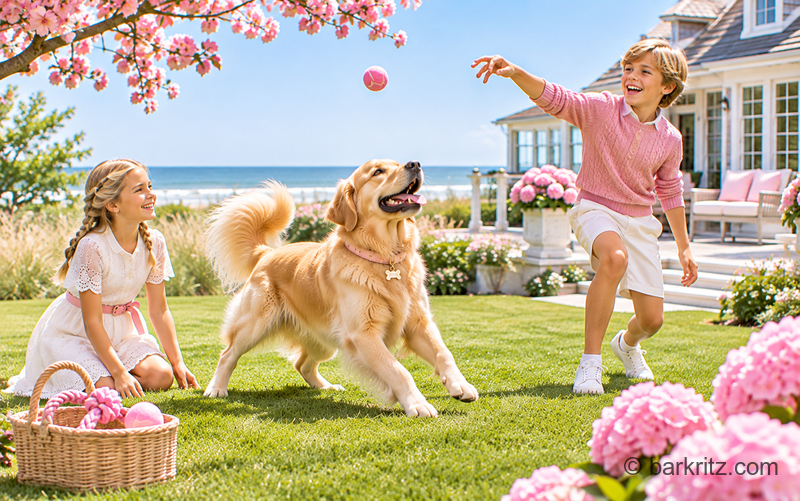
The Golden Retriever is especially well suited to families seeking a large, affectionate, and cooperative dog that can integrate into a busy household while maintaining a gentle, people-oriented temperament.
Goldens are widely admired for their sociability and willingness to participate in family activities. They often enjoy greeting visitors, accompanying their owners outdoors, and spending time near children and adults alike. Their trainability and eagerness to cooperate have also made them popular in assistance work and other roles that require close human partnership.
Although the breed has a reputation for gentleness, no dog should be assumed to be automatically safe with children. Young Goldens can be excitable and strong enough to knock over a small child unintentionally. Supervision, respectful handling, and a designated place where the dog can rest undisturbed are important parts of a successful family relationship.
Their luxurious-looking golden coats also require more maintenance than those of short-coated breeds. Regular brushing helps manage shedding and prevent tangles, especially around the feathered areas of the legs, tail, and ears.
- Temperament: Generally affectionate, friendly, and eager to please.
- Physical profile: Commonly weighs approximately 55–75 pounds.
- Activity requirements: Benefits from daily walks, retrieving games, training, and opportunities to explore.
- Coat care: Requires regular brushing and routine attention to ears, nails, and overall grooming.
- Ideal environment: Families who enjoy outdoor activities and want a companion that participates in shared experiences.
The Golden Retriever’s appeal lies in its ability to combine enthusiasm with an affectionate disposition. In a family that values companionship and includes its dog in everyday life, it can become a beloved presence across generations.
Can a Great Dane Be a Loyal Companion for a Sophisticated Urban or Estate Lifestyle?
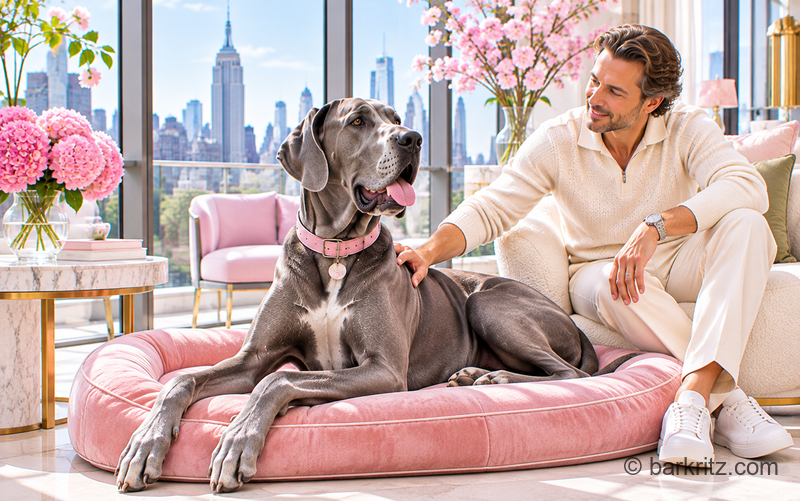
The Great Dane can be a devoted family companion for owners with sufficient space, a manageable daily routine, and an understanding of the practical responsibilities that accompany a giant-breed dog.
Despite its imposing stature, the Great Dane is often affectionate, people-oriented, and inclined to stay close to its family. Many individuals enjoy resting beside their owners and participating in household life rather than spending long periods alone outdoors. Their calm presence as adults can suit spacious city residences and country properties, provided the home accommodates their exceptional size.
Practical considerations are essential. A Great Dane needs enough room to move comfortably, a supportive resting area, and careful management around furniture, stairs, and slippery floors. Its size also affects transportation, boarding arrangements, veterinary procedures, and the cost of food and routine care. Giant breeds have a comparatively short average lifespan, often around seven to ten years, although individual outcomes vary.
Owners should also understand the breed’s health considerations, including an increased risk of gastric dilatation-volvulus, commonly known as bloat. A veterinarian can advise on preventive measures, feeding routines, and whether gastropexy is appropriate.
- Temperament: Often affectionate, gentle, and closely attached to its household.
- Physical profile: Frequently weighs approximately 110–175 pounds, with considerable variation between individuals.
- Activity requirements: Needs regular moderate exercise, with activity adjusted to age and physical condition.
- Coat care: Its short coat is relatively straightforward to maintain with routine brushing.
- Ideal environment: A home with generous usable space, owners prepared for giant-breed expenses, and convenient access to veterinary care.
The Great Dane demonstrates that loyalty need not be expressed through constant activity or vigilant guarding. For the right household, its combination of closeness, composure, and remarkable presence can make it an unforgettable companion.
Which Other Large Dog Breeds Offer Exceptional Loyalty to Their Families?
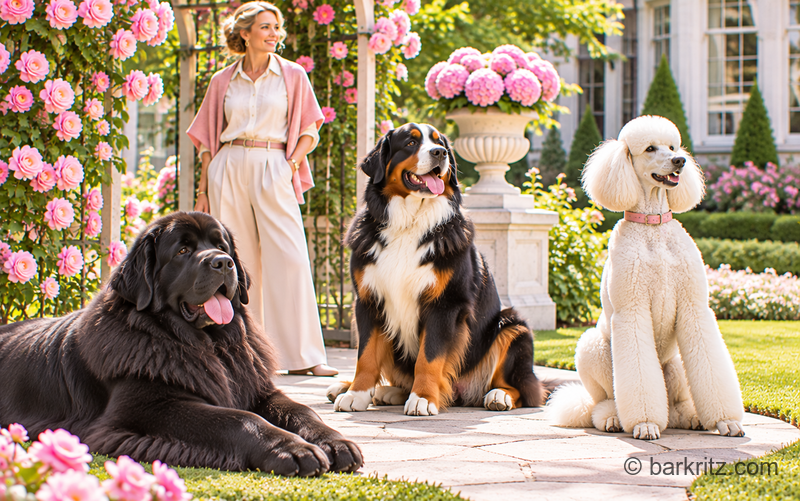
The Newfoundland, Bernese Mountain Dog, and Standard Poodle are three additional breeds worth considering for families who prioritize strong human bonds, although each brings distinct grooming, exercise, health, and environmental requirements.
The Newfoundland is known for its substantial build and generally gentle disposition. Many individuals are affectionate and patient, but their size, heavy coat, drooling, and preference for cooler conditions make grooming and climate management important considerations. Families should also be prepared for the practical demands of transporting and caring for a giant dog.
The Bernese Mountain Dog often forms a close relationship with its household and can be particularly appealing to families who enjoy a calm, outdoors-oriented lifestyle. Its thick coat is well suited to cooler weather, but regular grooming is essential, and the breed has significant health concerns, including an increased risk of certain cancers and a relatively short average lifespan.
The Standard Poodle offers a different expression of loyalty: highly intelligent, responsive, and frequently enthusiastic about learning alongside its family. Its coat requires regular professional grooming or careful home maintenance, and its need for mental stimulation should not be underestimated.
Their key distinctions include:
- Newfoundland: A gentle, substantial companion that generally suits families with room for a giant dog and time for extensive coat care.
- Bernese Mountain Dog: An affectionate, mountain-bred breed that often suits cooler climates and households that enjoy outdoor activities.
- Standard Poodle: An intelligent, athletic, highly trainable companion for owners who appreciate interactive training and regular grooming.
- Shared requirement: All three benefit from early socialization, positive reinforcement, appropriate exercise, and regular veterinary care.
Choosing among these breeds requires looking beyond appearance and reputation. A family’s travel schedule, children’s ages, available outdoor space, tolerance for shedding or grooming expenses, and willingness to provide training should all influence the decision.
Ultimately, the most loyal large dog is not necessarily the biggest, most expensive, or most imposing. It is the individual whose temperament and needs fit the household, and whose owners provide dependable care, respectful boundaries, and meaningful companionship. In a well-matched home, loyalty develops through everyday trust—and becomes one of the most rewarding relationships a family can share.