

Best Collars and Leashes for Elegant Everyday Looks
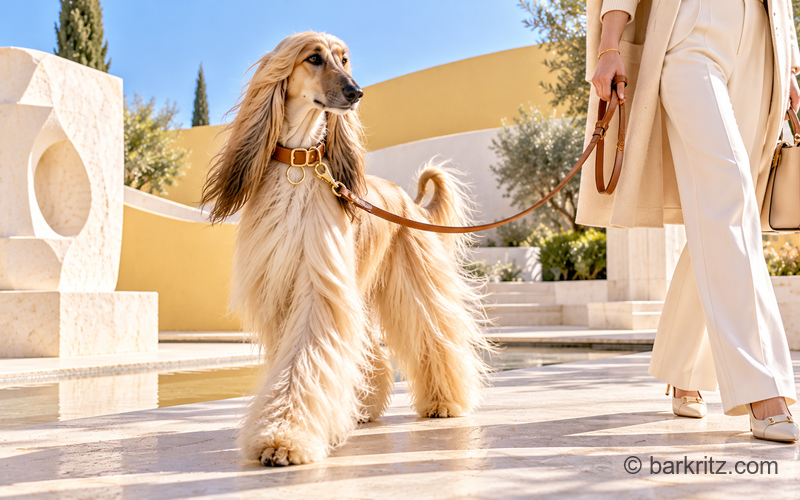
An elegant everyday look for a dog begins with accessories that balance considered design, material quality, and practical comfort. The right collar and leash can complement a beautifully maintained coat, coordinate with a carefully chosen walking wardrobe, and bring a sense of polish to even the simplest daily outing. Yet true sophistication extends beyond appearance: an accessory should fit correctly, withstand regular use, and allow the dog to move naturally. From supple leather and refined hardware to lightweight woven fabrics and understated colors, the best combinations make everyday walks feel effortlessly composed without compromising canine comfort or safety.
Which Collar Materials Offer the Best Balance of Elegance, Comfort, and Durability?
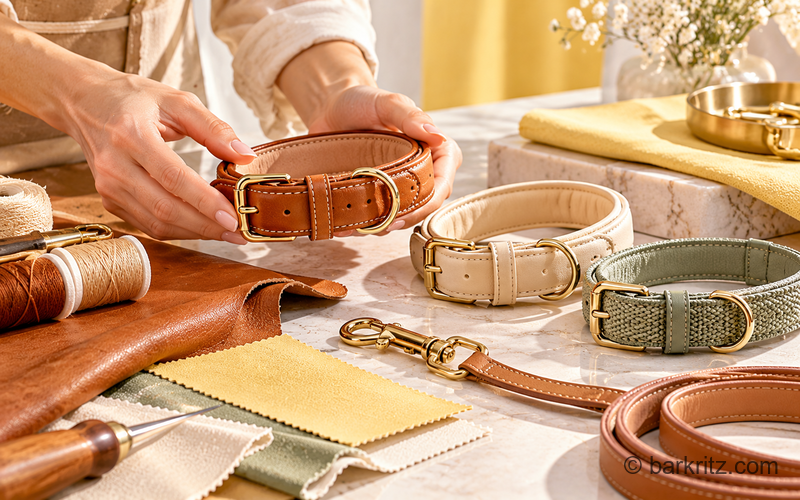
The best collar materials combine a refined appearance with a comfortable feel, dependable construction, and suitability for the dog’s coat, activity level, and daily routine.
Leather remains a perennial favorite for its natural texture, clean lines, and ability to develop character with use. Full-grain leather often features distinctive grain patterns and can soften over time when properly maintained, while high-quality finished leather offers a more uniform appearance and may be easier to wipe clean. Neither option is universally superior; construction, lining, stitching, and the dog’s environment all influence performance.
For dogs with sensitive skin or fine coats, the material touching the neck deserves particular attention. A smooth lining and carefully finished edges can help reduce friction, while a lighter collar may be more comfortable for a small dog than a thick, heavily embellished design.
Consider the strengths of the most common materials:
- Full-grain leather: A classic, structured look with natural texture; requires appropriate care and may not be ideal for consistently wet conditions.
- Padded leather: Offers a cushioned contact surface and a substantial, tailored appearance; quality depends on the padding, lining, and construction.
- High-density woven nylon: Lightweight, versatile, and generally easy to clean; available in elegant solid colors and understated patterns.
- Premium polyester webbing: Can provide colorfastness and practical everyday performance when well constructed; inspect stitching and hardware carefully.
- Soft, flexible coated webbing: Often easy to wipe clean and useful in damp conditions; check flexibility, edge finishing, and the quality of the fittings.
A refined finish should never conceal weak construction. Look for reinforced stitching, secure attachment points, smooth edges, and hardware that feels appropriately substantial without being excessively heavy. Decorative studs, oversized buckles, and elaborate embellishments may photograph beautifully, but they should not create pressure points or catch on the dog’s coat.
Material selection should also reflect the dog’s habits. A dog that swims, runs through wet grass, or enjoys muddy trails may benefit from a water-resistant, easy-care collar rather than delicate leather. For a dog whose routine centers on city pavements and supervised neighborhood walks, a well-maintained leather or woven collar may offer the desired balance of appearance and practicality.
The most elegant accessory is one that remains comfortable and presentable after repeated wear. A thoughtful material choice makes that possible without turning everyday care into an elaborate ritual.
How Should You Choose a Collar and Leash That Complement Your Dog’s Size and Silhouette?
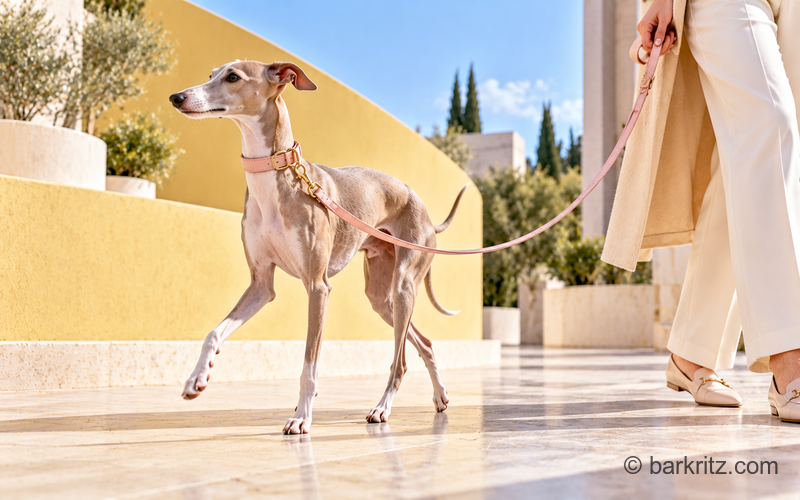
A well-proportioned collar and leash should complement the dog’s natural build while remaining light enough for comfortable movement and strong enough for reliable control.
Scale is central to an elegant walking ensemble. A wide, heavily buckled collar can overwhelm a petite Italian Greyhound, while a very narrow strap may be unsuitable for a powerful, broad-necked dog. The objective is not to make every dog look alike, but to select accessories that appear balanced on the individual animal and perform safely under everyday conditions.
Start with the collar’s fit rather than its visual appeal. Measure the dog’s neck according to the manufacturer’s instructions and check the finished fit after fastening. For many flat collars, the familiar two-finger check can serve as a preliminary guide, but it is not a universal measurement standard; the collar must also remain secure without restricting breathing, swallowing, or natural movement. Follow the product’s specific fitting guidance and seek professional help if the fit is uncertain.
A few proportion principles can help refine the look:
- Small, fine-boned dogs: Lightweight straps, compact buckles, and restrained hardware often create a balanced appearance without unnecessary bulk.
- Medium-sized dogs: Moderate strap widths and simple metal fittings can complement a wide range of builds and coat types.
- Large, broad-necked dogs: Substantial, well-constructed collars may look more proportionate, but width and hardware should be selected for fit and comfort rather than appearance alone.
- Long-haired breeds: Smooth edges and appropriately positioned fittings can help reduce tangling and friction around the neck.
- Short-coated breeds: Soft lining and careful adjustment are particularly important because the skin may have less protection from rubbing.
Leash proportions matter just as much. A comfortable handle should fit the handler’s hand without sharp edges or awkward seams, while the leash length should support the environment in which it will be used. A shorter leash can help maintain control on crowded pavements, whereas a longer standard leash may offer more room in open areas where local rules permit.
For ordinary walks, a fixed-length leash is often a straightforward choice. Retractable leashes can create additional handling and entanglement risks in crowded settings and should not be treated as a universal substitute for a standard leash. Whatever style you choose, inspect the clip, swivel, stitching, and connection points regularly.
Most importantly, accessories should never be selected by weight or visual scale alone. A collar must be secure and appropriately fitted, and a leash must be suitable for the dog’s strength, behavior, and environment. A polished silhouette is most successful when the equipment works naturally with the animal rather than against it.
Which Colors and Hardware Create the Most Timeless Everyday Combinations?
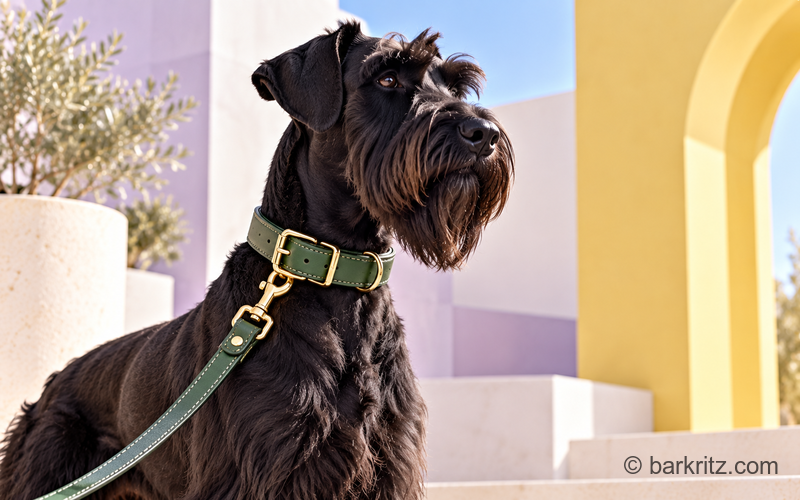
The most versatile collar-and-leash combinations pair a restrained color palette with coordinated, durable hardware and details that complement the dog’s natural coloring.
Color coordination does not require an exact match between every accessory and the dog’s coat. Instead, consider contrast, undertone, and the overall impression you want to create. Warm leather shades can enrich golden, red, and chocolate coats, while cooler neutrals often complement silver, black, white, and blue-gray coloring. A contrasting color can be equally sophisticated when used deliberately.
A compact palette makes everyday styling easier because individual pieces can work across seasons and outfits. Consider these combinations:
- Cognac leather with brushed brass: A warm, traditional pairing that suits cream, caramel, and red coats particularly well.
- Black leather with polished silver-tone hardware: A crisp, architectural look that complements dark coats and creates clean contrast against lighter fur.
- Taupe or mushroom with muted gold-tone fittings: An understated combination that works across many coat colors and seasonal wardrobes.
- Deep forest green with dark metal hardware: A rich, practical choice for outdoor routines and dogs with warm or neutral coat tones.
- Burgundy with antique-brass details: A distinctive accent that adds depth without relying on conspicuous decoration.
- Pale blue or lavender woven webbing with silver-tone fittings: A lighter contemporary option for dogs whose owners prefer a softer color story.
Hardware finish influences both style and maintenance. Polished metal offers a bright, formal appearance but can show fingerprints and fine scratches. Brushed finishes tend to look more subdued, while darker coatings create a modern effect that may wear over time depending on the coating and use.
Do not assume that a particular metal color guarantees a particular level of quality. Examine the actual material, fastening mechanism, finish, and resistance to corrosion. Clips and rings should close securely, move smoothly where designed to swivel, and remain free from sharp edges.
Personalization can also be elegant when it serves a purpose. A discreet nameplate or identification tag may complement the accessory while helping others identify the dog if it becomes separated from its owner. Ensure that any attachment is secure, legible, and appropriate for the collar’s design.
The most timeless combinations are not necessarily the plainest or most expensive. They are the ones that coordinate naturally with the dog’s appearance, suit the owner’s preferences, and remain attractive after regular use. A small, considered collection of well-made accessories often proves more versatile than a large assortment chosen solely for novelty.
How Can You Coordinate a Collar, Leash, and Walking Accessories Without Overstyling the Look?
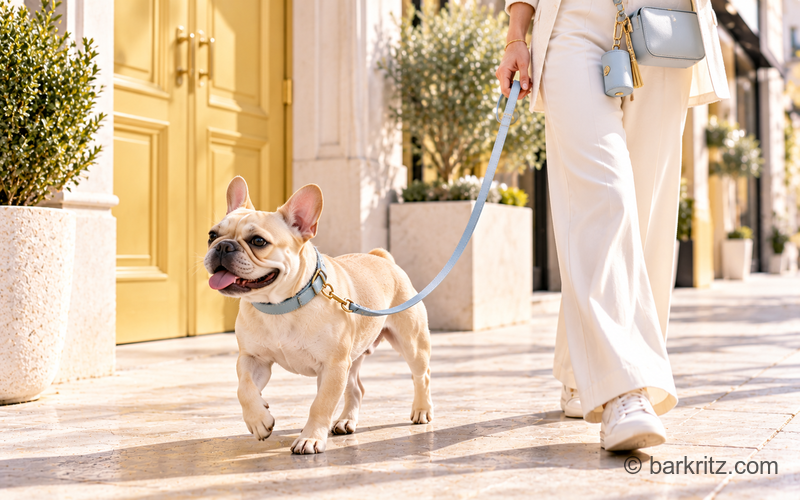
A coordinated walking ensemble looks most polished when the collar and leash share one visual element, while the remaining accessories stay functional, restrained, and easy to use.
Matching sets provide an uncomplicated starting point because the materials, colors, and hardware are designed to work together. However, coordination can also come from a shared accent rather than identical finishes. A cognac collar, for example, may pair naturally with a dark-brown leash if the leather tones complement each other and the hardware does not clash.
Think of the collar and leash as the foundation of the ensemble. Add a waste-bag holder, treat pouch, or walking bag only when it improves the routine. Too many competing colors, oversized charms, and decorative attachments can make the setup cumbersome while distracting from the dog’s natural appearance.
For a more considered combination, use a simple styling framework:
- Choose one leading material: Leather, woven webbing, or a coated material can establish the overall character.
- Repeat one key color: Carry the collar’s main shade into the leash or one practical accessory.
- Keep hardware consistent where possible: Similar metal tones can create visual continuity without requiring identical products.
- Limit decorative details: A single understated accent usually looks more deliberate than several competing embellishments.
- Prioritize function: Any accessory should remain secure, accessible, and comfortable for both dog and handler.
The right combination also depends on the setting. For a short city walk, a streamlined collar, fixed-length leash, and discreet waste-bag holder may be all that is needed. A longer outing may call for a treat pouch, water container, and other practical equipment, but these items should be chosen for the dog’s needs rather than to complete a visual theme.
Seasonality offers another way to vary the look without rebuilding the entire collection. Lighter woven materials and pale neutrals can feel fresh in warmer months, while richer leather tones and deeper colors may suit autumn and winter wardrobes. Any seasonal change should account for weather and activity: delicate leather may require extra protection from rain, and accessories should be cleaned and dried according to their care instructions.
Avoid attaching bulky ornaments or loose decorative elements that could snag, be chewed, or interfere with movement. Bandanas, bows, and clothing accessories should be fitted carefully and removed if the dog shows discomfort or attempts to chew them. Styling should enhance the experience of walking, not turn it into a constraint.
A truly elegant ensemble is recognizable by its ease. Every piece has a purpose, the colors feel intentional, and nothing interferes with the dog’s comfort or the handler’s control.
What Safety and Fit Details Should You Check Before Buying a Premium Collar and Leash?
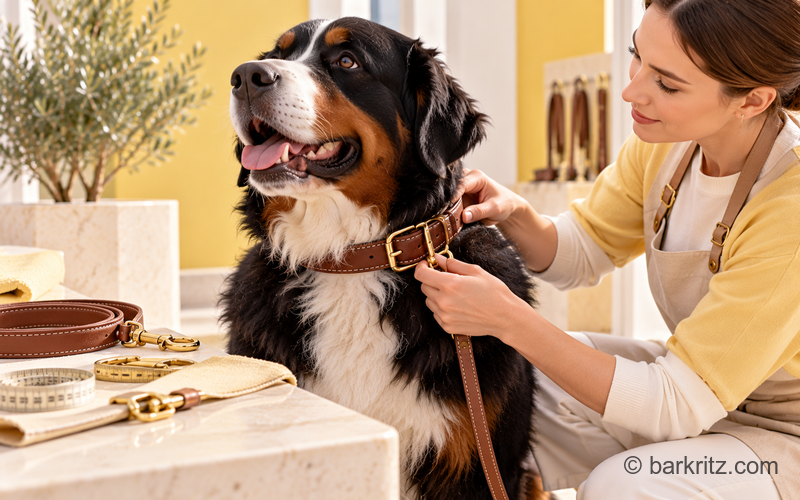
Before purchasing a premium collar and leash, verify the fit, load-bearing construction, secure fastenings, and suitability for the dog’s behavior and walking environment.
Appearance and material quality matter, but they cannot compensate for unreliable hardware or an unsuitable design. A refined collar should sit comfortably, remain secure during ordinary movement, and allow the dog to breathe and swallow normally. A leash should provide dependable control without sharp edges, weak seams, or a clip that can open unexpectedly.
Before buying, inspect the product and ask the manufacturer about its intended use. Pay attention to the details that affect everyday reliability:
- Correct sizing: Measure the dog’s neck and follow the brand’s fitting instructions; do not rely on breed labels alone.
- Secure buckle or fastening: Check that the closure engages properly and cannot be easily released by ordinary movement.
- Reinforced attachment points: Inspect the stitching and construction around rings, clips, and leash connections.
- Appropriate hardware: The clip should suit the dog’s size and strength without adding unnecessary weight.
- Comfortable contact surfaces: Look for smooth edges, suitable lining, and an absence of sharp or abrasive details.
- Clear care instructions: Choose materials you can maintain properly, especially if the dog regularly encounters rain, mud, salt, or water.
A collar should not be used as a substitute for a properly fitted walking harness when a harness is more appropriate for the individual dog. Dogs that pull strongly, have respiratory concerns, or are prone to slipping out of collars may benefit from a different walking setup, selected with guidance from a veterinarian or qualified force-free trainer. For dogs that can back out of ordinary collars, a properly fitted escape-resistant design may be worth considering.
Check the equipment regularly rather than waiting for visible failure. Leather can dry or crack, webbing can fray, stitching can loosen, and metal fittings can corrode or deform. Replace any component that shows meaningful wear, and ensure that identification tags remain securely attached.
Comfort deserves ongoing attention, too. Watch for persistent scratching at the neck, hair loss, redness, rubbing, changes in gait, or reluctance to walk in the equipment. These signs may indicate that the collar or harness needs adjustment or replacement; persistent irritation warrants veterinary advice.
For puppies and young dogs, fit should be reassessed frequently as the animal grows. Even an expensive, well-made collar can become too tight if its size is not checked. Adult dogs may also need adjustments as their weight or coat changes.
The best premium accessories combine craftsmanship with thoughtful engineering. Choose a collar and leash that suit the dog in front of you, maintain them consistently, and replace them when they no longer perform reliably. Elegant everyday style is not about displaying the most elaborate equipment; it is about choosing pieces that make each walk safer, more comfortable, and quietly well composed.