

Advanced Dental Care for Dogs and Cats Explained
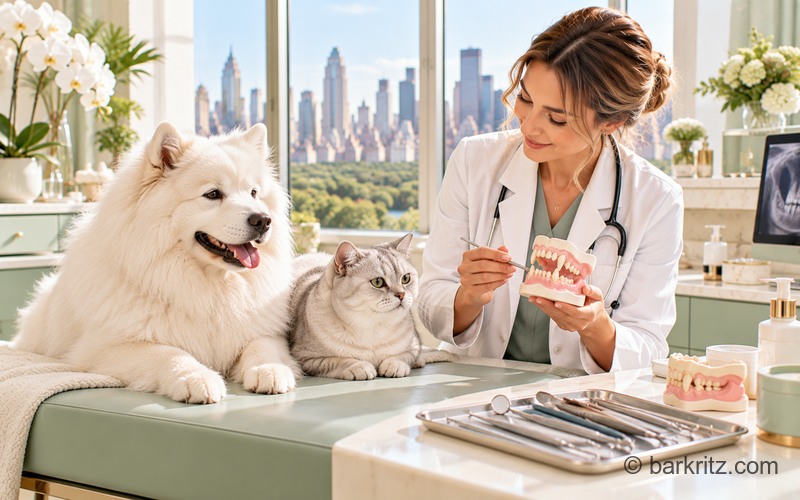
A healthy smile is more than an aesthetic detail in a well-cared-for companion; it is an essential component of long-term wellness. For dogs and cats, oral health influences eating, comfort, behavior, and overall quality of life, yet dental disease can develop gradually and remain unnoticed until it becomes painful. By the time an animal begins refusing food or pawing at its mouth, significant problems may already be present beneath the gumline.
For New York’s discerning pet owners, advanced dental care offers a more comprehensive approach than occasional brushing or a routine visual inspection. Modern veterinary dentistry combines professional assessment, diagnostic imaging, preventive techniques, and individualized treatment to identify problems early and preserve healthy teeth wherever possible. Understanding these options helps owners make informed decisions that prioritize both comfort and longevity.
What Does Advanced Dental Care Involve for Dogs and Cats?
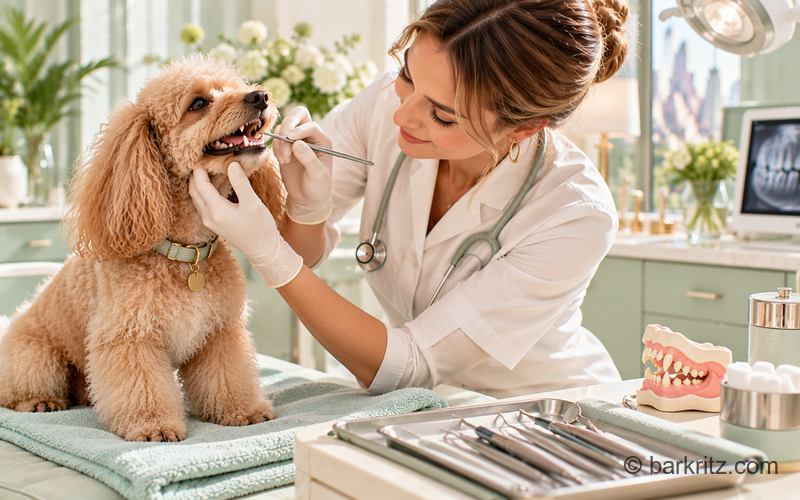
Advanced dental care combines a thorough veterinary oral examination, professional cleaning, appropriate diagnostic imaging, and targeted treatment to address disease that cannot be reliably identified through a surface-level inspection alone.
A pet’s visible teeth reveal only part of the picture. Periodontal disease can affect the tissues supporting the teeth, while fractures, root infections, and other abnormalities may remain hidden below the gumline. Cats can also develop painful tooth resorption, a condition in which tooth structure is progressively destroyed and may be difficult to recognize without dental radiographs.
A comprehensive veterinary dental procedure typically includes an assessment of the mouth, professional removal of plaque and hardened calculus, examination of individual teeth and gum pockets, and polishing when appropriate. General anesthesia is usually necessary for a complete cleaning and detailed examination because it allows the veterinary team to evaluate the entire mouth, obtain diagnostic images, and treat affected areas while minimizing movement and distress.
Advanced dental care may include:
- Periodontal assessment: Evaluates gum inflammation, pocket depth, tissue attachment, and signs of disease around individual teeth.
- Dental radiography: Reveals abnormalities affecting tooth roots, surrounding bone, and structures hidden beneath the gumline.
- Professional scaling and polishing: Removes accumulated calculus and plaque, including deposits below the gumline when indicated.
- Restorative treatment: Addresses selected fractures or damaged teeth when preservation is appropriate and clinically feasible.
- Oral surgery and extractions: Removes teeth that are severely diseased, fractured, or otherwise unlikely to remain comfortable and functional.
The appropriate treatment depends on the animal’s age, medical history, oral findings, and overall health. A young dog with a fractured tooth may need a different approach from an older cat with extensive tooth resorption or a small breed with advanced periodontal disease.
Owners should ask their veterinarian what diagnostic procedures are recommended, whether dental radiographs will be taken, how anesthesia will be monitored, and what pain-management plan will be used. These questions help distinguish a comprehensive dental service from a cosmetic cleaning that addresses visible deposits without adequately evaluating underlying disease.
Why Are Dental X-Rays and Anesthesia Important in Veterinary Dentistry?
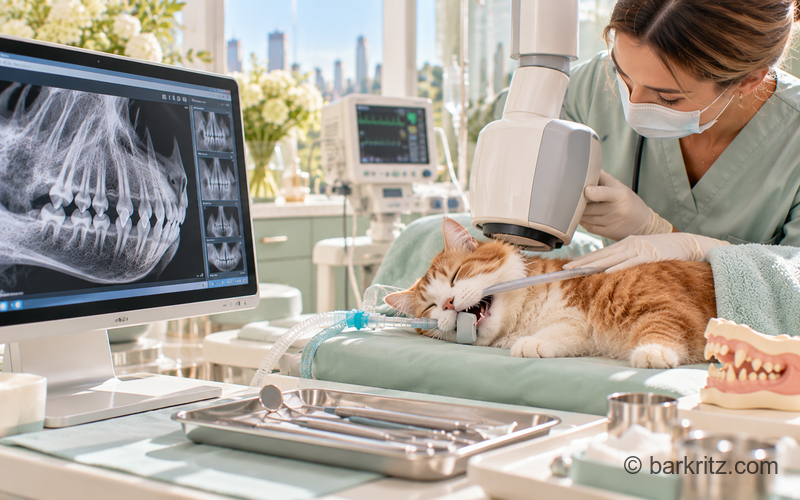
Dental radiographs and carefully managed general anesthesia are central to comprehensive veterinary dentistry because they allow clinicians to examine hidden structures, evaluate disease accurately, and perform necessary treatment safely and thoroughly.
A tooth may appear intact above the gumline while its root is damaged, infected, or surrounded by abnormal bone. Similarly, a cat with tooth resorption may show little visible change until the affected area is examined more closely. Dental radiographs help identify these problems and inform decisions about treatment, including whether extraction or another intervention is necessary.
Anesthesia makes a complete examination possible without requiring a conscious animal to tolerate prolonged mouth opening, probing, and dental instrumentation. It also helps protect the airway when used with appropriate veterinary monitoring and airway management. Although anesthesia carries risks, those risks should be evaluated individually rather than assumed to be unacceptable simply because a pet is older.
A responsible dental anesthesia protocol generally considers:
- Pre-anesthetic assessment: Reviews medical history, current medication, physical examination findings, and any relevant laboratory testing.
- Individualized planning: Adjusts the anesthetic approach to the animal’s health, age, and specific risk factors.
- Airway protection: Uses appropriate airway management to reduce the risk of inhaling water, debris, or other material during the procedure.
- Continuous monitoring: Tracks relevant parameters such as oxygenation, ventilation, circulation, temperature, and anesthetic depth.
- Recovery supervision: Monitors the animal as it wakes and assesses comfort, alertness, and readiness for discharge.
There is no single anesthetic protocol suitable for every dog or cat. A pet with heart disease, kidney impairment, respiratory problems, or other medical conditions may require additional evaluation and tailored precautions. The veterinary team should explain the anticipated benefits, potential risks, and measures used to manage complications.
Owners should be cautious about services advertised as anesthesia-free dental cleaning. Although such procedures may remove some visible deposits, they generally cannot provide the same comprehensive examination, subgingival treatment, or diagnostic imaging as a properly performed veterinary dental procedure under anesthesia. A cleaner-looking tooth surface does not necessarily indicate healthy gums or disease-free roots.
The objective is not to pursue the most elaborate intervention available, but to use the diagnostic and treatment methods necessary to achieve a healthy, comfortable mouth. When recommended by a veterinarian, imaging and anesthesia make it possible to identify hidden disease rather than relying on appearance alone.
How Can You Recognize Dental Disease Before It Becomes Painful?

The most effective way to detect dental disease early is to combine regular veterinary oral examinations with attention to subtle changes in eating habits, breath, grooming, and everyday behavior.
Dogs and cats may continue eating despite significant oral discomfort. Some compensate by chewing on one side, swallowing food with minimal chewing, dropping pieces from the mouth, or preferring softer textures. Cats, in particular, may conceal signs of pain, making small behavioral changes important clues.
Persistent bad breath is not simply an unavoidable consequence of having a pet. It can indicate plaque accumulation, gum inflammation, infection, or other oral problems that deserve examination. Red or bleeding gums, visible calculus, excessive drooling, facial swelling, and reluctance to have the head touched are also reasons to arrange veterinary assessment.
Watch for these common warning signs:
- Changes in eating: Slower meals, dropping food, chewing on one side, or suddenly preferring soft food.
- Gum abnormalities: Redness, swelling, bleeding, or gum tissue that appears to be receding.
- Unusual breath: Persistent or worsening odor that may accompany plaque, periodontal disease, or infection.
- Behavioral changes: Irritability, reduced interest in play, hiding, or resistance to handling around the face.
- Visible tooth problems: Fractures, discoloration, loose teeth, or apparent cavities or defects.
- Other physical signs: Excessive drooling, pawing at the mouth, facial swelling, or discharge.
Facial swelling, significant bleeding, inability to eat or drink, or obvious severe pain warrants prompt veterinary attention. Difficulty breathing or rapidly progressing swelling should be treated as an emergency.
A visual check at home can help owners notice changes, but it cannot replace a professional examination. Some cats develop tooth resorption, and some dogs experience disease around the roots or beneath the gumline without obvious external signs. The absence of visible calculus also does not guarantee healthy teeth.
Routine veterinary visits should include an oral assessment, with the frequency and depth of follow-up determined by the pet’s individual risk. Small-breed dogs, animals with a history of periodontal disease, and cats with previous dental problems may need closer monitoring. Early intervention can reduce discomfort and help prevent minor findings from progressing into more complex treatment needs.
Which At-Home Dental Care Methods Actually Help Prevent Disease?
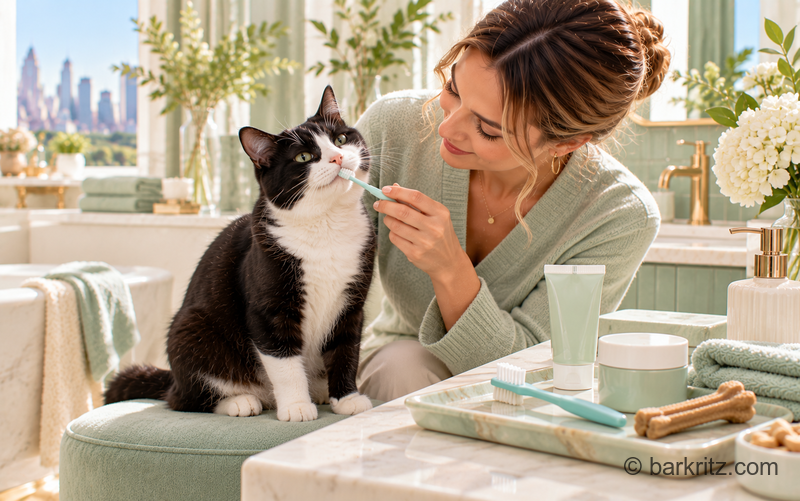
Daily toothbrushing with a pet-safe toothpaste is generally the most effective at-home method for reducing plaque accumulation, while veterinarian-approved dental products can provide useful additional support.
Plaque is a soft bacterial biofilm that continually forms on tooth surfaces. If it is not disrupted, it can mineralize into calculus, which is more difficult to remove with routine home care. Brushing helps interrupt this process before deposits become established, particularly along the gumline where periodontal disease often begins.
Introduce brushing gradually, using a soft-bristled toothbrush designed for pets or a suitable finger brush if recommended. Start by allowing the animal to investigate the brush and taste a small amount of pet toothpaste, then progress to brief contact with the outer tooth surfaces. Keep sessions calm and rewarding. If the animal becomes distressed, pause and try again later rather than forcing the mouth open.
Never use human toothpaste for dogs or cats. Some formulations contain ingredients that are unsuitable for pets, including xylitol in certain products. Pet-specific toothpaste is designed for veterinary use and is available in flavors that may make the routine easier to establish.
A practical home-care plan may combine several methods:
- Toothbrushing: The preferred daily habit for physically disrupting plaque on accessible tooth surfaces.
- Veterinary dental diets: Selected diets designed to help reduce plaque or calculus through their texture or specific formulation.
- Dental chews: Products with suitable sizing and texture that may reduce deposits when used as directed.
- Dental gels and rinses: Certain formulations can support oral hygiene, although their effectiveness varies by product and application.
- Regular professional assessment: Identifies disease that home care cannot diagnose or adequately treat.
When selecting dental chews, toys, or treats, avoid objects that are excessively hard, such as antlers, bones, and very rigid chew products, because they can fracture teeth. Choose products appropriate to the animal’s size, chewing style, and medical needs. Cats may benefit from a different approach than dogs, and not every product marketed for dental health has strong evidence of effectiveness.
Look for products accepted by the Veterinary Oral Health Council (VOHC), which reviews evidence supporting claims that qualifying products help control plaque and/or calculus. Its accepted-product list can be a useful starting point, but a product’s suitability still depends on the individual pet and the veterinarian’s advice.
Home care is most effective when started before substantial disease develops. Brushing cannot reverse advanced periodontal damage, remove all hardened calculus, or treat an infected tooth root. If a pet already has painful oral disease, a veterinary examination and appropriate treatment should come before establishing a new brushing routine.
How Often Should Dogs and Cats Receive Professional Dental Care?

Dogs and cats should receive professional dental assessments at regular veterinary visits, with the timing of a complete dental procedure determined by their oral condition, individual risk factors, and the findings of each examination.
There is no universal schedule that suits every pet. Some animals maintain relatively healthy mouths with consistent home care, while others accumulate deposits quickly or develop periodontal disease despite attentive brushing. Breed, age, tooth alignment, diet, previous dental treatment, and underlying medical conditions can all influence the frequency of professional care required.
Small-breed dogs often have crowded teeth and may be particularly susceptible to periodontal disease. Cats can develop tooth resorption and other painful conditions that are not always visible during a brief examination. Both species benefit from an individualized approach rather than waiting for obvious symptoms to appear.
A useful framework is to distinguish between three levels of care:
- Routine oral checks: Performed during regular veterinary visits to identify changes and determine whether further evaluation is needed.
- Professional dental cleaning and assessment: Scheduled when examination findings and the pet’s risk indicate a need for comprehensive evaluation and treatment.
- Targeted follow-up: Recommended after extractions, periodontal treatment, or other procedures to assess healing and plan ongoing prevention.
After a dental procedure, follow the veterinarian’s instructions regarding feeding, medication, activity, and oral hygiene. Pets that have undergone extractions may require a temporary change in food texture and a period without brushing near healing tissues. The length of recovery and the timing of follow-up depend on the procedure performed and the animal’s condition.
Prevention should continue after professional treatment. Once the mouth has healed, consistent home care can help slow the return of plaque and reduce the likelihood of future problems. Keeping a record of dental findings and previous procedures also helps the veterinary team recognize changes over time and make informed recommendations.
For owners who value proactive wellness, dental care is best understood as an ongoing partnership between home routines and professional veterinary medicine. Regular assessment, appropriate diagnostics, timely treatment, and daily plaque control work together to protect oral comfort throughout a pet’s life.
A healthy mouth supports more than a polished appearance. It helps dogs and cats eat comfortably, interact naturally, and enjoy their daily routines without avoidable pain. By treating dental health as an essential part of preventive care, owners can make a meaningful investment in their companions’ comfort, function, and long-term well-being.