

Designer Pet Furniture That Complements Your Home
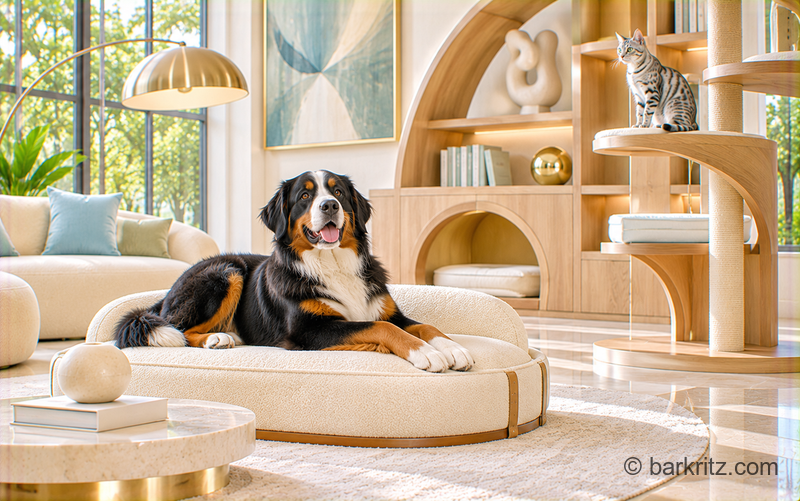
A beautifully designed home reflects the personality of its owner through carefully considered proportions, materials, textures, and details. For households that share their living spaces with beloved pets, this design philosophy increasingly extends to the furniture created for their four-legged companions. A cat tree no longer needs to resemble a purely functional climbing structure, and a dog’s bed can be as thoughtfully selected as an upholstered accent chair.
Designer pet furniture brings together two essential considerations: the comfort and natural behavior of the animal, and the visual character of the home. From sculptural sleeping pieces and architectural climbing systems to refined feeding stations and discreet storage, contemporary designs demonstrate that practical pet essentials can coexist beautifully with sophisticated interiors.
The most successful choices do more than match a color scheme. They respect the proportions of a room, complement its materials, withstand everyday use, and provide an environment in which pets can feel secure and comfortable. Selecting the right pieces begins with understanding how design, craftsmanship, and animal needs can work together.
How Can Designer Pet Furniture Complement Your Interior Design Style?
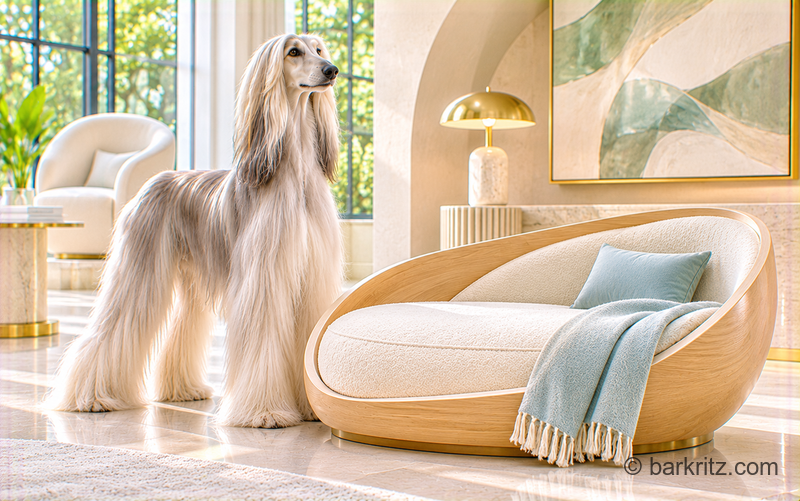
Designer pet furniture complements a sophisticated interior most successfully when its silhouette, materials, and color palette relate naturally to the existing furniture and architectural details.
Rather than treating pet accessories as separate decorative objects, consider them part of the overall interior composition. A sculptural cat tree can echo the geometry of a contemporary bookcase, while a beautifully upholstered dog bed can complement the proportions of a living-room sofa.
The first step is identifying the dominant design language of the room. Different interiors call for different furniture characteristics:
- Contemporary interiors: clean silhouettes, restrained colors, polished metal, and architectural forms.
- Mid-century modern spaces: warm wood, tapered legs, curved profiles, and understated upholstery.
- Classic residences: elegant joinery, traditional upholstery, refined detailing, and timeless proportions.
- Minimalist homes: discreet forms, concealed storage, neutral finishes, and visual simplicity.
- Organic modern interiors: natural wood, tactile fabrics, rounded edges, and muted earthy tones.
- Eclectic interiors: distinctive sculptural pieces, carefully coordinated colors, and expressive material combinations.
Scale is equally important. A large climbing structure can overwhelm a compact living room, while an undersized resting place may fail to accommodate a large dog comfortably. Measure the available floor area and consider how the furniture will interact with existing pathways, doors, windows, and seating arrangements.
Color coordination should feel intentional rather than overly matched. A pet bed in a shade slightly lighter or darker than the main sofa can create a subtle relationship without disappearing into the upholstery. Natural wood, brushed metal, and textured fabrics can also introduce visual interest while remaining consistent with the home’s established palette.
Consider sightlines as well. Pet furniture positioned near a window may become an attractive architectural feature while giving cats a comfortable place to observe their surroundings. A discreet sleeping piece beside a reading chair can create a practical resting area without interrupting the room’s composition.
The most elegant result comes from selecting furniture that appears to belong in the home while remaining unmistakably designed for the animal that uses it.
Which Materials Make Pet Furniture Both Beautiful and Durable?
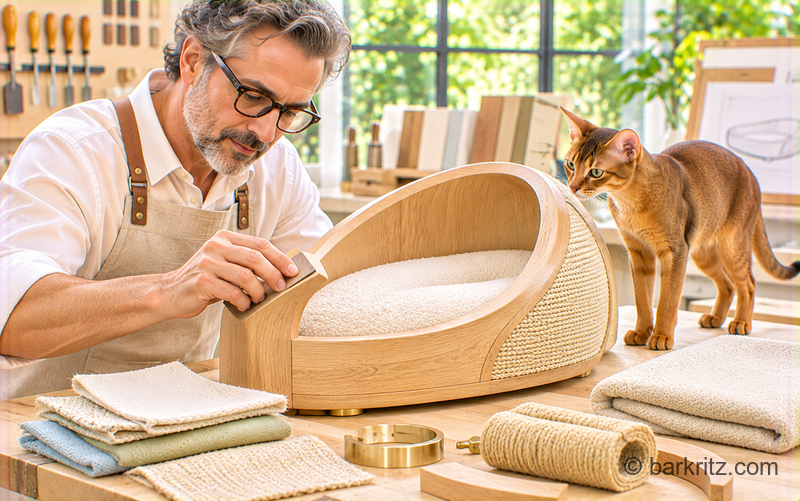
The finest designer pet furniture combines visually refined materials with durable construction, easy maintenance, and surfaces appropriate for the animal’s everyday use.
Material selection influences far more than appearance. It determines how a piece ages, how easily it can be cleaned, whether it withstands scratching or chewing, and how comfortable it feels against a pet’s body.
Natural wood remains an especially versatile choice. Oak, walnut, ash, and other carefully finished hardwoods can introduce warmth and craftsmanship into contemporary and traditional interiors. For pet furniture, however, the quality of the finish and the stability of the construction are essential. Smooth edges, secure joints, and non-toxic finishes should take priority over decorative treatments.
Upholstery offers another opportunity to coordinate pet furniture with the home’s existing furnishings. Consider the following characteristics:
- Performance fabrics: designed to resist everyday wear and simplify cleaning, although suitability varies by weave and finish.
- Removable upholstery: allows covers to be washed or professionally cleaned without replacing the entire piece.
- Tightly woven textiles: may be more practical than loosely woven fabrics that can catch claws.
- Natural linen and cotton blends: provide attractive textures but may require more careful maintenance.
- Leather and leather alternatives: can create a refined appearance, although scratching, chewing, and surface damage should be considered.
- Washable cushions: make it easier to maintain hygiene and refresh the appearance of a favorite resting place.
Metal and ceramic details can also elevate the design. Powder-coated steel, brushed brass accents, and high-quality stainless steel are often used in feeding stations, furniture frames, and modular structures. These materials should be finished carefully, without sharp edges or unstable decorative elements.
For cat furniture, scratching surfaces deserve particular attention. Sisal is widely used because it provides a satisfying texture for scratching and can be incorporated into sculptural columns, panels, and climbing systems. A beautiful scratching post should still offer sufficient height, stability, and usable surface area.
For dogs, cushion construction matters as much as the outer fabric. Supportive filling, appropriate firmness, and a washable cover contribute to everyday comfort. Older dogs or those with mobility concerns may benefit from a supportive, accessible bed selected with veterinary guidance.
Always consider the safety of finishes, adhesives, coatings, and decorative components. Avoid materials that can splinter, release harmful substances, or become dangerous if chewed. Beautiful craftsmanship should never compromise the practical requirements of a pet-friendly home.
What Types of Designer Furniture Best Suit Cats and Dogs?
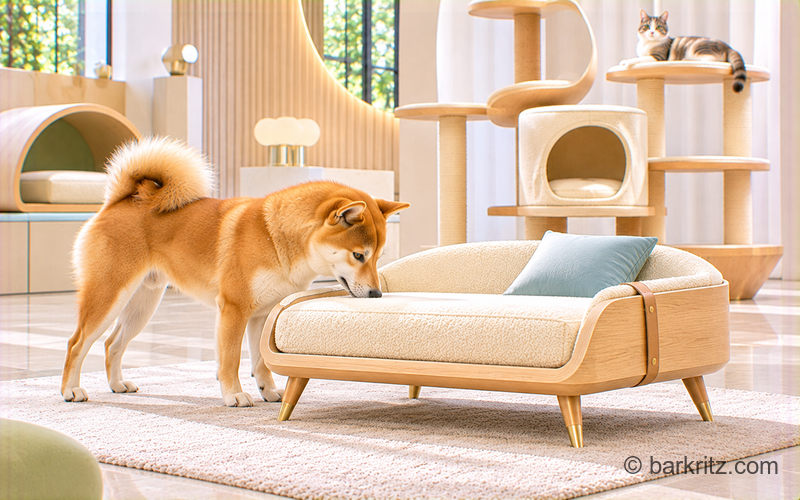
The best designer pet furniture is selected according to the animal’s species, size, age, habits, and preferred resting or activity patterns rather than appearance alone.
Cats and dogs use domestic furniture differently, so their needs should guide the selection process. A cat may value elevated viewpoints, enclosed retreats, and opportunities to scratch, while a dog generally needs a comfortable resting surface, appropriate support, and easy access.
For cats, contemporary design offers several possibilities:
- Architectural cat trees: combine vertical climbing opportunities with sculptural forms and coordinated finishes.
- Wall-mounted climbing systems: use vertical space and can be integrated into shelving arrangements, provided they are securely installed.
- Enclosed sleeping pods: offer privacy and a sheltered resting place for cats that prefer more enclosed environments.
- Window perches: provide comfortable observation points when safely secured and positioned.
- Integrated scratching furniture: combines functional scratching surfaces with seating, shelving, or decorative structures.
A cat tree should be stable enough to withstand jumping and climbing. Platforms must be appropriately sized, and the arrangement should allow the animal to move between levels comfortably. Wall-mounted systems require secure installation into suitable structural supports rather than relying on decorative mounting alone.
For dogs, the most important piece is often the bed. Designer dog beds range from low-profile upholstered platforms to elegant wooden frames and generously cushioned pieces. The appropriate choice depends on the dog’s dimensions, sleeping position, mobility, and personal preferences.
A few particularly useful options include:
- Upholstered daybed-style beds: offer a refined appearance for living rooms and bedrooms.
- Orthopedic-style mattresses: may provide additional support for certain dogs, depending on their individual needs.
- Raised wooden platforms: create a defined resting area and can help separate the sleeping surface from the floor.
- Compact lounge beds: suit smaller breeds and homes where floor space is limited.
- Built-in sleeping alcoves: integrate a dog’s resting place into cabinetry or bespoke furniture, provided ventilation and accessibility are adequate.
Feeding stations can also become part of the interior design. Raised wooden stands, ceramic bowls, and stainless-steel inserts offer a more considered alternative to temporary feeding arrangements. Their height should be appropriate for the individual animal, and bowls should remain easy to remove and clean.
The central principle is functionality before ornament. A sculptural piece is only successful when it supports natural behavior and provides a comfortable, safe experience for the pet.
How Can You Integrate Pet Furniture Into Small or Open-Plan Living Spaces?
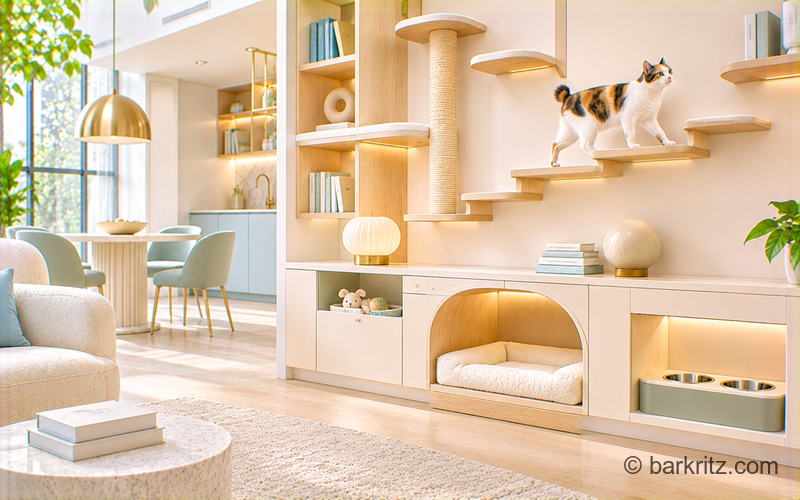
In smaller homes and open-plan residences, the most effective pet furniture uses vertical space, multifunctional design, and carefully planned placement to preserve both comfort and visual order.
Urban interiors often require a more considered approach to pet essentials. A large dog bed, feeding station, scratching structure, and collection of toys can quickly occupy valuable floor space if they are introduced without a coherent plan.
Multifunctional furniture offers a practical solution. A side table can incorporate a sheltered pet bed underneath, a storage bench can conceal toys and grooming supplies, and a carefully designed cabinet can house feeding accessories while keeping everyday essentials organized.
Vertical space is particularly useful for cats. Wall-mounted shelves, climbing platforms, and integrated scratching panels can create an engaging environment without occupying the entire floor. These installations should be securely fixed, with appropriate spacing and accessible routes between levels.
In open-plan homes, visual zoning can help establish a comfortable environment for pets without creating unnecessary divisions. A dog bed positioned beside a sofa can define a resting area, while a discreet feeding station can occupy a convenient kitchen corner away from heavy foot traffic.
Several design strategies are worth considering:
- Under-console sleeping spaces: create a discreet resting area beneath an existing piece of furniture.
- Integrated storage: conceal toys, grooming equipment, and spare bedding.
- Wall-mounted cat systems: use unused vertical surfaces for climbing and exploration.
- Modular furniture: allows individual components to be rearranged as household needs change.
- Coordinated feeding stations: keep bowls and food storage together in a dedicated location.
- Compact resting platforms: provide a comfortable sleeping surface without dominating the room.
Placement should also reflect the pet’s preferences. Cats often appreciate elevated positions and quiet retreat areas, while dogs may prefer sleeping near their owners or in a location where they can observe household activity.
Avoid placing beds beside frequently opened doors, noisy appliances, or busy walkways if the animal prefers peace and privacy. Feeding areas should be kept away from litter trays and should allow comfortable access.
Finally, maintain enough space for cleaning and movement. Furniture should not obstruct ventilation, emergency exits, or everyday household circulation. In a carefully designed home, pet furniture feels integrated rather than crowded into the remaining available space.
How Do You Choose Designer Pet Furniture That Offers Lasting Value?
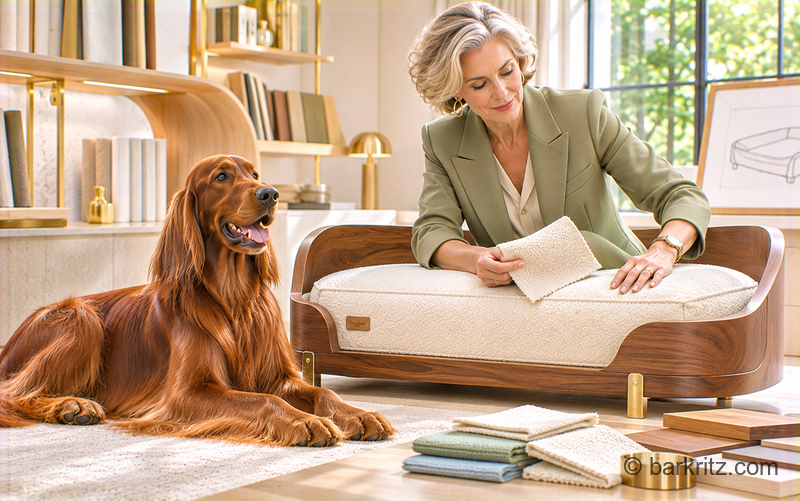
Designer pet furniture offers lasting value when its construction, repairability, timeless appearance, and suitability for the animal justify the initial investment.
A beautifully photographed piece may be visually appealing, but long-term satisfaction depends on how it performs in daily life. Before purchasing, examine the construction, upholstery quality, fastening systems, replacement-part availability, and ease of maintenance.
Craftsmanship deserves close attention. Look for stable frames, reinforced joints, securely attached surfaces, smooth edges, and components that can withstand the weight and activity of the intended animal. For climbing furniture, stability is essential; for dog beds, the support system should remain comfortable rather than quickly flattening.
A considered purchase should address several questions:
- Is the size appropriate? The pet should be able to use the furniture comfortably at its current age and size.
- Can the covers be removed? Replaceable and washable upholstery extends the practical life of the piece.
- Are replacement components available? Scratching panels, cushions, and hardware should ideally be replaceable.
- Are the materials safe? Finishes, adhesives, coatings, and fabrics should be appropriate for animals.
- Can the furniture be repaired? Well-constructed pieces are often easier to maintain than disposable alternatives.
- Will the design remain relevant? Timeless forms and restrained materials are less likely to feel dated.
- Does the manufacturer provide clear specifications? Weight limits, dimensions, cleaning instructions, and installation requirements should be transparent.
Custom-made furniture can be especially appealing when a home has unusual dimensions or a distinctive architectural character. Bespoke cabinetry may accommodate a sleeping alcove, while a custom climbing system can follow the proportions of a room. However, custom design should still prioritize ventilation, access, stability, and the animal’s comfort.
Sustainability can also influence the decision. Durable materials, responsible sourcing, repairable construction, and replaceable upholstery reduce the need for frequent purchases. A well-made wooden frame with a replaceable cushion may remain useful long after a less durable alternative has deteriorated.
It is also worth considering how the furniture will adapt to changing needs. A young, energetic cat may benefit from a more elaborate climbing system, while an older animal may eventually prefer lower platforms and easier access. A dog may require a different mattress as its size, age, or mobility changes.
Ultimately, designer pet furniture should be judged by the same thoughtful standards as the rest of the home: quality of materials, precision of construction, proportion, and enduring usefulness. The most successful pieces bring together exceptional design and genuine consideration for the animal, creating a living environment in which refined interiors and everyday pet comfort exist naturally side by side.