

How to Match Your Pet’s Style to Your Own Wardrobe
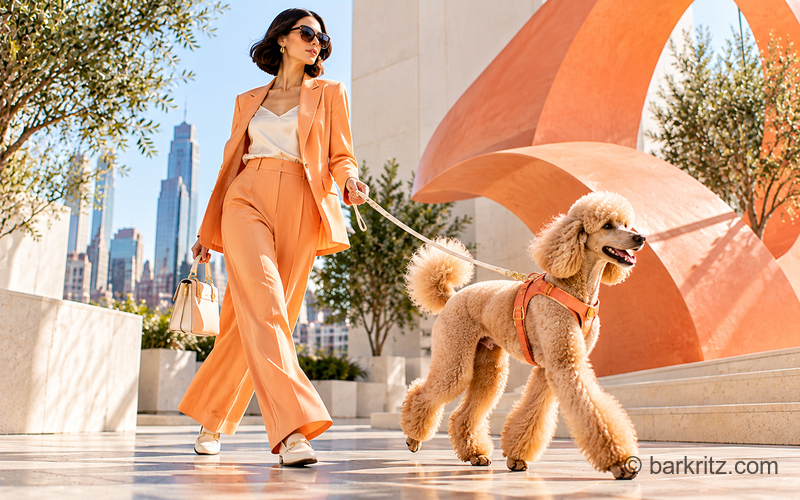
Personal style does not have to end at the wardrobe door when a beloved pet is part of the picture. From a perfectly coordinated walking ensemble to a shared palette that feels effortlessly sophisticated, dressing in harmony with a dog or cat can be an expression of taste rather than a display of matching outfits. The most compelling approach is subtle: consider colour, texture, proportion, and occasion, allowing the pet’s natural character and comfort to remain as important as the owner’s aesthetic. When the details are thoughtfully chosen, the result feels polished, personal, and entirely natural.
How Can You Coordinate Colours Between Your Wardrobe and Your Pet’s Accessories?
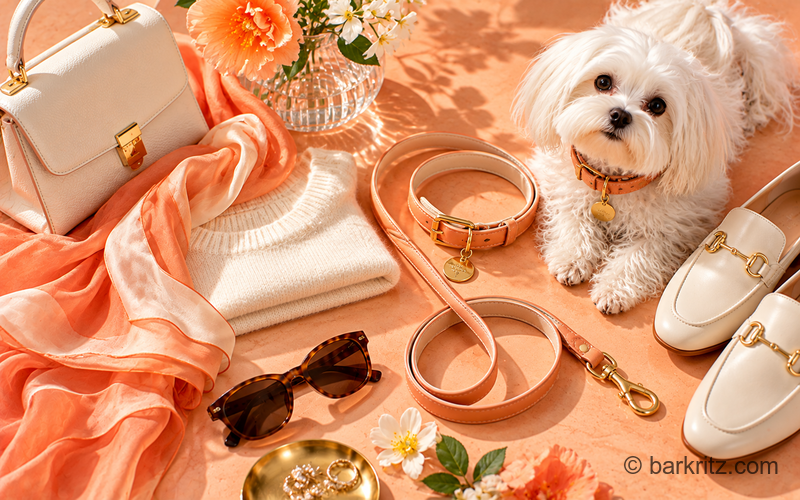
The most elegant way to coordinate your wardrobe with your pet’s accessories is to share a complementary colour palette rather than reproduce the same outfit in miniature. A carefully chosen lead, collar, bandana, or coat can echo a tone already present in your clothing while allowing both styles to retain their individuality.
Begin with the colours you wear most often. A wardrobe built around navy, ivory, charcoal, or soft grey offers a versatile foundation for accessories in muted pastels, rich jewel tones, or restrained metallic accents. Owners who prefer brighter clothing can choose a neutral pet accessory that balances the overall look instead of competing with it.
Consider these combinations:
- Ivory and camel: Pair a cream-coloured dog’s collar with an ivory knit and warm camel outerwear for a soft, tonal effect.
- Navy and silver: A charcoal or silver-grey pet can complement a navy coat, with a matching lead providing a discreet connection.
- Pastel pink and powder blue: These shades work beautifully with spring tailoring, pale denim, and light cotton separates.
- Forest green and chocolate brown: Rich natural tones create a cohesive autumn palette for walks in the park or countryside.
- Black and ivory: A monochromatic combination offers a crisp, architectural finish that works across seasons.
The objective is harmony, not exact duplication. If your outfit already features a bold print, choose a solid-colour accessory for your pet. Conversely, a simple outfit can accommodate a more expressive bandana or a distinctive lead.
Colour should also be considered in relation to the animal’s coat. A pale accessory may disappear against cream fur, while a deep colour can provide a striking contrast. For darker coats, soft coral, powder blue, and ivory can stand out beautifully without overwhelming the pet’s natural appearance.
Which Fabrics and Textures Create a Sophisticated Shared Style?
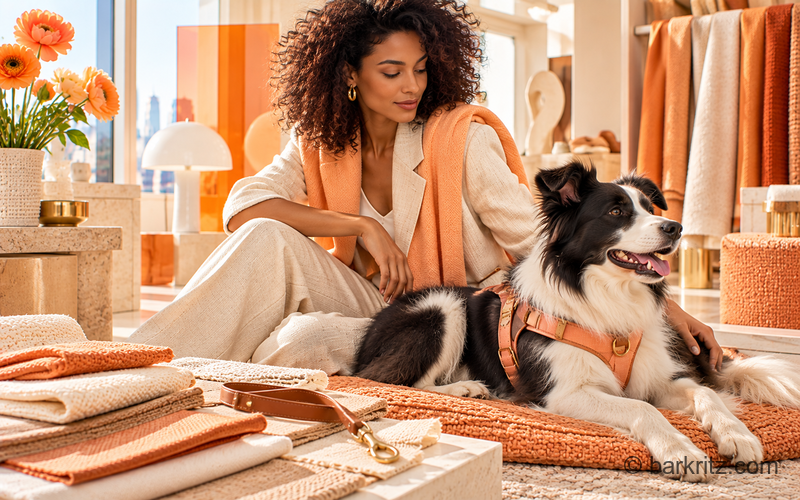
A sophisticated shared style emerges when the textures of a pet’s accessories complement the materials in the owner’s wardrobe while remaining practical, comfortable, and suitable for the animal. The best pairings feel connected through material character rather than through identical fabrics.
A wool coat, for example, can be complemented by a neatly finished woven lead, while a relaxed linen outfit pairs naturally with lightweight cotton accessories. Smooth leather details can connect a structured handbag or belt with a classic collar, provided the pet accessory is designed for safe everyday use.
Useful texture pairings include:
- Wool and woven cotton: A tailored winter coat paired with a durable fabric lead creates a refined, understated combination.
- Linen and lightweight canvas: Ideal for warm-weather walks, these materials convey relaxed elegance and are easy to incorporate into casual outfits.
- Smooth leather and polished hardware: A structured handbag or belt can echo the finish of a well-made collar or lead.
- Soft knitwear and brushed fabrics: A knitted owner’s ensemble can be complemented by a comfortable pet layer when the weather and the animal’s needs justify one.
- Quilted outerwear and technical fabrics: A practical pairing for rainy days and outdoor excursions, balancing appearance with function.
Material choice should never compromise safety. Pet accessories must fit correctly, allow natural movement, and withstand the forces placed on them during use. Clothing for animals should not restrict breathing, vision, walking, or temperature regulation, and decorative elements should not present choking or entanglement hazards.
Cats generally do not need clothing indoors unless there is a specific veterinary or environmental reason, and many cats find garments stressful. Dogs may benefit from appropriately fitted outerwear in cold or wet conditions, depending on coat type, age, health, and individual tolerance.
Care is another part of a polished appearance. Choose materials that can be cleaned according to the manufacturer’s instructions, inspect collars and leads regularly, and replace items when stitching, fastenings, or hardware become worn. A beautiful accessory should remain dependable long after the first outing.
How Should You Match Your Pet’s Look to Different Occasions?
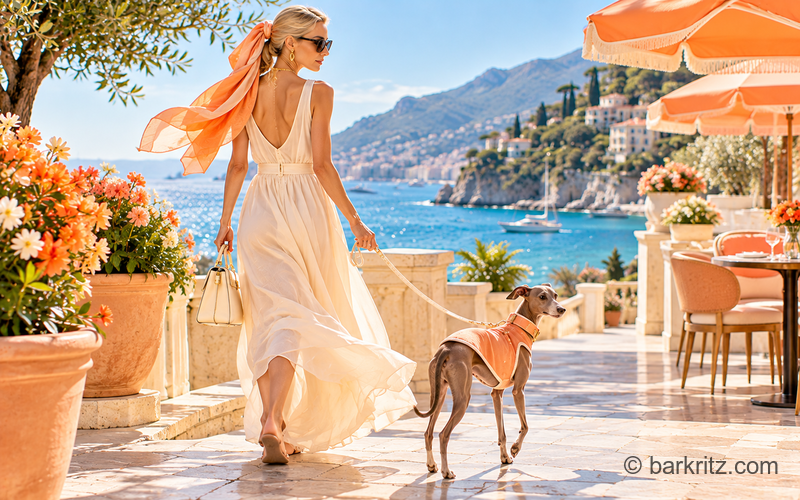
The most polished owner-and-pet combinations adapt to the occasion, using understated accessories for everyday walks, practical layers for outdoor adventures, and carefully coordinated details for social gatherings. Matching should always reflect the setting and the animal’s comfort rather than impose a human dress code on a pet.
For a morning coffee run, a simple collar, a neat lead, and a comfortable harness can complement jeans, a fine knit, and trainers. For a weekend in the countryside, weather-resistant accessories and suitable protective layers are more useful than elaborate decoration. A pet-friendly garden party may call for a coordinated colour accent, provided the animal is comfortable around guests and the environment is safe.
A versatile occasion-based wardrobe might include:
- Everyday city walks: A well-fitted harness or collar, a durable lead, and a compact waste-bag holder in a colour that complements your coat or bag.
- Country escapes: Weather-appropriate equipment, reflective details when visibility is poor, and practical layers for animals that need them.
- Pet-friendly cafés: Simple, secure accessories and a relaxed outfit that allows you to manage the pet comfortably in a public setting.
- Social gatherings: A tasteful bandana or a small colour-coordinated accessory, provided it does not interfere with movement or behaviour.
- Travel days: A secure carrier or restraint appropriate to the mode of transport, alongside practical luggage and clothing chosen for comfort.
Occasion dressing should also account for the pet’s temperament. A confident, social dog may enjoy joining its owner at an outdoor event, while a noise-sensitive dog or a cat may be happier at home. No accessory can compensate for an environment that causes distress.
Before attending an event, check its pet policy, consider access to water and quiet space, and plan an easy exit if the animal becomes overwhelmed. The most successful styling is the kind that makes the experience more enjoyable for both owner and pet.
How Can You Build a Coordinated Wardrobe Without Overdoing Matching Outfits?
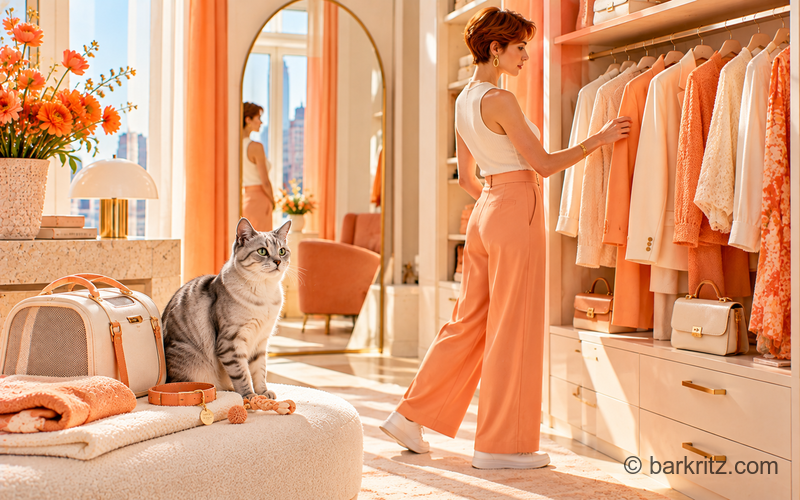
A coordinated wardrobe looks most refined when it relies on a small collection of versatile accessories, recurring colours, and occasional visual references rather than complete matching outfits. The aim is to create a recognisable connection without sacrificing the owner’s personal style or the pet’s natural appearance.
Start by identifying two or three colours that already dominate your wardrobe. Choose pet accessories that work with these shades across multiple outfits, rather than purchasing a separate set for every occasion. A high-quality neutral lead, a comfortable everyday harness, and one or two seasonal accessories can provide more flexibility than a large collection of novelty items.
A thoughtful capsule approach can include:
- A signature neutral: Ivory, charcoal, navy, or another frequently worn colour that serves as the foundation.
- A seasonal accent: Pastel pink in spring, fresh blue in summer, or a rich green in autumn.
- One distinctive detail: A subtle metal finish, a woven texture, or a restrained pattern that connects the two wardrobes.
- Practical everyday equipment: Properly fitted collars, harnesses, leads, and weather-appropriate items selected for the individual animal.
- A special-occasion accessory: Something simple that can be used selectively without turning every outing into a styling exercise.
Avoid dressing pets in uncomfortable or unnecessary garments simply to create a photograph. Large embellishments, dangling decorations, restrictive sleeves, and accessories that can catch on furniture or vegetation are poor choices regardless of their appearance. The animal should be able to move naturally, communicate through body language, and disengage from an accessory if it becomes uncomfortable.
Photography can also influence styling decisions. Coordinated colours often look more cohesive than identical patterns, while a simple background helps the pet remain the focal point. Natural light, relaxed body language, and a genuine interaction usually create a stronger image than elaborate posing.
A coordinated wardrobe should make daily life easier, not more complicated. Repeating a few considered elements creates continuity while leaving room for individual expression.
What Are the Essential Rules for Keeping Pet Style Comfortable, Safe, and Personal?
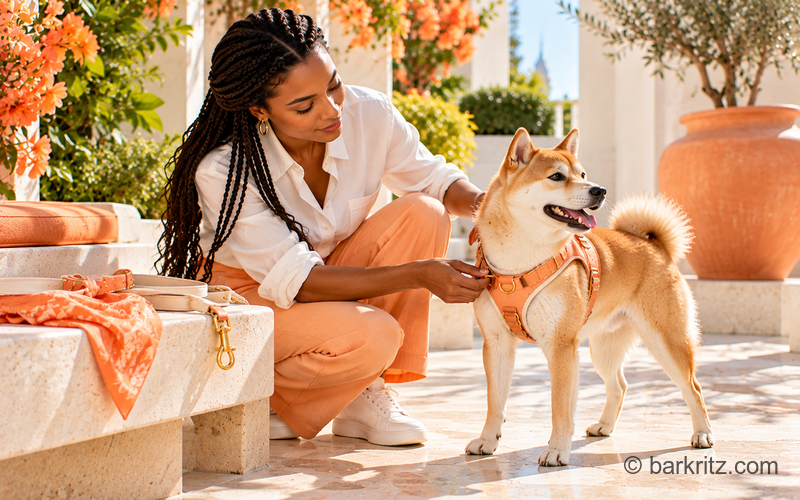
The essential rule of coordinated pet style is to put comfort, fit, and welfare first, using fashion as a subtle expression of the relationship between owner and animal. An accessory is successful only when the pet can wear or use it safely and comfortably.
Before introducing a new item, check its fit and construction. Collars should be appropriately adjusted, harnesses should not restrict shoulder movement or breathing, and leads should be suitable for the animal’s size and strength. Never leave a pet unattended in clothing or accessories that could become caught, and remove any item that causes persistent scratching, freezing, attempts to escape, or other signs of discomfort.
Keep these principles in mind:
- Prioritise fit: Check for rubbing, pressure points, restricted movement, or difficulty breathing.
- Choose suitable materials: Consider weather, skin sensitivity, cleaning requirements, and the pet’s tolerance.
- Keep decoration restrained: Avoid small detachable pieces, loose cords, and embellishments that can be chewed or swallowed.
- Respect species and personality: Most cats do not need decorative clothing, and individual dogs differ in their comfort with garments.
- Inspect equipment regularly: Look for frayed stitching, weakened fastenings, damaged buckles, and worn lead attachments.
- Let behaviour guide the decision: If the pet appears distressed or repeatedly tries to remove an item, stop using it and reassess the fit or necessity.
Style also benefits from authenticity. A lively terrier may suit a playful colour accent, while a calm older dog might look most natural in a classic neutral harness. A long-haired cat’s beauty may be best expressed through its coat and a comfortable resting environment rather than additional adornment.
Ultimately, matching your pet’s style to your wardrobe is an exercise in thoughtful coordination, not imitation. A shared palette, complementary textures, and practical accessories can create a polished visual connection while preserving each individual’s character. When comfort and welfare remain the foundation, personal style becomes a natural extension of the bond between owner and pet.