

How to Dress Your Dog in Luxury Without Looking Ridiculous
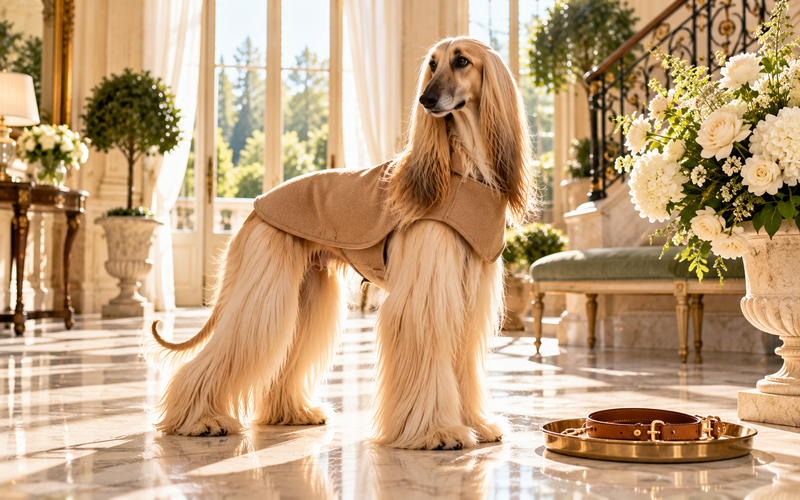
Dressing a dog well is an exercise in restraint: the objective is not to make a companion look like a miniature fashion victim, but to refine the animal’s natural presence with pieces that are proportionate, functional and beautifully made. For the Four-Legged Elite, the most convincing canine wardrobe borrows from the principles of a permanent human wardrobe—excellent materials, disciplined color, impeccable fit and very few unnecessary details. The result should look considered rather than conspicuous, allowing the dog to remain the star.
How Can You Make a Dog’s Wardrobe Look Sophisticated Rather Than Overdone?
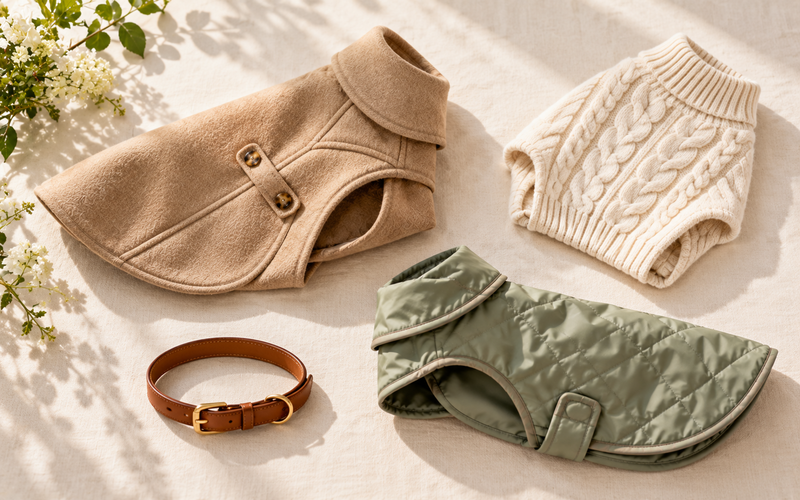
The most sophisticated canine wardrobe begins with restraint, using a small number of beautifully proportioned pieces instead of dressing the dog in every available accessory.
The first rule is to distinguish between dressing a dog and decorating a dog. A well-cut cashmere coat can be elegant; a coat covered in oversized logos, rhinestones, bows and unnecessary hardware quickly becomes theatrical. The best pieces work with the animal’s anatomy and coloring rather than competing with it.
A refined wardrobe might contain:
- One exceptional outer layer: Cashmere, wool or technically advanced weatherproof fabric depending on climate.
- One understated knit: Useful for cold interiors, travel or short-haired breeds.
- One formal accessory: A finely made collar or harness in leather, suede or another durable premium material.
- One practical travel piece: A sophisticated raincoat, quilted layer or lightweight protective jacket.
- Minimal decoration: Hardware, embroidery and branding should remain discreet.
The visual hierarchy matters. If the coat is distinctive, keep the collar simple. If the collar is the statement piece, choose an unadorned coat. Sophistication comes from editing, not accumulation.
Which Fabrics and Materials Make a Dog Look Elegantly Dressed?
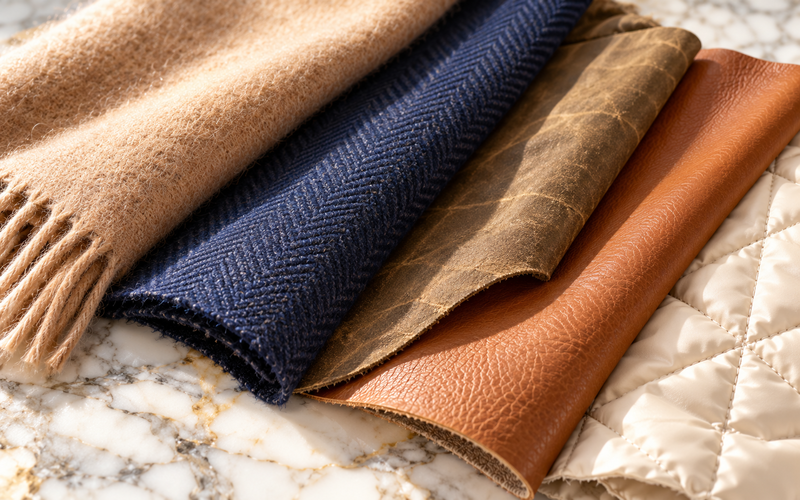
The most convincing materials are those chosen for tactile quality, durability and suitability to the dog’s environment rather than simply for their price or visual extravagance.
Cashmere, fine wool, waxed cotton, technical textiles and carefully finished leather can all work beautifully when selected for the correct purpose. The material should also respect the dog’s comfort: a beautiful fabric that restricts movement, traps excessive heat or irritates the skin has no place in a serious wardrobe.
Consider the hierarchy of materials:
- Cashmere: Exceptional softness and warmth for appropriate indoor or cold-weather use.
- Fine wool: Structured, naturally insulating and particularly effective for tailored coats.
- Waxed cotton: Practical protection with a heritage outdoor character.
- Technical performance fabrics: Ideal for rain, snow, wind and active travel.
- Full-grain leather: Particularly effective for collars and leads when properly fitted and maintained.
- Quilted textiles: Useful for lightweight insulation without excessive bulk.
Material should follow lifestyle. A city dog walking through Manhattan requires different protection from a mountain companion spending hours outdoors. The most sophisticated choice is therefore rarely the most delicate one; it is the one that performs beautifully without appearing overly engineered.
How Should You Choose Colors That Look Expensive on a Dog?
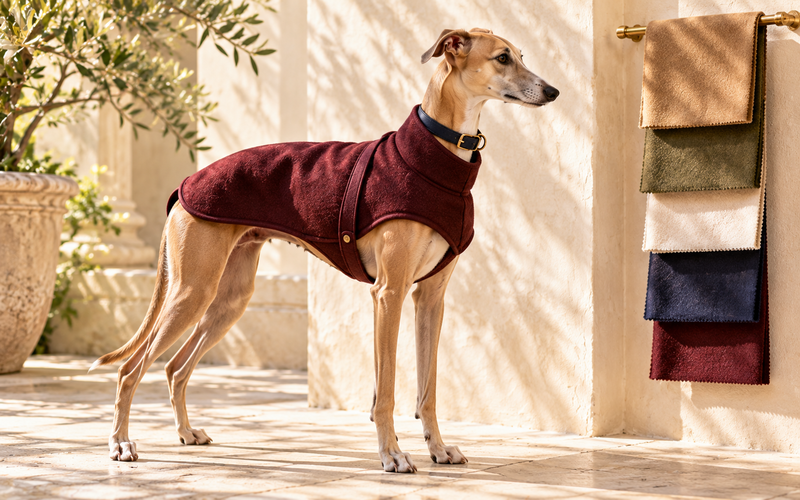
The most elegant canine palettes are built around the dog’s natural coloring and a restrained wardrobe of complementary neutrals rather than seasonal novelty shades.
Color is one of the easiest ways to make a canine look polished—or immediately overstyled. Deep navy, camel, ivory, charcoal, forest green, burgundy and warm taupe have enduring appeal because they complement a wide range of coats and environments. Brighter colors can work, particularly for outdoor visibility, but they should have a clear purpose.
A considered palette can follow several principles:
- Golden or apricot coats: Camel, olive, cream, navy and deep burgundy.
- Black coats: Ivory, camel, warm grey, emerald and rich burgundy.
- White or cream coats: Chocolate, navy, forest green, camel and muted rose.
- Grey or silver coats: Charcoal, ivory, burgundy, navy and soft blue.
- Brown coats: Cream, tobacco, forest green, navy and warm stone.
Avoid building the wardrobe around a single loud shade simply because it photographs well on social media. A sophisticated dog should be recognizable before its clothing is. Color should frame the animal, not overpower it.
Which Accessories Elevate a Dog’s Appearance Without Making It Look Like a Costume?
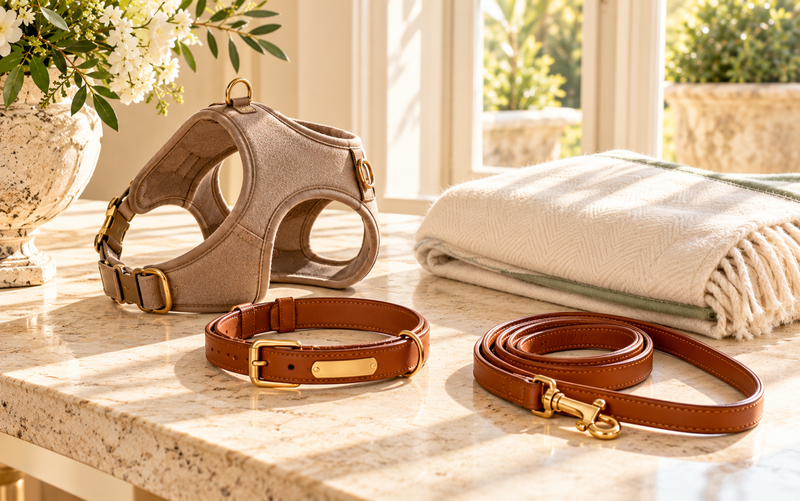
The best accessories are functional objects with excellent design, allowing craftsmanship and proportion to create distinction rather than novelty.
A beautifully made collar, discreet leather lead or precisely fitted harness can transform the appearance of a dog without making the styling feel artificial. The same principle applies to travel accessories: a well-designed carrier, blanket or food-and-water set can contribute to a coherent visual identity without turning the dog into a walking advertisement.
The most useful accessories include:
- A refined collar: Narrow enough to remain elegant and properly fitted for the breed.
- A coordinated lead: Matching or complementing the collar without excessive ornament.
- A discreet harness: Particularly important for breeds requiring additional control or comfort.
- A sophisticated travel blanket: Useful in hotels, aircraft cabins and restaurants where permitted.
- A premium raincoat: Functional protection that can become part of the wardrobe rather than an afterthought.
- A personalized detail: A subtle monogram or engraved identification plate rather than oversized branding.
The dividing line between style and costume is purpose. If an accessory improves comfort, safety, identification or practicality while looking beautiful, it earns its place. If it exists solely to attract attention, it probably does not.
How Can You Build a Permanent Canine Wardrobe That Never Looks Ridiculous?
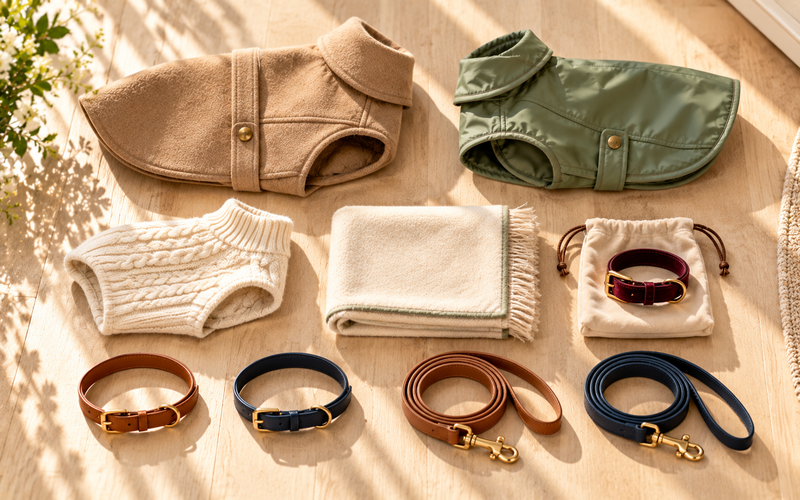
A permanent canine wardrobe should be compact, interchangeable and tailored to the dog’s actual lifestyle, with each piece earning its place through fit, function and longevity.
Instead of accumulating seasonal novelty items, build a small wardrobe that can adapt to city walks, country weekends, formal hotel stays and changing weather. The ideal collection should feel coherent enough that almost every piece can be worn with another.
A disciplined wardrobe architecture might include:
- Two everyday collars or harnesses: One primary and one reserve.
- Two leads: A refined everyday version and a practical outdoor option.
- One tailored cold-weather coat: Chosen for climate and breed.
- One lightweight weatherproof layer: For rain and transitional seasons.
- One fine knit: For genuinely cold environments where appropriate.
- One travel blanket: Neutral, washable and easy to pack.
- One formal accessory: Reserved for special occasions rather than daily wear.
The ultimate test is simple: remove anything that makes the dog look as though it is wearing a costume. The finest canine style is almost invisible because the clothing appears to belong naturally to the animal, the setting and the life it leads. When craftsmanship, proportion and practicality take precedence over conspicuous decoration, a dog can look impeccably dressed without ever looking ridiculous.