

How to Travel with Multiple Pets Internationally

International travel with more than one pet requires meticulous planning, from coordinating veterinary documents to securing suitable transport and accommodation for every animal. Each companion may have different health requirements, temperament, and travel needs, while destination countries, airlines, and transit airports can impose separate conditions. For households traveling with their entire four-legged family, the key to a successful journey is a coordinated plan that protects each pet’s comfort and welfare without leaving essential details to chance.
What Documents and Health Requirements Must You Prepare for Multiple Pets Traveling Abroad?

Every pet must independently meet the applicable entry, transit, and airline requirements, making an individual travel file for each animal essential.
International pet travel rules vary by destination, country of origin, route, species, and mode of transport. Dogs and cats traveling together do not necessarily qualify under identical regulations, even when they share the same owner and itinerary.
Depending on the destination, requirements may include a microchip, rabies vaccination, additional blood testing, parasite treatment, a veterinary health certificate, an import permit, or official endorsement of veterinary documents. Some countries impose waiting periods after vaccination or testing, while others require advance notification, inspection, or entry through designated airports.
Create a separate checklist for every animal:
- Identification: Confirm that the microchip number matches the pet’s veterinary records and travel documents.
- Vaccination records: Verify dates, validity periods, and required waiting periods.
- Veterinary certificates: Establish when examinations must take place and whether official certification is necessary.
- Import permits: Determine whether permits, declarations, or advance appointments are required.
- Transit documentation: Check whether connecting countries impose additional conditions, even if the animals remain in the airport.
- Emergency copies: Keep printed and digital copies of all documents, organized by animal.
Requirements can differ significantly between destinations. The European Union, for example, has specific identification and rabies-related rules for dogs and cats, with additional provisions applying in certain circumstances. Other countries may require different testing, quarantine, or certification procedures. Never assume that compliance with one country’s rules automatically guarantees entry into another.
Create a master itinerary listing each pet, its microchip number, vaccination dates, document deadlines, certificate requirements, and booking references. Confirm the current rules for the exact route with your veterinarian and the relevant official authorities. Starting several months ahead is prudent when permits, tests, or waiting periods may be involved.
How Should You Choose Flights and Transport Arrangements for Several Pets?
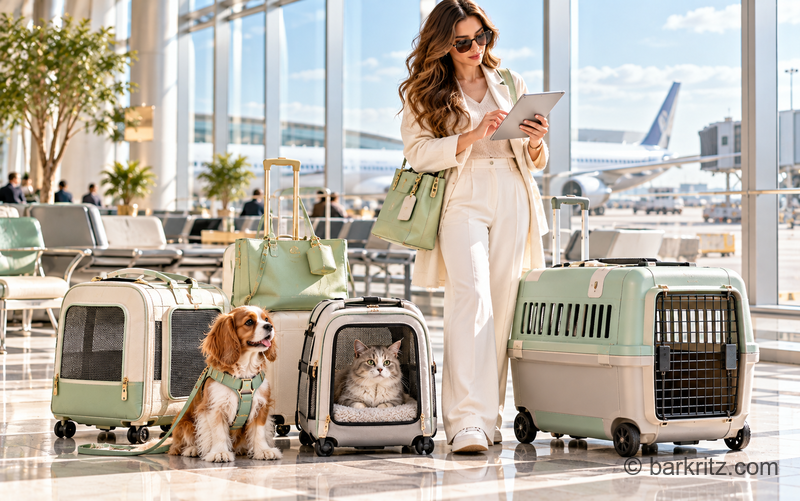
The most suitable transport plan is one that confirms an acceptable arrangement for every animal before tickets are finalized, rather than assuming all pets can travel under the same conditions.
Airlines differ in how they transport animals. Some accept eligible pets in the passenger cabin, subject to carrier and weight restrictions; others offer checked-pet services on selected routes or require animals to travel through specialized cargo arrangements. Availability may be limited, and restrictions can apply by passenger, cabin, aircraft, or flight.
A small dog that qualifies for cabin travel may have different options from a larger dog, while cats may be subject to separate carrier requirements. Certain short-nosed breeds can face additional restrictions because of increased respiratory risks during travel.
Before booking, confirm these details directly with the airline:
- Pet allocation: How many animals may accompany each passenger, and can they travel on the same flight?
- Carrier specifications: What dimensions, ventilation, construction, and under-seat requirements apply?
- Transport category: Is each pet eligible for cabin travel, checked transport, or cargo?
- Route restrictions: Are animals accepted on every segment, including regional connections?
- Weather limitations: Could extreme temperatures prevent transport on the intended date?
- Transfer arrangements: Will pets remain with their handlers, or will separate handling be required?
Traveling with another responsible adult may make coordination easier, especially when each person can manage a designated animal. However, this does not automatically increase the number of pets an airline accepts.
Whenever possible, favor straightforward itineraries with fewer transfers and sufficient connection time. A short layover may be convenient for people but unsuitable for animals requiring document checks, separate handling, or terminal changes. Confirm the transfer procedure for every segment rather than assuming that pets will be transferred automatically.
Private charter travel may offer greater flexibility for certain households, but it is not a universal solution. Aircraft operators, destination authorities, and ground handlers still impose requirements, and the cost can be substantial. The right arrangement depends on the animals’ size, health, number, route, and available services.
How Can You Prepare Multiple Pets for a Long International Journey?

The best preparation combines individual veterinary assessments, gradual carrier training, familiar routines, and a travel setup tailored to each animal’s temperament and physical needs.
Pets living together at home may respond very differently to unfamiliar environments. One dog might settle quickly in a carrier, while another becomes anxious around airport noise. A cat accustomed to a quiet room may find a crowded terminal overwhelming, even when its canine companion remains relaxed.
Arrange a veterinary consultation before departure, particularly for senior animals, pets with chronic conditions, and breeds that may be more vulnerable to respiratory or temperature-related stress. Discuss journey duration, hydration, feeding schedules, motion sensitivity, and any additional precautions appropriate to each animal.
Preparation should begin well in advance. Allow each pet to investigate its carrier at home, initially with the door open and familiar bedding inside. Gradually introduce brief periods of confinement and, where appropriate, short journeys. Reward relaxed behavior and avoid forcing an animal to remain confined while visibly distressed.
A practical preparation routine includes:
- Individual carrier training: Make each carrier familiar through positive reinforcement and gradual exposure.
- Clear identification: Label every carrier with the animal’s name, owner contact details, destination information, and essential handling instructions.
- Familiar supplies: Pack appropriate food, a collapsible water bowl, waste bags, cleaning materials, and permitted bedding.
- Feeding and hydration planning: Follow veterinary advice about feeding before departure and providing water during the journey.
- Behavioral preparation: Introduce harnesses, travel equipment, and handling routines gradually.
- Health precautions: Discuss medication and anxiety management with a veterinarian; never administer sedatives or calming products without professional advice.
Do not assume that two pets who normally sleep together should share a carrier. Airline rules, carrier specifications, size, species, and individual behavior may make separate carriers necessary or safer. Even closely bonded animals can react unpredictably when frightened or confined.
For cats, familiar scents and a secure hiding option inside an approved carrier may help reduce stress. Dogs may benefit from predictable handling and calm breaks when the itinerary permits. Ensure that all equipment complies with airline instructions and that accessories cannot catch on doors or obstruct ventilation.
On travel day, assign a specific person to each animal whenever possible. Keep documents immediately accessible and establish a clear sequence for check-in, security, boarding, and arrival. If the group includes animals with different needs, build the schedule around the most restrictive requirement.
How Do You Manage Customs, Transfers, and Arrival Procedures With Several Pets?
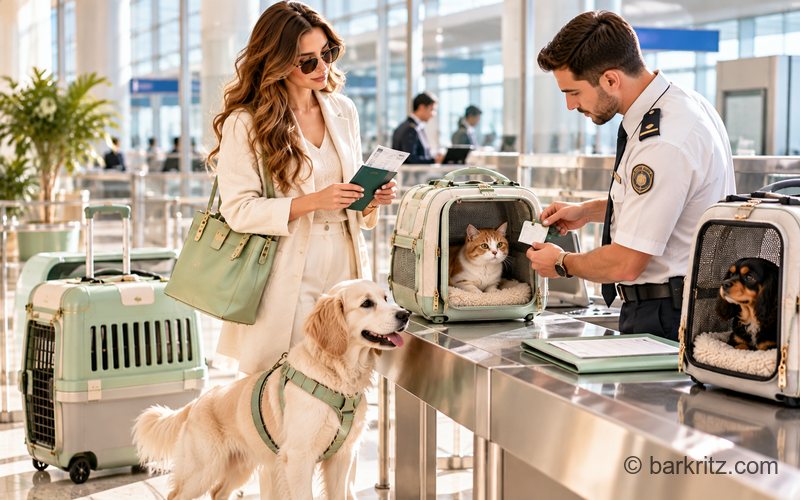
A smooth arrival depends on knowing where each animal must be presented, which inspections or declarations are required, and how the group will be reunited with its pets and belongings at every stage.
Arrival procedures vary even when all animals travel under one owner’s name. Authorities may inspect identification, vaccination records, veterinary certificates, import permits, or evidence of required treatments. Some destinations require entry through approved points, veterinary inspection, or quarantine arrangements if the applicable conditions have not been met.
Before departure, verify the arrival process with the destination’s official animal-import authority and the airline. Establish whether the pets will arrive in the passenger terminal, through a separate animal reception facility, or via a cargo terminal. If animals travel separately from their owners, clarify who may collect them and which documents are required.
Connections deserve particular attention. Remaining in an international transit area does not always eliminate animal-related requirements. The rules may depend on whether pets remain airside, must be checked in again, cross another country’s border, or require an overnight stay. Confirm every segment instead of relying solely on the final destination’s regulations.
For a multi-pet itinerary, prepare a transfer plan that identifies:
- Responsible handlers: Establish who manages each animal and who communicates with airline staff.
- Inspection procedures: Confirm whether pets are examined together or separately and whether appointments are necessary.
- Transfer deadlines: Allow enough time for document checks, terminal changes, and animal-handling procedures.
- Contingency arrangements: Determine what happens if a flight is delayed, a connection is missed, or an animal is held for inspection.
- Arrival transportation: Arrange a vehicle that can safely accommodate every carrier or crate.
Do not rely on airport staff to improvise arrangements for several animals during a disruption. Keep airline contact details, local veterinary contacts, and information for any relevant animal reception facility readily accessible. If an overnight delay is possible, investigate suitable accommodation and confirm its pet policies in advance.
Once the pets are released, check each animal individually before leaving the airport area. Confirm that all carriers, identification tags, and essential supplies have arrived. Watch for signs of excessive stress, overheating, injury, or unusual behavior, and contact a veterinarian if you have concerns.
Make the first hours after arrival calm and predictable. Offer water, provide an appropriate opportunity to relieve themselves, and allow the pets to settle into a secure environment. A quiet arrival day gives the entire household time to recover after a long journey.
How Can You Choose Pet-Friendly Accommodation and Maintain Comfort Abroad?

The ideal accommodation explicitly accepts every traveling animal and provides enough space, suitable facilities, and flexibility to support the group’s needs throughout the stay.
A hotel or rental property that welcomes one dog may not accept several pets, a combination of dogs and cats, or animals above a specified weight. Policies may include per-pet fees, deposits, limits on unattended animals, restrictions on furniture access, or vaccination requirements. Obtain written confirmation that every animal is welcome before finalizing the reservation.
For multiple pets, room layout matters as much as the property’s general pet policy. Separate resting areas can help animals that need quiet or do not share resources comfortably. Cats may require a secure room away from open exterior doors, while dogs may benefit from convenient outdoor access. Check that windows, balconies, and outdoor areas can be secured against escapes.
A useful accommodation checklist includes:
- Confirmed pet capacity: Obtain written approval for every animal, including species, size, and applicable restrictions.
- Space for individual routines: Ensure there is room for carriers, beds, feeding areas, and litter facilities where needed.
- Safe access: Ask about elevators, stairs, nearby walking areas, and secure entrances.
- Cleaning and house rules: Clarify fees, deposits, unattended-pet policies, and restrictions on furniture or common areas.
- Nearby veterinary services: Identify a local clinic and an emergency veterinary facility before they are needed.
- Suitable ground transport: Confirm that taxis, transfers, or rental vehicles can accommodate all pets safely.
Pack familiar bedding and maintain feeding, medication, exercise, and rest routines as closely as possible. Avoid introducing unfamiliar foods immediately after arrival, particularly when travel has already disrupted normal habits. Keep identification and contact details current, including a reachable phone number while abroad.
Local regulations also deserve attention. Some destinations impose leash requirements, restrictions on particular breeds, rules governing public transport, or conditions for entering restaurants, parks, and attractions. Check these rules in advance and avoid assuming that a pet-friendly hotel guarantees access to every venue.
Finally, prepare for emergencies. Keep copies of medical records, know how to reach local veterinary care, and maintain a plan for what happens if one animal becomes ill or cannot continue the itinerary. Review travel insurance carefully, since standard policies may not cover veterinary expenses, quarantine, or pet-related travel disruptions.
International travel with multiple pets is most successful when every decision accounts for the individual animals. Meticulous documentation, confirmed transport arrangements, thoughtful training, and realistic scheduling can transform a complicated undertaking into a manageable experience. The measure of a well-planned journey is not simply that every pet reaches the destination, but that each arrives safely, with its health, comfort, and emotional well-being protected along the way.