

How to Travel with a Pet on a Private Yacht
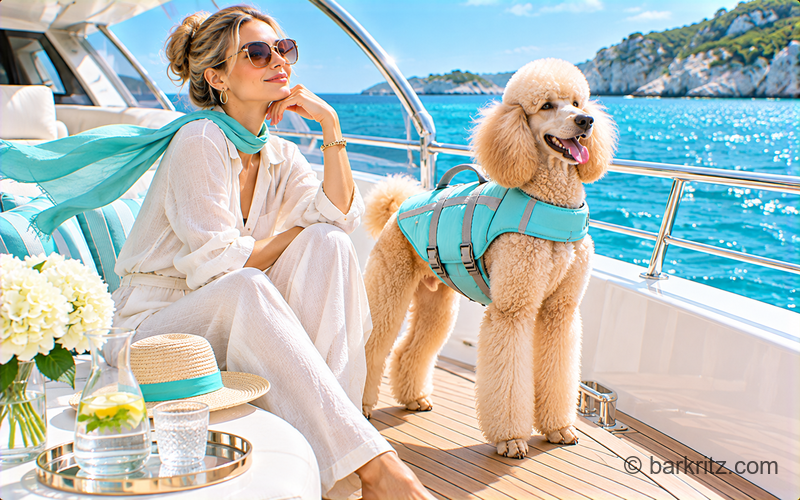
A private yacht offers an extraordinary way to explore the coastline, combining the freedom of the open water with the comfort of a beautifully appointed vessel. For pet owners, however, the experience requires more than simply bringing a favorite companion aboard. A successful voyage depends on thoughtful preparation, appropriate safety equipment, and an itinerary designed around the animal’s comfort as carefully as the guests’ enjoyment.
Whether planning a leisurely Mediterranean cruise, a weekend along the Côte d’Azur, or an extended island-hopping journey, traveling with a dog or cat introduces considerations that are easy to overlook. From securing suitable accommodation on board to arranging shore excursions and understanding maritime regulations, every detail contributes to a smoother experience. With the right preparation, a yacht holiday can become an exceptional shared adventure rather than a stressful change of environment.
How Should You Prepare Your Pet Before Boarding a Private Yacht?
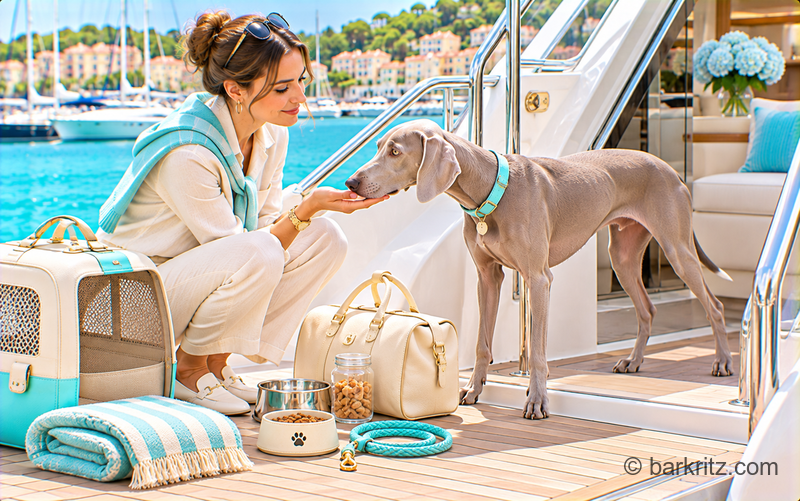
The best preparation begins well before departure, allowing your pet to become familiar with the vessel, its surroundings, and the equipment that will keep it safe during the voyage.
A yacht is a very different environment from a home, hotel, or conventional vehicle. Moving surfaces, unfamiliar sounds, engine vibrations, narrow passageways, and changing outdoor conditions can initially unsettle even confident animals. Introducing these experiences gradually helps reduce anxiety.
If possible, arrange a short visit to the yacht before departure. Allow your pet to explore a stationary vessel under supervision, become familiar with its designated resting area, and encounter the crew in a calm setting. For animals with little experience of boats, a brief introductory outing may help establish how they respond to movement and noise.
A pre-voyage preparation checklist should include:
- Veterinary assessment: discuss fitness for travel, existing medical conditions, motion sensitivity, and any medication requirements.
- Identification: ensure your pet has a microchip and an identification tag displaying current contact information.
- Familiar bedding: bring a favorite blanket or bed carrying recognizable household scents.
- Feeding arrangements: pack the animal’s usual food and treats rather than introducing unfamiliar products during the journey.
- Travel documentation: prepare vaccination records, health certificates, and destination-specific paperwork.
- Crew briefing: explain the animal’s temperament, feeding schedule, preferred handling, and any behavioral concerns.
Cats may require additional preparation because unfamiliar environments and open spaces can be particularly unsettling. A secure, quiet cabin with a familiar carrier, litter tray, and hiding place can make a considerable difference.
For dogs, short walks around the marina and supervised time aboard before departure can help establish a more relaxed routine. Regardless of species, avoid forcing an animal to explore if it appears frightened. Familiarity should develop gradually, with access to a quiet retreat whenever needed.
What Safety Equipment Does a Pet Need on a Private Yacht?
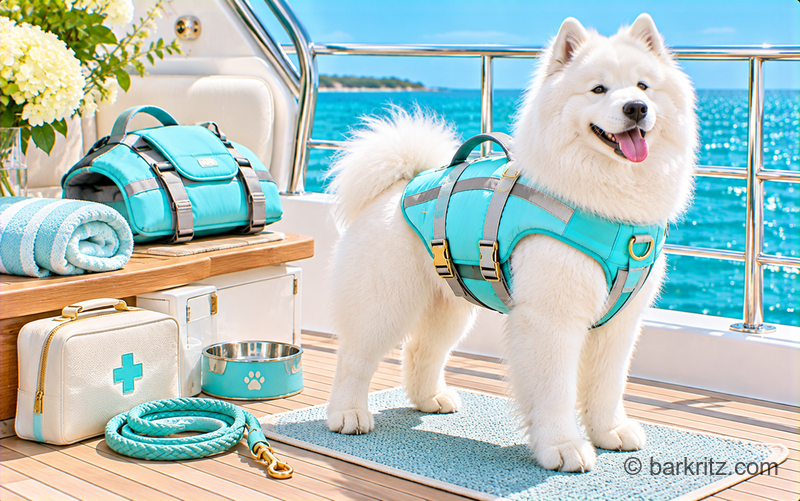
Every pet aboard a private yacht should have a properly fitted marine life jacket, a secure resting area, and a clearly established safety routine supervised by the owner and crew.
Even confident swimmers can encounter difficulties in open water. Currents, waves, exhaustion, slippery surfaces, and the distance between the animal and the nearest safe boarding point create risks that do not exist in a conventional home environment. A life jacket designed specifically for animals provides additional buoyancy and, ideally, a sturdy lifting handle for emergency recovery.
The equipment should be selected according to the animal’s size, weight, proportions, and swimming ability. It should fit securely without restricting breathing or natural movement.
Essential onboard equipment includes:
- Marine life jacket: choose a correctly sized model with secure fastening, buoyancy support, and a strong recovery handle.
- Non-slip surfaces: use suitable mats on decks and steps where an animal may lose its footing.
- Safety barriers: restrict access to hazardous areas, including engine spaces, technical compartments, and exposed edges.
- Secure resting area: provide a shaded, comfortable location away from machinery and heavy foot traffic.
- Pet first-aid kit: include veterinarian-approved essentials and any prescribed medication.
- Emergency identification: keep a recent photograph, medical information, and veterinary contact details readily available.
A designated onboard area is particularly important during navigation. Dogs should not be allowed to roam freely around the deck when the yacht is moving, and cats should remain in a secure environment rather than having unrestricted access to exterior spaces.
The crew should also understand the vessel’s pet-safety procedures before departure. Everyone aboard needs to know where the life jacket is stored, how to handle the animal in an emergency, and which areas are strictly off-limits.
Swimming directly from a yacht requires additional caution. Never assume that a pet can safely jump into the sea and return independently. Strong currents, propellers, ladders, and the difficulty of lifting a wet animal back aboard can turn a seemingly pleasant activity into a dangerous situation. Swimming should take place only when conditions are appropriate, engines are safely managed, and a controlled means of recovery is available.
How Can You Keep Your Dog or Cat Comfortable During a Yacht Journey?
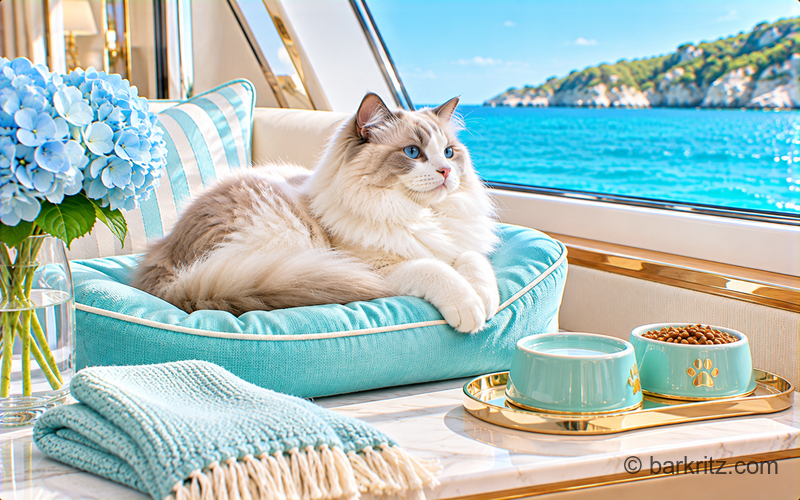
A comfortable yacht journey depends on maintaining familiar routines, providing adequate hydration, managing temperature, and giving the animal a quiet space away from unnecessary stimulation.
Movement at sea affects pets differently. Some adapt quickly to the gentle motion of a large vessel, while others may experience anxiety or motion sickness. Early signs can include excessive salivation, repeated swallowing, restlessness, unusual vocalization, lethargy, and vomiting.
Owners should discuss motion sensitivity with their veterinarian before departure rather than experimenting with human medication or unverified remedies. Any prescribed treatment should be administered according to professional instructions.
Daily onboard care should prioritize several essentials:
- Fresh drinking water: maintain a constant supply in stable, non-slip bowls and monitor intake throughout the day.
- Regular meals: preserve familiar feeding times and avoid unusually large meals immediately before departure.
- Temperature management: provide shade, ventilation, and access to a comfortably cool interior.
- Rest periods: establish a quiet cabin area where the animal can sleep without interruption.
- Gentle exercise: schedule short, supervised walks or movement breaks when the yacht is safely moored.
- Observation: monitor appetite, hydration, behavior, and bathroom habits for signs of discomfort.
Heat deserves particular attention, especially during Mediterranean summer voyages. Deck surfaces can become extremely hot under direct sunlight, and animals may overheat more quickly than their owners expect. A pet should never be left unattended in a hot cabin or exposed on an unshaded deck.
For dogs, a familiar walking schedule can provide reassurance, even when the yacht’s itinerary changes. Cats generally benefit from a predictable indoor environment, with a secure litter tray positioned away from food, water, and areas of heavy movement.
The choice of sleeping arrangements also matters. A soft, washable bed secured in a stable location can prevent unnecessary sliding and help the animal settle. Keep food, water, bedding, and essential supplies together in a designated area so that the crew can maintain a consistent routine.
Which Yacht Destinations and Shore Excursions Are Best for Traveling with Pets?
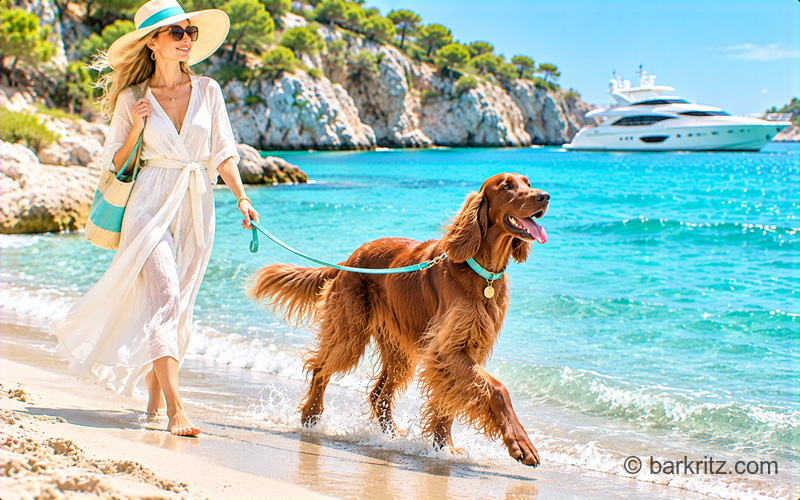
The most enjoyable pet-friendly yacht itineraries combine sheltered anchorages, accessible marinas, manageable transfers ashore, and destinations where animals are genuinely welcome.
A beautiful coastline does not automatically make a convenient destination for a pet. Some marinas have limited green space, some beaches prohibit dogs during particular seasons, and certain islands have restricted access or limited veterinary services. The itinerary should therefore be evaluated from the animal’s perspective as well as the owner’s.
Several Mediterranean regions offer appealing possibilities when their local rules and facilities are checked in advance.
- French Riviera: destinations such as Antibes, Cannes, and Saint-Tropez offer established marina infrastructure, coastal promenades, and a range of pet-friendly hospitality options.
- Italian Riviera: Portofino, Santa Margherita Ligure, and the surrounding coastline offer picturesque harbor towns and opportunities for supervised walks ashore.
- Balearic Islands: Mallorca, Menorca, and Ibiza provide varied anchorages and coastal scenery, although beach access and local pet restrictions must be checked individually.
- Croatian Adriatic: the islands around Split and Dubrovnik offer numerous sheltered bays and attractive waterfront settlements, with suitable shore access varying by location.
- Greek Islands: selected destinations in the Ionian and Aegean seas can offer relaxed anchorages and coastal walks, provided that heat, transport, and local regulations are considered.
A pet-friendly excursion does not need to involve a long walk or an ambitious itinerary. A quiet marina promenade, a shaded waterfront café, or a short visit to a peaceful coastal village may be more enjoyable than a crowded beach or a full-day excursion.
Before selecting a destination, investigate:
- Whether pets are permitted in the marina and on its tender boats.
- Whether local beaches allow dogs and whether seasonal restrictions apply.
- The availability of shaded walking areas and fresh drinking water.
- Whether restaurants and outdoor terraces welcome animals.
- The location of the nearest veterinary clinic or emergency animal hospital.
- Any restrictions on entering protected natural areas or national parks.
Tender transfers deserve particular attention. Small boats can be noisy, unstable, and unfamiliar to animals. Use a secure carrier for cats and small dogs when appropriate, and a suitable canine flotation device for dogs. Never force an anxious animal into a tender; allow time for gradual acclimatization and ensure that the transfer is supervised.
What Documents and Health Requirements Should You Arrange Before Traveling Internationally by Yacht with a Pet?
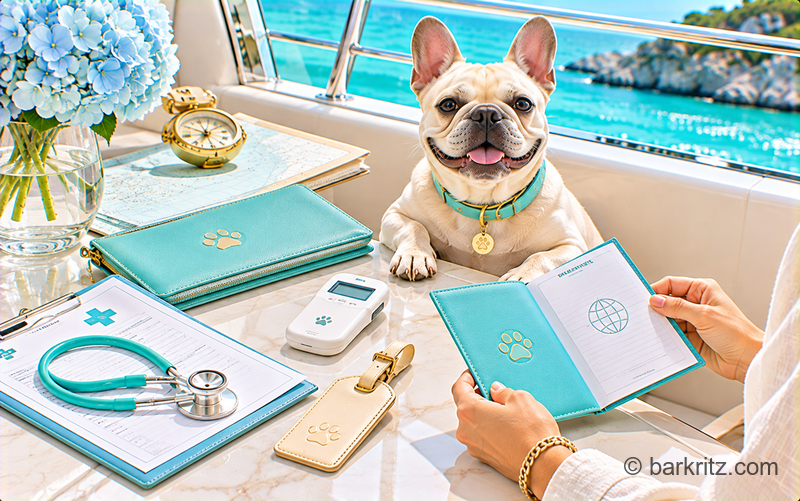
International yacht travel with a pet requires destination-specific veterinary documentation, valid identification, and advance confirmation of entry and transit rules for every country on the itinerary.
Traveling by private yacht does not exempt owners from national animal-import regulations. Requirements can differ depending on the animal’s species, country of origin, vaccination history, and the ports or territories visited.
For many international journeys involving dogs and cats, the essential documentation may include:
- Microchip identification: an approved microchip should be implanted and registered according to the applicable destination requirements.
- Rabies vaccination: vaccination must meet the required validity period and sequencing rules.
- Animal health certificate or pet passport: the correct document depends on the countries involved and the animal’s origin.
- Additional treatments: certain destinations require specific parasite treatments or veterinary declarations.
- Import authorization: some countries require advance permits, declarations, or approved entry arrangements.
Travelers moving between European Union countries should check the applicable pet-travel rules, including identification, rabies vaccination, and documentation requirements. Entry from outside the EU can involve additional certification and designated entry procedures. Countries outside Europe may impose separate quarantine, testing, or import-permit conditions.
The yacht’s captain or management team should also be informed of the animal’s presence before departure. Port authorities, marina operators, and border-control officials may require advance notification or documentation when the vessel arrives with pets on board.
An itinerary involving multiple countries should be reviewed before the yacht leaves its home port. A document that is sufficient for one destination may not meet the requirements of the next, and some veterinary procedures must be completed within specific time windows.
Owners should also identify veterinary facilities along the route and keep digital and printed copies of essential records. A small travel folder containing vaccination details, medical history, insurance information, and emergency contacts can save valuable time if an unexpected situation arises.
Ultimately, traveling with a pet on a private yacht is an exercise in thoughtful preparation. The finest voyage is not simply one that offers beautiful anchorages and impeccable onboard hospitality, but one in which every member of the party can feel secure and comfortable. With suitable safety equipment, familiar routines, carefully selected destinations, and properly arranged documentation, the open sea can become a remarkable setting for a shared adventure.