

Best Pet-Friendly Safari Lodges in Africa
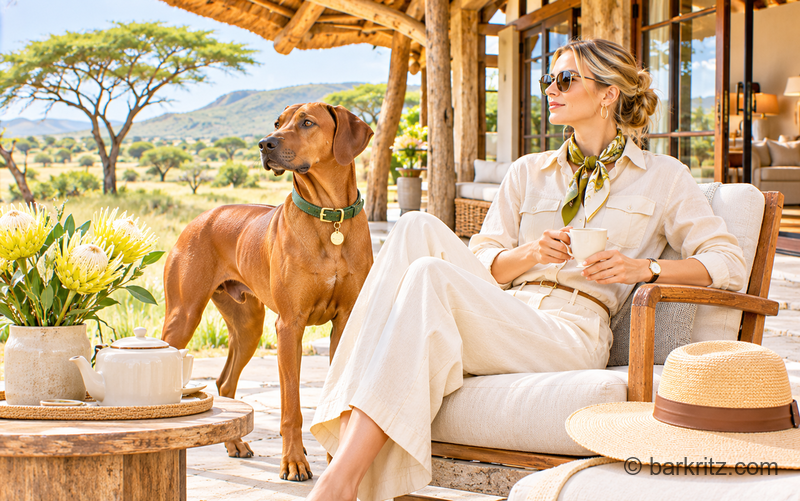
An African safari promises extraordinary landscapes, exceptional hospitality, and encounters with wildlife found nowhere else on Earth, but bringing a beloved pet along requires a different kind of planning. Unlike conventional pet-friendly hotels, safari lodges operate within protected ecosystems, wildlife conservancies, and remote wilderness areas where domestic animals may be restricted for the safety of both pets and native species. The most suitable stays are therefore not necessarily the lodges closest to wildlife, but properties that can accommodate pets responsibly, offer secure private surroundings, and provide practical arrangements for animals while their owners enjoy the safari experience.
For travelers seeking an elevated African escape with a dog or another companion animal, the essential distinction is between a property that welcomes pets on its premises and one that permits them to accompany guests on game drives or enter protected habitats. These are very different privileges, and the latter is generally incompatible with conventional wildlife-viewing operations. The following guide explains how to identify suitable accommodations, which safari destinations merit consideration, and how to plan a trip that respects both animal welfare and Africa’s extraordinary wildlife.
Which Pet-Friendly Safari Lodges in South Africa Offer the Best Bushveld Experience?
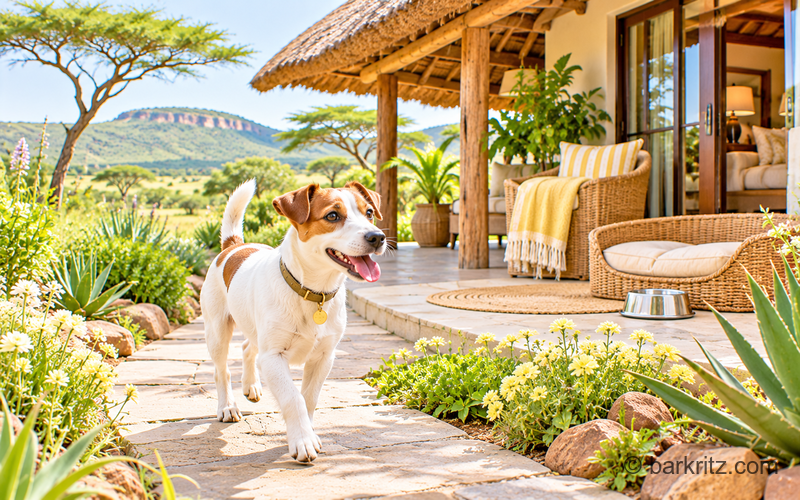
South Africa offers some of the most practical options for combining a wilderness-inspired holiday with pet-friendly accommodation, particularly at private game lodges and reserves that explicitly permit domestic animals.
The key is to distinguish between a traditional safari lodge operating inside a major wildlife reserve and a pet-friendly property situated in a bushveld landscape where guests can enjoy nature without necessarily entering a Big Five reserve. For travelers bringing a dog, the latter can offer a more comfortable and responsible experience.
Madikela Game Lodge, located in Limpopo’s Waterberg region, welcomes well-behaved pets by prior approval. Its self-catering chalets offer private outdoor areas, and guests can enjoy activities including guided game drives, nature walks, and time in the surrounding landscape. This arrangement suits travelers who prefer independent accommodation and want their dog to remain part of the holiday. Pet acceptance should be confirmed before booking, including any restrictions relating to size, breed, or the number of animals.
Another possibility is Adansonia Eco Lodge, near Musina in Limpopo. The property offers rustic cabins and camping-style accommodation in a natural setting where guests may encounter plains game and a variety of bird species. The lodge identifies itself as pet-friendly and welcomes well-behaved companions, making it an option for travelers who prioritize outdoor experiences over formal safari-camp conventions.
Maroelani Safari Lodge also welcomes well-trained, well-behaved pets. Its bushveld setting, abundant birdlife, and outdoor atmosphere appeal to travelers seeking a nature-focused escape with their animals.
These properties offer different styles of travel:
- Madikela Game Lodge: Best suited to travelers who value private chalet accommodation, self-catering flexibility, and access to outdoor activities.
- Adansonia Eco Lodge: A practical choice for visitors who enjoy a rustic bush experience, wildlife observation, and a relaxed atmosphere.
- Maroelani Safari Lodge: Worth considering for travelers interested in birdwatching, nature, and a peaceful bushveld retreat.
An important distinction remains: permission to stay with a pet does not automatically mean that the animal can join a game drive, enter wildlife enclosures, or roam freely around the reserve. Always establish where pets may go, whether they must remain leashed, and what arrangements are available when guests participate in activities that exclude domestic animals.
Where Can You Find a More Private Safari-Style Escape With Your Dog?
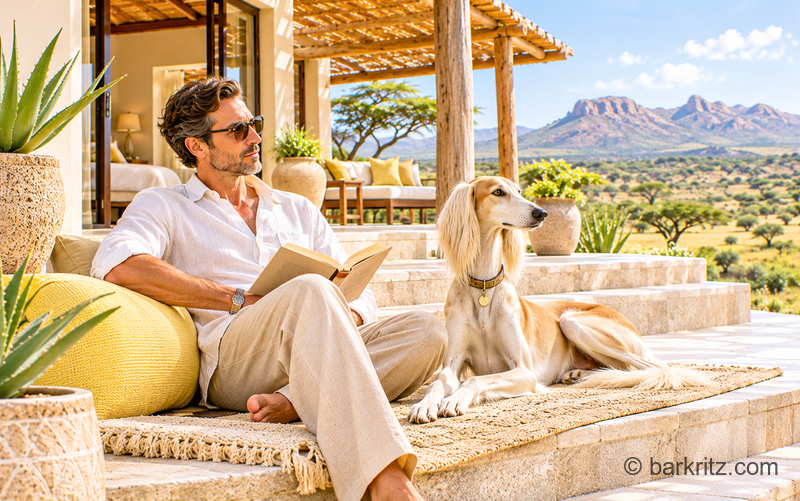
For travelers who value privacy, space, and a slower pace, a pet-friendly cottage or exclusive-use retreat near a wildlife area can provide a more adaptable alternative to a conventional safari lodge.
A private property gives owners greater control over their dog’s routine, feeding, rest periods, and outdoor time. It can also be easier to manage than a shared lodge where communal dining areas, wildlife activity, and other guests may create restrictions.
Melozhori Private Game Reserve in South Africa’s Western Cape offers a pet-friendly cottage alongside other accommodation options, including an exclusive-use lodge and distinctive nature-oriented stays. The reserve’s landscape features hills, mountains, indigenous vegetation, and a range of wildlife. Travelers considering the pet-friendly cottage should confirm the current rules for dogs, including whether walks are restricted to designated areas and whether pets may accompany guests on any activities.
In Namibia, Waldeck Lodge offers an exclusive-use wilderness setting near Windhoek, with extensive private grounds and opportunities to experience the surrounding bushveld. However, travelers should not assume that its private-use format means pets are permitted. Obtain explicit written confirmation of its current pet policy before making plans.
For those seeking a dog-centered stay in Namibia, Prince and Pooch Cottage near Windhoek offers a different kind of solution. This self-catering property is designed specifically for guests traveling with dogs and features a fenced outdoor area. It is not a conventional safari lodge, but it can work well as a comfortable base before or after a wildlife excursion, particularly when dogs cannot accompany visitors into national parks.
When comparing private retreats, consider these priorities:
- Enclosed outdoor space: Secure boundaries help dogs enjoy the outdoors without wandering into wildlife habitats.
- Exclusive-use accommodation: A private cottage or villa can reduce encounters with unfamiliar animals and other guests.
- Flexible routines: Self-catering facilities allow owners to maintain familiar feeding and rest schedules.
- Proximity to excursions: A convenient location makes it easier to arrange safari activities while ensuring the pet has suitable care.
- Clear pet rules: Written confirmation should cover fees, supervision, sleeping arrangements, and access to shared facilities.
Private accommodation does not eliminate wildlife risks. Even a fenced property may be exposed to snakes, wild animals, or other hazards, so owners should ask about local risks and follow the property’s guidance. A secure outdoor area, attentive supervision, and a reliable plan for managing the dog are essential parts of a responsible stay.
What Should You Look for in a Pet-Friendly Safari Lodge?
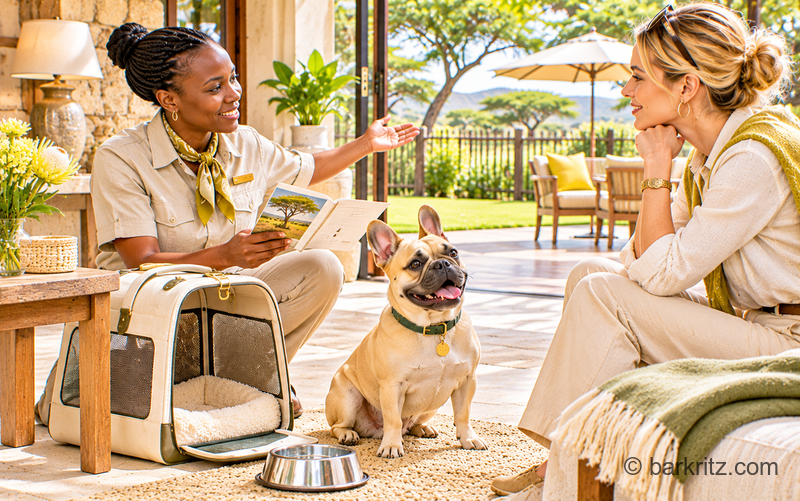
The best pet-friendly safari accommodation combines an explicit pet policy, a safe environment, comfortable facilities, and a realistic plan for managing the animal while guests participate in wildlife activities.
A property may describe itself as pet-friendly while imposing important restrictions on where animals can go or how they must be supervised. Those details matter especially in safari destinations, where domestic pets can encounter wildlife, parasites, extreme temperatures, and unfamiliar terrain.
Before booking, request specific information rather than relying on a general pet-friendly label. Confirm whether dogs are accepted in the actual accommodation category you intend to reserve, as some properties allow pets only in designated cottages or selected units.
The most useful questions include:
- Which animals are accepted? Some properties welcome dogs but may not accept cats or other companion animals.
- Are there size, breed, or quantity limits? Policies may vary according to the accommodation type.
- Can pets remain in the room unattended? Many lodges prohibit this or require special arrangements.
- Are outdoor areas enclosed? A private garden or fenced courtyard can be especially valuable.
- Are there additional charges? Cleaning fees, deposits, or restrictions on bedding may apply.
- What happens during game drives? Establish whether the pet must stay in the accommodation and whether a sitter or other care arrangement is available.
- Are veterinary services accessible? Remote properties may be some distance from an emergency clinic.
A lodge’s wildlife policy deserves equal attention. Domestic dogs should not be taken into protected wildlife areas or allowed to approach wild animals unless the property explicitly provides a safe, lawful, and professionally managed arrangement. In most conventional safari settings, dogs cannot accompany guests on game drives.
The surrounding environment should also suit the individual animal. Active dogs may appreciate supervised walks in permitted areas, while older pets may need a quiet room, comfortable bedding, and limited exposure to heat. Travelers with brachycephalic breeds, very young animals, or pets with existing health concerns should discuss the destination’s climate and physical demands with their veterinarian before departure.
A genuinely suitable property will answer these questions clearly and help owners understand what is and is not possible. Transparency is a more meaningful measure of hospitality than an appealing description alone.
How Can You Keep Your Pet Safe During an African Safari Holiday?
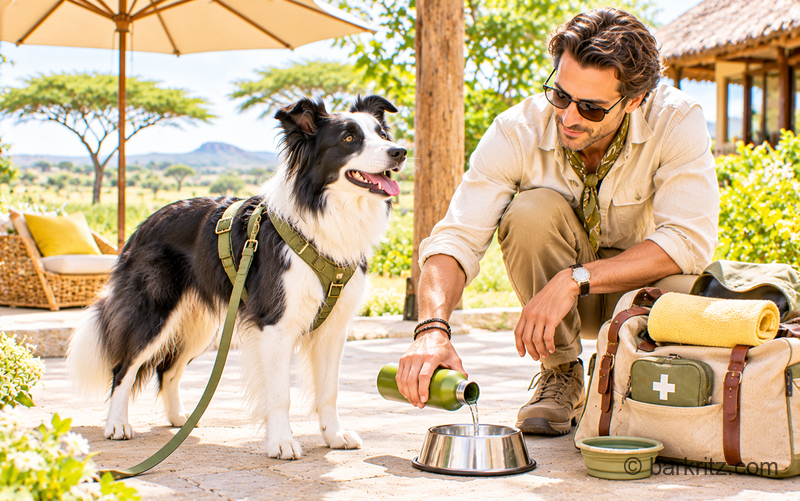
Keeping a pet safe on an African safari holiday requires advance veterinary planning, secure supervision, heat management, and strict separation from wildlife.
The African bush can be an extraordinary environment for people, but its natural hazards are very different from those encountered on a conventional resort holiday. Temperatures may rise rapidly, insects and parasites can pose health risks, and unfamiliar animals may react unpredictably to a domestic dog.
Begin preparations well before departure. Ask a veterinarian about vaccinations, parasite prevention, travel fitness, and health precautions appropriate to the destination. Requirements vary by country and may depend on the animal’s origin, vaccination history, and route of travel. International journeys may also require microchip identification, official veterinary documentation, permits, and specific rabies-related procedures.
Heat management is particularly important. Plan outdoor activity for cooler parts of the day, provide constant access to fresh water, and ensure that the accommodation offers shade and adequate ventilation. Never leave a pet unattended in a vehicle or an enclosed space that may become dangerously hot.
A responsible safari packing list should include:
- Identification: A microchip, a secure collar with current contact details, and recent photographs of the pet.
- Familiar essentials: The animal’s usual food, feeding bowls, bedding, leash, and any prescribed medication.
- Health documentation: Vaccination records, veterinary certificates, relevant permits, and emergency contact information.
- Parasite protection: Preventive measures recommended by a veterinarian for the destination.
- Heat protection: Fresh water, portable bowls, access to shade, and a plan for avoiding strenuous activity in high temperatures.
- Emergency arrangements: Details for the nearest veterinary clinic and a plan for transport if urgent care is required.
Wildlife awareness is equally important. Do not let a dog chase antelope, approach baboons, investigate burrows, or wander through tall grass without supervision. Keep the animal on a leash in permitted areas, follow the lodge’s instructions, and never attempt to bring it closer to wildlife for a photograph.
Travelers should also prepare for periods when their pet cannot accompany them. A reputable sitter or a suitable private accommodation arrangement may allow owners to enjoy a game drive while the animal remains in a familiar, secure environment. If reliable care cannot be arranged, it may be wiser to choose a destination with activities that better accommodate the pet’s needs.
The objective is not to make every safari experience pet-accessible. It is to design a holiday in which the animal remains safe, comfortable, and properly cared for while its owner enjoys the destination responsibly.
How Can You Plan a Safari Itinerary That Works for Both You and Your Pet?
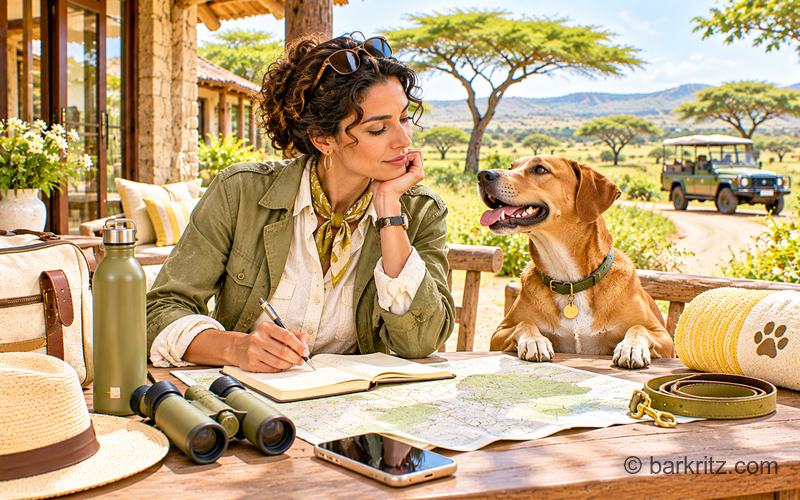
The most successful pet-friendly safari itinerary balances wildlife experiences with comfortable accommodation, manageable travel distances, and dependable care for the animal whenever an activity is unsuitable for pets.
Rather than choosing a famous reserve first and trying to accommodate a dog afterward, begin by identifying properties that explicitly welcome pets. Build the itinerary around those confirmed arrangements, then select wildlife excursions and other experiences that fit the location.
A stay of several nights at one suitable property may be more comfortable than moving between lodges every day. Fewer transfers reduce disruption to the pet’s routine and give owners more time to enjoy the surroundings without repeatedly packing equipment or negotiating new pet policies.
Consider dividing the trip into two complementary stages. The first might involve a pet-friendly bushveld lodge or private cottage where the dog can remain with its owner during permitted activities. The second could be a conventional safari lodge or national park visit arranged separately, with appropriate pet care in place. This approach makes it possible to enjoy a broader range of experiences without assuming that domestic animals can enter wildlife areas.
Before finalizing the route, compare:
- Driving distances: Long journeys can be tiring for pets, particularly in hot weather or on rough roads.
- Accommodation transitions: Fewer changes of lodging usually make it easier to maintain feeding, exercise, and rest routines.
- Care during excursions: Confirm arrangements for every activity that does not permit animals.
- Seasonal conditions: Research expected temperatures, rainfall, road conditions, and local parasite risks.
- Emergency access: Identify veterinary services and consider how far the accommodation is from suitable care.
- Travel documentation: Verify the latest entry and exit requirements for every country on the itinerary.
If international travel is involved, check official animal-import requirements well in advance. Airlines have their own carrier, temperature, and animal-transport policies, while national authorities may require documentation that takes time to obtain. Requirements can change, so confirm them directly with the relevant authorities and airline before departure.
Above all, judge a property by how well it meets the needs of the particular animal traveling with you. A dog accustomed to long walks may thrive in a suitable countryside cottage, while a senior companion may prefer a quiet chalet with a shaded outdoor area and minimal transfers. The best itinerary is the one that respects these individual needs while preserving the integrity of the wildlife experience.
An African safari can be rewarding even when a pet cannot accompany its owner on every excursion. With careful research, honest communication with accommodation providers, and a realistic approach to wildlife access, travelers can create a memorable bush escape that combines exceptional scenery, thoughtful hospitality, and responsible companionship.