

Private aviation can transform pet travel from a logistical exercise into a highly individualized journey, particularly when the itinerary, aircraft and animal’s needs are considered together. Dogs and cats can often remain close to their owners throughout a private flight, but the most seamless experience still depends on careful preparation, appropriate documentation, veterinary planning and advance coordination with the operator. The objective is simple: make the journey feel as composed and predictable for the animal as it does for its owner.
How Should You Prepare Your Dog or Cat Before a Private Flight?
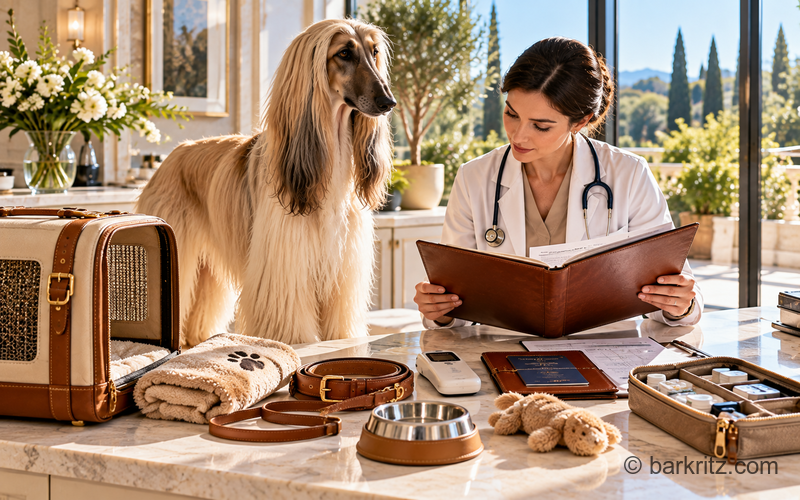
The most successful private pet journeys begin several days or weeks before departure, with veterinary preparation, documentation and a travel routine tailored to the individual animal.
A pre-flight plan should account for the destination, duration of the journey, climate, the animal’s age and temperament, and any border or entry requirements that apply. International travel can involve vaccination records, identification requirements, health certificates, import permits or other documentation depending on the countries involved.
Before departure, establish:
- Veterinary review: Confirm that the animal is fit to travel and discuss any breed- or age-specific considerations.
- Identification: Ensure microchip information and contact details are current.
- Documentation: Prepare vaccination records, health certificates and destination-specific paperwork well in advance.
- Medication: Carry prescribed medication in its original packaging and follow veterinary instructions.
- Familiarization: Introduce the carrier, travel blanket or other equipment well before departure rather than on travel day.
- Routine: Preserve normal feeding, exercise and sleep patterns as closely as practical before the flight.
For international itineraries, requirements can vary considerably by destination and may change over time, making confirmation with the relevant authorities and the aviation operator essential.
Can Dogs and Cats Stay With Their Owners During a Private Flight?
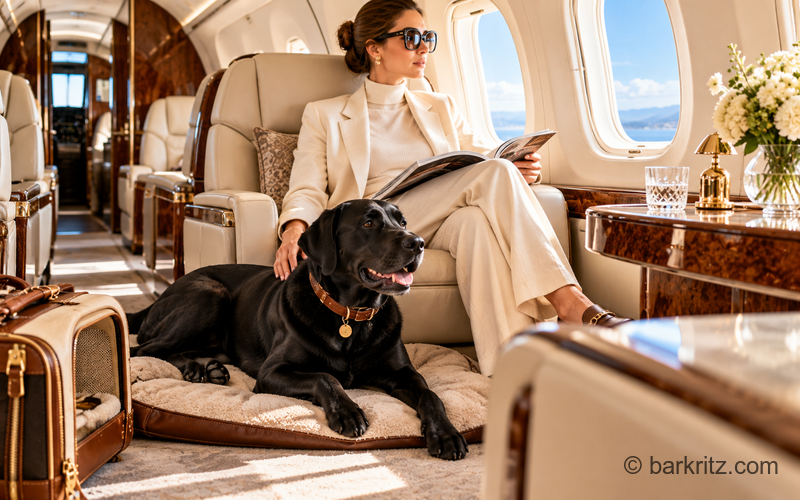
One of the principal advantages of private aviation is the ability to coordinate the journey around the animal rather than separating the pet from the owner as commonly occurs in commercial travel.
Depending on the aircraft, operator and itinerary, dogs and cats may be able to remain in the cabin with their owners rather than traveling in a separate cargo environment. The exact arrangement should always be confirmed before booking, particularly for larger dogs or animals requiring specialized equipment.
Important considerations include:
- Cabin access: Confirm that the specific operator and aircraft permit the animal to remain in the passenger cabin.
- Size: Verify whether there are restrictions based on the animal’s dimensions or weight.
- Carrier requirements: Some operators may require a suitable carrier during portions of the journey.
- Seating: Determine where the animal can safely rest without obstructing aisles or emergency equipment.
- Multiple pets: Confirm the number and species of animals permitted on the specific aircraft.
- Crew procedures: Discuss feeding, movement, cleaning and other practical arrangements before departure.
For a large dog, the aircraft itself becomes an important part of the decision. Cabin dimensions, floor space, seating configuration and door access can matter considerably more than the aircraft’s headline range.
What Should You Pack for a Private Flight With a Pet?
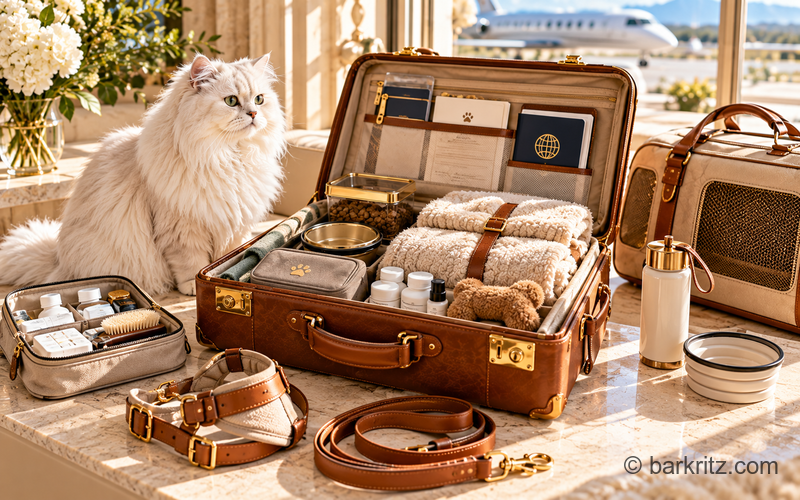
A refined pet-flight kit should be compact but comprehensive, containing everything required to preserve the animal’s normal routine from departure through arrival.
The advantage of private aviation is flexibility, but that does not eliminate the need for disciplined packing. Familiar objects can also reduce anxiety by giving the animal recognizable scents and textures throughout an unfamiliar journey.
A considered flight kit can include:
- Travel documentation: Health records, identification details and destination paperwork.
- Food: The animal’s usual diet portioned for the entire journey plus a contingency supply.
- Water: Familiar drinking water where practical, particularly for sensitive animals.
- Bowls: Lightweight, stable food and water bowls.
- Comfort item: A familiar blanket, bed or toy carrying the animal’s usual scent.
- Medication: Prescribed treatments with clear dosing instructions.
- Cleaning supplies: Waste bags, absorbent pads, wipes and disposable protective materials.
- Leash or harness: Kept immediately accessible rather than packed away.
- Emergency essentials: Contact details for the veterinarian and relevant destination veterinary services.
Avoid introducing a completely new food, supplement or calming product immediately before departure unless it has been discussed with the animal’s veterinarian. Familiarity is usually more valuable than novelty when preparing for travel.
How Can You Make the Aircraft Comfortable for a Dog or Cat?
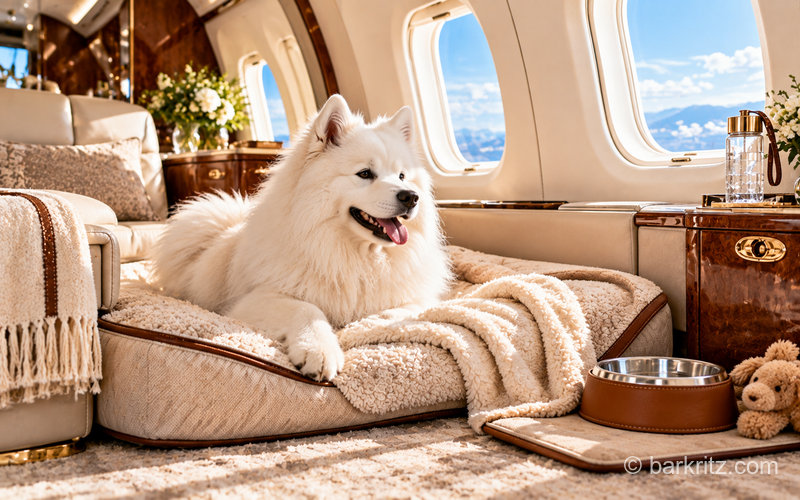
The ideal private-flight environment is calm, temperature-controlled and familiar, with the animal given a defined space where it can rest without unnecessary disruption.
Cabin temperature, noise, lighting and movement can all influence how an animal experiences the flight. Some pets settle immediately into the unfamiliar environment, while others benefit from remaining beside their owner with familiar bedding and a consistent routine.
For greater comfort, consider:
- Dedicated resting area: Give the animal a predictable place to settle rather than moving it repeatedly around the cabin.
- Familiar bedding: Bring an item that smells like home.
- Stable temperature: Avoid placing the animal directly beside strong ventilation or heat sources.
- Water access: Make fresh water available according to the animal’s normal routine.
- Movement: Follow the operator’s safety procedures and allow appropriate movement when practical.
- Noise management: Keep unnecessary cabin noise and sudden disruptions to a minimum.
Sedation should never be treated as a routine travel accessory. Any medication intended to alter an animal’s behavior during flight should be discussed with a veterinarian beforehand, particularly because changes in altitude and cabin conditions can affect an animal differently.
How Do You Plan a Seamless Private Arrival With Your Pet?
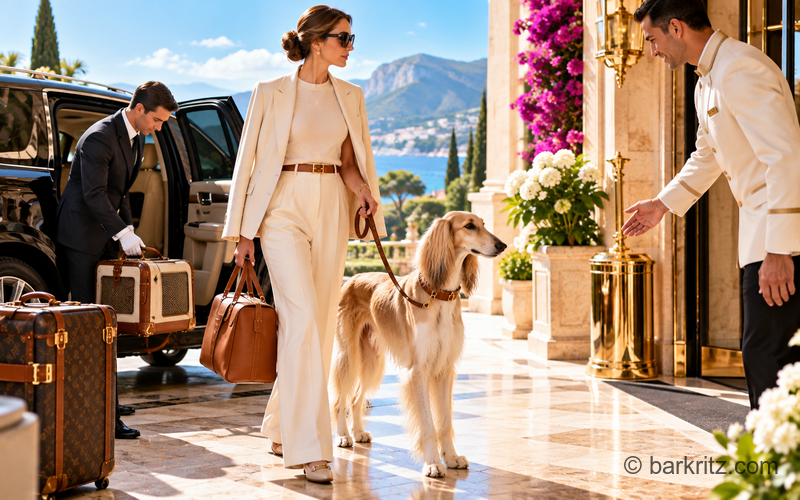
The most sophisticated private pet journey extends the same level of planning to the arrival, ensuring that transportation, accommodation and the animal’s immediate needs are already organized before touchdown.
Arrival can be more demanding than the flight itself, particularly after an international journey. A pet may need to pass through veterinary or border procedures, adjust to a new climate or transition directly into ground transportation and a hotel or residence.
A complete arrival plan should cover:
- Ground transportation: Reserve an appropriate pet-friendly vehicle before departure.
- Destination requirements: Confirm veterinary, customs or animal-entry procedures in advance.
- Accommodation: Verify the property’s current pet policy rather than relying on third-party descriptions.
- Food: Arrange access to the animal’s established diet at the destination.
- Veterinary support: Identify a reputable local veterinary practice before arrival.
- Environment: Prepare a quiet resting area where the animal can decompress after the journey.
- Return itinerary: Keep documentation and travel equipment organized for the next flight.
The defining advantage of private pet travel is not simply the aircraft but the control it gives the owner over the entire journey. When veterinary preparation, documentation, aircraft selection, cabin arrangements, ground transportation and accommodation are coordinated in advance, the experience becomes remarkably close to ordinary life—only with the dog or cat beside you from departure to arrival.
The strongest pet wardrobes are built around pieces that remain relevant long after a seasonal trend has disappeared. For the Four-Legged Elite, enduring canine style is less about novelty than proportion, craftsmanship, beautiful materials and an instinctive understanding of the animal wearing them. A perfectly cut wool coat, a refined leather collar or a beautifully made knit can become part of a permanent wardrobe precisely because it never competes with the dog’s natural character.
Which Classic Dog Coats Never Go Out of Style?
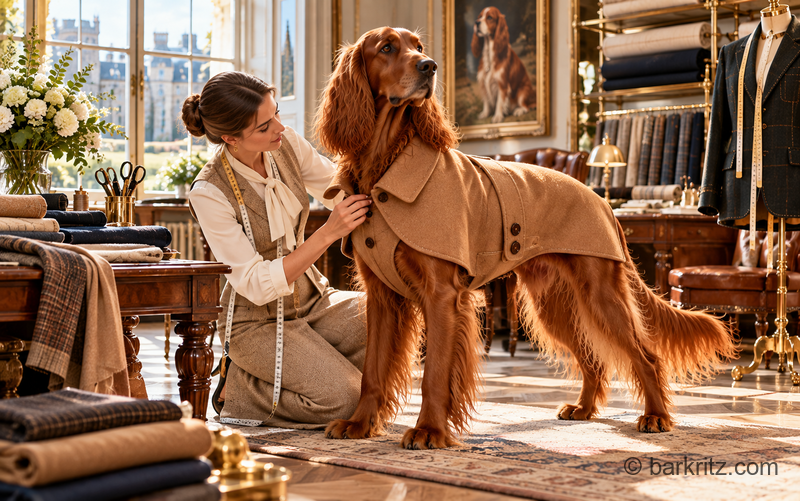
A beautifully tailored wool coat remains one of the most enduring pieces in a sophisticated canine wardrobe because its structure, practicality and restrained silhouette transcend seasonal fashion.
The ideal coat should follow the dog’s natural proportions without restricting movement, with details kept deliberately discreet. Camel, charcoal, navy, deep burgundy and warm ivory have particular longevity because they complement a wide range of coat colors and remain appropriate across different settings.
Classic coat characteristics include:
- Material: Fine wool, cashmere blends or refined weather-resistant textiles.
- Silhouette: Clean lines with enough room for unrestricted movement.
- Colors: Camel, navy, charcoal, burgundy and ivory.
- Hardware: Discreet horn, leather or brushed-metal closures rather than oversized embellishment.
- Longevity: A well-constructed coat can remain a wardrobe foundation for several seasons.
The best example resembles a miniature piece of considered tailoring rather than a costume. Its purpose is to protect the dog while allowing its breed characteristics and natural elegance to remain visible.
Why Are Fine Knits a Permanent Essential in Canine Fashion?
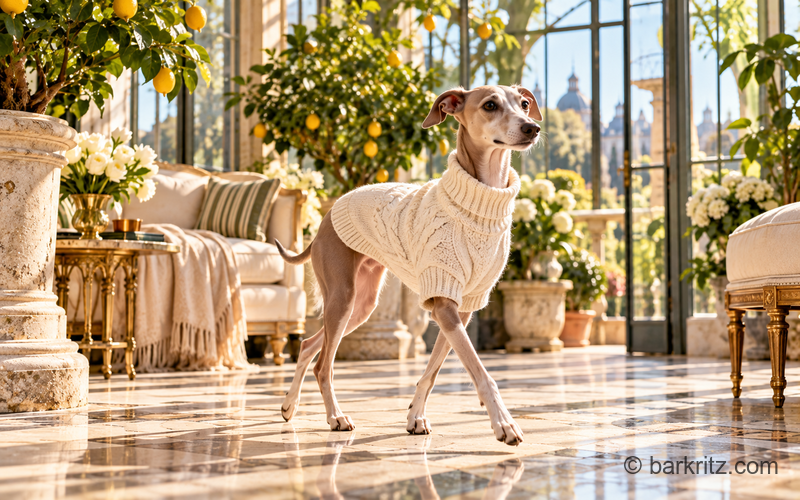
A beautifully proportioned knit is among the most versatile pieces a dog can own because it combines warmth, comfort and understated visual refinement.
Fine wool, merino and cashmere-blend knits can work particularly well for short-haired breeds, smaller dogs and indoor environments where a heavy coat would be unnecessary. Cable textures, ribbed collars and simple crew-neck silhouettes add visual interest without relying on excessive decoration.
A timeless knit wardrobe favors:
- Merino wool: Lightweight warmth with a refined natural texture.
- Cashmere blends: Exceptionally soft and particularly suited to cold interiors or gentle outdoor use.
- Cable knit: A heritage texture with an unmistakably classic character.
- Ribbed construction: Provides structure while accommodating natural movement.
- Neutral palette: Ivory, oatmeal, camel, navy and soft grey remain consistently versatile.
The distinction lies in proportion. A knit should follow the dog’s body rather than overwhelm it, with the neckline, sleeves and hem carefully adapted to the breed’s anatomy.
Which Leather Accessories Define Timeless Pet Style?
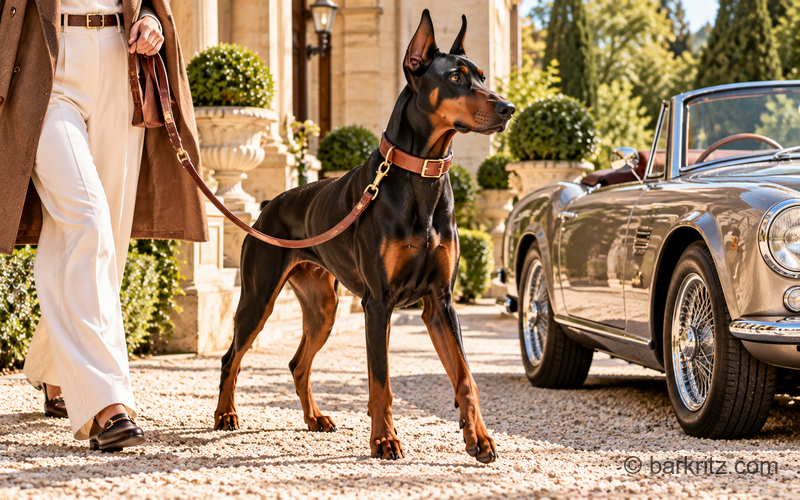
A finely made leather collar and lead remain the foundation of an enduring canine wardrobe because their usefulness and craftsmanship improve with thoughtful selection and care.
Full-grain leather develops character over time, while restrained hardware allows the quality of the material to remain the visual focus. Cognac, chestnut, dark brown, black and deep burgundy offer particularly versatile options, while a discreet engraved nameplate can provide personalization without excessive ornament.
The most enduring accessories share several characteristics:
- Leather: Full-grain or carefully finished leather with a supple but durable hand.
- Hardware: Brass, brushed metal or understated polished fittings.
- Width: Proportional to the dog’s neck and breed rather than dictated by fashion.
- Personalization: Small engraved details rather than oversized monograms.
- Coordination: Collar and lead should complement the dog’s coat rather than create a competing focal point.
A beautiful collar should look appropriate with a tailored coat, a simple knit or no clothing at all. That versatility is what transforms an accessory from a seasonal purchase into a permanent wardrobe piece.
Which Colors Have the Greatest Staying Power in Pet Fashion?
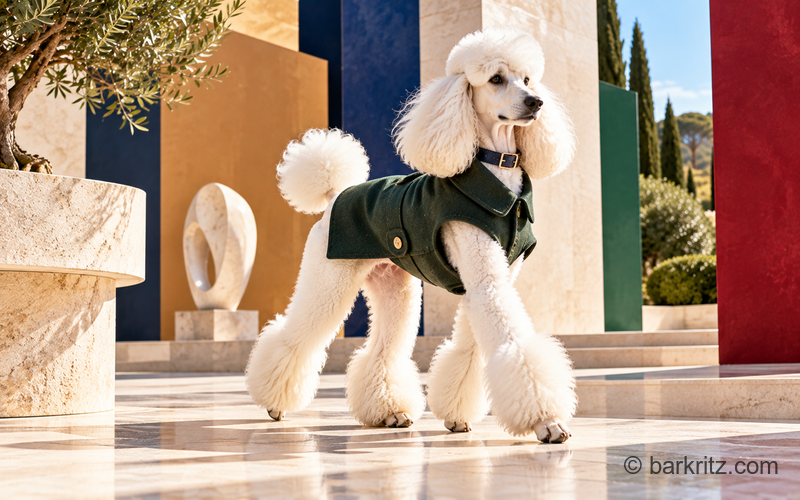
A restrained palette built around camel, navy, ivory, chocolate, charcoal, forest green and burgundy provides the strongest foundation for a canine wardrobe that remains visually relevant.
Color should complement the dog’s natural coat rather than dominate it. A golden retriever can carry camel and deep green beautifully, while black-coated breeds often benefit from ivory, burgundy or warm tan. White and cream coats create opportunities for richer contrast, while silver and grey coats pair naturally with navy, charcoal and muted burgundy.
A considered color architecture might include:
- Camel: Particularly effective with golden, apricot, cream and brown coats.
- Navy: A versatile alternative to black with a distinctly tailored character.
- Ivory: Creates elegant contrast against darker coats.
- Forest green: Adds depth while remaining natural and understated.
- Burgundy: Provides a richer accent without becoming theatrical.
- Chocolate and tobacco: Particularly effective with cream, white and golden coats.
The objective is not to eliminate color but to edit it. One carefully chosen accent often has greater visual impact than an entire wardrobe of competing shades.
How Can You Build a Pet Wardrobe That Remains Stylish for Years?
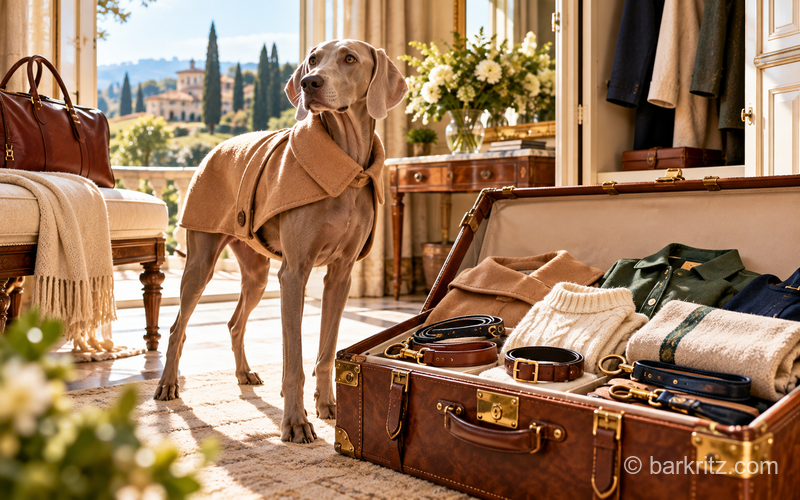
The most enduring pet wardrobe is a compact capsule built around interchangeable classics, with every piece selected for fit, function, material quality and the dog’s actual lifestyle.
Instead of accumulating novelty items, establish a small collection capable of covering changing weather, travel, formal occasions and everyday walks. The strongest pieces should work together naturally, allowing the wardrobe to evolve without losing its visual coherence.
A permanent canine capsule can include:
- One tailored coat: The principal cold-weather layer.
- One lightweight weatherproof piece: For rain and transitional seasons.
- One fine knit: For cold interiors and appropriate outdoor conditions.
- Two leather collars: One everyday and one reserved for formal occasions.
- Two leads: A refined everyday lead and a more practical outdoor version.
- One travel blanket: Neutral, washable and easy to carry.
- One understated formal accessory: Used selectively rather than as daily decoration.
The ultimate measure of timeless pet fashion is whether a piece still looks right when the season that inspired it has disappeared. The finest canine wardrobes are edited rather than crowded, with craftsmanship, proportion and individuality doing the work that passing trends cannot.
For discerning owners, acquiring an exceptional dog is rarely determined by the purchase price alone. Pedigree, rarity, bloodline, geographic availability, breeding standards, grooming requirements and lifelong care can make certain breeds considerably more demanding investments than their initial price suggests. Among the world’s most sought-after dogs, the true distinction lies in provenance, temperament, health, conformation and the expertise required to maintain the animal at its best.
Which Dog Breeds Command the Highest Purchase Prices?
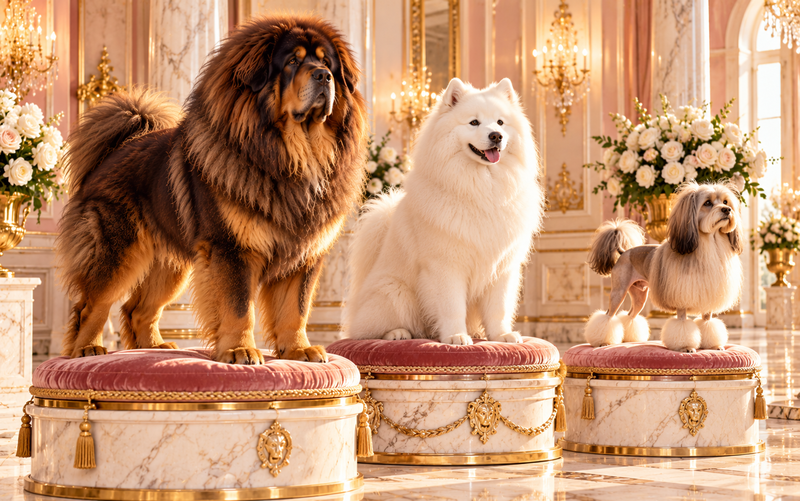
Tibetan Mastiffs, Samoyeds and Löwchens are among the breeds most often associated with exceptionally high acquisition prices because of rarity, pedigree and specialized breeding.
The Tibetan Mastiff remains the most famous example of extraordinary canine pricing, particularly among exceptional animals from highly regarded bloodlines. Samoyeds command substantial prices because responsible breeding, genetic screening and the maintenance of their distinctive coat require considerable expertise. The Löwchen, meanwhile, has long been one of Europe’s rarer companion breeds.
Key distinctions include:
- Tibetan Mastiff: Exceptional pedigree animals can command very high five-figure prices, although extraordinary reported sales should not be confused with normal market values.
- Samoyed: Well-bred puppies from established lines can cost several thousand dollars, with show-quality animals potentially commanding considerably more.
- Löwchen: A historically rare European companion breed known for its distinctive “little lion” appearance.
- Primary value drivers: Pedigree, health, lineage, rarity and breeder reputation.
- Market reality: Record-setting transactions are exceptional rather than representative of typical breed prices.
Which Rare Dog Breeds Offer the Greatest Sense of Exclusivity?
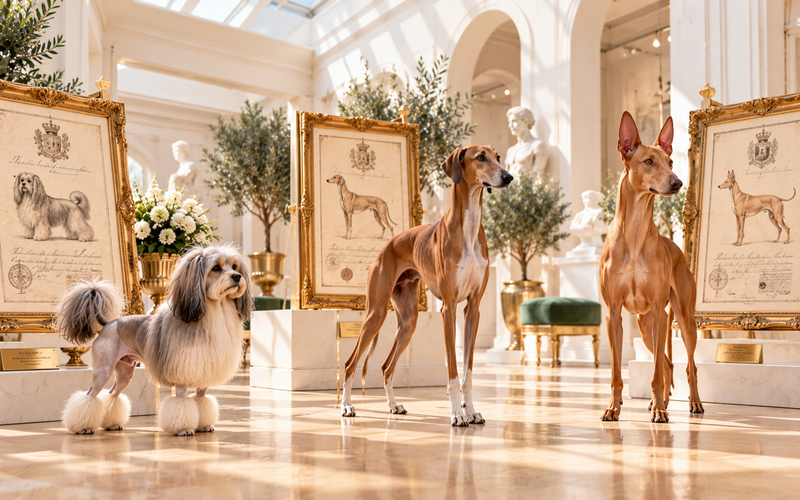
For owners seeking genuine rarity rather than simply a high purchase price, the Löwchen, Azawakh and Pharaoh Hound offer particularly distinctive combinations of limited availability and deep breed heritage.
Their appeal lies partly in their relative scarcity among companion animals. Finding a reputable breeder can require considerable patience, international communication and careful verification of bloodlines.
Their distinguishing characteristics include:
- Löwchen: A historic European companion breed with a distinctive clipped silhouette and relatively limited global population.
- Azawakh: A West African sighthound traditionally associated with the Sahel and known for its elegant, highly athletic form.
- Pharaoh Hound: A Mediterranean hunting breed particularly associated with Malta and distinguished by its athletic build and expressive appearance.
- Availability: Responsible breeding programs may have lengthy waiting lists.
- Provenance: Documented lineage and established breeding history can be more meaningful than a high asking price alone.
For the sophisticated owner, genuine rarity is compelling when it reflects authentic breed history and responsible preservation rather than artificial scarcity or short-lived fashion.
Which Expensive Breeds Demand the Greatest Investment After Acquisition?
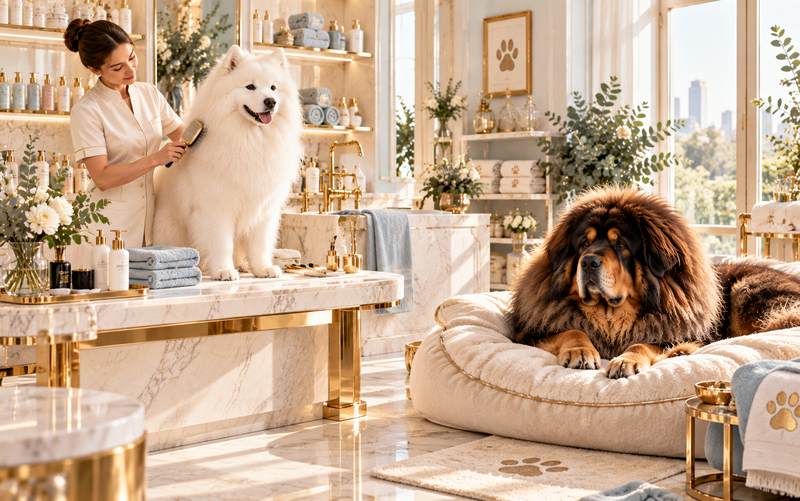
The most expensive dog to own is not necessarily the one with the highest purchase price, because grooming, nutrition, veterinary care, training, insurance and specialist maintenance can dramatically increase lifetime expenditure.
Samoyeds provide a clear example: their dense double coat requires consistent grooming, while their energetic nature calls for regular exercise and mental stimulation. Tibetan Mastiffs present a different ownership profile, with their considerable size, independent character and powerful guarding instincts requiring experienced handling.
Long-term expenditure can include:
- Grooming: Dense or specialized coats may require professional grooming alongside regular home maintenance.
- Nutrition: Large breeds can consume substantially more food over their lifetime.
- Veterinary care: Breed-specific screening, preventative medicine and age-related care can become significant expenses.
- Training: Independent, powerful or strongly protective breeds may benefit from professional behavioral guidance.
- Insurance: Premiums vary according to breed, age, location and coverage.
- Travel: Large or uncommon breeds can require more complex transportation arrangements.
The sophisticated approach is therefore to calculate total ownership costs rather than focusing exclusively on the initial acquisition price. A carefully bred puppy with a moderate purchase price can ultimately require a greater financial commitment than a more expensive puppy whose breed is easier to maintain.
Which High-Value Breeds Combine Pedigree Prestige With an Exceptional Lifestyle?
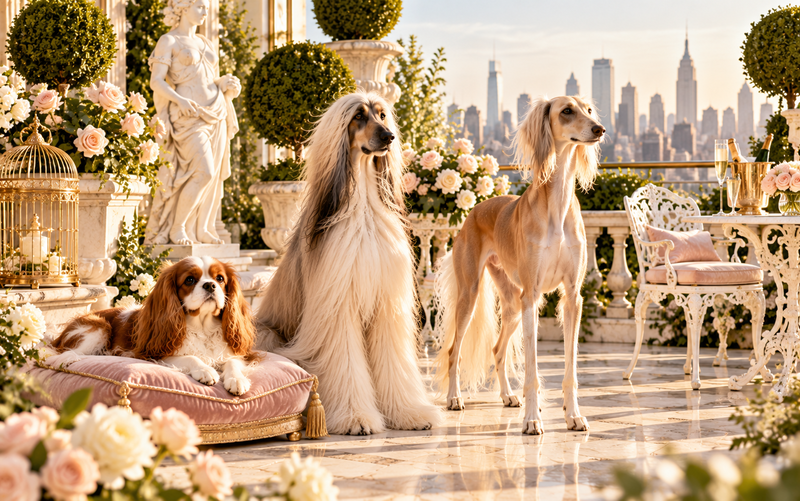
For owners who value heritage, presence and compatibility with an elevated lifestyle, breeds such as the Cavalier King Charles Spaniel, Afghan Hound and Saluki offer distinctive advantages beyond simple rarity.
The Cavalier King Charles Spaniel has centuries of aristocratic association and an adaptable temperament, while the Afghan Hound brings extraordinary visual presence and a heritage rooted in the hunting traditions of Afghanistan. The Saluki, one of the world’s oldest recognized breeds, combines an elegant silhouette with remarkable athleticism.
Their lifestyle profiles differ considerably:
- Cavalier King Charles Spaniel: Compact, sociable and well suited to sophisticated city living when properly exercised and cared for.
- Afghan Hound: Dramatic appearance, independent temperament and a coat requiring substantial grooming expertise.
- Saluki: Ancient sighthound heritage, exceptional athleticism and an understated elegance.
- Best for urban living: Cavalier King Charles Spaniels generally require less space than large sighthounds.
- Best for visual impact: Afghan Hounds possess one of the most immediately recognizable silhouettes in the canine world.
- Best for heritage: Salukis have an exceptionally deep historical association with the ancient Middle East.
The most compelling breed is ultimately the one whose temperament and physical requirements genuinely match the owner’s lifestyle. Pedigree prestige means little if the animal’s daily needs cannot be met properly.
What Should Discerning Owners Look for When Buying an Expensive Dog?
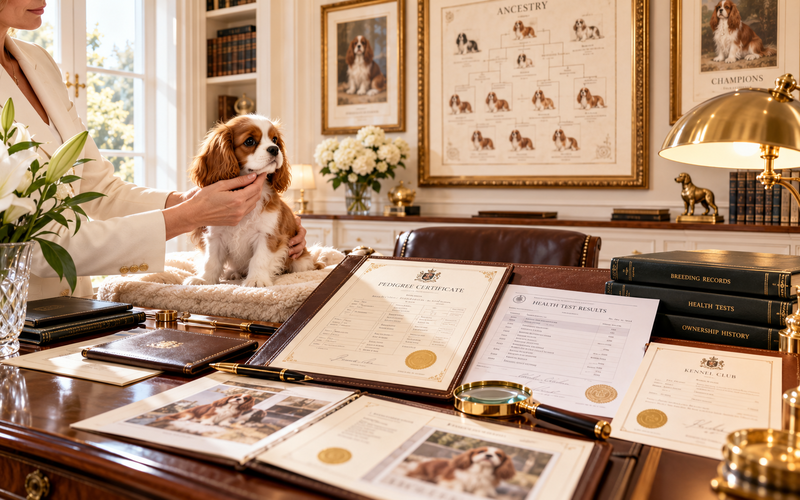
The most important investment is not the highest-priced puppy but a transparent pedigree from a responsible breeder who prioritizes health, temperament and long-term breed preservation.
A sophisticated acquisition should begin with documentation rather than aesthetics. Photographs, social-media popularity and an impressive asking price are not substitutes for health records, genetic testing, verifiable lineage and evidence of responsible breeding practices.
Before committing to a high-value puppy, examine:
- Pedigree: Verify the documented ancestry and registration with the relevant recognized kennel organization.
- Health testing: Ask for breed-appropriate genetic, orthopedic, cardiac or ophthalmic screening.
- Breeding practices: Understand how often the parents are bred and how puppies are raised and socialized.
- Temperament: Meet the parents where possible and discuss behavioral characteristics honestly.
- Contract: Review health guarantees, registration conditions and breeder responsibilities carefully.
- Lifetime support: The strongest breeders remain available for guidance throughout the dog’s life.
- Provenance: For unusually valuable or rare animals, maintain comprehensive documentation of ownership, lineage and veterinary history.
The most sophisticated canine acquisition is ultimately an exercise in discernment. A remarkable breed is valuable not because it carries the highest price tag, but because exceptional breeding, sound health, distinctive heritage and an extraordinary bond with its owner converge in one animal. That is the form of canine distinction that retains its meaning long after the transaction itself has been forgotten.
Dressing a dog well is an exercise in restraint: the objective is not to make a companion look like a miniature fashion victim, but to refine the animal’s natural presence with pieces that are proportionate, functional and beautifully made. For the Four-Legged Elite, the most convincing canine wardrobe borrows from the principles of a permanent human wardrobe—excellent materials, disciplined color, impeccable fit and very few unnecessary details. The result should look considered rather than conspicuous, allowing the dog to remain the star.
How Can You Make a Dog’s Wardrobe Look Sophisticated Rather Than Overdone?
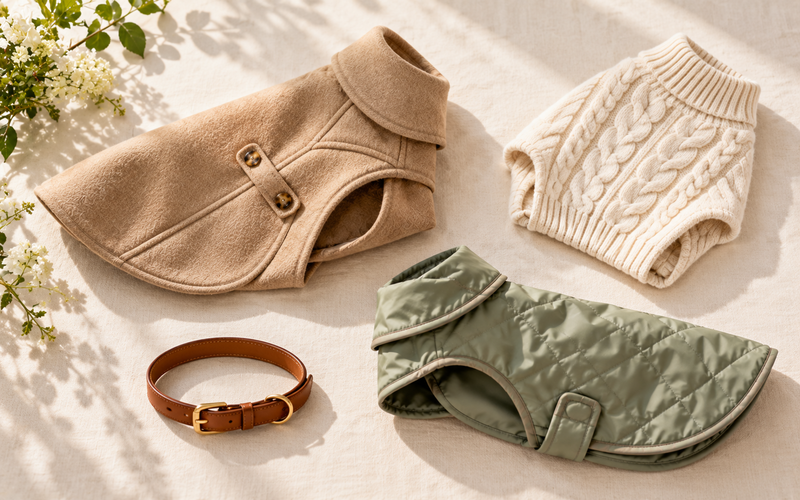
The most sophisticated canine wardrobe begins with restraint, using a small number of beautifully proportioned pieces instead of dressing the dog in every available accessory.
The first rule is to distinguish between dressing a dog and decorating a dog. A well-cut cashmere coat can be elegant; a coat covered in oversized logos, rhinestones, bows and unnecessary hardware quickly becomes theatrical. The best pieces work with the animal’s anatomy and coloring rather than competing with it.
A refined wardrobe might contain:
- One exceptional outer layer: Cashmere, wool or technically advanced weatherproof fabric depending on climate.
- One understated knit: Useful for cold interiors, travel or short-haired breeds.
- One formal accessory: A finely made collar or harness in leather, suede or another durable premium material.
- One practical travel piece: A sophisticated raincoat, quilted layer or lightweight protective jacket.
- Minimal decoration: Hardware, embroidery and branding should remain discreet.
The visual hierarchy matters. If the coat is distinctive, keep the collar simple. If the collar is the statement piece, choose an unadorned coat. Sophistication comes from editing, not accumulation.
Which Fabrics and Materials Make a Dog Look Elegantly Dressed?
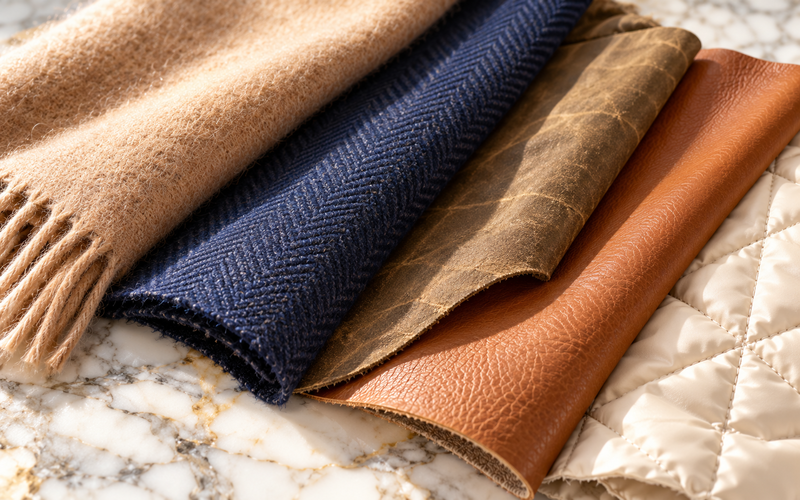
The most convincing materials are those chosen for tactile quality, durability and suitability to the dog’s environment rather than simply for their price or visual extravagance.
Cashmere, fine wool, waxed cotton, technical textiles and carefully finished leather can all work beautifully when selected for the correct purpose. The material should also respect the dog’s comfort: a beautiful fabric that restricts movement, traps excessive heat or irritates the skin has no place in a serious wardrobe.
Consider the hierarchy of materials:
- Cashmere: Exceptional softness and warmth for appropriate indoor or cold-weather use.
- Fine wool: Structured, naturally insulating and particularly effective for tailored coats.
- Waxed cotton: Practical protection with a heritage outdoor character.
- Technical performance fabrics: Ideal for rain, snow, wind and active travel.
- Full-grain leather: Particularly effective for collars and leads when properly fitted and maintained.
- Quilted textiles: Useful for lightweight insulation without excessive bulk.
Material should follow lifestyle. A city dog walking through Manhattan requires different protection from a mountain companion spending hours outdoors. The most sophisticated choice is therefore rarely the most delicate one; it is the one that performs beautifully without appearing overly engineered.
How Should You Choose Colors That Look Expensive on a Dog?
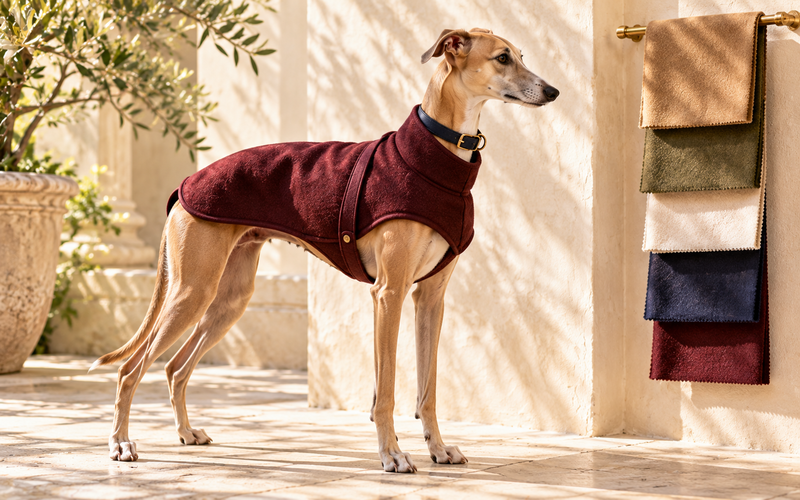
The most elegant canine palettes are built around the dog’s natural coloring and a restrained wardrobe of complementary neutrals rather than seasonal novelty shades.
Color is one of the easiest ways to make a canine look polished—or immediately overstyled. Deep navy, camel, ivory, charcoal, forest green, burgundy and warm taupe have enduring appeal because they complement a wide range of coats and environments. Brighter colors can work, particularly for outdoor visibility, but they should have a clear purpose.
A considered palette can follow several principles:
- Golden or apricot coats: Camel, olive, cream, navy and deep burgundy.
- Black coats: Ivory, camel, warm grey, emerald and rich burgundy.
- White or cream coats: Chocolate, navy, forest green, camel and muted rose.
- Grey or silver coats: Charcoal, ivory, burgundy, navy and soft blue.
- Brown coats: Cream, tobacco, forest green, navy and warm stone.
Avoid building the wardrobe around a single loud shade simply because it photographs well on social media. A sophisticated dog should be recognizable before its clothing is. Color should frame the animal, not overpower it.
Which Accessories Elevate a Dog’s Appearance Without Making It Look Like a Costume?
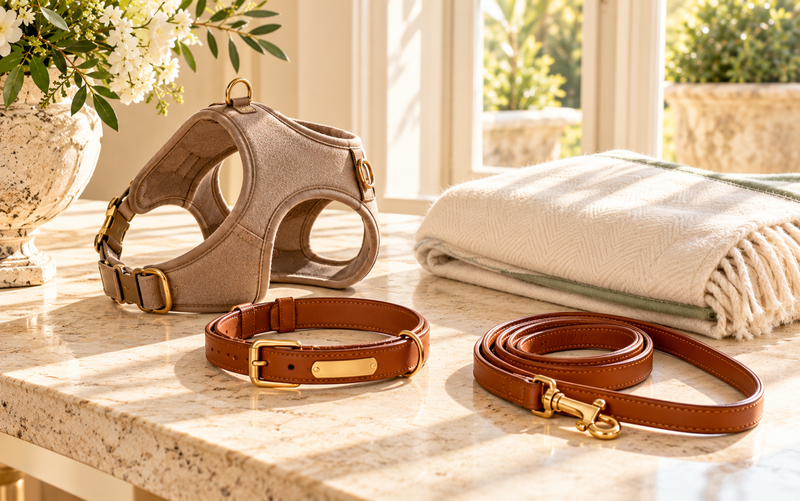
The best accessories are functional objects with excellent design, allowing craftsmanship and proportion to create distinction rather than novelty.
A beautifully made collar, discreet leather lead or precisely fitted harness can transform the appearance of a dog without making the styling feel artificial. The same principle applies to travel accessories: a well-designed carrier, blanket or food-and-water set can contribute to a coherent visual identity without turning the dog into a walking advertisement.
The most useful accessories include:
- A refined collar: Narrow enough to remain elegant and properly fitted for the breed.
- A coordinated lead: Matching or complementing the collar without excessive ornament.
- A discreet harness: Particularly important for breeds requiring additional control or comfort.
- A sophisticated travel blanket: Useful in hotels, aircraft cabins and restaurants where permitted.
- A premium raincoat: Functional protection that can become part of the wardrobe rather than an afterthought.
- A personalized detail: A subtle monogram or engraved identification plate rather than oversized branding.
The dividing line between style and costume is purpose. If an accessory improves comfort, safety, identification or practicality while looking beautiful, it earns its place. If it exists solely to attract attention, it probably does not.
How Can You Build a Permanent Canine Wardrobe That Never Looks Ridiculous?
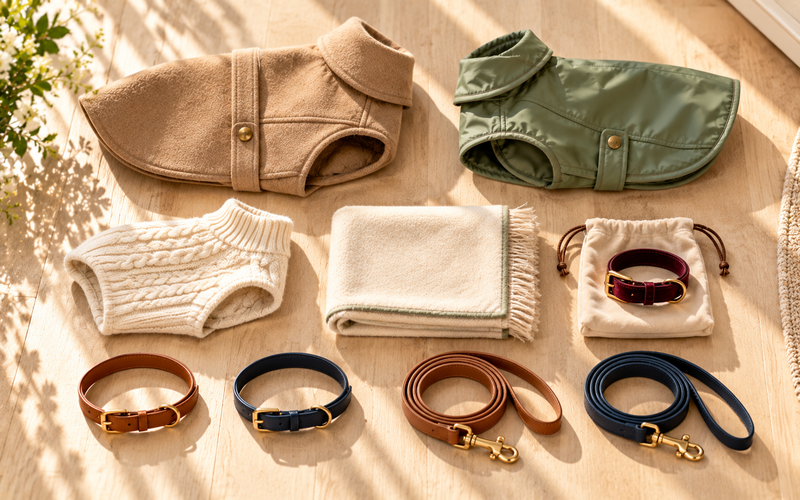
A permanent canine wardrobe should be compact, interchangeable and tailored to the dog’s actual lifestyle, with each piece earning its place through fit, function and longevity.
Instead of accumulating seasonal novelty items, build a small wardrobe that can adapt to city walks, country weekends, formal hotel stays and changing weather. The ideal collection should feel coherent enough that almost every piece can be worn with another.
A disciplined wardrobe architecture might include:
- Two everyday collars or harnesses: One primary and one reserve.
- Two leads: A refined everyday version and a practical outdoor option.
- One tailored cold-weather coat: Chosen for climate and breed.
- One lightweight weatherproof layer: For rain and transitional seasons.
- One fine knit: For genuinely cold environments where appropriate.
- One travel blanket: Neutral, washable and easy to pack.
- One formal accessory: Reserved for special occasions rather than daily wear.
The ultimate test is simple: remove anything that makes the dog look as though it is wearing a costume. The finest canine style is almost invisible because the clothing appears to belong naturally to the animal, the setting and the life it leads. When craftsmanship, proportion and practicality take precedence over conspicuous decoration, a dog can look impeccably dressed without ever looking ridiculous.
For the Four-Legged Elite, a truly exceptional hotel does more than permit a companion to stay. The finest properties understand that sophisticated pet travel requires the same attention to detail as the human guest experience: considered accommodation, tailored amenities, attentive concierge service, access to nature or culture, and a seamless approach to the practical realities of traveling with an animal. From historic city hotels to mountain retreats, these are the addresses where pet hospitality becomes an integral part of the journey.
Which Pet-Friendly Hotels Set the Standard for Exceptional Canine Hospitality?
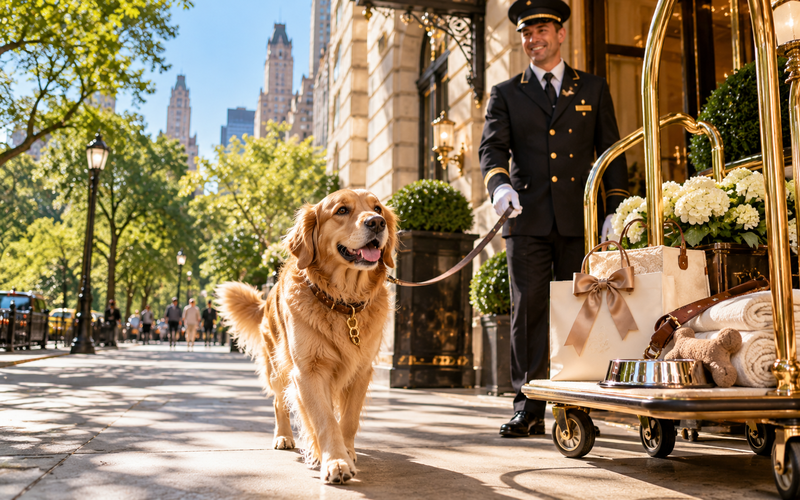
The Mark in New York and The Little Nell in Aspen distinguish themselves by treating canine hospitality as a carefully developed extension of the guest experience.
At The Mark, the Upper East Side location places guests beside Central Park, while canine amenities include a dedicated dog bed, water bowl, custom placemat and a Woof Woof Kit containing essentials for walks and daily care. The hotel’s canine dining program, created with Chef Jean-Georges, adds a culinary dimension rarely found in conventional pet-friendly accommodation.
The Little Nell takes a distinctly alpine approach, combining five-star hospitality with practical services for traveling dogs. Pet guests can receive beds, bowls and house-made treats, while the hotel also offers a dedicated pet menu and assistance with dog walking and sitting.
Among the distinctions worth considering:
- Urban advantage: The Mark offers immediate proximity to Central Park and Manhattan’s Upper East Side.
- Mountain advantage: The Little Nell places guests at the base of Aspen Mountain, making outdoor access central to the experience.
- Dining: Both properties extend their culinary philosophy to canine guests through dedicated offerings.
- Care: The Little Nell adds walking and sitting services for owners seeking greater flexibility during their stay.
- Design: The Mark’s approach is distinctly metropolitan; The Little Nell’s is oriented toward alpine leisure and outdoor living.
Which London Hotels Offer the Most Considered Experience for Traveling Pets?
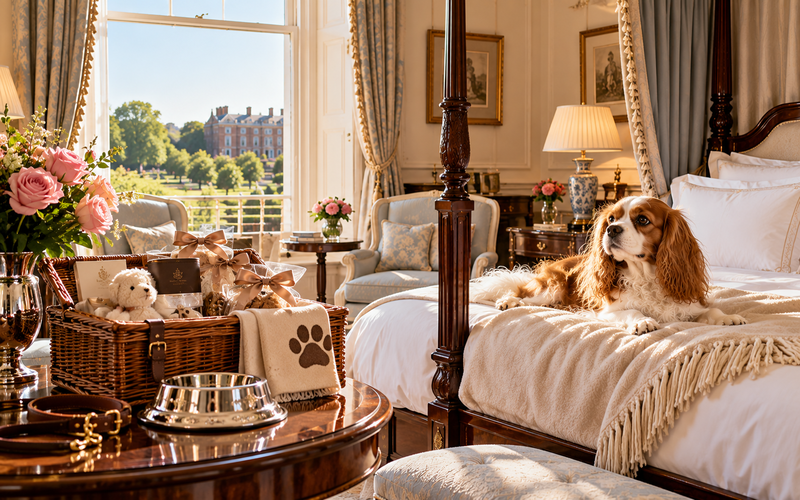
The Milestone Hotel & Residences and The Lanesborough offer two distinctly British interpretations of high-level pet hospitality, combining attentive service with dedicated amenities for canine guests.
The Milestone Hotel & Residences welcomes both dogs and cats and provides a particularly comprehensive program, including a tailor-made arrival hamper, custom bedding, food and water bowls, an in-house pet menu and turndown treats. Walking, sitting and grooming services can also be arranged, while a Pet Concierge can assist with local recommendations and practical requirements.
The Lanesborough takes a more traditional approach, welcoming small and medium-sized dogs and incorporating its butler service into the pet experience. Canine guests can receive dedicated amenities and access to a Canine Connoisseur menu, while selected public areas are available to well-behaved dogs.
Key distinctions include:
- Species: The Milestone accommodates both dogs and cats; The Lanesborough focuses on small and medium-sized dogs.
- Concierge: The Milestone offers dedicated Pet Concierge assistance.
- Grooming: The Milestone can arrange grooming services.
- Butler service: The Lanesborough integrates canine assistance into its established butler tradition.
- Setting: The Milestone sits opposite Kensington Palace and its gardens, while The Lanesborough occupies a prominent Hyde Park Corner position.
Which Paris Hotels Deliver a Refined Palace Experience for Pet Travelers?
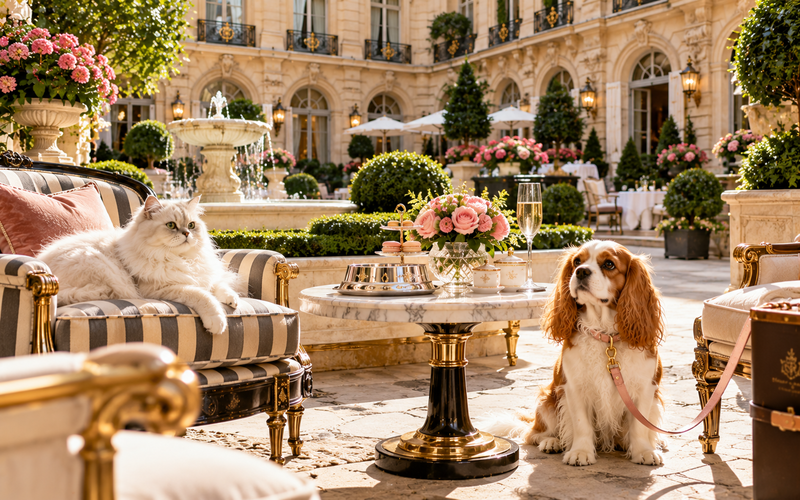
Le Bristol Paris and Hôtel de Crillon stand out among Parisian palace hotels for travelers seeking an exceptionally polished stay without leaving their companions behind.
Le Bristol Paris has an unusually strong connection with animal hospitality, having maintained resident cats as part of its identity for more than a decade. Guest pets are also welcomed, creating an environment in which animals feel naturally integrated into the character of the house rather than treated as an afterthought.
Hôtel de Crillon offers a similarly prestigious setting at Place de la Concorde, with a defined policy for smaller pets and a highly individualized approach to guest service. Its historic architecture and central location make it particularly compelling for travelers combining Parisian cultural itineraries with a refined residential experience.
Notable distinctions include:
- Heritage: Both properties occupy landmark positions within Paris’s historic hotel culture.
- Animal identity: Le Bristol has developed a particularly recognizable tradition around its resident cats.
- Location: Le Bristol offers an elegant setting near the Champs-Élysées and Rue du Faubourg Saint-Honoré; Hôtel de Crillon overlooks Place de la Concorde.
- Pet policy: Hôtel de Crillon specifies a 10-kilogram limit for pets.
- Atmosphere: Le Bristol combines palace hospitality with a celebrated garden and feline tradition, while Hôtel de Crillon emphasizes its historic French grandeur and central Paris position.
Where Can Pets Enjoy the Most Accomplished Resort-Style Escape?
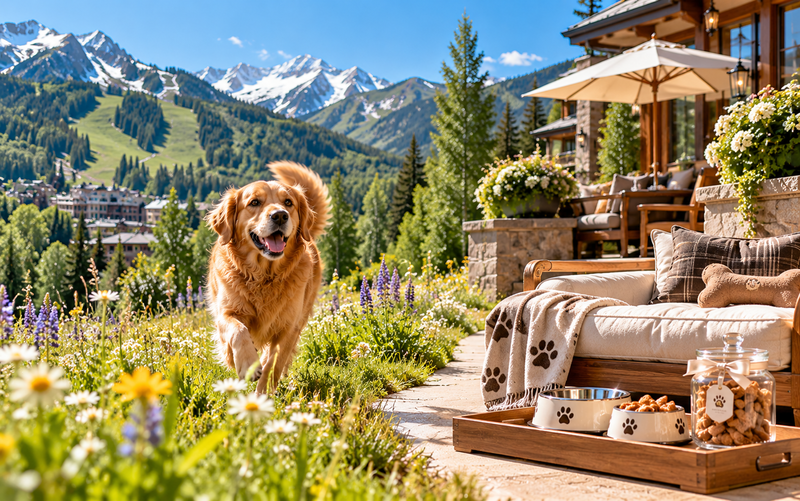
For travelers seeking space, nature and outdoor access, The Little Nell in Aspen offers one of the most compelling resort experiences for canine companions.
Its location at the base of Aspen Mountain changes the character of pet travel entirely: the surrounding landscape becomes part of the stay. Dogs can accompany their owners into an environment defined by mountain trails, fresh air and outdoor activity, while the hotel’s concierge can assist with pet-friendly excursions and practical arrangements.
Inside the property, the experience remains highly considered. Pet beds and bowls are available, house-made treats provide a welcoming touch, and a dedicated pet menu extends the hotel’s culinary attention to canine guests. Dog walking and sitting services further reduce the logistical demands of traveling with a companion.
The resort’s strongest attributes include:
- Setting: Direct access to Aspen’s mountain environment.
- Accommodation: Pet preparation integrated into the guest room experience.
- Dining: Dedicated canine dishes alongside the hotel’s broader culinary program.
- Activity: Concierge assistance with pet-friendly trails and outdoor experiences.
- Convenience: Walking and sitting services for owners with independent activities on their itinerary.
What Should Be Verified Before Booking a Pet-Friendly Hotel at the Highest Level?
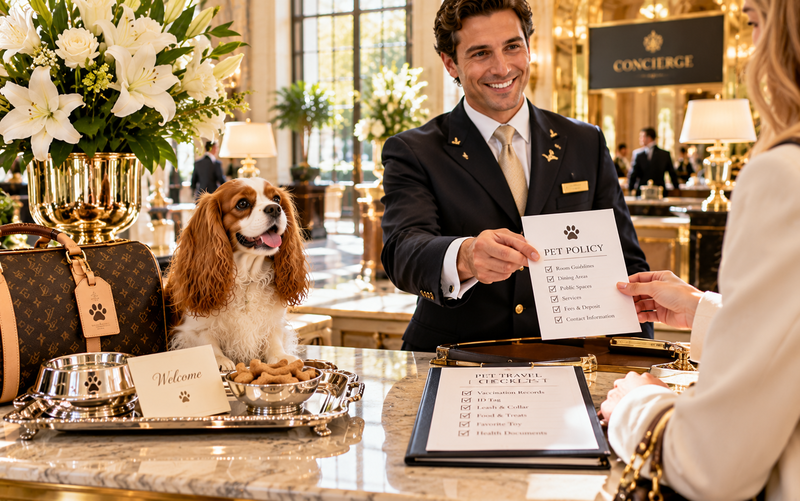
The most important step is to verify the property’s current pet policy in detail before confirming a reservation, because species restrictions, weight limits, fees, room categories and access rules can differ substantially between hotels.
A hotel described as pet-friendly may welcome only dogs, restrict certain breeds or sizes, limit pets to specific rooms, prohibit animals from restaurants and wellness facilities, or require that they never be left unattended. For sophisticated travel, these details matter as much as the room itself.
Before booking, confirm:
- Species and size: Whether dogs, cats or both are accepted and whether weight limits apply.
- Fees: Whether charges are calculated per night, per stay or through a deposit.
- Accommodation: Which rooms or suites are eligible for pets.
- Public spaces: Where animals are permitted within the property.
- Supervision: Whether pets can remain alone in the room and whether sitting services are available.
- Dining: Whether the hotel provides a genuine pet menu or only basic food and water.
- Care services: Availability of walking, grooming, veterinary assistance or other specialist support.
- Advance arrangements: Whether the hotel requires prior notification or specific documentation.
The finest pet-friendly hotels understand that exceptional hospitality is measured by continuity. When accommodation, dining, exercise, concierge assistance and animal care are coordinated seamlessly, traveling with a cherished companion becomes not an accommodation to the journey, but one of its most rewarding elements.
For owners of exceptional companion animals, preventative care is less about reacting to illness than about preserving vitality, mobility and quality of life over the longest possible horizon. The finest veterinary programs now resemble a private health strategy: individualized to breed, age, genetics, lifestyle and environment, with sophisticated diagnostics scheduled before subtle changes become visible. For the Four-Legged Elite, the objective is clear—anticipate risk, establish meaningful health baselines and maintain a precise record of every variable that can influence longevity.
What Should a Preventative Care Plan for a High-Value Pet Actually Include?
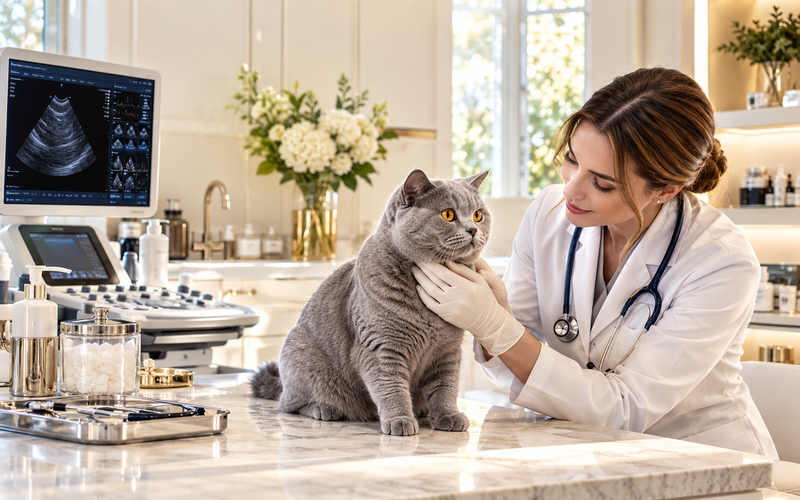
A superior preventative care plan combines individualized examinations, diagnostics, nutrition, dental care, parasite protection and continuous monitoring into one coordinated health strategy rather than a collection of routine appointments.
For an exceptional dog or cat, an annual vaccination visit alone is no longer an adequate definition of preventative medicine. A comprehensive program should establish a baseline early in life and then adjust its intensity as the animal ages, travels, competes, breeds or develops breed-specific vulnerabilities.
Key elements include:
- Comprehensive physical examinations: At least annually, with more frequent assessments for senior animals.
- Vaccination planning: Protocols calibrated to age, lifestyle and exposure rather than applied indiscriminately.
- Laboratory baselines: Complete blood count and chemistry testing when clinically appropriate, establishing reference values for future comparison.
- Targeted screening: Urinalysis, fecal screening and additional infectious-disease testing where appropriate.
- Dental care: Professional assessment combined with a structured home oral-care regimen.
- Condition monitoring: Weight, body condition and muscle mass tracked over time.
- Parasite prevention: Protection selected according to geographic exposure and travel patterns.
- Breed-specific screening: Evaluation for inherited or statistically significant conditions.
The most valuable feature is continuity: the veterinarian should be able to compare today’s findings with an established historical profile rather than evaluate every appointment in isolation.
How Often Should a Sophisticated Preventative Health Screening Be Performed?
For most healthy adult pets, a detailed veterinary examination at least once a year is a sensible foundation, while senior animals and pets with elevated genetic or lifestyle risks generally benefit from more frequent monitoring.
The ideal schedule should be determined by biological age rather than the calendar alone. A young, healthy cat living indoors may require a different surveillance strategy from an elderly Persian, a giant-breed dog, a highly active sporting animal or a pet that travels internationally with its owner.
A refined wellness calendar may include:
- Young animals: Foundational examinations, vaccination planning, parasite prevention, dental development and genetic-risk assessment.
- Mature adults: Annual physical examinations with diagnostic testing selected according to breed, lifestyle and previous results.
- Senior pets: Examinations approximately every six months, with laboratory and imaging diagnostics guided by individual risk.
- High-risk breeds: Earlier and potentially more frequent screening for recognized hereditary conditions.
- Frequent travelers: Additional infectious-disease, parasite and vaccination considerations based on destinations.
This approach turns preventative medicine into a longitudinal discipline. Small deviations in weight, kidney markers, cardiac findings, dental health or mobility can become clinically meaningful when viewed against years of carefully maintained records.
Which Advanced Diagnostics Are Worth Adding to a Premium Pet Wellness Program?
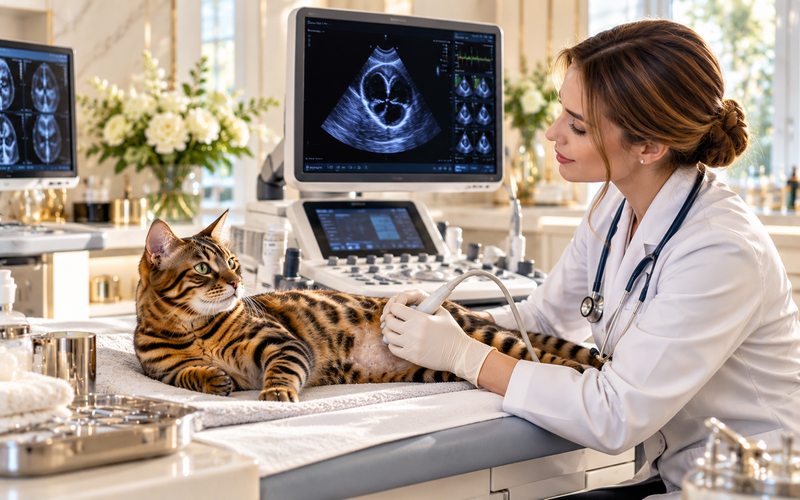
Advanced diagnostics are most valuable when they answer a defined clinical question or establish a meaningful baseline for an animal whose age, breed or history creates a measurable risk.
Modern veterinary medicine offers considerably more than routine bloodwork, but sophistication should never mean indiscriminate testing. The best private-care programs use diagnostics selectively, matching each examination to the animal’s risk profile.
Depending on the pet, a premium screening program may incorporate:
- Cardiac evaluation: Blood pressure measurement, electrocardiography or echocardiography when indicated by breed, age, symptoms or examination findings.
- Imaging: Ultrasound or radiography for selected organs, joints or areas of concern.
- Genetic screening: Particularly valuable for breeds with established hereditary disorders or for responsible breeding programs.
- Ophthalmic examinations: Useful for breeds predisposed to inherited or age-related eye disorders.
- Orthopedic assessment: Especially relevant to large breeds, working dogs and animals showing early changes in gait or muscle condition.
- Expanded laboratory panels: Selected according to age, previous results and organ-specific risk rather than simply maximizing the number of tests.
The principle is precision. A beautifully organized diagnostic history can be more valuable than a single spectacular screening package because it reveals trends—the gradual change that may precede a visible clinical problem.
How Should Nutrition, Dental Health and Fitness Be Built Into Preventative Care?
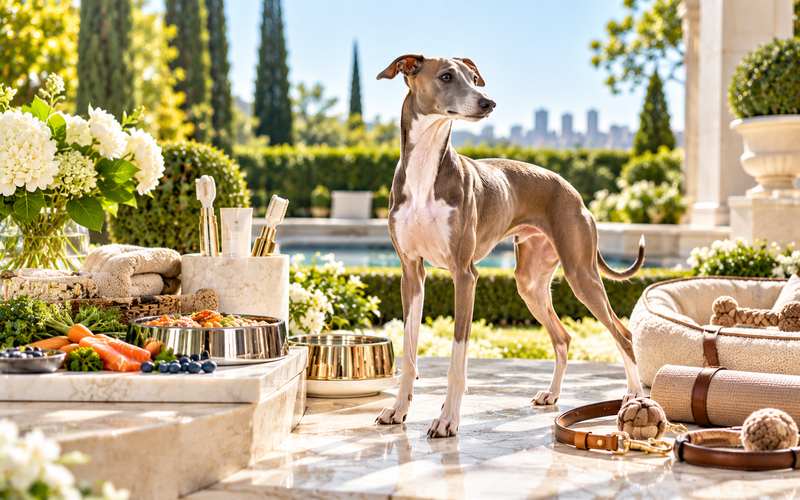
The strongest preventative programs treat nutrition, oral health and physical conditioning as measurable components of medicine rather than lifestyle accessories.
For pets with demanding lifestyles or carefully managed environments, daily habits can have as much influence on long-term wellbeing as the annual veterinary examination. Nutrition should reflect age, body composition, activity and known medical risks, while exercise should preserve functional strength without creating unnecessary orthopedic stress.
A sophisticated wellness protocol can track:
- Body weight and body-condition score: Recorded at regular intervals.
- Muscle mass and mobility: Particularly important for mature and senior animals.
- Caloric intake: Including significant dietary changes and treats.
- Dental hygiene: Home care, professional cleanings and periodontal findings.
- Exercise: Duration, intensity and recovery.
- Skin and coat condition: As part of the broader physical assessment.
- Behavioral changes: Including appetite, thirst, sleep, elimination and activity patterns.
Dental care deserves particular attention because oral disease can develop quietly while affecting eating, comfort and overall health. Similarly, maintaining lean muscle mass becomes increasingly important with age, making controlled movement and appropriate nutrition integral parts of a long-term wellness strategy.
What Makes a Truly Exceptional Preventative Care Plan Worth the Investment?
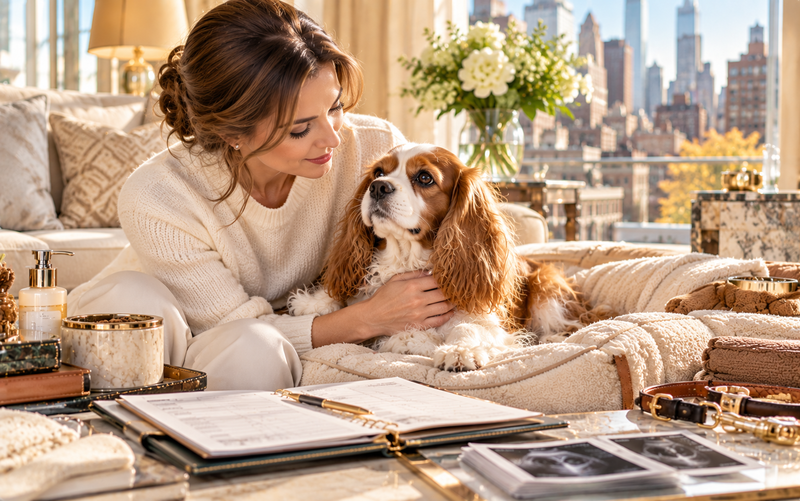
The finest preventative care plan is defined not by its price or the number of tests it contains, but by its degree of personalization, continuity and ability to identify meaningful changes before they become major health events.
For owners accustomed to private, highly individualized services, the veterinary equivalent should provide a similarly disciplined experience. A dedicated primary veterinarian, access to appropriate specialists, centralized medical records and a clearly defined screening calendar create a level of continuity that fragmented care cannot easily reproduce.
The most valuable characteristics include:
- A personalized health baseline: Established early and updated systematically.
- Breed-specific risk management: Rather than generic wellness protocols.
- Senior-care escalation: As biological age and individual risk increase.
- Integrated records: Covering examinations, laboratory work, imaging, dental care, nutrition and medications.
- Specialist access: When cardiology, dermatology, ophthalmology, oncology, dentistry or orthopedics becomes relevant.
- Travel preparedness: For pets regularly moving between states or countries.
- Clear thresholds for action: So emerging changes trigger timely reassessment rather than passive observation.
Preventative medicine ultimately becomes an exercise in stewardship. For a cherished companion whose health, mobility and vitality are considered part of the household’s long-term priorities, the most sophisticated strategy is remarkably simple: know the animal’s normal state, monitor it intelligently and intervene before a small deviation becomes a defining medical event.
In the world of pedigreed cats, rarity is rarely a simple question of appearance. A scarce bloodline, difficult breeding program, centuries-old heritage, wild ancestry, or exceptionally limited breeder network can transform a kitten from a companion animal into a serious acquisition. For the Four-Legged Elite, the distinction matters: the highest prices are often attached not merely to a beautiful coat, but to provenance, generation, pedigree, and the difficulty of obtaining a particular cat.
It is also important to distinguish genuine rarity from marketing mythology. Some cats command extraordinary prices because they are genuinely scarce or difficult to breed, while others have acquired an expensive reputation through aggressive marketing rather than recognized breed status.
Which Cat Breeds Are Considered the Rarest in the World?
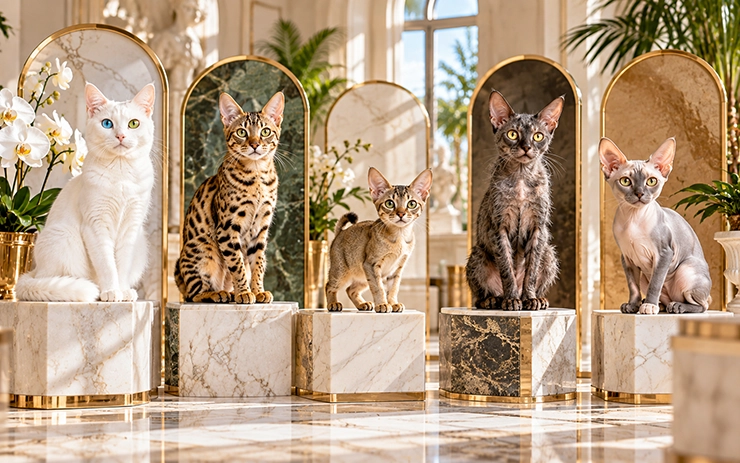
The rarest pedigreed cats tend to be breeds with small breeding populations, limited geographic distribution, or tightly controlled bloodlines, rather than simply the cats with the highest retail prices.
Among the names most often associated with feline rarity are the Khao Manee of Thailand, Sokoke of Kenya, Toybob, Minskin, and Lykoi, each representing a very different chapter in modern cat breeding and preservation.
- Khao Manee: an ancient Thai breed distinguished by its pure white coat and often strikingly mismatched eyes.
- Sokoke: an exceptionally uncommon breed originating in Kenya, recognized for its distinctive naturally patterned coat.
- Toybob: a diminutive breed associated with Russia and known for its naturally short tail.
- Minskin: a highly uncommon modern breed combining short stature with distinctive coat characteristics.
- Lykoi: recognizable for its unusual partially hairless, roan-like appearance.
Rarity can mean several things: a small global population, few active breeders, restricted geographic origins, or a narrow bloodline requiring careful preservation. That is why the most interesting rare cats are not necessarily the most expensive ones.
Which Rare Cat Breed Can Cost the Most?
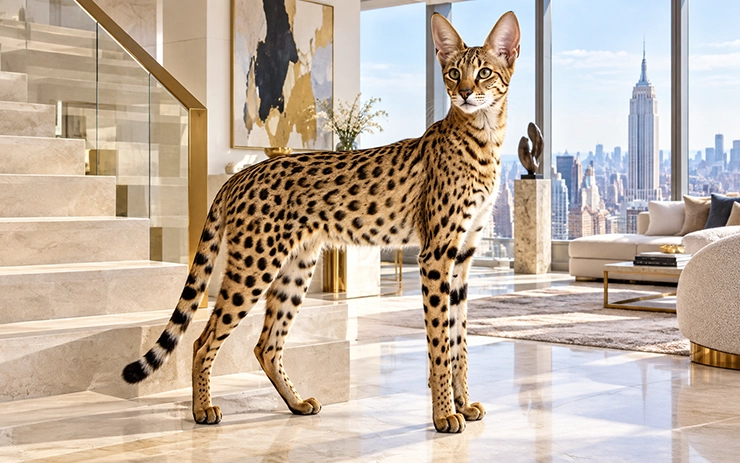
The Savannah is among the most expensive genuinely established cat breeds, with early-generation kittens potentially reaching approximately $12,000 to $25,000 or more depending on generation, pedigree, breeder reputation, appearance, and availability.
The Savannah is a hybrid of a domestic cat and the African serval, and its price is heavily influenced by generation. The closer the cat is to its wild ancestor, the more specialized the breeding process becomes and the more limited the pool of suitable animals can be.
- F1 Savannah: approximately 50 percent serval ancestry and generally the most expensive generation.
- F2 Savannah: approximately 25 percent serval ancestry, with a greater domestic-cat profile.
- Later generations: progressively further removed from the serval and generally less expensive.
- Primary price factors: generation, pedigree, markings, breeder reputation, sex, and availability.
- Ownership consideration: early-generation hybrids can be subject to restrictions depending on local law.
The Savannah’s appeal is architectural as much as aesthetic. Long legs, large ears, dramatic spotting and an athletic silhouette give the breed an almost sculptural presence. For an owner accustomed to conventional pedigreed cats, however, an early-generation Savannah can represent a considerably more demanding commitment than simply purchasing an unusually beautiful companion.
Is the Khao Manee One of the Most Valuable Rare Purebred Cats?
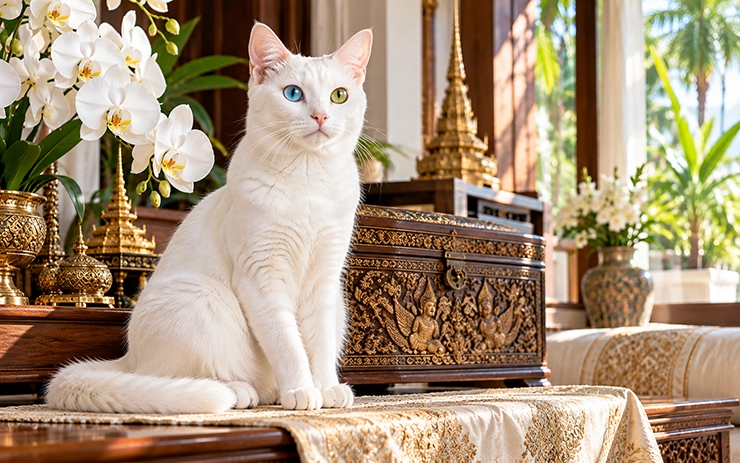
The Khao Manee is one of the world’s most historically significant rare purebred cats, with exceptional kittens commonly commanding several thousand dollars because of their limited availability, distinctive appearance, and centuries-old Thai heritage.
Known as the “White Gem,” the Khao Manee is an ancient natural breed from Thailand whose history is associated with traditional Thai cat manuscripts. Its most recognizable feature is the combination of a completely white coat and unusually vivid eyes, with odd-colored eyes considered particularly distinctive.
Its defining characteristics include:
- Coat: pure, glistening white.
- Eyes: blue, green, yellow, amber, or combinations of colors.
- Signature feature: odd eyes, with each eye a different color.
- Size: generally a medium-sized, athletic cat.
- Heritage: a traditional Thai breed with a long cultural history.
Prices can vary considerably between breeders, but well-bred Khao Manee kittens can enter the several-thousand-dollar range, with exceptional pedigree, breeding rights, rarity of coloration, and breeder reputation pushing the figure substantially higher.
The attraction is therefore not simply visual. A genuine Khao Manee represents access to a relatively uncommon bloodline with a documented cultural history, making provenance particularly important when evaluating a premium purchase.
Which Rare Cats Combine the Strongest Heritage and Exclusivity?
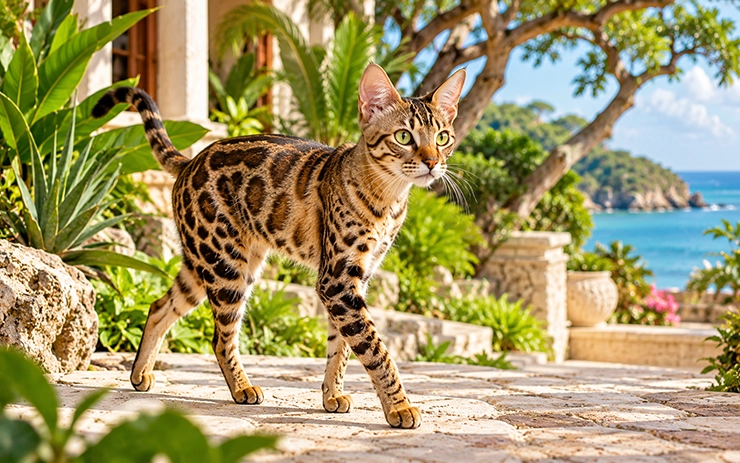
For collectors interested in provenance rather than headline price, the Khao Manee, Sokoke, Toybob, Lykoi, and early-generation Savannah represent five distinctly different definitions of feline exclusivity.
The most compelling acquisitions are often those where the story behind the breed is inseparable from its physical identity. The Khao Manee brings centuries of Thai heritage; the Sokoke represents one of Africa’s most unusual naturally occurring domestic-cat lineages; the Toybob is distinguished by its compact scale and short tail; the Lykoi by a remarkable naturally occurring mutation; and the Savannah by deliberate hybridization with the serval.
For the discerning owner, the distinctions are clear:
- Strongest historical provenance: Khao Manee.
- Most dramatic wild ancestry: F1 Savannah.
- Most unusual natural appearance: Lykoi.
- Most distinctive geographic heritage: Sokoke.
- Most unusual miniature profile: Toybob.
- Most important acquisition credential: documented pedigree from a reputable breeder.
This is also where the meaning of “expensive” becomes more sophisticated. A rare cat purchased from a preservation-focused breeder with documented lineage may represent a considerably more meaningful acquisition than a dramatically priced animal whose rarity is primarily a marketing proposition.
What Should Buyers Verify Before Paying a Premium for a Rare Cat?
Before committing substantial money to a rare cat, buyers should verify its pedigree, generation, health documentation, breeder credentials, registration status, and the legal requirements governing ownership in their jurisdiction.
The headline purchase price is only the beginning of the acquisition. With rare breeds, scarcity can create a significant gap between legitimate specialist breeding and opportunistic marketing. This is particularly relevant with exotic hybrids, where regulations can differ substantially between jurisdictions.
A serious acquisition file should include:
- Pedigree: documented lineage and registration where applicable.
- Generation: essential for hybrid breeds such as the Savannah.
- Health records: veterinary examinations, vaccinations, and appropriate genetic testing.
- Breeder history: an established reputation and transparent breeding practices.
- Purchase contract: clearly defined ownership, breeding rights, and health provisions.
- Legal status: confirmation that the specific breed and generation may legally be kept at the owner’s residence.
- Lifetime planning: appropriate veterinary care, nutrition, enrichment, insurance, and specialist support.
For the Four-Legged Elite, true rarity is ultimately about provenance rather than spectacle. The finest rare cat is not necessarily the one carrying the largest price tag, but the one whose lineage, health, history, and breeding integrity can withstand scrutiny.