

How to Choose the Right Harness for a Well-Dressed Dog
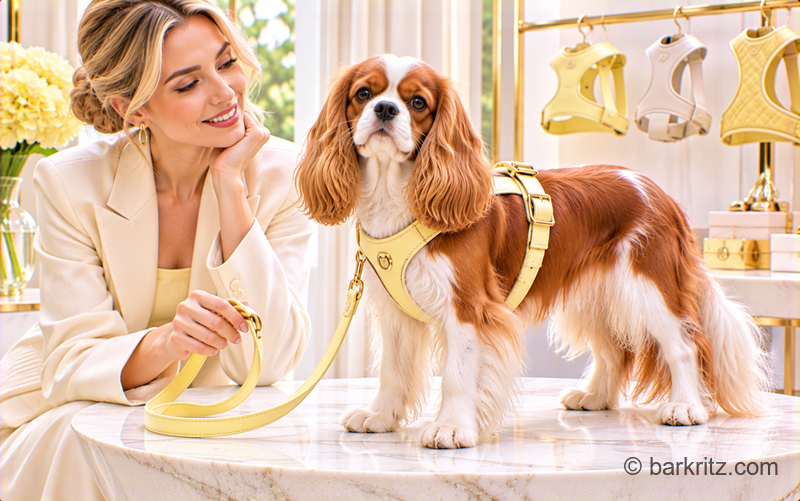
A beautifully dressed dog deserves accessories that combine thoughtful design with genuine comfort, and few pieces are more important than a well-chosen harness. Whether paired with a tailored walking coat, a fine-knit sweater, or an impeccably fitted everyday ensemble, the right harness should complement a dog’s appearance without compromising freedom of movement or safety.
Today’s canine accessories offer an impressive range of silhouettes, materials, finishes, and fastening systems. Yet the most sophisticated choice is not necessarily the most elaborate. A truly exceptional harness is one that fits the individual dog, distributes pressure appropriately, suits its walking habits, and brings an understated sense of refinement to everyday outings.
Which Harness Style Is Best for Your Dog’s Size, Shape, and Personality?
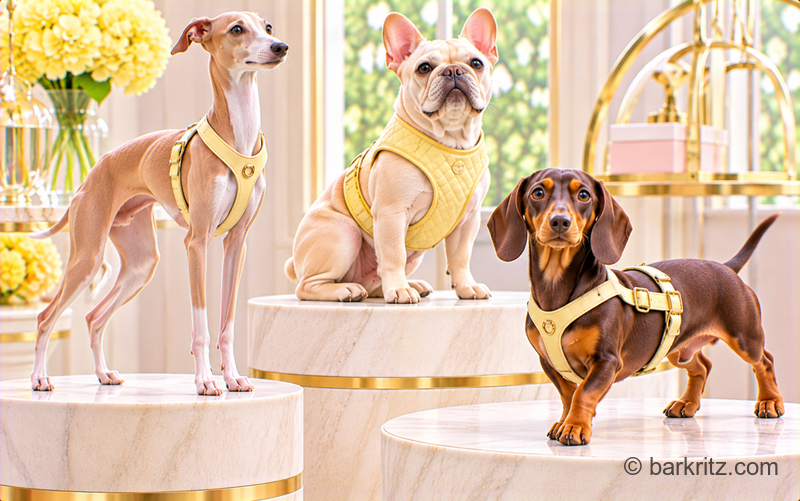
The best harness style is determined by a dog’s body proportions, movement patterns, and temperament rather than by appearance alone.
Harnesses generally fall into several principal designs, each offering a different balance of coverage, adjustability, and control. Understanding these distinctions makes it easier to choose an accessory that looks elegant while serving its practical purpose.
- Y-shaped harness: forms a V-shaped structure across the chest and generally leaves the shoulders relatively free, making it a versatile option for everyday walking.
- H-shaped harness: features adjustable straps around the neck and torso, allowing a more individualized fit for dogs whose proportions are difficult to accommodate.
- Vest-style harness: offers broader fabric coverage across the chest and back, often appealing to small dogs and companions who prefer a softer-feeling design.
- Step-in harness: allows the dog to place its front paws into the harness before it is fastened across the back, which can simplify dressing for some dogs.
- Front-clip harness: positions the leash attachment at the chest and may provide additional steering assistance for dogs that pull, although its suitability depends on the individual animal and correct fit.
A small Italian Greyhound, for example, has a very different silhouette from a broad-chested French Bulldog or a compact Dachshund. The former may need a harness designed to accommodate a deep chest and narrow waist, while the latter benefits from a construction that does not press against its elongated back or restrict its short legs.
Personality matters, too. Sensitive dogs may prefer lightweight designs with minimal fabric contact, while energetic companions often benefit from secure adjustment points and durable hardware. The ideal harness should feel like a natural extension of the dog’s wardrobe rather than an obstacle to movement.
Which Materials and Finishes Make a Dog Harness Both Elegant and Practical?
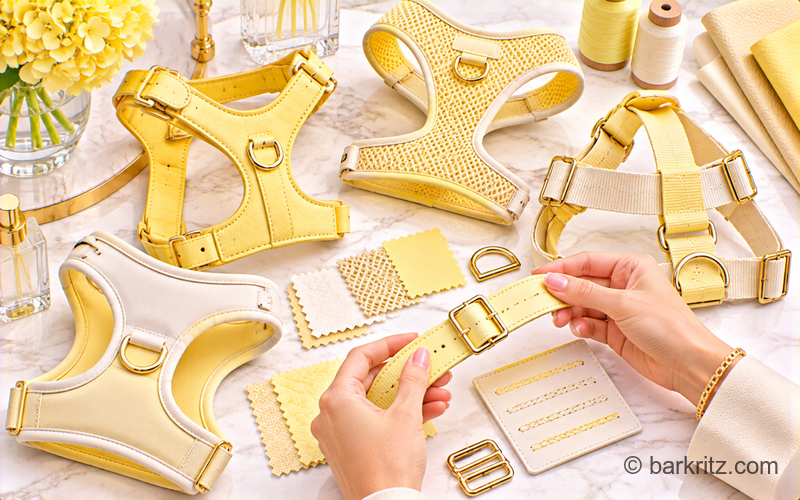
The most desirable harness materials combine softness against the coat, structural durability, easy maintenance, and finishes that retain their appearance through regular use.
Material selection influences far more than aesthetics. It determines how a harness feels against the skin, how it responds to moisture, and whether it remains comfortable during extended walks.
Consider these popular choices:
- Soft padded mesh: lightweight and breathable, making it suitable for everyday use and warmer weather.
- Premium nylon webbing: durable, relatively easy to clean, and available in refined colors and understated finishes.
- Leather: offers a classic appearance and develops character over time, although it requires appropriate conditioning and careful attention to fit.
- Cotton or textile blends: can provide a softer, more natural finish, but should be selected with durability and washing requirements in mind.
- Neoprene padding: offers a smooth, cushioned surface that can improve comfort when properly positioned and fitted.
For an elevated everyday look, consider restrained details such as brushed-metal buckles, tonal stitching, carefully finished edges, and coordinated leash hardware. These elements can make an accessory feel thoughtfully designed without introducing unnecessary ornamentation.
The interior construction deserves equal attention. Seams, buckles, adjustment sliders, and leash rings should be smooth and securely attached. Rough edges or poorly positioned hardware may cause friction, particularly beneath the front legs or around the chest.
Color can also contribute to a harmonious appearance. Ivory, soft taupe, dusty rose, sage, and deep navy pair beautifully with many coat colors, while a contrasting shade can create a more expressive fashion statement. The most successful design complements the dog’s natural coloring rather than overwhelming it.
How Should a Dog Harness Fit to Ensure Comfort and Freedom of Movement?
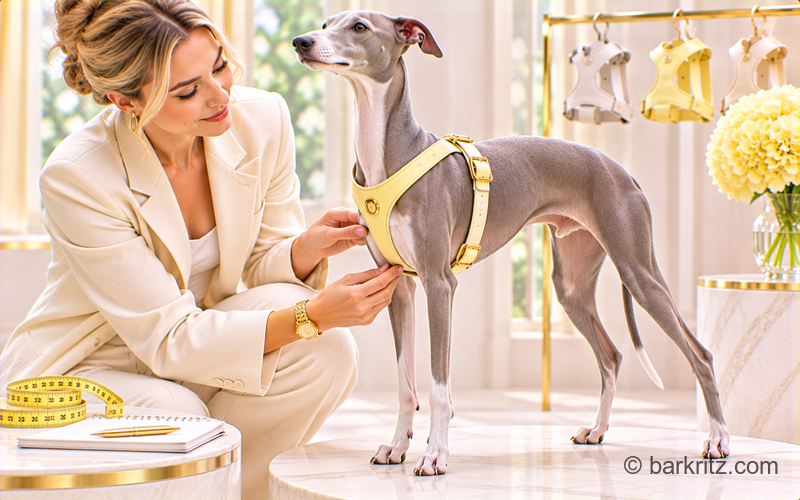
A correctly fitted harness sits securely against the body without restricting the shoulders, rubbing the skin, pressing on the throat, or allowing the dog to slip free.
Fit is the defining quality of a good harness, regardless of its designer, material, or price. An attractive accessory that shifts during walking or creates pressure points is not an appropriate choice.
Before purchasing, measure the dog carefully according to the manufacturer’s instructions. Most harnesses require at least the following measurements:
- Chest girth: measured around the widest part of the rib cage, usually just behind the front legs.
- Neck circumference: measured where the harness’s upper straps are intended to sit, rather than automatically using the collar measurement.
- Body proportions: considered alongside breed characteristics, especially for deep-chested, broad-shouldered, or long-bodied dogs.
Many manufacturers use the familiar two-finger guideline: after fastening the harness, approximately two fingers should fit comfortably beneath the straps. This is a useful initial check, not a substitute for assessing the complete fit and following the manufacturer’s sizing guidance.
Pay particular attention to the following areas:
- The front straps should not press across the throat or interfere with natural breathing.
- The shoulder area should remain free enough for an unrestricted walking stride.
- The chest strap should stay in position without sliding toward the dog’s armpits.
- The harness should not rotate excessively when the leash is gently tensioned.
- The dog should be unable to back out of the harness during normal movement.
A harness should also be checked while the dog is standing, walking, and sitting. Some designs appear perfectly fitted when the animal is stationary but shift once the shoulders and chest begin moving.
Puppies and dogs whose weight changes noticeably require regular reassessment. Even a carefully selected harness can become unsuitable as the animal grows or its body condition changes.
How Can You Coordinate a Harness With Coats, Sweaters, and Everyday Dog Outfits?
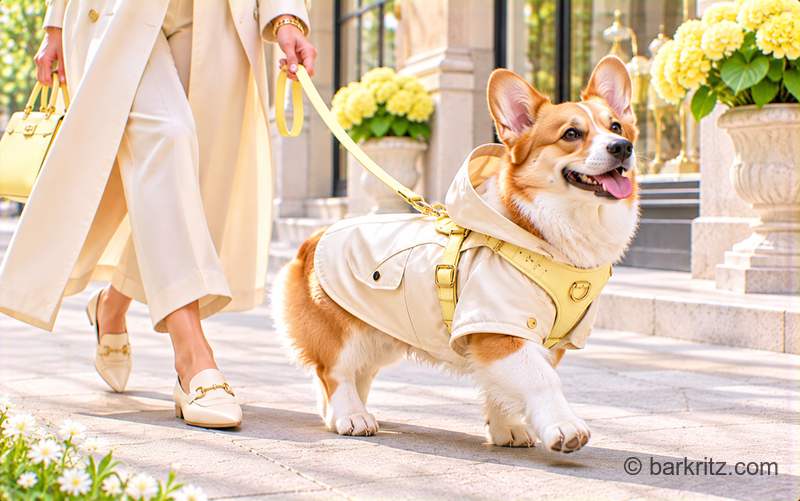
The most polished canine ensembles coordinate the harness with the dog’s clothing through compatible colors, proportions, and materials while ensuring that both pieces remain comfortable when worn together.
A harness should not simply be selected to match an outfit visually; it must also fit correctly over or under the clothing according to its intended construction. Some harnesses are designed to be worn directly against the body, while others accommodate light layers. The manufacturer’s guidance should determine how the particular model is used.
For a coordinated wardrobe, consider several combinations:
- Tailored walking coat: choose a harness with a streamlined profile and sufficient adjustment to accommodate the coat without creating pressure.
- Fine-knit sweater: select a design that does not catch on the knit or compress the fabric around the shoulders.
- Lightweight summer clothing: prioritize breathable materials and minimal coverage to avoid unnecessary heat retention.
- Rainwear: consider whether the harness is designed to sit over the garment or whether the coat has a dedicated leash opening.
- Everyday casual styling: a simple, well-constructed harness in a complementary shade can become a permanent wardrobe essential.
Color coordination can be subtle or expressive. A cream harness against a chocolate-colored coat creates a refined contrast, while dusty rose or pale sage can complement lighter coats beautifully. For dogs with patterned fur, solid colors often create a more balanced visual effect.
Hardware should be considered part of the overall styling. Matching metal finishes across the harness, leash, and other accessories can create visual continuity, while discreet branding and clean lines help preserve an elegant appearance.
Above all, avoid layering accessories so heavily that they restrict movement or make temperature regulation difficult. A beautifully dressed dog should always look comfortable, relaxed, and naturally at ease.
What Safety Features Should You Check Before Buying a Premium Dog Harness?
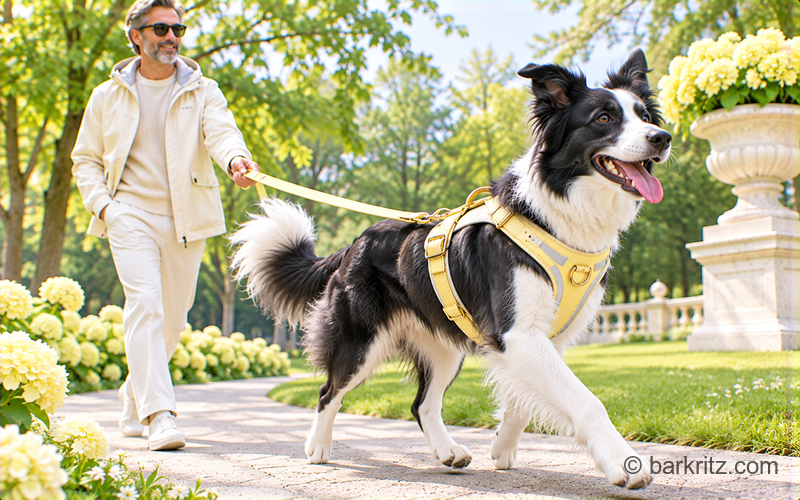
A high-quality dog harness should provide secure fastening, reliable leash attachment, durable construction, and a design appropriate to the dog’s strength and walking behavior.
A sophisticated appearance is valuable, but safety must remain the deciding factor. Every buckle, seam, strap, and attachment point should be designed to withstand the forces generated during ordinary walks and unexpected movement.
Before making a purchase, inspect these essential details:
- Secure buckles: fasten firmly and should not open accidentally during movement.
- Reinforced stitching: particularly important around leash rings and areas subject to tension.
- Reliable D-rings: should be firmly attached to the harness structure rather than loosely secured to decorative fabric.
- Adjustable straps: allow the harness to accommodate the dog’s proportions without excessive slack.
- Smooth internal surfaces: help minimize friction and irritation beneath the legs and across the chest.
- Visibility details: reflective piping or discreet reflective panels can improve visibility during evening walks.
For dogs that pull strongly, owners should consider whether the harness offers appropriate control without placing uncomfortable pressure on sensitive areas. A front-clip design may be useful for some dogs, while others may walk more naturally in a well-fitted back-clip harness. Persistent pulling is best addressed through appropriate training rather than relying exclusively on equipment.
The harness should also be inspected regularly. Frayed webbing, weakened stitching, cracked buckles, corroded hardware, or stretched adjustment points are reasons to replace it. After walks in rain, snow, or muddy conditions, clean and dry the harness according to its care instructions.
Ultimately, choosing the right harness is an exercise in balancing design, fit, and function. The finest accessory is not necessarily the most decorative or recognizable, but the one that allows a dog to move comfortably and confidently while complementing its individual style. When thoughtful construction meets an impeccable fit, everyday walking becomes a natural expression of well-considered canine dressing.