

How to Travel by Private Jet with a Large Dog
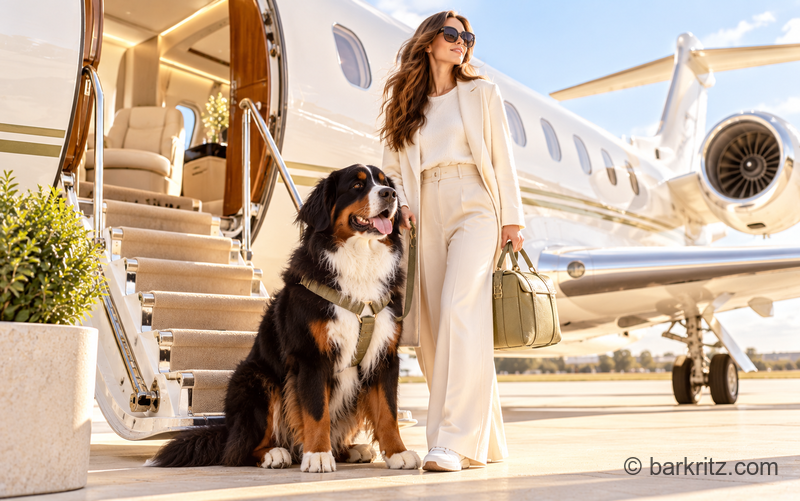
Traveling by private jet with a large dog offers a more personalized alternative to conventional air travel, allowing owners to plan around their companion’s size, temperament, and individual needs. Yet a successful journey requires more than booking an aircraft that welcomes pets. From selecting the right cabin configuration to coordinating veterinary documentation, ground transportation, and in-flight comfort, every detail deserves careful consideration. For owners who view their dogs as integral members of the family, the objective is simple: create a seamless travel experience in which comfort, safety, and thoughtful preparation take precedence.
Which Private Jet Is Best Suited to Traveling With a Large Dog?
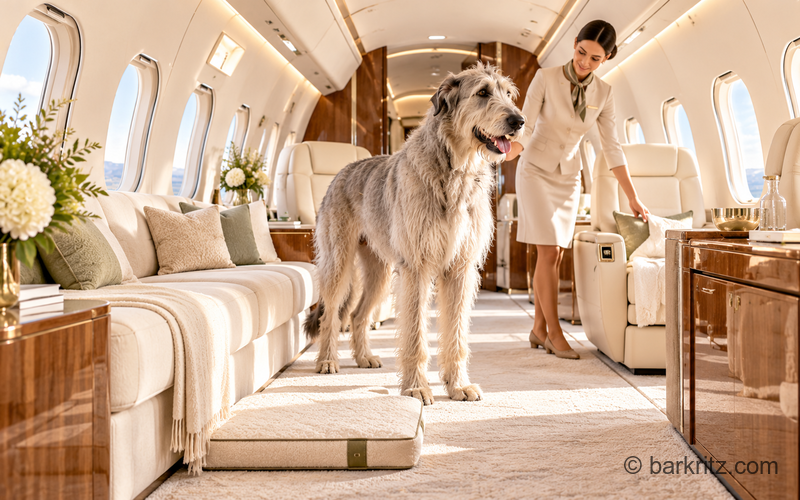
The best private jet for traveling with a large dog is one whose cabin dimensions, floor plan, ventilation, and operator policies accommodate the animal comfortably throughout the journey.
Aircraft selection should begin with the dog rather than the destination or the prestige of a particular model. A Great Dane, Newfoundland, or large German Shepherd may require substantially more usable floor space than a Labrador Retriever, while a tall dog may need sufficient headroom to stand naturally. Cabin layouts also vary considerably, so an aircraft’s passenger capacity alone cannot establish whether it is suitable.
When evaluating options, consider these practical distinctions:
- Light jets: Often well suited to shorter journeys with smaller groups, but limited cabin dimensions may make them unsuitable for giant breeds.
- Midsize and super-midsize jets: Can provide more room for movement, although individual floor plans and cabin restrictions must be verified.
- Large-cabin jets: Often offer greater usable space and flexibility for extended journeys, making them worth considering for large dogs and multiple passengers.
- Long-range aircraft: May reduce the need for intermediate stops on certain routes, but flight duration, range, weather, and operational requirements still determine the final itinerary.
Before confirming a charter, request the aircraft’s actual cabin dimensions and a floor plan showing where the dog will travel. Ask whether the animal may remain on the cabin floor, lie beside its owner, or occupy another approved position. Do not assume that every aircraft permits dogs on seats or beds, or that every operator allows an animal to move freely throughout the cabin.
The operator should also explain its procedures for boarding, securing the dog during taxi, takeoff, landing, and turbulence, and managing any cabin restrictions. A generous interior is valuable only when the flight crew can accommodate the dog safely and within the aircraft’s operating requirements.
What Documents and Health Preparations Does a Large Dog Need Before Departure?
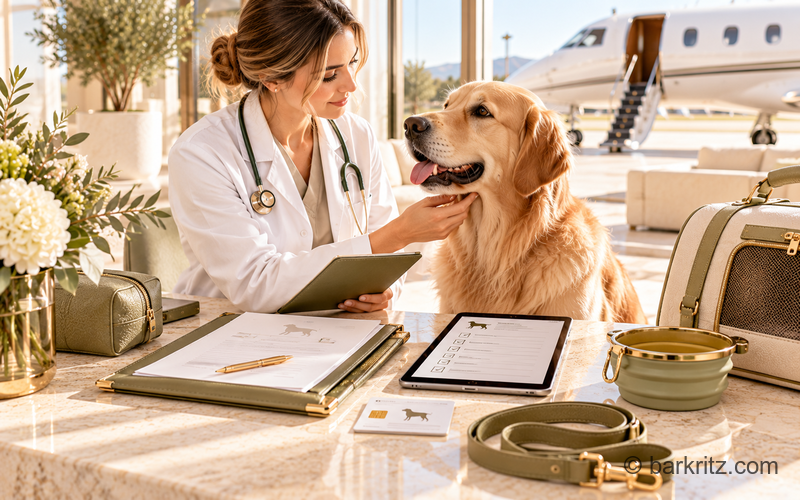
A large dog traveling by private jet needs the veterinary documentation, identification, vaccinations, parasite treatments, and import or export permissions required by every jurisdiction on the itinerary.
Private aviation can simplify scheduling, but it does not automatically exempt pets from border controls or animal-health regulations. Requirements depend on the departure country, destination, transit points, the dog’s country of origin, and the purpose of travel. Even a brief technical stop may introduce additional requirements, so the complete itinerary should be reviewed before tickets or charter arrangements are finalized.
Start preparations well in advance, especially for international journeys. Some destinations require specific vaccinations, laboratory tests, health certificates, import permits, or treatments administered within prescribed time windows. Missing a deadline can delay departure or prevent entry.
A comprehensive travel file should include, as applicable:
- Identification: A readable microchip and records connecting the dog’s identity to its veterinary documents.
- Vaccination records: Evidence of vaccinations required by the destination, including rabies vaccination where applicable.
- Veterinary health certificate: Documentation issued or endorsed by the appropriate authority when required.
- Import authorization: Any destination-specific permit, advance notification, or pre-approval.
- Parasite-treatment records: Evidence of treatments required within specified timeframes.
- Ownership and travel documents: Relevant owner identification, proof of ownership, or authorization for an accompanying handler when required.
Confirm the rules with the official veterinary or border authority for the destination and any transit country, and have the charter operator verify the practical requirements for the flight. Keep digital copies available, but carry original documents whenever required.
A pre-travel veterinary appointment should assess the dog’s fitness for the planned journey, particularly if it is elderly, has a respiratory or cardiovascular condition, experiences motion sickness, or has difficulty standing and lying down comfortably. Discuss the anticipated flight duration, temperature changes, hydration, feeding schedule, and access to appropriate relief areas.
Sedation should not be used simply to make air travel easier. Certain sedatives can interfere with balance, alertness, or the body’s ability to respond to changing conditions. Any medication decision should be made with the veterinarian familiar with the dog’s health and the specific journey.
How Can You Keep a Large Dog Comfortable During a Private Jet Flight?
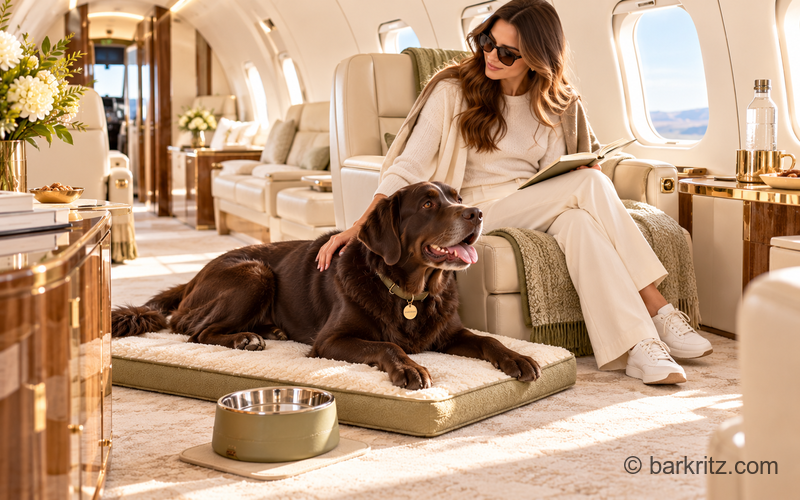
A large dog is most likely to travel comfortably when the cabin environment, resting area, hydration, temperature, and flight routine are planned around its familiar habits.
Even an aircraft with a spacious cabin can feel unfamiliar to a dog encountering new sounds, smells, people, and sensations. Preparation should therefore begin before departure, allowing the animal to become comfortable with the travel routine rather than confronting every new experience on the day of the flight.
If the operator permits it, introduce the dog to the aircraft or a similar environment before the journey. Let it explore calmly, investigate the designated resting area, and become familiar with its travel mat or blanket. Keep the experience positive and avoid forcing the dog into a confined space or repeatedly exposing it to anything that causes distress.
Thoughtful in-flight arrangements may include:
- A familiar resting surface: A non-slip mat or washable blanket that carries a familiar scent.
- Fresh drinking water: A stable, spill-resistant bowl and regular opportunities to drink.
- Appropriate temperature: Confirmation that the cabin environment will remain comfortable for the dog’s size, coat, and health.
- A predictable routine: A familiar feeding schedule and a calm approach to boarding and settling.
- Secure positioning: A location and restraint arrangement approved by the operator and compatible with the aircraft’s safety requirements.
Do not assume that a dog can remain unsecured during every phase of flight. Ask the operator how the animal must be positioned during taxi, takeoff, landing, and turbulence, and whether an appropriately sized restraint or other approved arrangement is required. The dog should never obstruct an aisle, emergency exit, or access to essential equipment.
For long flights, discuss the expected duration and any practical limitations on movement or relief breaks. A large dog may be unable to use a portable indoor relief system comfortably, so a suitable pre-departure walk and carefully planned ground stops can be particularly important.
Food timing should reflect the individual animal’s tolerance for travel. Some dogs are more comfortable after a light meal well before departure, while others may be prone to nausea. A veterinarian can advise on a suitable schedule based on the dog’s health and the length of the flight.
How Should You Plan Airport Transfers, Ground Stops, and Arrival With a Large Dog?
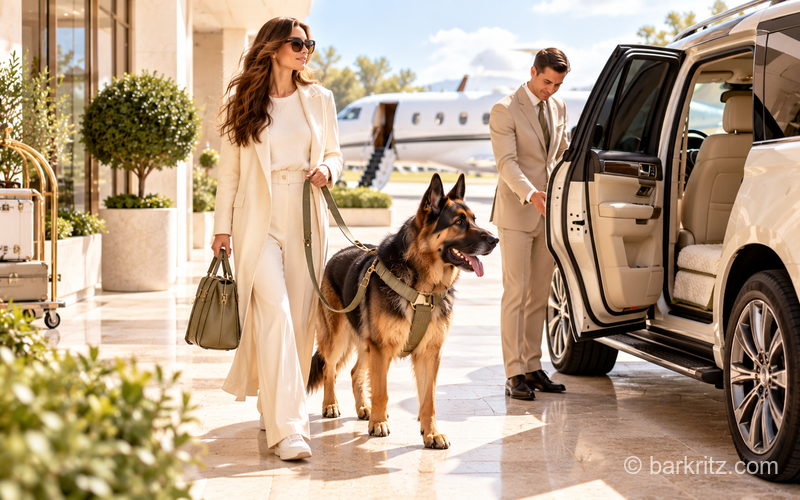
The smoothest private-jet journey is organized as a continuous door-to-door itinerary, with suitable ground transportation, realistic transfer times, and a clear plan for the dog’s needs at every stage.
The flight itself is only one part of the experience. A large dog may encounter busy entrances, unfamiliar vehicles, hot or cold tarmac conditions, and long periods of waiting before boarding. Careful coordination reduces unnecessary transitions and helps maintain a calm routine.
Begin by confirming that the private terminal or fixed-base operator can accommodate the dog during arrival and boarding. Access rules differ by facility, and the ability to travel in the cabin does not necessarily mean that the dog can enter every terminal area without restrictions.
Ground transportation deserves equally careful attention. Select a vehicle with enough space for the dog to sit, stand, and lie down comfortably, while allowing the animal to be secured safely. A large dog should not be expected to squeeze into a small sedan or travel loose in a vehicle simply because the transfer is short.
A well-organized itinerary should account for:
- Departure timing: Allow sufficient time for a relaxed walk, bathroom break, and calm boarding without rushing.
- Vehicle configuration: Verify the usable cargo or passenger space, ventilation, temperature control, and suitable restraint system.
- Ground-stop planning: Identify appropriate places for water, exercise, and relief when the route and flight schedule require a stop.
- Arrival arrangements: Confirm local transport, accommodation access, and any destination-specific rules before landing.
- Weather conditions: Avoid leaving the dog unattended in a vehicle or exposing it unnecessarily to extreme heat or cold.
If the journey includes a transfer between aircraft, airports, or countries, clarify who is responsible for supervising the dog and handling its documents at each stage. Establish a contingency plan for delays, diversions, or missed connections, including access to water, a suitable relief area, and an appropriate place to wait.
At the destination, allow time for the dog to settle before introducing a demanding schedule. A quiet arrival, familiar bedding, and a predictable walk can make the transition more comfortable than immediately proceeding to a crowded event or extended outing.
What Should You Pack for a Large Dog Traveling by Private Jet?
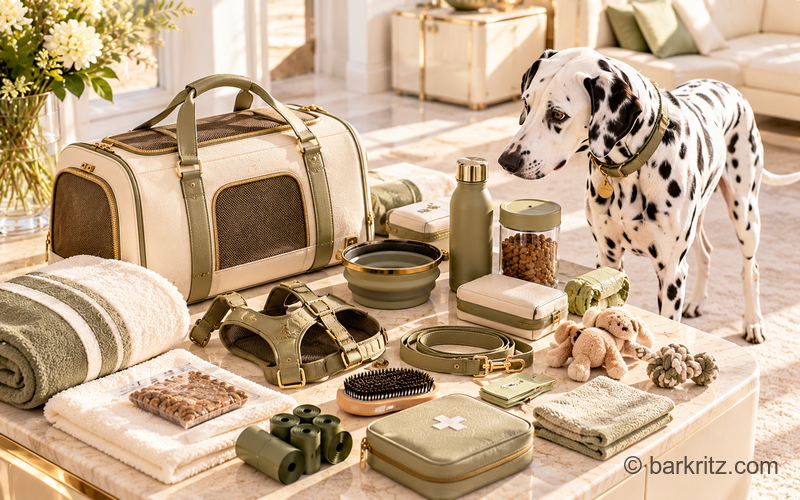
The ideal canine travel kit combines essential health records, familiar comfort items, hydration supplies, cleaning materials, and equipment tailored to the dog’s size and temperament.
A carefully assembled kit reduces the need to search for unfamiliar products during a transfer or after arrival. For a large dog, sizing is particularly important: bowls, harnesses, carriers when needed, and resting surfaces must be suitable for its actual dimensions rather than selected from standard travel sets.
Prepare a dedicated bag that remains accessible throughout the journey, separate from luggage that may be stored away from the cabin.
Prioritize the following essentials:
- Travel documentation: Required certificates, permits, vaccination records, identification details, and emergency veterinary contacts.
- Food and water: The dog’s usual food in measured portions, drinking water as appropriate, and stable bowls.
- Comfort items: A familiar blanket, non-slip mat, and one or two safe toys that do not contain easily detached parts.
- Walking equipment: A well-fitted harness or collar, a secure leash, identification tags, and waste bags.
- Cleaning supplies: Absorbent towels, pet-safe cleaning products, disposable bags, and spare bedding where practical.
- Health essentials: Any prescribed medication in its original packaging, relevant veterinary instructions, and basic grooming supplies.
Avoid introducing a new food, unfamiliar supplement, or elaborate accessory immediately before departure. Travel is not the ideal time to experiment with products that could cause digestive upset or discomfort.
The dog’s everyday equipment should be checked before the journey. Inspect the leash, harness, fasteners, and identification tags, and confirm that any restraint intended for use in the aircraft or vehicle is suitable for that specific setting. Equipment designed for walking is not automatically appropriate as an aviation restraint.
For overnight stays, confirm the accommodation’s rules for large dogs, including any size restrictions, designated relief areas, cleaning fees, or limitations on where the animal may rest. A property described as pet-friendly may still impose conditions that affect a giant breed.
Ultimately, traveling by private jet with a large dog is an exercise in thoughtful logistics rather than spontaneous indulgence. The right aircraft, accurate documentation, a dog-centered itinerary, and carefully chosen essentials create the foundation for a journey that feels composed from departure to arrival. When planning begins with the animal’s actual needs, private aviation can offer a more individualized way to explore the world together.