
Rare Siamese Cat Variations and Their History
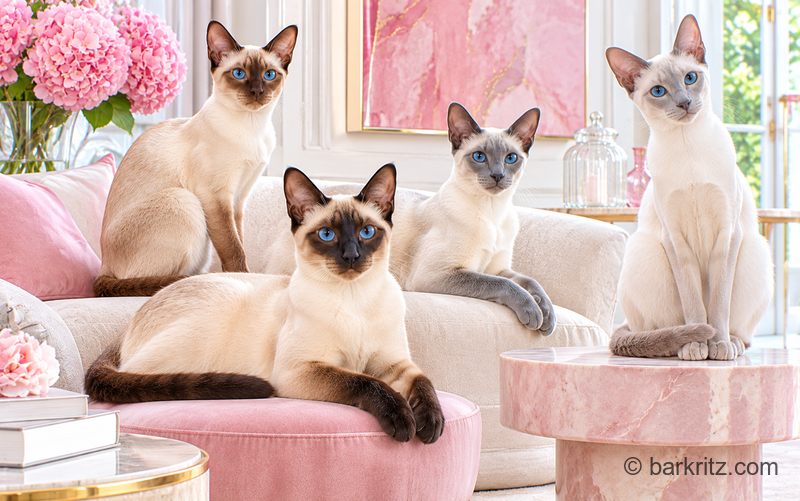
The Siamese cat has long captivated admirers with its sculptural silhouette, sapphire-blue eyes, and striking contrast between a pale body and darker extremities. Yet beyond the familiar seal-point coat lies a fascinating spectrum of colors, patterns, and historical developments that have shaped the breed over generations. Some variations emerged through selective breeding, while others reflect the genetics of color expression or the influence of related breeds. For enthusiasts of feline heritage, understanding these distinctions reveals a more nuanced portrait of one of the world’s most recognizable cats.
Which Rare Siamese Color Variations Have the Most Fascinating Histories?
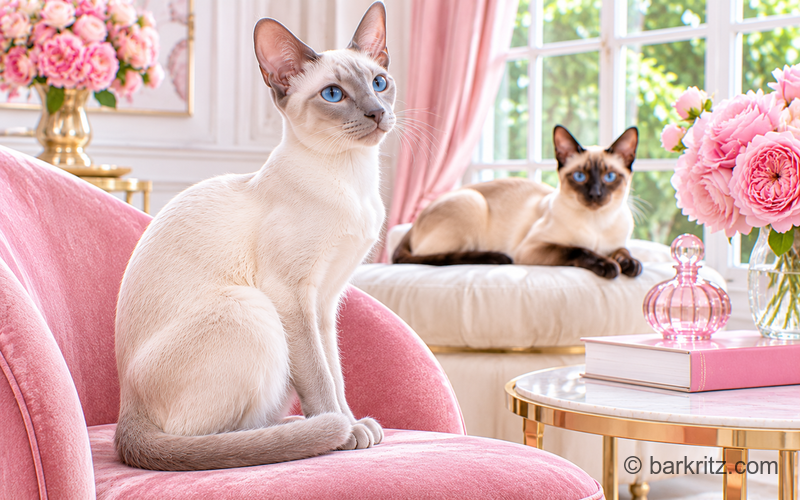
The most intriguing Siamese color variations are those that combine the breed’s characteristic pointed pattern with less familiar shades, including chocolate, blue, lilac, and the later-developed cinnamon and fawn colors.
The traditional Siamese pattern is a form of temperature-sensitive pigmentation: cooler areas of the body develop darker coloration, while warmer areas remain lighter. This produces the characteristic contrast across the face, ears, legs, and tail. The underlying color determines whether those points appear nearly black, warm brown, slate blue, or a delicate pinkish gray.
The four classic Siamese point colors are:
- Seal point: Deep brown to nearly black points against a warm, pale body; one of the earliest and most historically established Siamese color varieties in Western breeding.
- Chocolate point: Warm milk-chocolate points with an ivory body, often appearing softer and lighter than seal point.
- Blue point: Cool slate-blue points paired with a pale, bluish-white body, creating a distinctly cool-toned appearance.
- Lilac point: Delicate pinkish-gray points against a frosty, almost white body, generally producing the palest effect among the four traditional colors.
Chocolate and blue points became established through selective breeding after the early introduction of Siamese cats to Europe and North America. Lilac point, sometimes called frost point, emerged from the same broader breeding history and became recognized as a distinct color variety.
Cinnamon and fawn points add another dimension to the Siamese color spectrum. Cinnamon produces warm, light reddish-brown points, while fawn develops as a softer, paler derivative of cinnamon. These colors are less familiar to many casual admirers and may be associated with particular breeding programs and registries rather than universally accepted definitions of the traditional Siamese.
How Did the Siamese Cat’s Pointed Coat Develop?
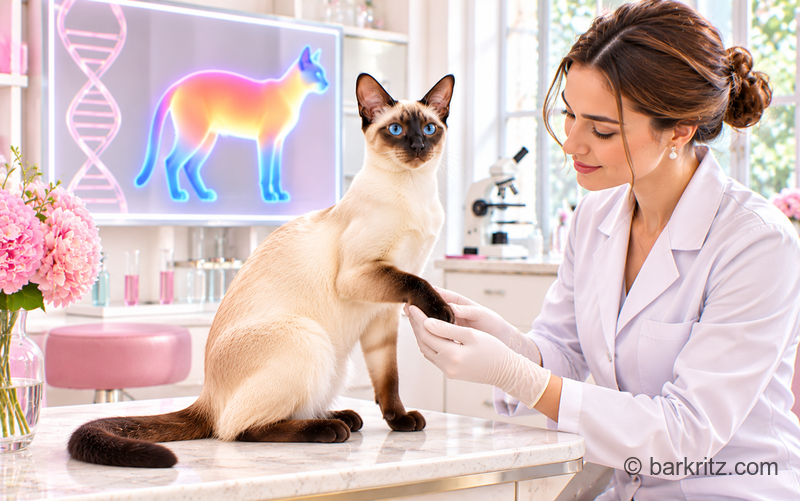
The Siamese pointed coat results from a temperature-sensitive form of the tyrosinase enzyme involved in melanin production, allowing pigmentation to develop more strongly in cooler regions of the body.
This distinctive pattern is not simply a decorative marking; it is a genetically influenced expression of pigmentation. The enzyme responsible for producing melanin functions differently at varying temperatures, which is why a Siamese kitten is generally born very pale and develops darker extremities as it grows. The face, ears, paws, and tail are typically cooler than the torso, allowing the points to become more pronounced.
The pattern can also change gradually throughout a cat’s life. Siamese cats living in cooler environments may develop darker coats, while the points can become more noticeable with age. Individual genetics, coat development, and environmental temperature all contribute to the final appearance.
Several features distinguish this pattern from ordinary coat coloration:
- Temperature sensitivity: Pigmentation is more pronounced in cooler body regions.
- Kitten development: Newborn kittens are usually pale because of the warmth of the maternal environment; their points darken over time.
- Seasonal influence: Changes in ambient temperature can influence coat darkness, although the effect varies between individuals.
- Inherited expression: The characteristic pattern is genetically determined and is passed through breeding rather than created through grooming or diet.
This genetic mechanism also explains why pointed coloration appears in several related breeds. The Himalayan, Ragdoll, Birman, and Colorpoint Shorthair can display similar patterns, although their breed histories, body types, and accepted standards differ. The presence of pointed coloration alone does not establish that a cat is a Siamese.
What Is the Difference Between Traditional Siamese and Modern Siamese Types?
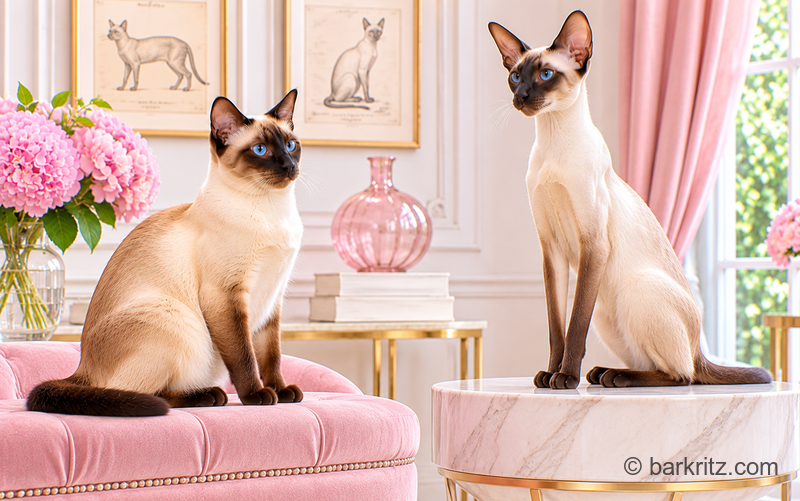
Traditional and modern Siamese cats share a common breed heritage, but selective breeding has produced noticeably different body structures and facial profiles.
The Siamese cats depicted in early Western records generally had a more moderate build than many contemporary show-line examples. Over time, some breeding programs emphasized a longer body, finer limbs, a wedge-shaped head, and very large ears. Other breeders continued to favor a more moderate appearance, preserving features associated with older Siamese lines.
The distinction is principally one of type rather than coat color. A seal-point cat may belong to a traditional-looking line or a highly refined modern line, depending on its ancestry and the standards followed by its breeder.
The principal differences include:
- Head shape: Traditional-looking cats often have a more moderate, rounded or gently wedge-shaped head, while modern show types typically feature a longer, sharply defined wedge.
- Body structure: Older-style cats generally appear more substantial, whereas modern show lines often emphasize an elongated, slender frame.
- Ears: Modern types commonly have exceptionally large ears set wide on the head.
- Overall impression: Traditional-looking Siamese cats may evoke the appearance seen in historical photographs, while modern examples reflect decades of specialized show breeding.
Terminology varies among organizations and breeders. The Thai cat, for example, is recognized by some registries as a distinct breed representing a more moderate traditional type. It should not automatically be treated as interchangeable with every cat described informally as an old-style Siamese.
Both types can be affectionate, vocal, intelligent, and socially engaged, although individual temperament depends on genetics, early socialization, and environment. Prospective owners should evaluate health, personality, and responsible breeding practices rather than assuming that one body type guarantees a particular character.
Which Less Familiar Siamese-Related Varieties Are Often Mistaken for Rare Siamese Colors?
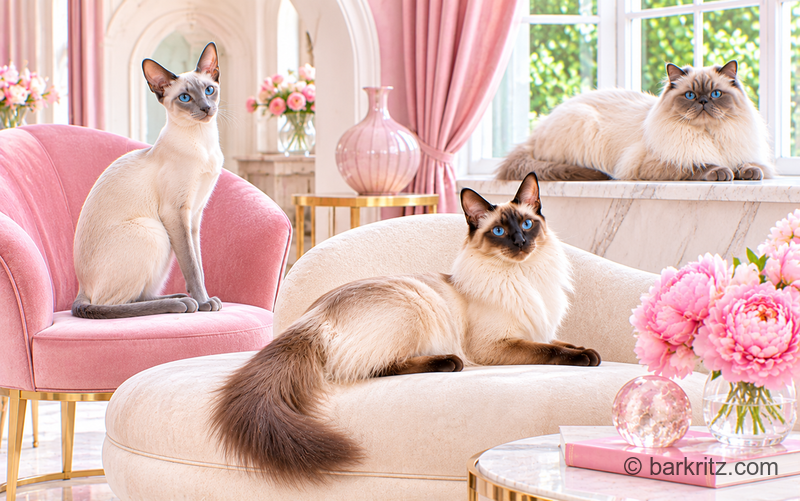
Several Siamese-related breeds and color varieties resemble unusual Siamese cats, but their appearance alone does not establish that they belong to the Siamese breed.
The broader family of pointed cats includes several distinctive varieties developed through natural inheritance and selective breeding. Some have long coats, different body proportions, or additional color patterns that are not traditionally associated with the Siamese. Their histories overlap, but each has its own breed identity.
Among the most interesting examples are:
- Colorpoint Shorthair: A close relative of the Siamese developed to include a broader range of pointed colors, including red, cream, and tortoiseshell points in registries that recognize these varieties.
- Balinese: A longhaired breed closely related to the Siamese, distinguished by its silky coat and plumed tail while retaining the pointed pattern.
- Oriental Shorthair: A breed with a similar elegant outline and large ears but a much wider range of coat colors and patterns, including solid and tabby varieties.
- Himalayan: A longhaired pointed cat developed through Persian and Siamese-related breeding, typically featuring a fuller coat and a rounder facial structure.
- Thai: A moderate-bodied pointed breed associated with the traditional Siamese appearance and recognized separately by certain cat registries.
The Colorpoint Shorthair is particularly relevant when discussing unusual Siamese-like colors. Depending on the registry, red-pointed, cream-pointed, and tortoiseshell-pointed cats may be classified under Colorpoint Shorthair rather than Siamese. This reflects differences in breed standards and historical breeding programs, not a judgment about the rarity or beauty of the individual cat.
Registry terminology matters because the same visual description may be treated differently by different organizations. Anyone seeking a particular variety should consult the relevant breed standard and verify the cat’s pedigree instead of relying exclusively on its coat.
How Can You Identify a Rare Siamese Variation and Preserve Its Heritage?
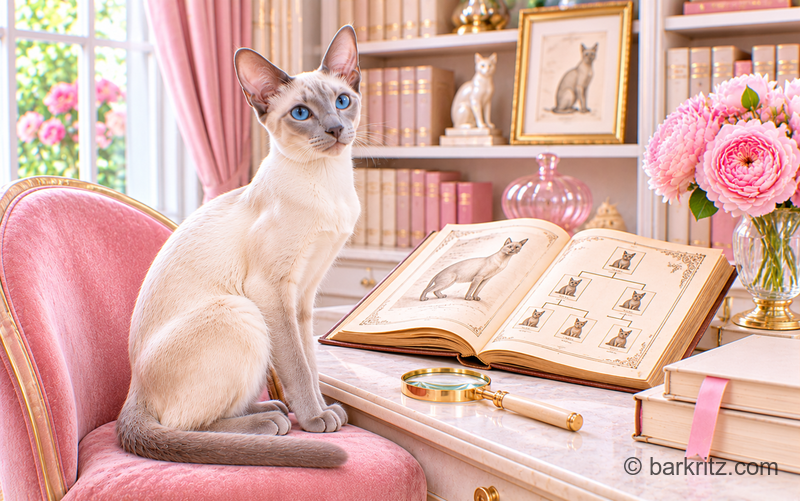
Identifying a rare Siamese variation requires evaluating the cat’s documented ancestry, point coloration, physical characteristics, and applicable breed standard rather than relying on appearance alone.
A pale lilac-point cat may look dramatically different from a deep seal point, yet both can belong to the same recognized color family. Conversely, a red-pointed cat with a Siamese-like body may be registered as a Colorpoint Shorthair or another pointed breed, depending on its pedigree and the registry involved.
For prospective owners and collectors of feline heritage, a careful evaluation should include several considerations.
Examine the points. Compare the color of the face mask, ears, legs, and tail under natural lighting. Seal points tend toward deep brown, chocolate points toward warmer milk-chocolate shades, blue points toward slate gray, and lilac points toward pale pinkish gray.
Consider the body color. The contrast between the torso and extremities can help distinguish the traditional point colors, although coat shade changes with age and environmental conditions.
Request pedigree documentation. Reputable breeders should be able to explain the cat’s lineage, the color varieties represented in previous generations, and the registration status of the kittens.
Prioritize health and welfare. A rare color should never outweigh responsible breeding practices, appropriate veterinary care, healthy parental cats, and transparent information about inherited conditions.
Understand the breed standard. Registries may differ in their recognition of certain colors and types. A color considered rare in one breeding community may be well established in another.
The heritage of the Siamese cat is best appreciated through the relationship between genetics, historical breeding, and responsible stewardship. Its appeal extends beyond sapphire eyes and a dramatic silhouette: every recognized variation reflects a particular combination of inherited traits and human decisions about how the breed should develop. Whether drawn to the deep elegance of seal point, the cool refinement of blue point, or the delicate coloring of lilac and fawn, admirers can preserve this heritage by valuing sound health, accurate identification, and the individuality of every cat.