

Rare Russian Blue Cat Traits Most Owners Never Notice
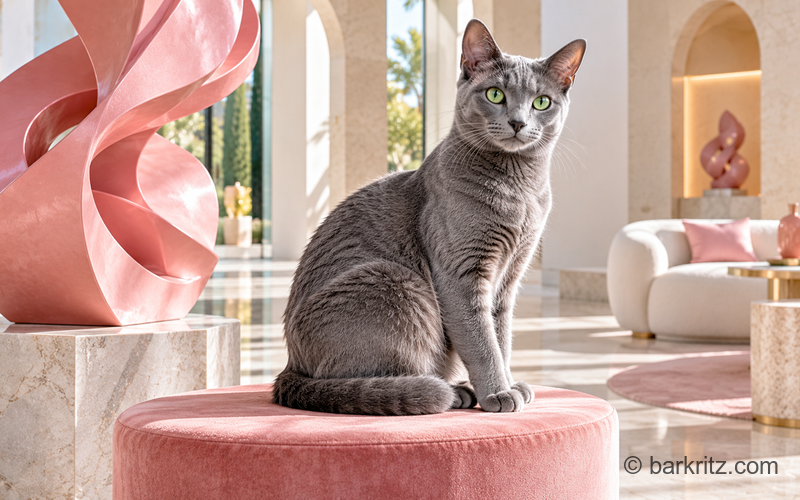
The Russian Blue is celebrated for its shimmering silver-tipped coat, vivid green eyes, and composed elegance, yet its most fascinating qualities often emerge through everyday observation rather than appearance alone. Beneath the breed’s polished exterior lies a remarkably subtle combination of sensory awareness, carefully measured affection, and distinctive communication habits. These cats can form deep attachments without demanding constant attention, express curiosity through almost imperceptible movements, and develop household rituals that reveal just how closely they observe their surroundings. For owners who appreciate feline sophistication, understanding these lesser-known traits offers a richer appreciation of one of the cat world’s most quietly distinctive breeds.
Why Does the Russian Blue’s Silver Coat Look Different in Changing Light?
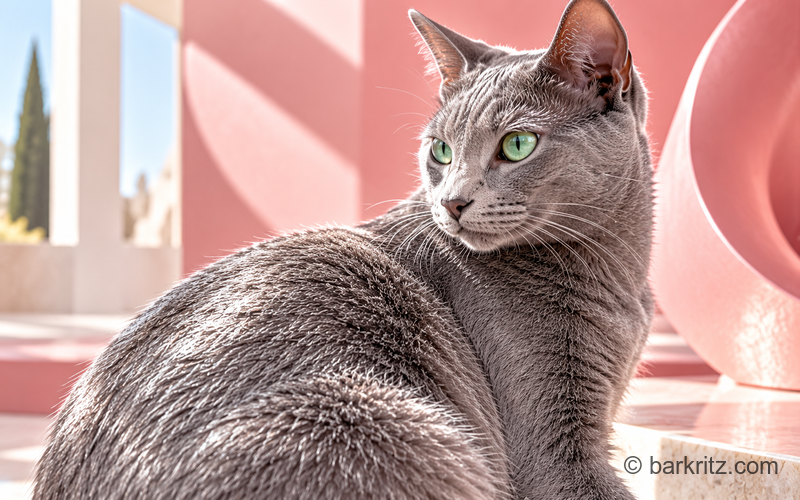
The Russian Blue’s extraordinary coat owes its distinctive appearance to a dense, plush double layer of blue-gray fur with silver-tipped guard hairs that catch and reflect light.
Unlike cats whose coats rely on contrasting stripes or dramatic color patches, the Russian Blue achieves its visual refinement through texture and subtle tonal variation. The individual hairs have pale silver ends, creating a soft, luminous effect that can make the coat appear almost metallic under bright daylight. In cooler or dimmer surroundings, the same fur may look deeper and more uniform in color.
The breed’s short coat stands away from the body because of its dense undercoat, producing a uniquely plush texture that distinguishes it from many other shorthaired cats. When viewed closely, the surface can appear velvety rather than sleek, despite the animal’s elegant silhouette.
Several details make this coat particularly distinctive:
- Silver-tipped hairs: These create the characteristic shimmering effect rather than a flat, solid blue appearance.
- Dense double coat: The combination of undercoat and guard hairs gives the fur its plush, resilient texture.
- Blue-gray coloration: The breed standard favors an even, clear blue coat, with lighter silver tipping adding dimension.
- Seasonal variation: Changes in shedding and coat density can subtly alter the way the fur looks and feels throughout the year.
- Light-sensitive appearance: Natural daylight, artificial illumination, and surrounding colors can influence how prominently the silver sheen appears.
This optical effect can be especially striking around the shoulders, back, and sides, where light moves across the coat as the cat changes position. It is not a separate silver color pattern but a result of the hair’s pigmentation and structure.
Owners can preserve the coat’s natural appearance with gentle brushing, a balanced diet, and routine veterinary care. Excessive bathing or unnecessary grooming products are rarely needed for a healthy Russian Blue. The coat is most impressive when its natural texture remains undisturbed.
What Do a Russian Blue’s Green Eyes Reveal About Its Development?
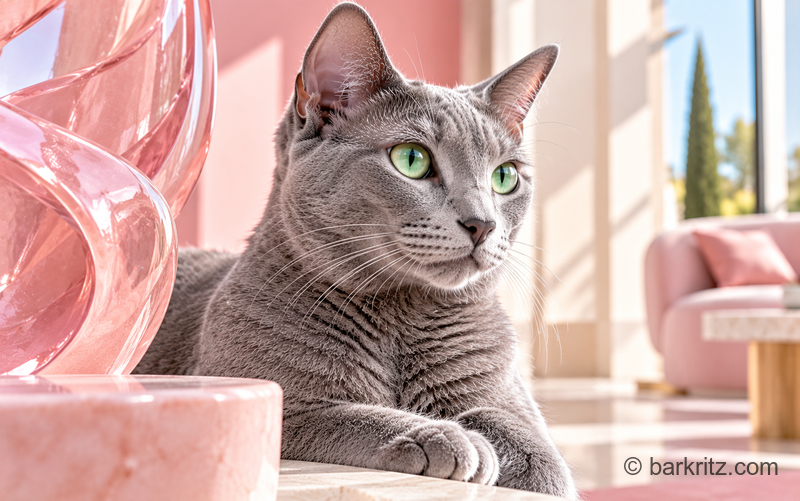
The Russian Blue’s vivid green eyes are a defining adult characteristic, but their color develops gradually as the kitten matures rather than appearing fully established at birth.
Young Russian Blue kittens commonly begin life with blue eyes that change as pigmentation develops. During the transition, the eyes may pass through yellowish or golden tones before settling into the clear green associated with mature cats. The timing and intensity of the change can vary, so the eyes of a young kitten should not be judged by adult appearance alone.
In mature Russian Blues, the contrast between green eyes and a cool blue-gray coat creates one of the breed’s most recognizable visual signatures. The effect is especially pronounced because the coat typically lacks strong markings that would compete for attention.
Owners may notice several subtle aspects of the eyes beyond their color:
- Gradual color change: Kittens’ eyes develop over time, and the final shade may not be obvious early in life.
- Visual contrast: The combination of green eyes and blue-gray fur contributes strongly to the breed’s distinctive appearance.
- Light-dependent intensity: Eye color may appear brighter or more muted depending on illumination and the surrounding environment.
- Expressive attention: Russian Blues can communicate interest through sustained observation, small changes in gaze, and subtle head movements.
- Individual variation: Green shades can differ between cats, even within the same breed.
Eye color alone cannot establish a cat’s pedigree or overall health. A Russian Blue with an unusual eye appearance, persistent discharge, cloudiness, squinting, or sudden changes in vision should be examined by a veterinarian rather than assessed against aesthetic expectations.
The most revealing quality is often how the cat uses its gaze. A Russian Blue may observe a new visitor from a comfortable distance before approaching, quietly monitoring movement and tone of voice. That measured attention can seem almost contemplative, but it is best understood as individual temperament rather than evidence of any special cognitive ability associated exclusively with the breed.
Why Do Russian Blue Cats Often Observe Before They Approach?

Many Russian Blues are reserved around unfamiliar people and prefer to assess a new situation before engaging, although confidence and sociability vary considerably from one individual to another.
The breed has a reputation for forming close relationships with familiar people while remaining cautious in unfamiliar surroundings. Rather than immediately investigating every visitor, a Russian Blue may choose a comfortable vantage point and watch the room before deciding whether to approach. This behavior can be mistaken for aloofness, even when the cat is strongly attached to its household.
The distinction becomes clearer through repeated observation. A cat that waits near a doorway, follows its owner from one room to another, or settles nearby without demanding contact may be demonstrating companionship in a quieter form.
Common patterns owners may notice include:
- Distance before contact: The cat may prefer to observe a new person before accepting interaction.
- Preference for routine: Familiar feeding times, resting places, and household rhythms can provide reassurance.
- Selective affection: Some Russian Blues seek physical contact primarily with people they know well.
- Quiet proximity: Sitting nearby or following a familiar person can be a form of social engagement without direct cuddling.
- Sensitivity to disruption: Loud noises, abrupt movements, or unfamiliar changes may cause some individuals to retreat temporarily.
These tendencies should not be treated as universal breed rules. Early socialization, previous experiences, household dynamics, and individual personality all influence how a cat responds to people. Some Russian Blues are outgoing and playful with guests, while others need considerably more time to feel comfortable.
Owners can support confidence by providing hiding places, elevated resting spots, and opportunities for voluntary interaction. Letting the cat approach at its own pace is generally more effective than lifting it toward unfamiliar people or insisting on contact. Treats and play can help create positive associations, provided the cat remains comfortable.
A reserved temperament is not necessarily a sign of anxiety, but a sudden increase in hiding, avoidance, or irritability deserves attention. Changes in behavior can reflect pain, illness, or environmental stress and should not automatically be attributed to the breed.
How Do Russian Blues Communicate Without Making Much Noise?
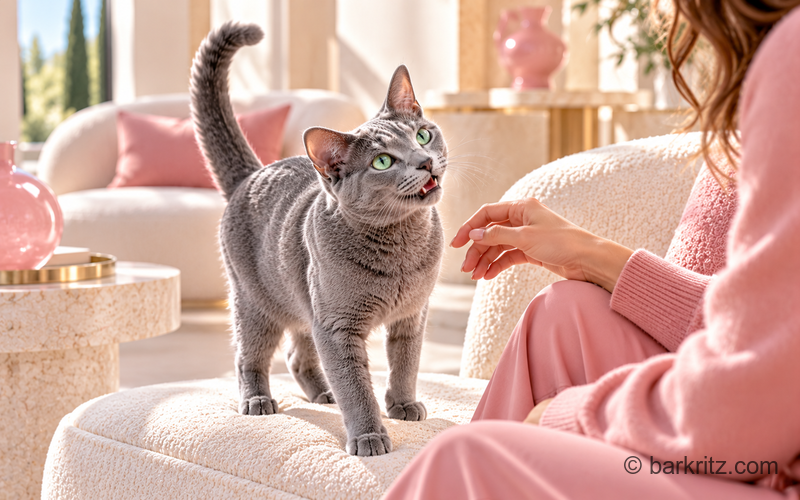
Russian Blues can communicate through a nuanced combination of posture, tail position, ear movements, facial expression, and soft vocalizations, making attentive observation more informative than relying on meowing alone.
Although individual cats differ, some Russian Blues are relatively quiet compared with more vocal breeds. They may use short meows, chirps, or gentle trills in particular situations, while expressing much of their everyday mood through body language. A cat that waits near its food bowl, raises its tail when greeting a familiar person, or settles close by may be communicating clearly without producing much sound.
Recognizing these signals helps owners distinguish relaxed curiosity from discomfort or overstimulation.
Useful cues to observe include:
- Tail held upright: Often associated with friendly greetings or confident movement, particularly when approaching a familiar person.
- Slow blinking: Can occur when a cat appears relaxed; owners may respond with a gentle blink without forcing interaction.
- Ears turned forward: May indicate attention or interest, although the full posture should be considered.
- Ears flattened or rotated backward: Can signal discomfort, fear, or irritation, especially when accompanied by a tense body.
- Tail flicking sharply: May indicate increasing arousal or annoyance, suggesting that the interaction should pause.
- Soft chirps or trills: May accompany greetings, requests for attention, or moments of excitement.
Context matters more than any single gesture. A flicking tail does not always mean the same thing, and a quiet cat is not necessarily content. Body tension, pupil changes, posture, surroundings, and recent events all contribute to a more accurate interpretation.
Russian Blues may also develop individualized communication habits with their owners. One cat might wait beside a particular door, while another uses a specific chirp to initiate play. These patterns emerge through repeated interaction and should be understood as the behavior of a particular animal rather than an exclusive feature of the breed.
Owners can strengthen communication by responding consistently, respecting signs of withdrawal, and offering predictable routines. If vocalization changes suddenly, or a normally communicative cat becomes unusually silent, veterinary advice may be appropriate—especially when the change occurs alongside alterations in appetite, movement, or general behavior.
What Makes the Russian Blue’s Intelligence and Daily Rituals So Easy to Overlook?
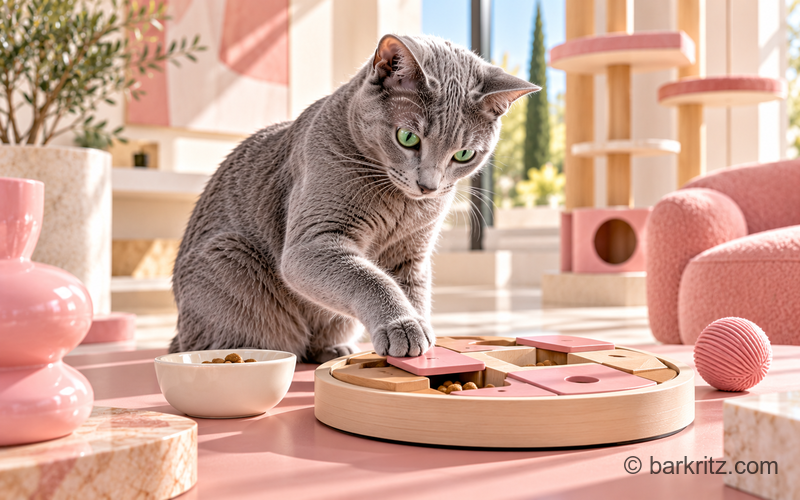
Russian Blues can be observant, adaptable companions that learn household routines and explore their environment thoughtfully, although their abilities and preferred activities depend on individual temperament and experience.
A Russian Blue may appear to be resting while quietly tracking familiar patterns: the sound of a cupboard opening, the time a favorite person returns home, or the sequence of events before a meal. Repeated experiences can help cats anticipate what happens next, and attentive owners may notice that their companion begins moving toward a familiar location before a routine is fully underway.
This type of learning is not unique to Russian Blues, but the breed’s often measured behavior can make it especially easy to overlook. Rather than displaying constant high-energy activity, some individuals prefer short, focused periods of play separated by long stretches of observation and rest.
Mental enrichment can encourage curiosity without overwhelming a cat that prefers a predictable environment. Consider incorporating:
- Puzzle feeders: Offer a manageable challenge while encouraging natural food-seeking behavior.
- Interactive wand toys: Provide opportunities for stalking, chasing, and pouncing in short sessions.
- Rotating toys: Introduce familiar objects in a slightly different arrangement to renew interest.
- Elevated observation points: Allow the cat to watch household activity from a secure, comfortable position.
- Predictable play routines: Short sessions at consistent times can support engagement while respecting the cat’s need for rest.
- Reward-based learning: Simple behaviors can be encouraged through treats and positive reinforcement without punishment or pressure.
A cat’s preference for a particular routine does not necessarily mean it is unusually intelligent, nor does a quieter style of play indicate low engagement. Owners should observe what motivates their individual companion and adjust enrichment accordingly.
The Russian Blue’s relationship with its environment can be as distinctive as its appearance. Some cats become skilled at opening lightweight doors, finding hidden resting places, or anticipating daily events; others prefer straightforward games and familiar comforts. Both patterns can reflect normal feline learning and personality.
Consistency is especially valuable when introducing changes. New furniture, visitors, travel, or alterations to feeding schedules can be easier to manage when the cat has access to familiar bedding, safe retreat spaces, and a reliable daily rhythm.
Ultimately, the Russian Blue’s appeal lies not in a collection of mysterious or guaranteed traits, but in the subtle details that emerge when an owner takes time to observe. Its shimmering coat, evolving green eyes, quiet communication, and individual rituals create a companion whose character often becomes more fascinating with familiarity. The closer the relationship, the easier it becomes to appreciate the small signals that make each Russian Blue unique.